
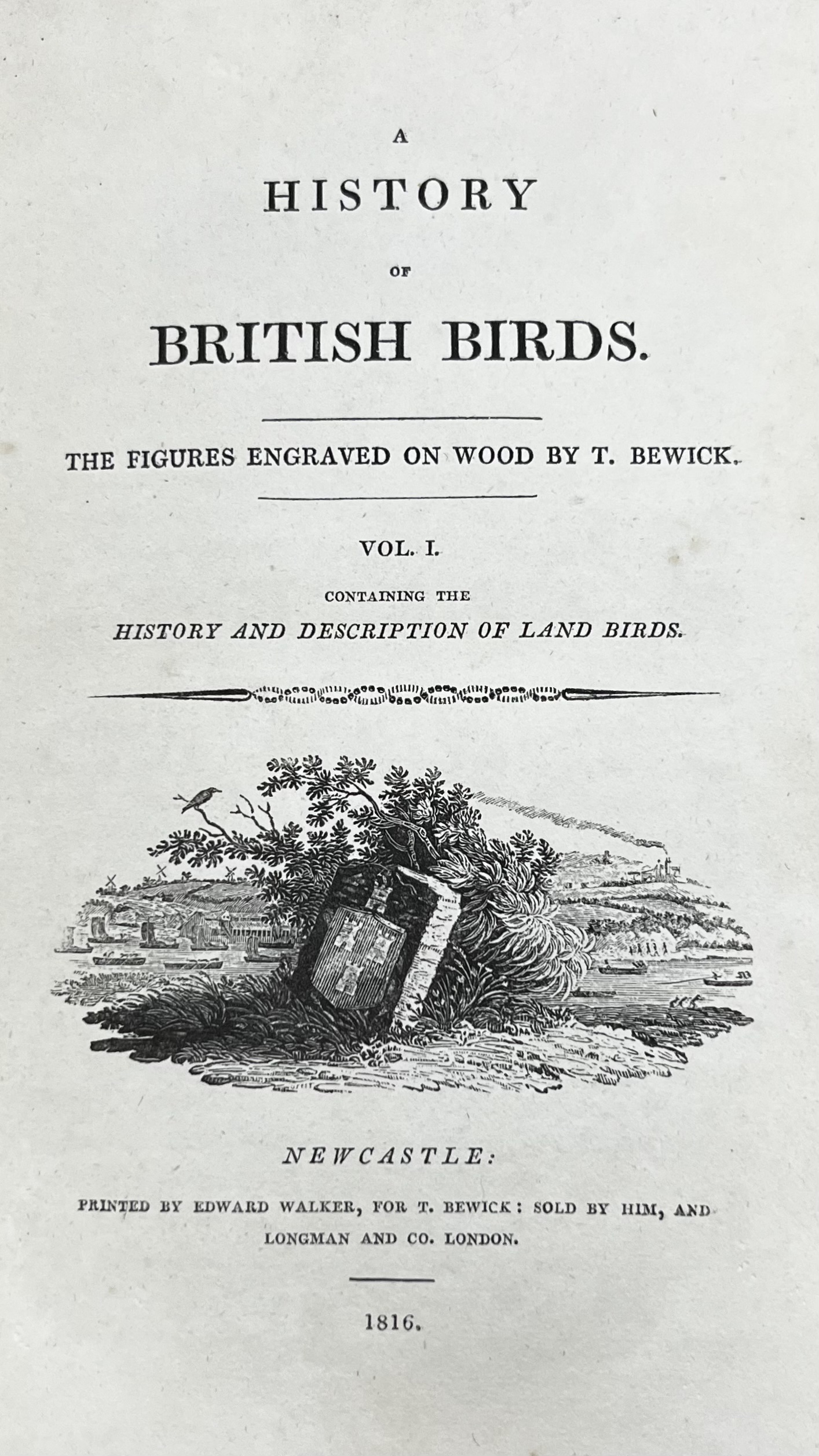
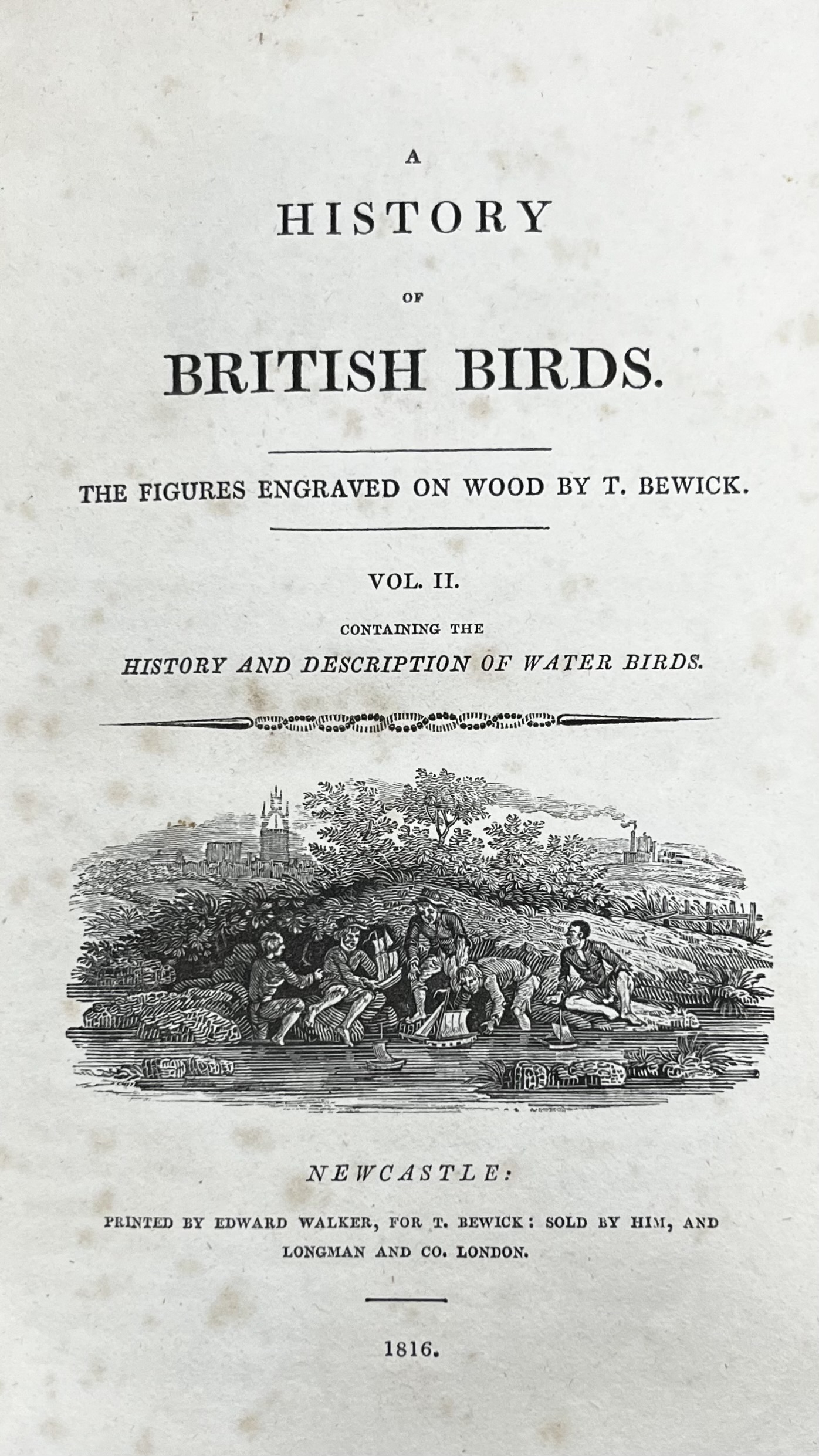
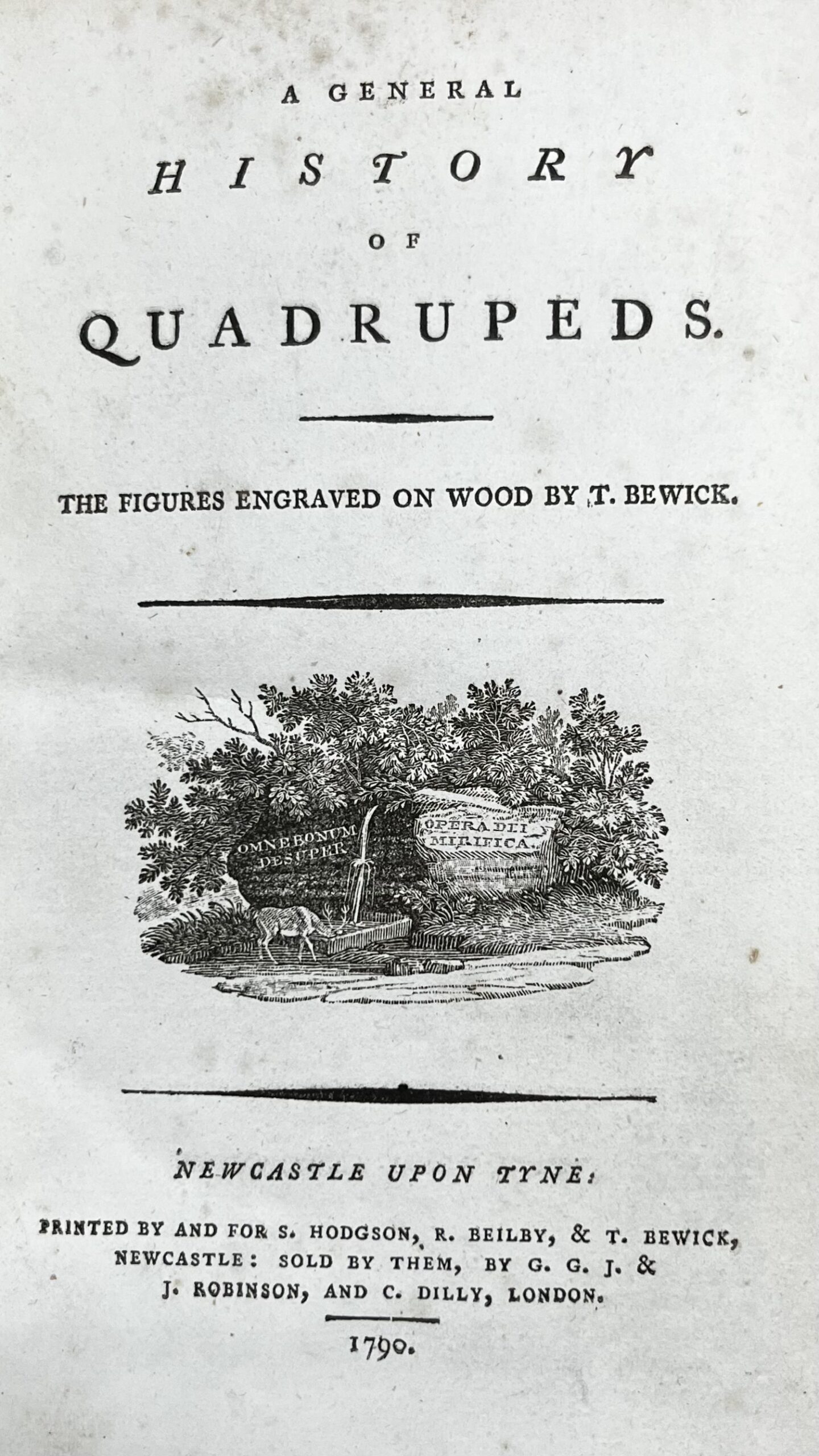
This three volume set from Thomas Bewick (1753–1828) is actually comprised of two separate works—the titular A History of British Birds (vols. I and II) and A General History of Quadrupeds.
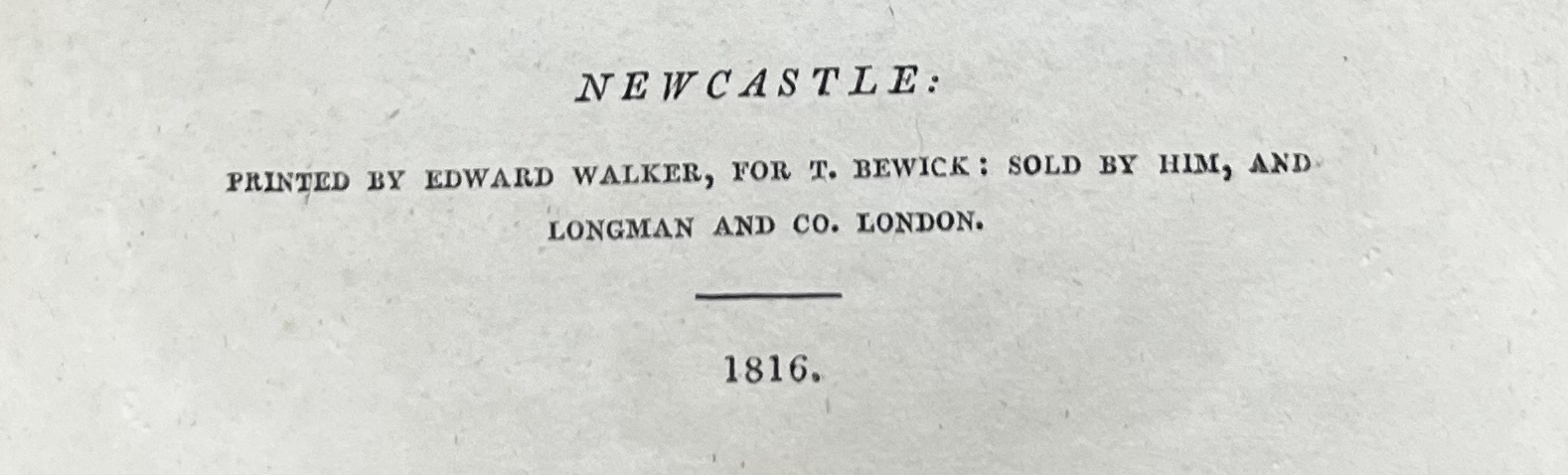
Both vol. I, History and Description of Land Birds, and vol. II, History and Description of Water Birds, were printed in Newcastle, England in 1816 by Edward Walker, intended to be sold in London by Longman and Co.
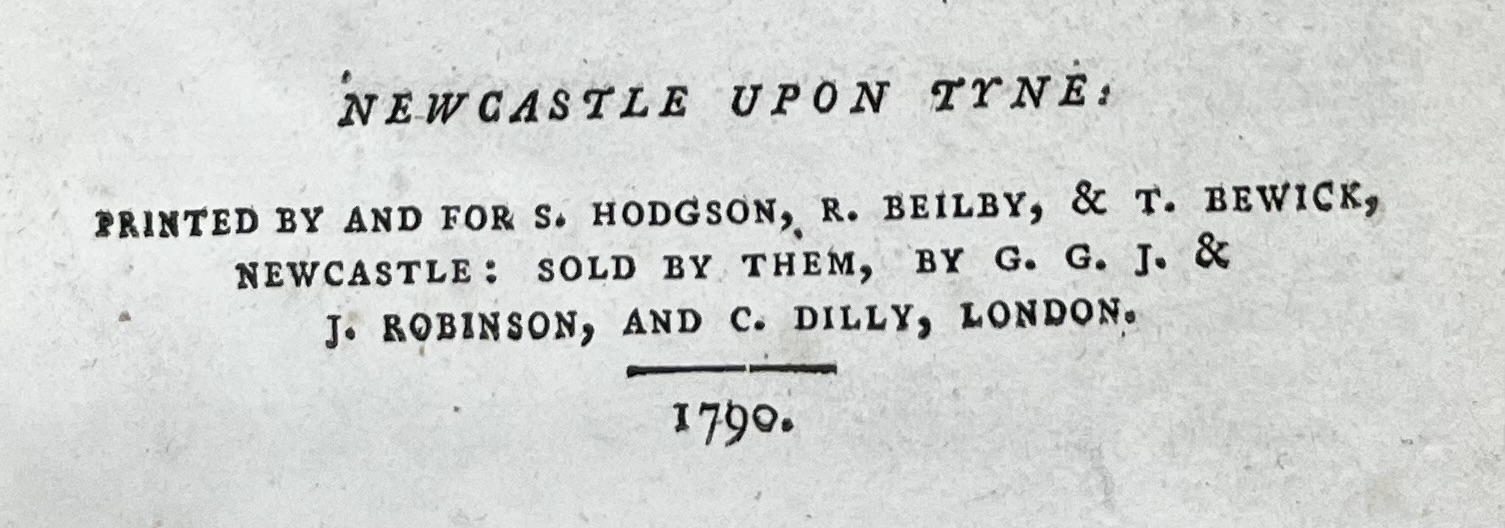
Vol. III, A General History of Quadrupeds, was printed in 1790—notably prior to the first two volumes. It was published in Newcastle by S. Hodgson, R. Beilby, and T. Bewick, and sold in Newcastle by the printers and in London by G. G. J. & J. Robinson and C. Dilly.
MSU call numbers: XX QL690.G7 B5 1816 v. 1 (vol. I), XX QL690.G7 B5 1816 v. 2 (vol. II), XX QL690.G7 B5 1816 v. 3 (vol. III)
Physical Condition
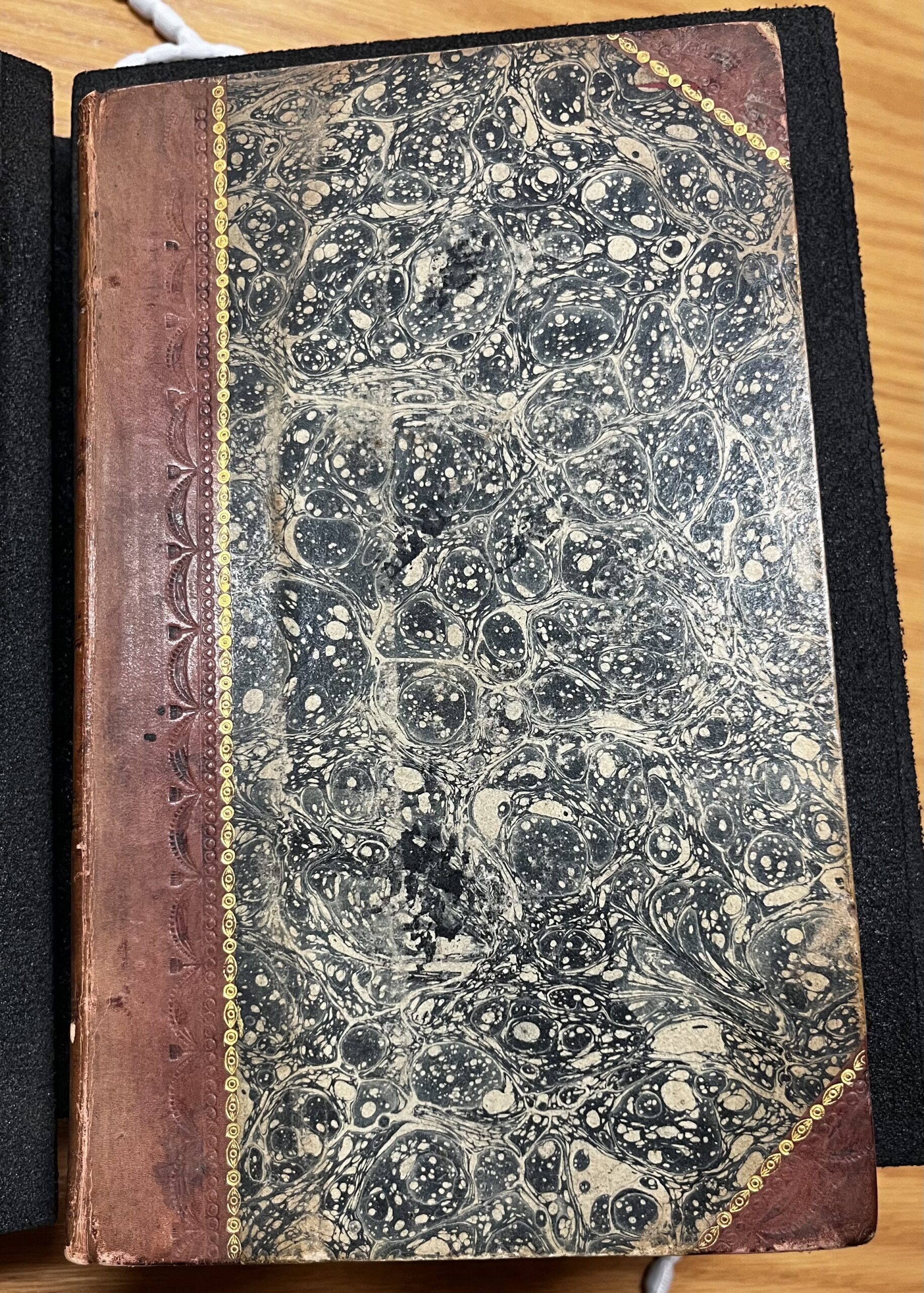
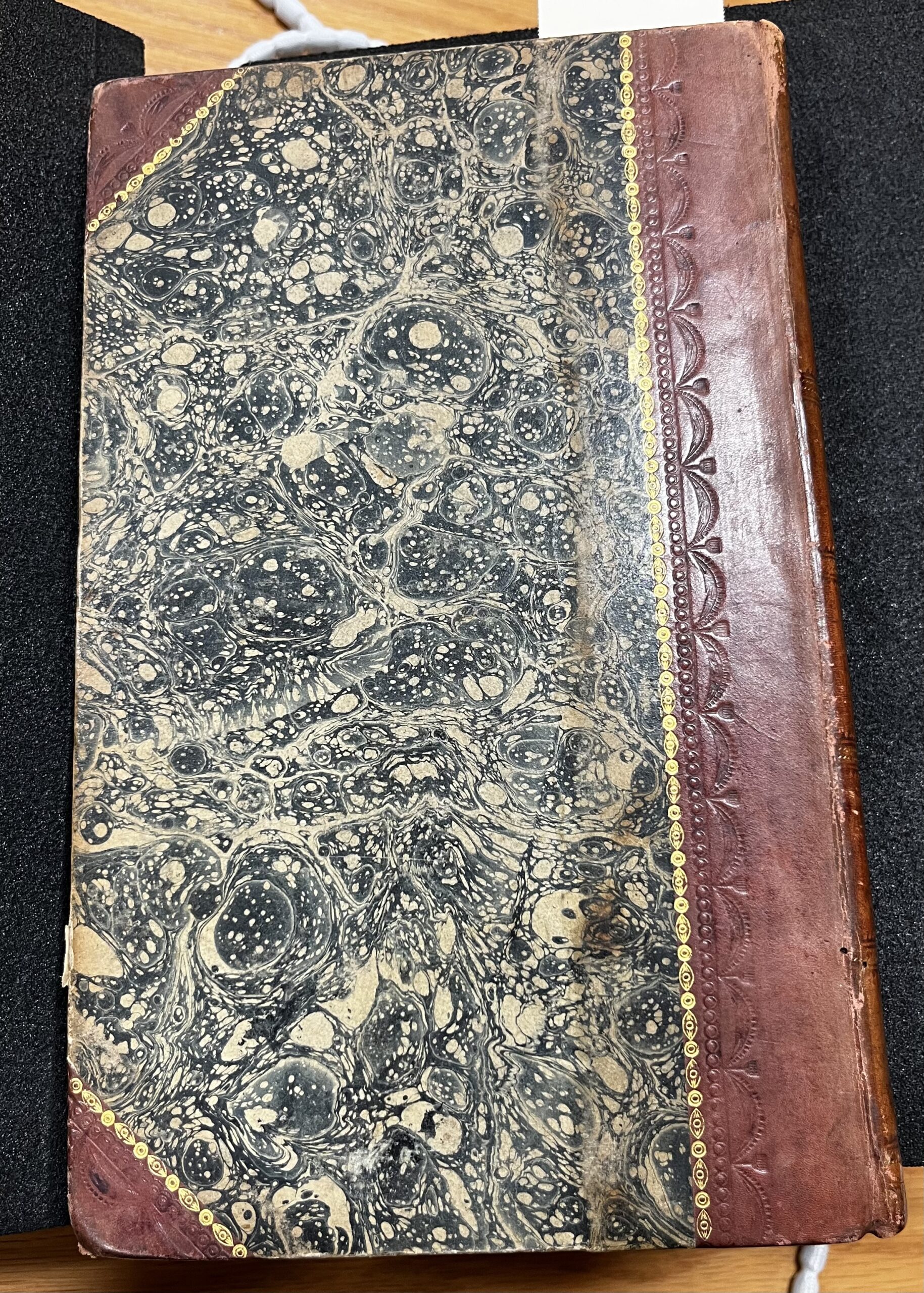
The three books have matching bindings, which is why Quadrupeds is labeled as vol. III of the set rather than being catalogued as its own work.
The volumes have contemporary marbled bindings, light gilding and tooling near the edges and on/near the spines. There are marbled edges present on all sides of all three volumes. No tears exist on any pages, and no marginalia or other markings are present in the body of the text of any of the volumes.
Vols. I and II are in excellent condition; vol. III is in good condition. Some foxing throughout each volume—most noticeable in vol. II (see images at top of page). There is a light stain on the front cover of Water Birds, and part of the back binding of Quadrupeds is torn. Altogether, there is very little evidence of use on the pages of the three volumes.



Author and Content
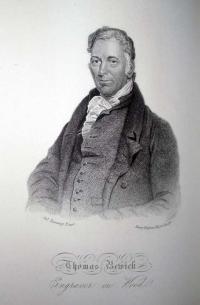
Thomas Bewick (b. 1753) was a noted nature engraver and writer from northern England. He began engraving at age 14 when he became apprenticed to Ralph Beilby in Newcastle, who would later become his business partner and help him co-create Quadrupeds (1790) and Land Birds (1797). (The first edition of Water Birds was not published until 1804.) Bewick fully took over the engraving business from Beilby after his retirement in 1798. His son, John, became his apprentice and later inherited the business after Bewick died in 1828.
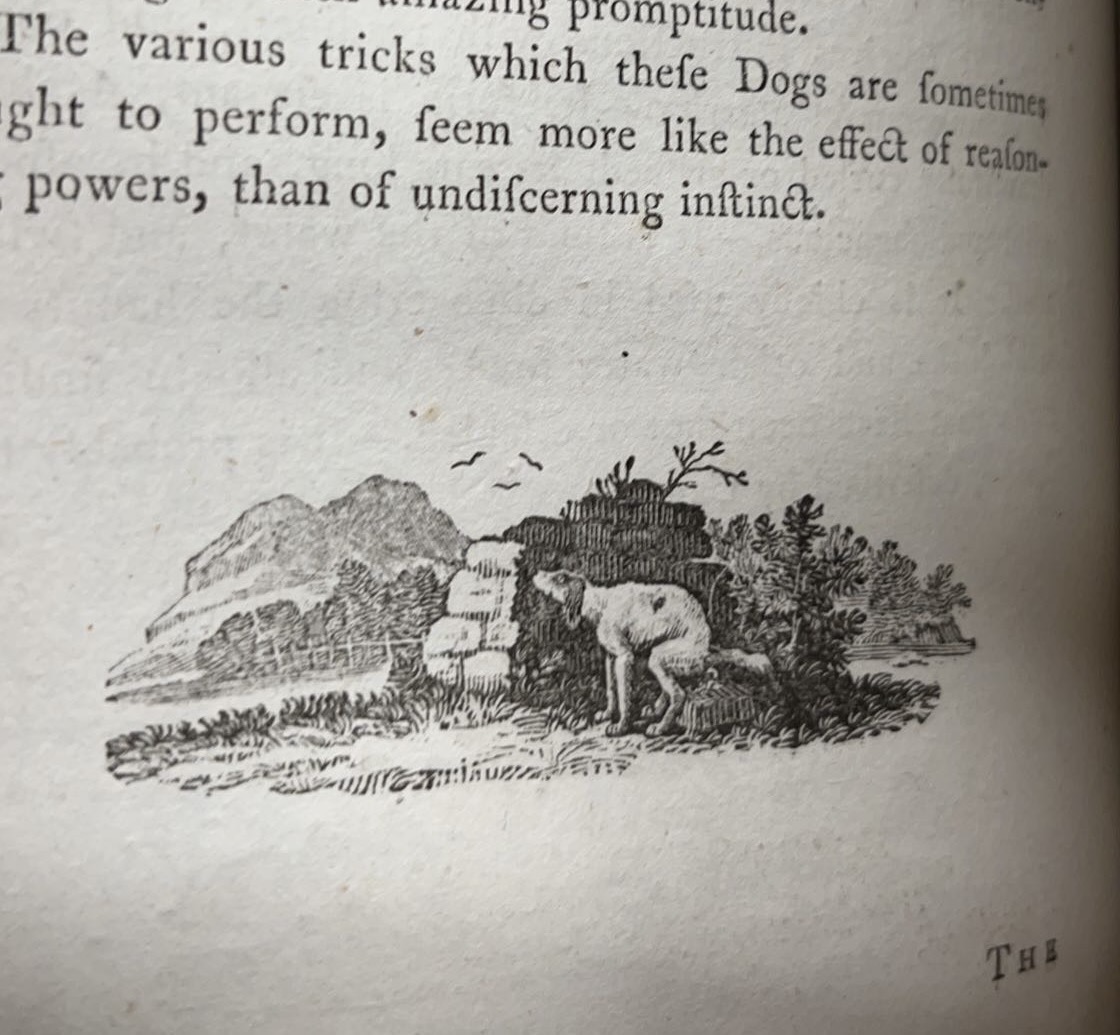
The contents of the three volumes in the MSU set are deceptively simple—each page contains an image of a bird or quadruped paired with a short descriptions of the animal. However, British Birds and Quadrupeds were both successful enough to warrant multiple republications over the next half-century, and Bewick became widely-known for his images’ accuracy and his innovative new techniques as an engraver. At the time, he made a vast range of species accessible and identifiable for the non-specialist, and today, British Birds is considered to be “the forerunner of all modern field guides.”
Fun fact: The Brontë family owned a copy of A History of British Birds, and the volumes inspired much of the sisters’ art and poetry. Charlotte Brontë even wrote Bewick’s work into the opening of Jane Eyre.
Provenance
This particular set of Bewick’s work is unique for its combination of multiple publication dates across the three guides. Both volumes of British Birds, for instance, were printed in 1816, one of a series of republications that resulted from the work’s popularity. In contrast, this set’s Quadrupeds is a first edition from 1790. Quadrupeds was likely purchased long before Land Birds and Water Birds, and then the three were later bound as a set. The following is a description of all provenance markers across all three volumes, as well as the person(s) likely responsible for them.
Publisher’s imprints: As described above, all three volumes were printed in Newcastle, England, though not at the same time. Quadrupeds was printed by S. Hodgson—a female printer and business owner—and the authors. British Birds (both 1816 volumes) were printed by Edward Walker and intended to be sold in London. It is more likely, however, that these volumes, along with volume three, were sold in Newcastle to the Collingwood family (see below).
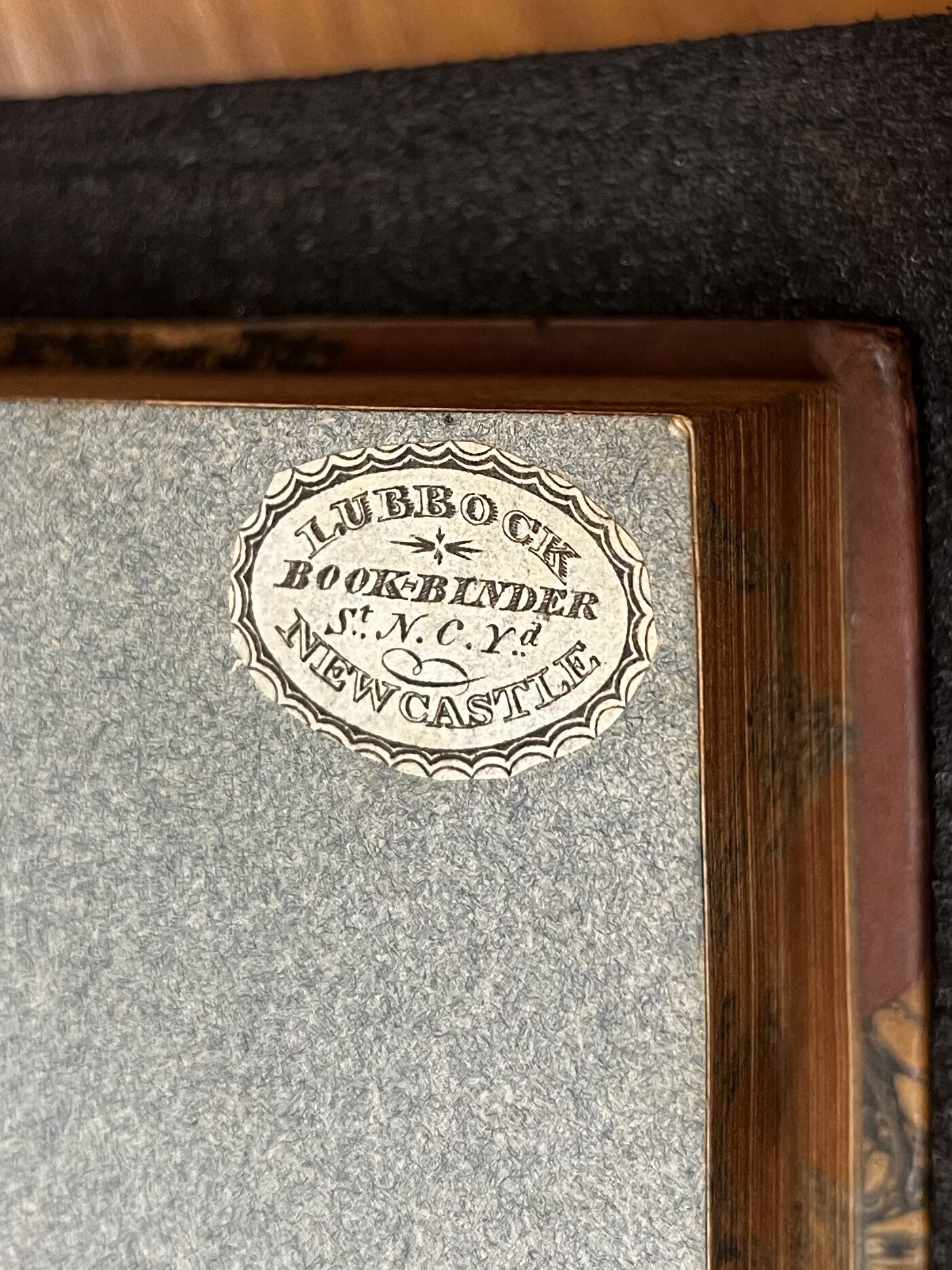
Bookbinder’s seal: The recto of the first front endleaf of each volume contains a seal from a Newcastle bookbinder, Lubbock – St. N. C. Y. d. This matches the label of William Lubbock, who was a Newcastle bookbinder active during the early nineteenth century. Based on the time that his business was in operation, it is likely that the current binding on the set is the original, which may have been commissioned by Henry J. W. Collingwood (see below) upon his purchase of the British Birds volumes.
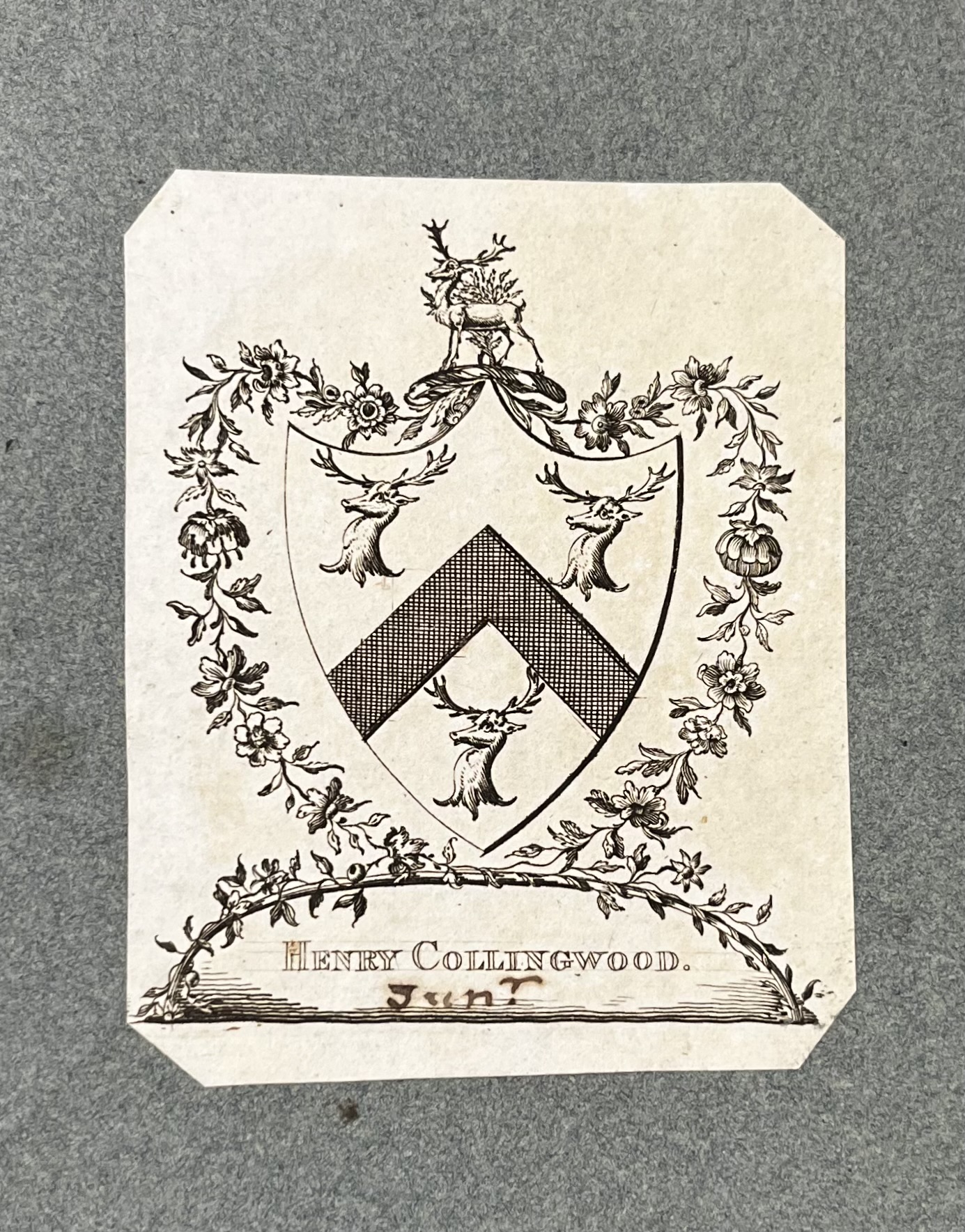
Henry Collingwood (Jr.) armorial bookplate: On the front pastedown of all three volumes (and on the back pastedown of vol. II), there is an armorial bookplate labeled with the name “Henry Collingwood.” However, on two of the three front bookplates, the letters “Junr” have been written below the name. Henry Collingwood (senior and junior) were both alive at the time of publication, so either one could plausibly be the original owner. The Collingwood family also owned an estate in Northumberland, further solidifying them as the likely first owners.
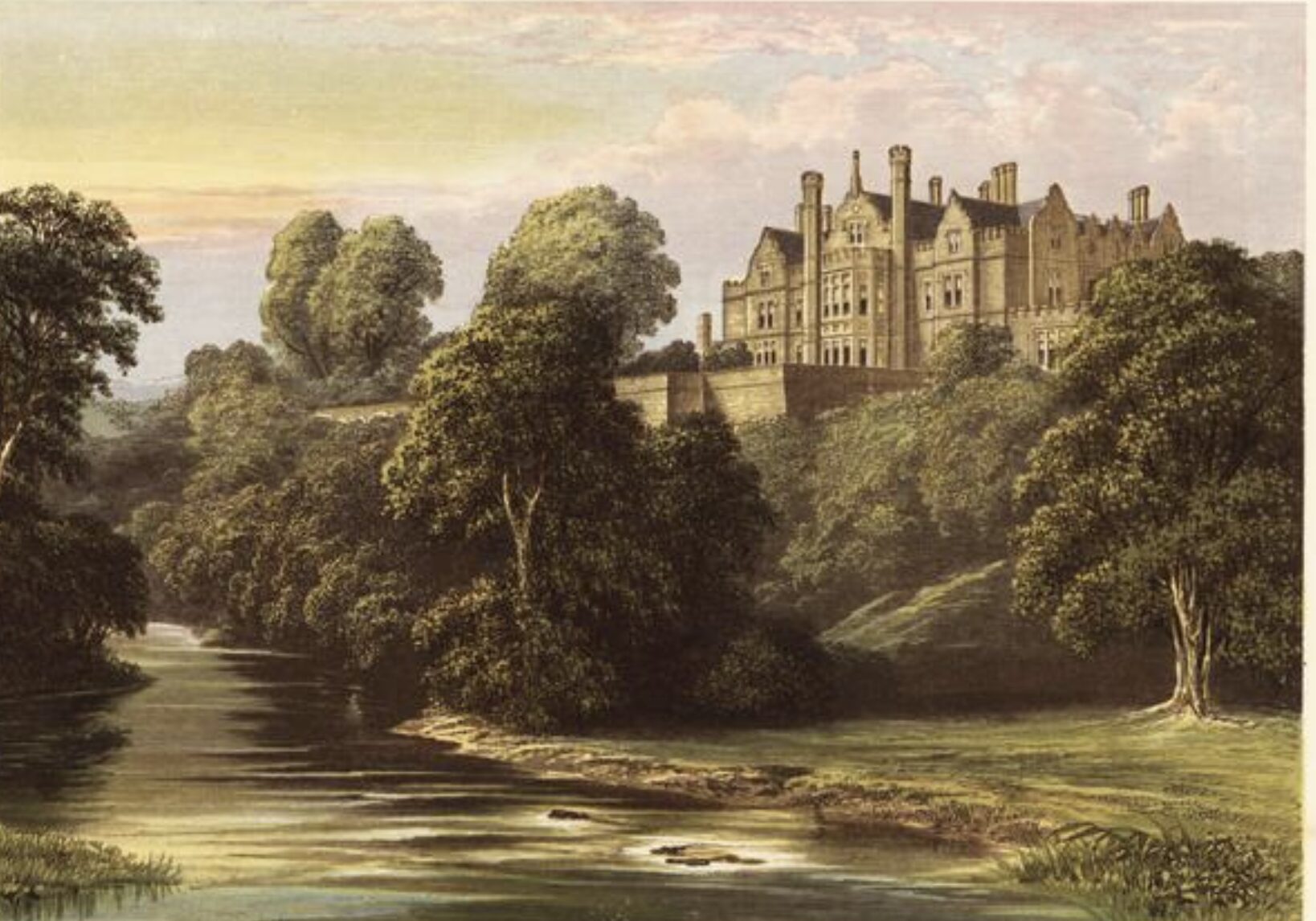
“HJWC” monogram: On the verso of the first front endleaf of all three volumes, there is a monogram and printed image of a stag in front of a small tree. This is the crest of the Collingwood family, and “HJWC” are the initials of Henry John William Collingwood, or Henry Collingwood Jr. The page that this crest is printed on also contains a unique “1819” watermark that is not present on any other page in the book (pictured below). The watermark serves as evidence that this page was either inserted or bound into the book instead of the monogram and crest being stamped onto an existing page. This suggests that the books have always belonged to Henry J. W. Collingwood, not his father. The use of the “Henry Collingwood” bookplates may have been simply out of convenience—they were already printed with the family coat of arms, and only needed slight modification to designate “Junr” as the owner.
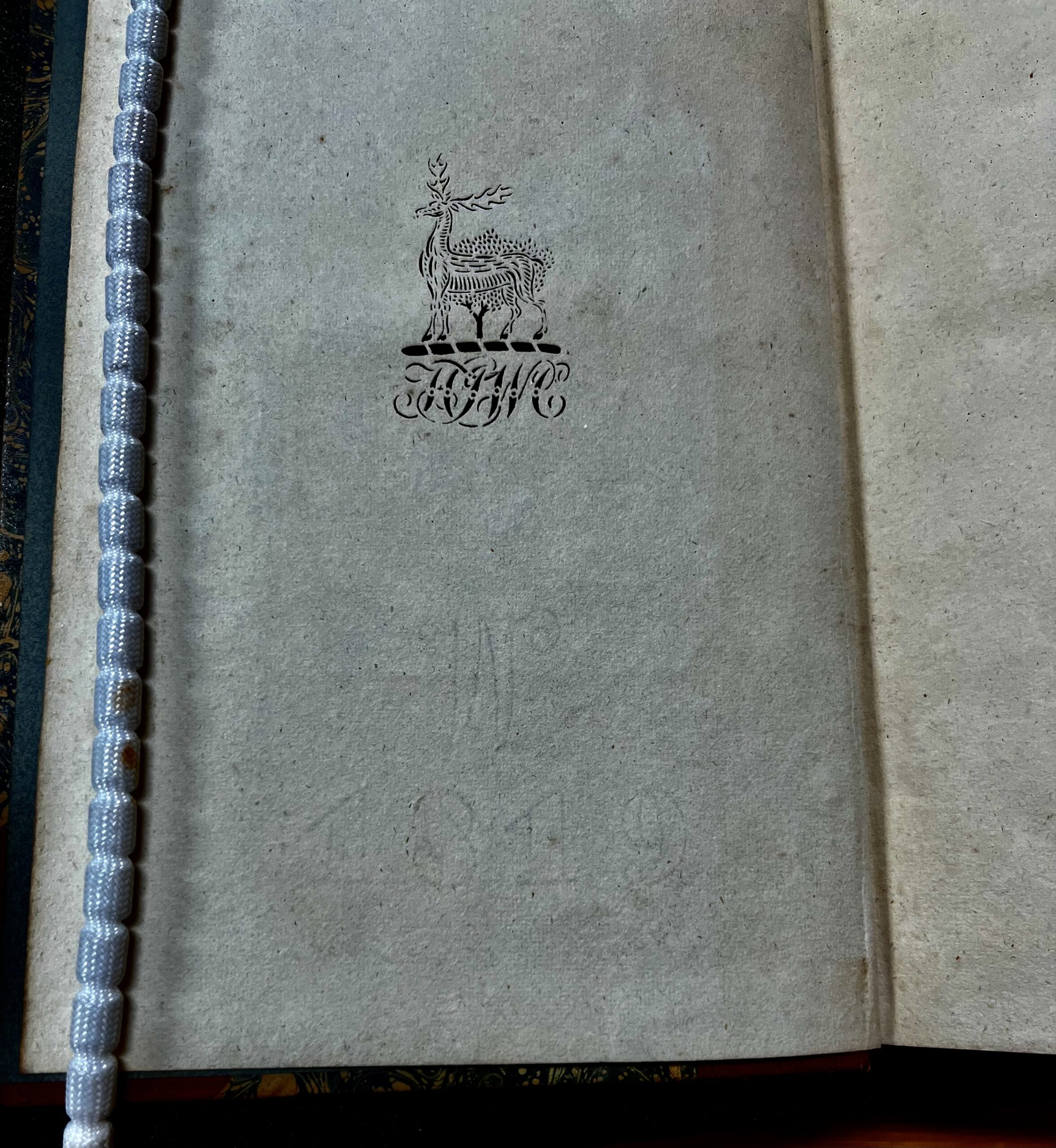
There are no other signs of individual ownership until W. D. Chase’s inscription written in 1978 (described below), which may indicate that this set was passed down through the Collingwood family until it was bought by a bookseller.
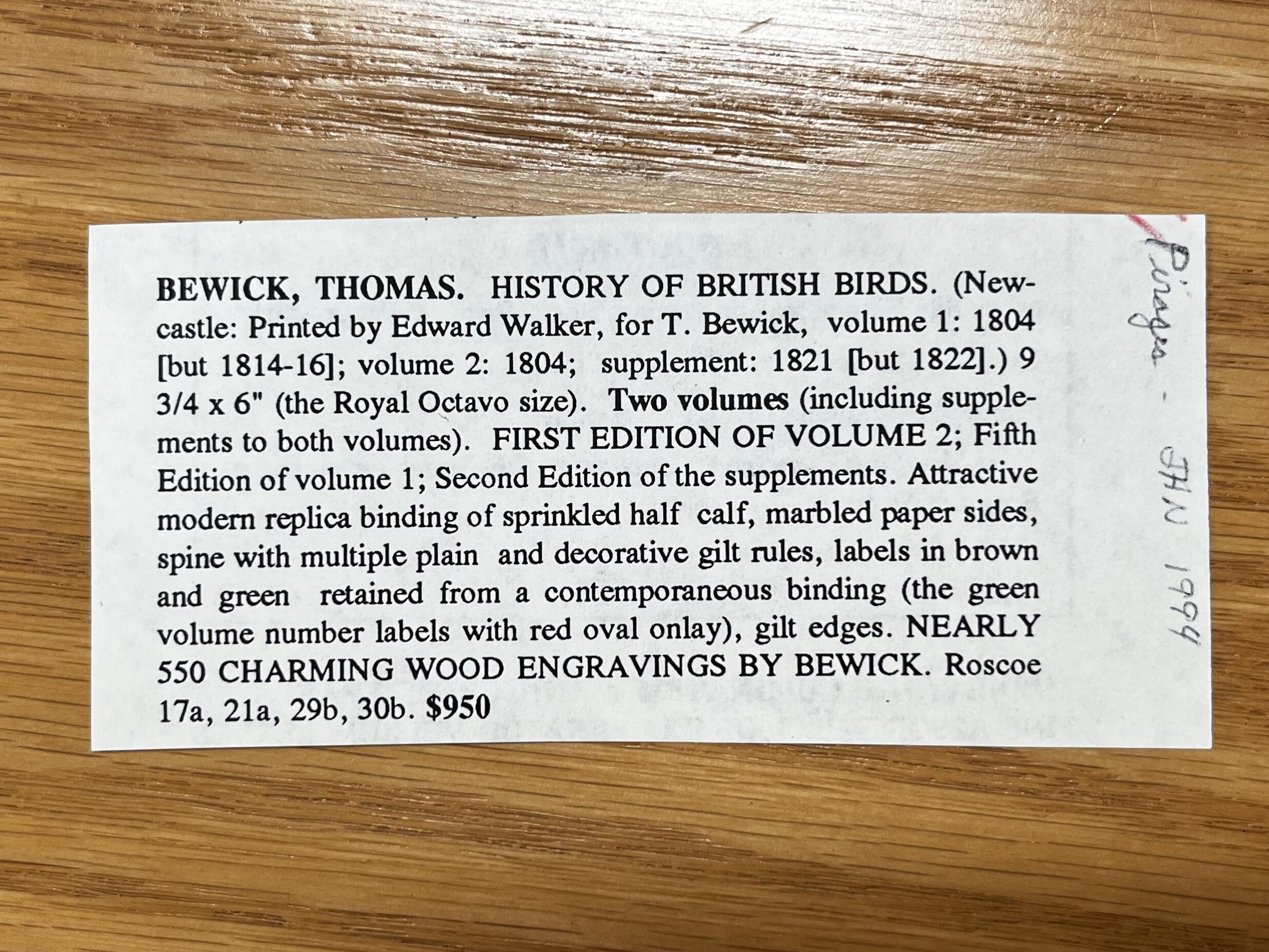
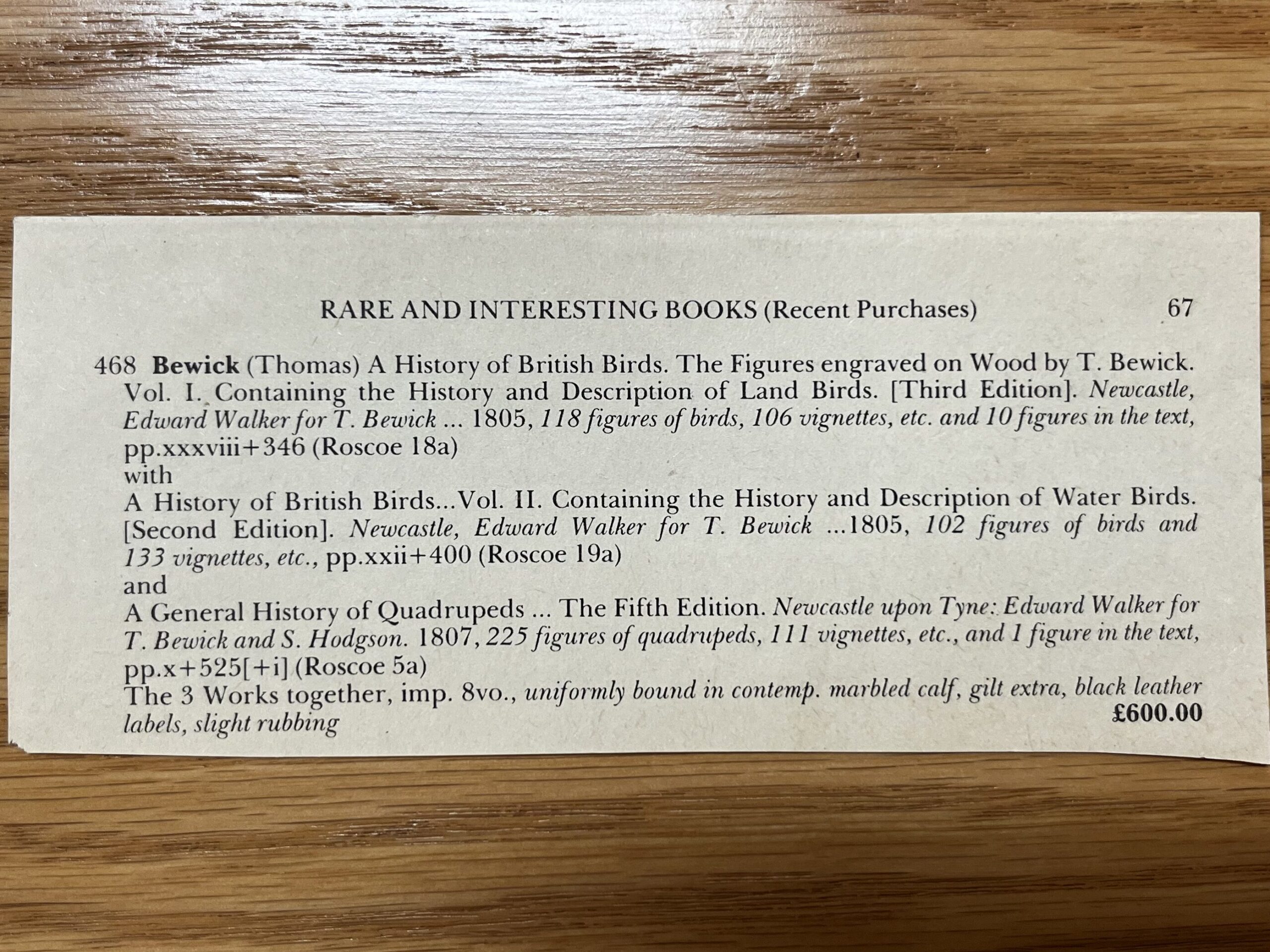
Bookseller descriptions, bookseller ownership materials: Volumes I and III both contain insertions from various rare book sellers. Volume I has a Pirages 1994 description as well as a cutout from a Blackwell’s Rare Books catalogue (date unknown). Neither of the descriptions in these clippings match the editions in the MSU set, suggesting the collector was simply keeping track of other volumes of Bewick’s works that existed elsewhere.
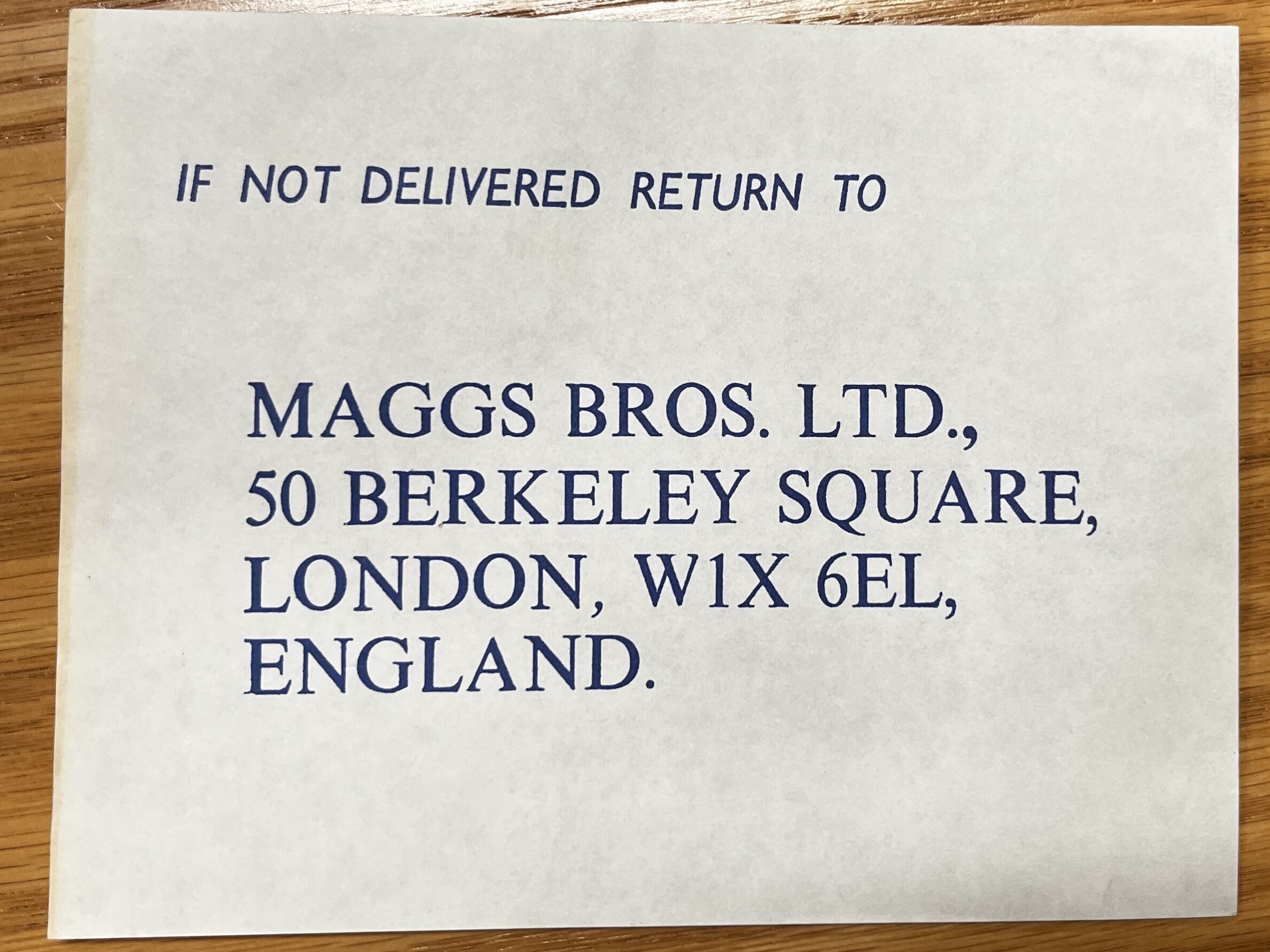
In Quadrupeds, however, there is a half-sheet inserted into the middle of the volume that asks for the book to be returned to a Maggs Bros. shop at the address 50 Berkeley Square, London, W1X 6EL, England. This insertion implies actual ownership by the bookseller because it is not a descriptive clipping that one might keep alongside the text like the others. Because it is unlikely that W. D. Chase (below), an American collector, bought the set from Newcastle and subsequently sold it back to a London business, it can be assumed that Maggs Bros. bought the volumes from the Collingwood estate and eventually sold them to Chase. The postcode W1X further supports this: W1X has been defunct since at least 2000, meaning it was probably not in Maggs Bros.’ inventory any time this century.

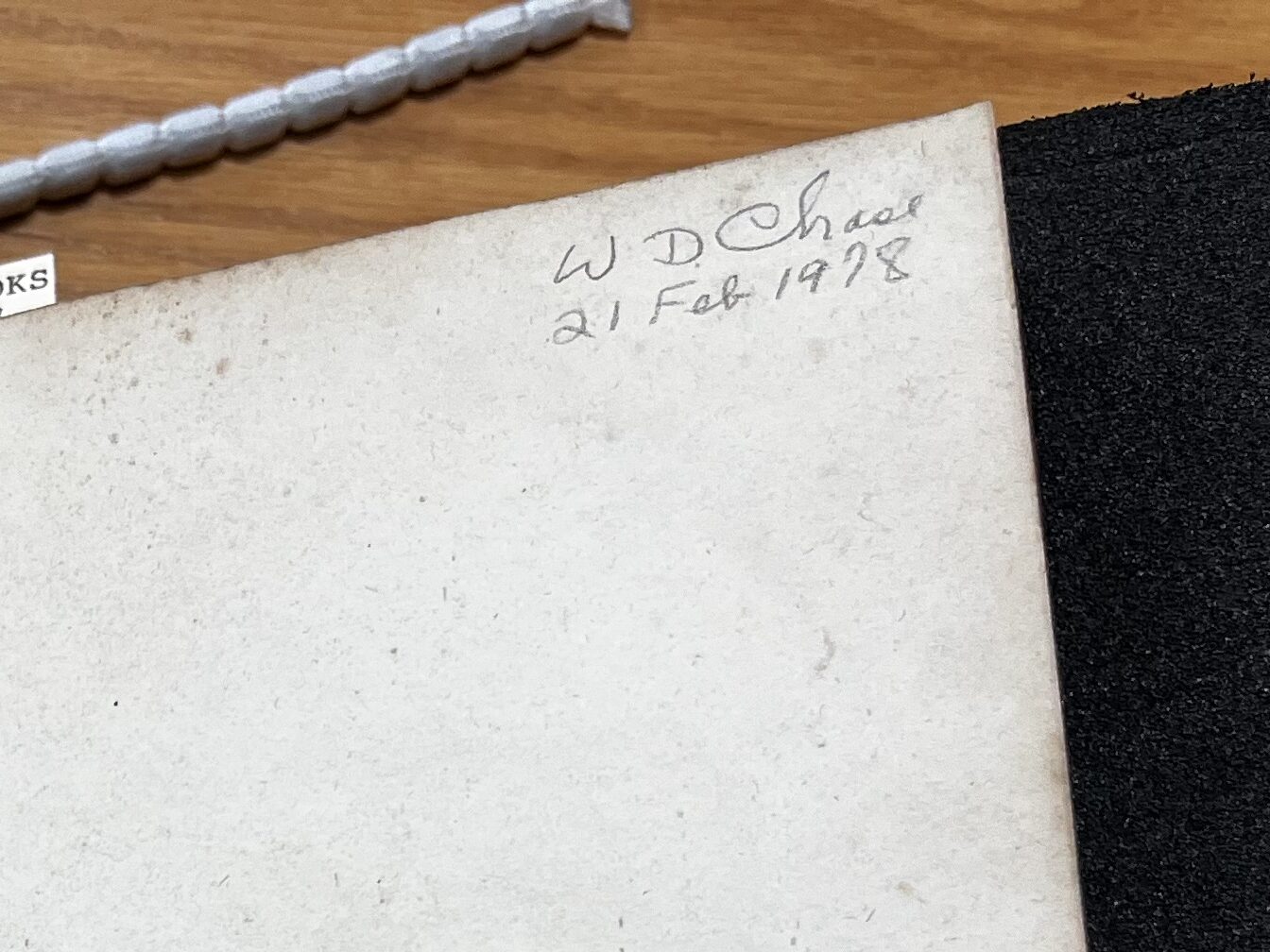
W. D. Chase autograph: On the top right corner of the recto of the second endleaf in each volume, there is a name and date that reads “W D Chase / 21 Feb 1978,” which is attributable to William DeRoy Chase of Ann Arbor, Michigan. During his life, Chase was a curator and collector of books, and there are many other books in Special Collections that once belonged to him. Other books donated to the MSU collection from Chase also contain clippings of various bookseller descriptions, similar to the ones found in volume I (shown above). The set must have been donated to MSU between the years 1994 and 2020 because ’94 is the latest date verifiably assigned to one of the bookseller clippings, and Chase passed away in 2020. There are no publicly available records that specify the exact year that the three volumes entered the MSU collection.
Besides his name and date, Chase left no marginalia in the text.
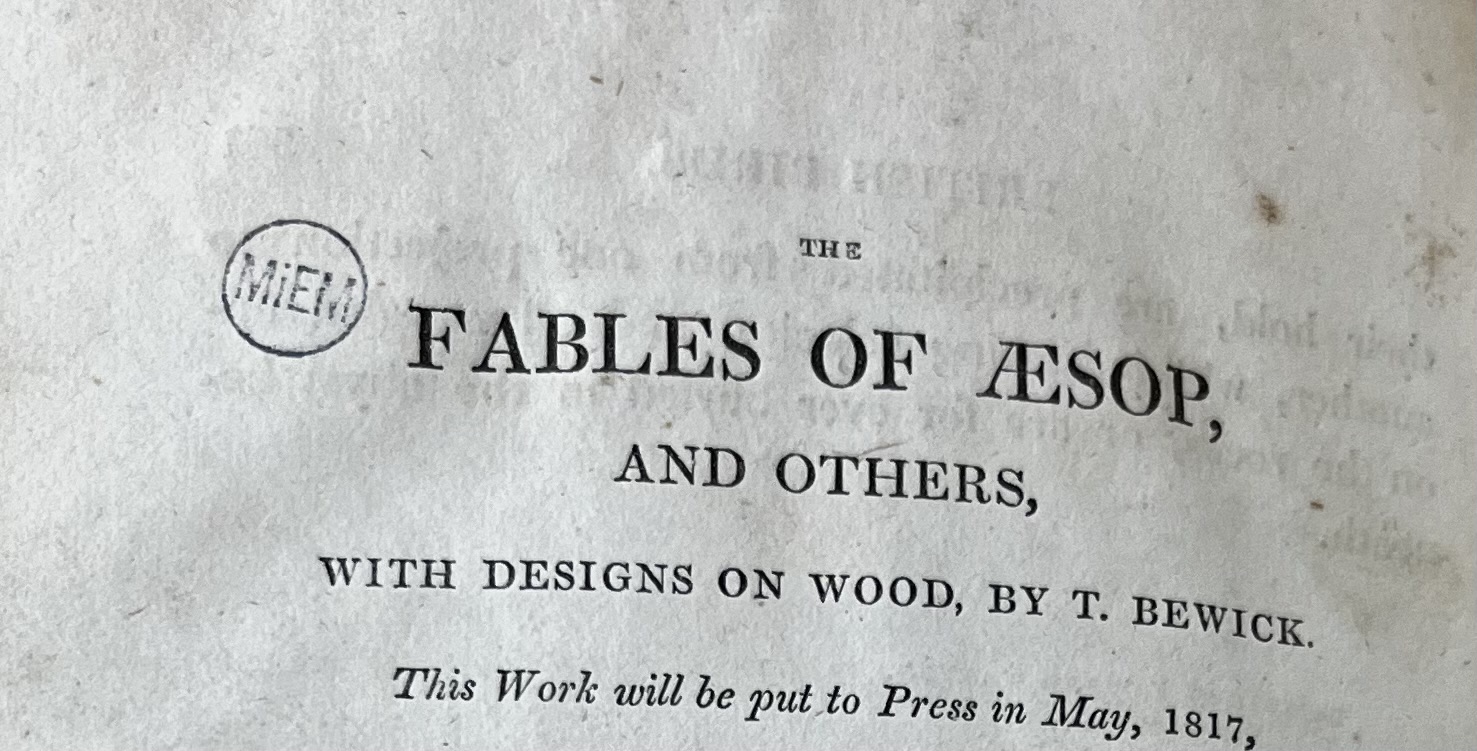
MSU stamp: In various locations throughout the three texts, there are circle stamps with the letters “MiEM” in the center. These indicate Michigan State University’s ownership of the books.
Sources
- Thomas Bewick – life
- Thomas Bewick – impact of work
- Thomas Bewick – image
- British Birds and the Brontës
- Collingwood family crest and lineage
- William Chase
- Bookbinder’s seal
- Lilburn Tower – image
- Lilburn Tower – lineage
- Source #3 – Mackenzie, Eneas (1825). An Historical, Topographical and Descriptive View of the County of Northumberland, Vol. II, pp. 14–15. Newcastle upon Tyne: Mackenzie and Dent.
Created by Sydney Logsdon
HST 475, Fall 2023
