Author: John Abercrombie and Thomas Mawe Title: Every Man His Own Gardener Language: English Place of Publication: London, England Printer: S. Hamilton Year Published: 1800 Collection: Stephen O. Murray and Keelung Hong Special Collections – Rare Books Call Number: XX SB97 .A3 1800 (links to MSU catalog page)
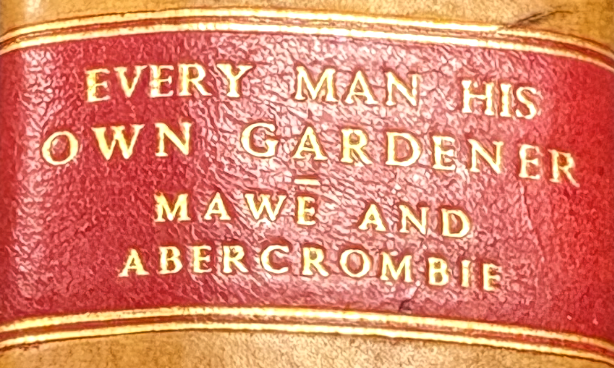
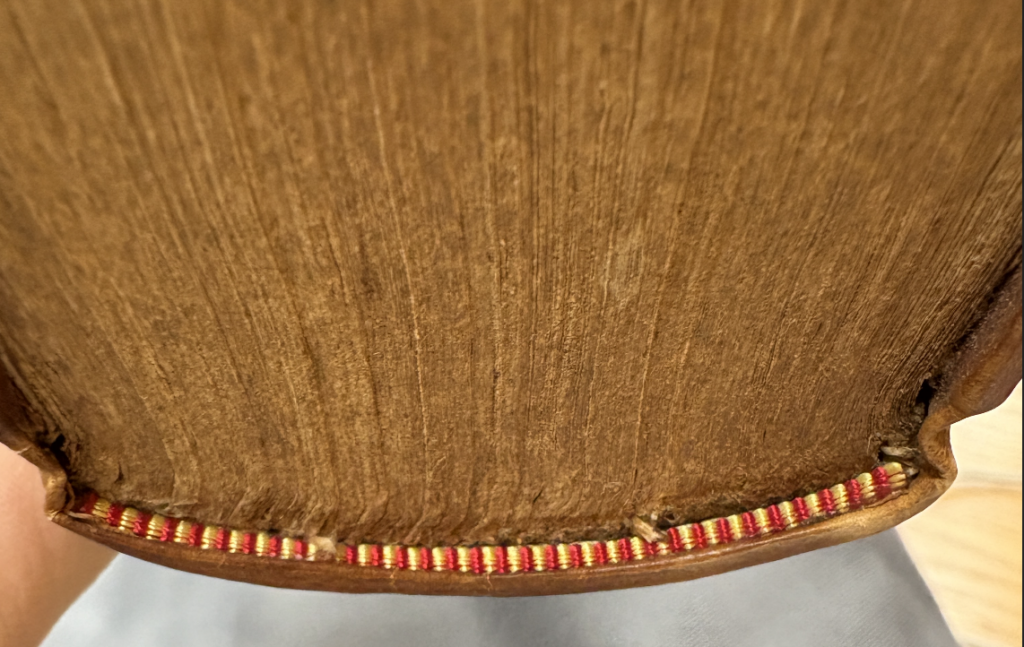
Every Man His Own Gardener is in good condition, with little damage to the spine, or main text block. The brown leather on the boards is slightly cracked, and you can see some missing pieces, but that’s the extent of the damage. The lettering on the spine is done in gold, and the title is on a band of red leather. The leather on the spine looks newer than the boards, and the head and tail bands are done in a very new-looking red and gold. There is printing waste visible under both paste downs, and it cannot be opened all the way without putting stress on the spine.
Book Origin
The full title of this work is
Every Man His Own Gardener : Being A New And Much More Complete Gardener’s Calendar And General Directory Than Any One Hitherto Published : Containing Not Only An Account Of What Work Is Necessary To Be Done In The Kitchen And Fruit Garden, Pleasure Ground, Flower Garden And Shrubbery, Nursery, Greenhouse And Hot-house, For Every Month In The Year, But Also Ample Practical Directions For Performing The Said Work : Explaining Likewise The Methods Of Propagating And Raising The Different Sorts Of Plants, Flowers, Trees, &c. In Each Department, To Best Perfection. With Complete Directions For Forcing The Different Kinds Of Choice Plants, Flowers, And Fruits To Early Perfection, In Hot-beds, Hot-houses, Hot-walls, Forcing-frames, Forcing-houses, Vineries, &c. Also Particular Directions Relative To Soil And Situation, Adapted To The Different Sorts Of Plants And Trees, &c And To The Whole Are Now Added, Very Considerably Improved, And Greatly Enlarged, Complete Classical Lists Of Kitchen-garden Plants, Fruit Trees, Forest And Ornamental Trees, Flowering Shrubs, Evergreens, Annual, Biennial, And Perennial Fibrous-rooted Flowers, Bulbous And Tuberous Rooted Flowers, Green-house, And Hot-house Plants, Proper For Cultivation In The English Gardens And Plantations, &c. : With General Explanations, Under Each Class, Of The Nature Of Growth, Respective Properities, And Essentials Of General Culture
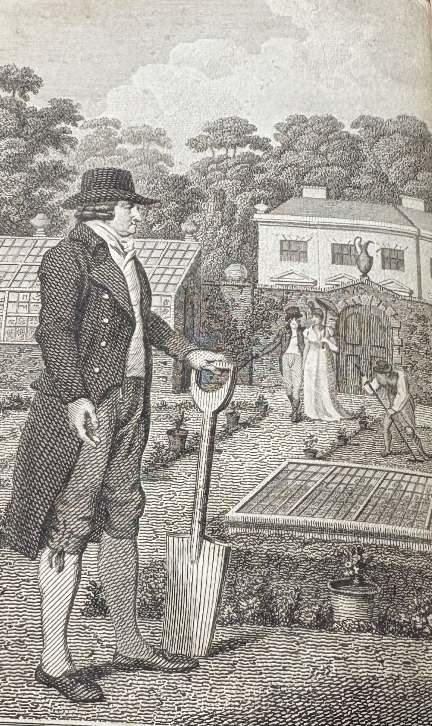
Every Man His Own Gardener is attributed to both Thomas Mawe, who was gardener for the Duke of Leeds, and John Abercrombie (1726-1806), who had worked as a gardener for 60 years, and had published a previous book on gardening, The Universal Gardener and Botanist. When originally published, only Mawe was credited as an author, but in the later editions, Abercrombie was credited as an author alongside him on the title page, and the sole author in the preface. Mawe did not contribute anything more than suggestions to the book, and was paid twenty pounds for allowing his name to be on the title page.1
Provenance
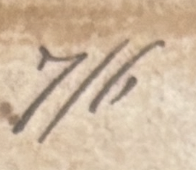
I believe this 7/6, to represent 7 shillings, 6 pence, is the first mark that was made in the book, as a booksellers price mark. It matches the printed price within the book, so the price likely corresponds to its first sale, as it would have been lowered for subsequent sales.
7/6
[Price 7s. 6d. Bound.]
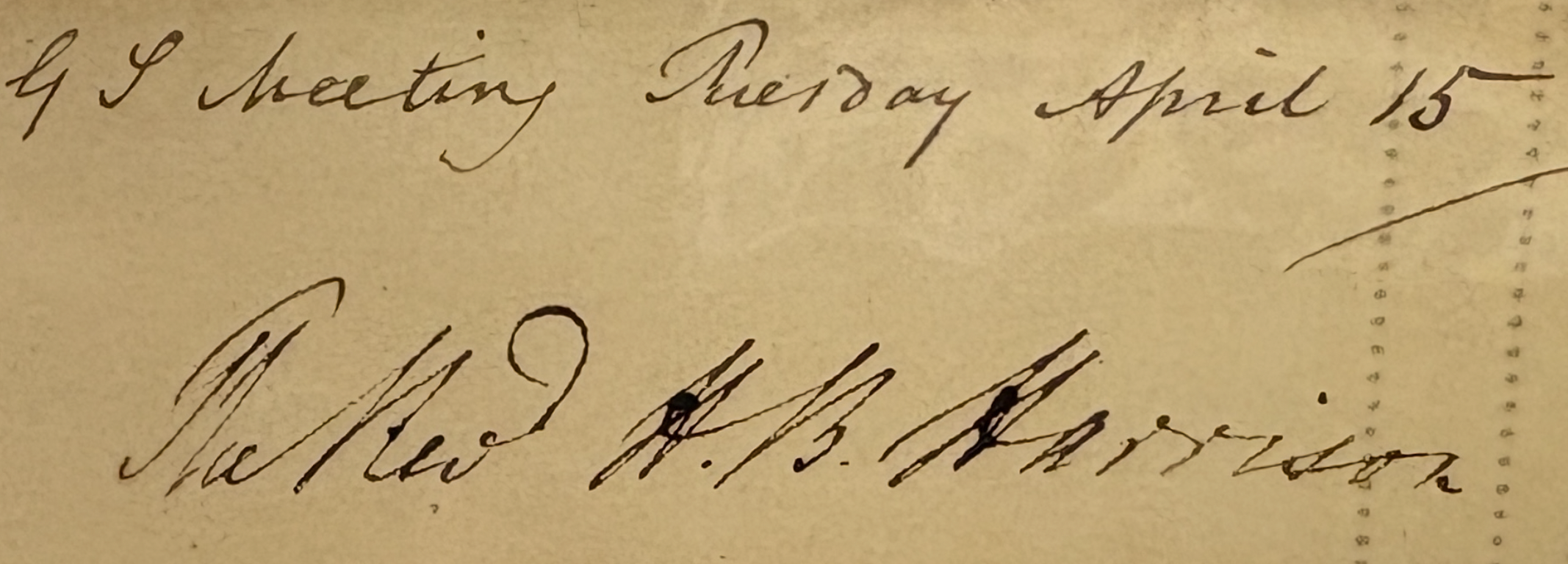
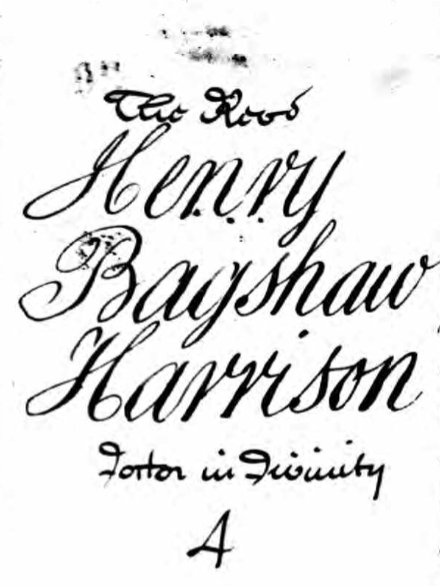
GS Meeting Tuesday April 15 The Rev H.B Harrison
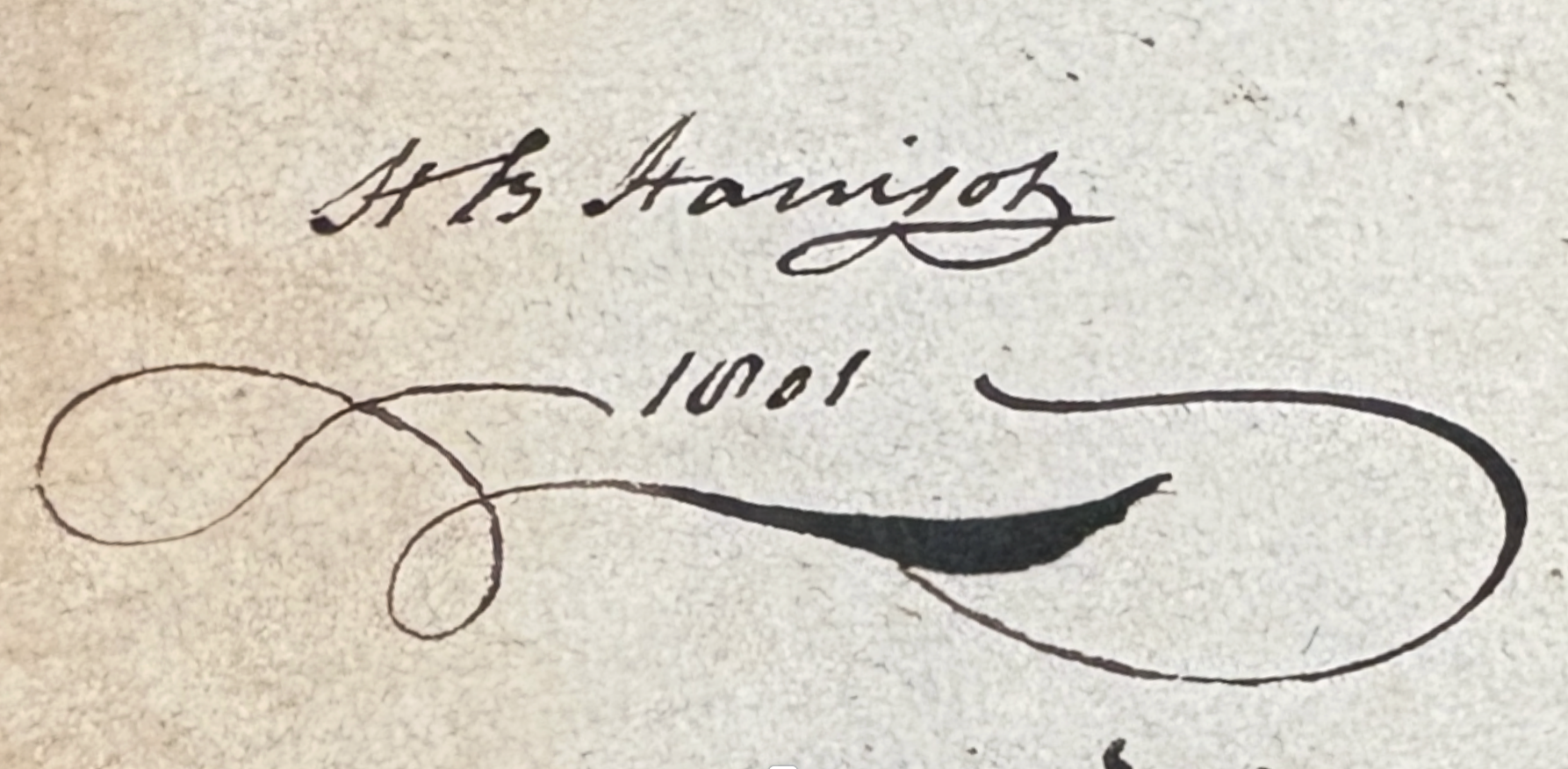
H B Harrison. 1801
The only evidence of an owner of this book are the notes of a Reverend H.B Harrison. His name is signed inside the book on the front paste down with the year 1801, and also on a torn piece of paper, which references a meeting he attended on April 15th. He was also likely the first, or one of the first owners of the book, as his signature is dated only a year after the publication. He seems to be very passionate about gardening, which is why he owns this book, and makes notes throughout.
Online I was able to find a record of a rectory in Bugbrooke, Northamptonshire, England, now called Park or New Creation Hall, that was built for the Rev. H.B Harrison in 18152. With that location, I was able to find the grave of a Rev. Henry Bagshaw Harrison, who was the Rector of Bugbrooke Parish from 1789, until his death in 18303. I also found his will, which let me know he held a doctorate of divinity4.
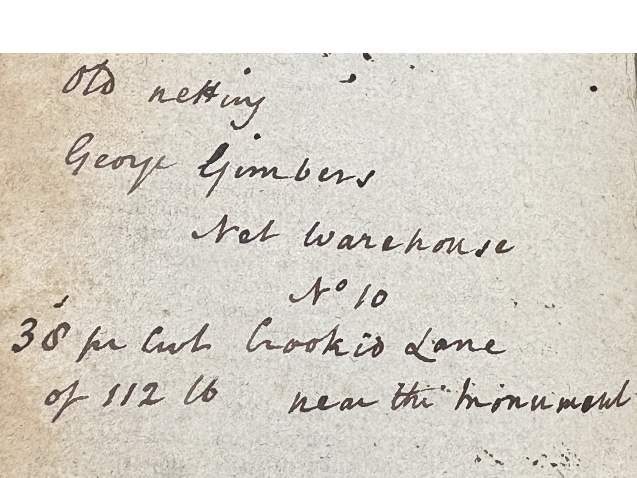
One of the notes made by Rev. Harrison inside the book refers to him buying old netting from a George Gimber, and the location of the warehouse. The netting was 3 shillings, 8 pence per hundredweight (abbreviated in the note as “cwt”) of 112 pound net.
I was able to find census records of George Gimber, who lived at Number 10 Crooked lane, and sold fishing-related supplies.7 The purchase was for the garden, to keep insects or animals from eating the plants, which is why it was noted in the book.
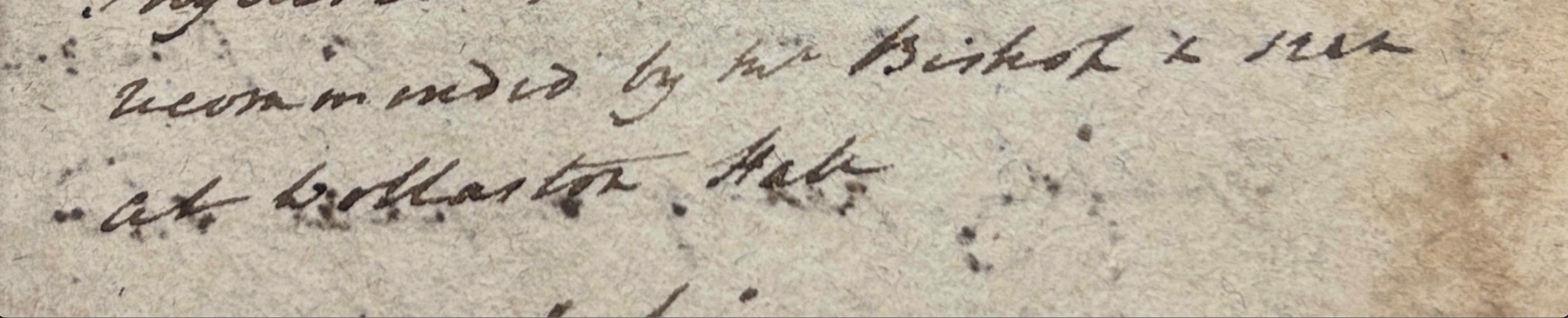
Recommended by Mr. Bishop + seen at Wollaston Hall
Another note made by the Reverend inside the book notes that two types of plants were seen and recommended to him by a Mr. Bishop at Wollaston Hall. I was not able to find a record of Mr. Bishop that I was confident in saying was the right one.
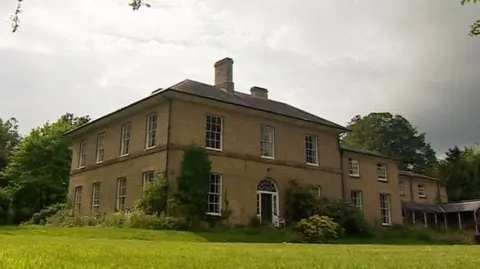
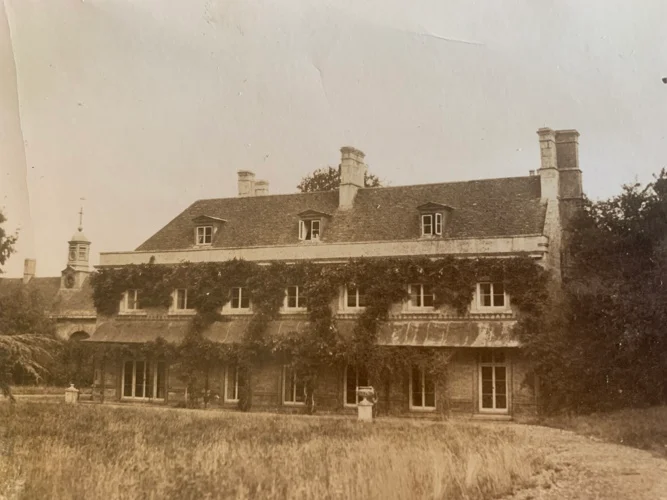
There are a few Wollaston Halls in England, and even more with very similar names. This is the one that seems to be most likely to be the one referenced in the book, as it is traveling distance from Bugbrooke, and it is more of a country house than the other options, and would be more likely to have a garden.8
Wollaston Hall, undated photo
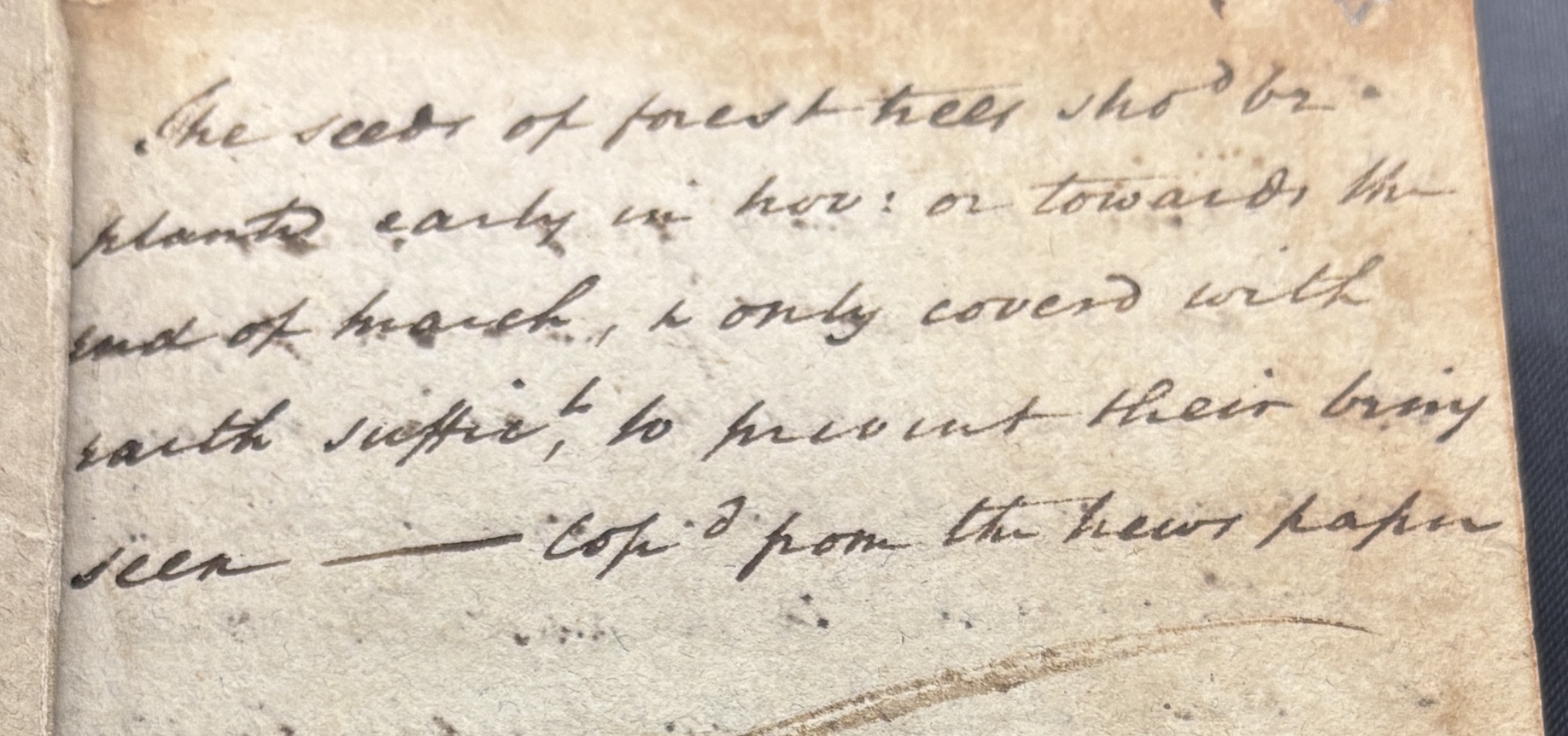
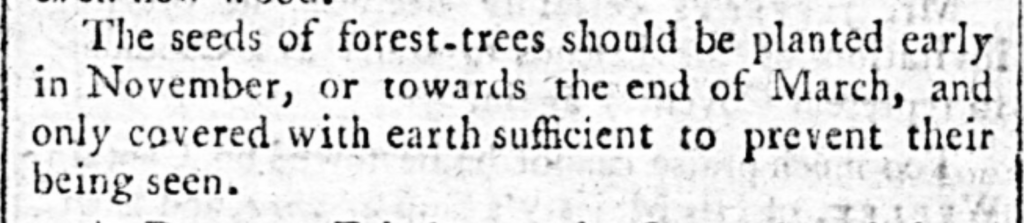
“The seeds of forest trees should be planted early in Nov: or towards the end of March + only covered with earth sufficient to prevent their being seen – copied from the news paper“
The last written note that helped me place when and where the Reverend was from was this passage. I was able to place this as being from the London Sun on the 6th of May 1802, a Thursday. The text is very similar, excepting some abbreviations Rev. Harrison made while copying.
All the writing I’ve found in the book seems to be from Rev. Harrison, so it is a mystery to me what happened to the book after it left his possession. He died in 1830, and my next confirmed event is in 2022, when Every Man His Own Gardener was purchased from an unrecorded bookseller by the Michigan State University Special Collections. It now resides there, in the Rare Books Collection, to be used for teaching and research.
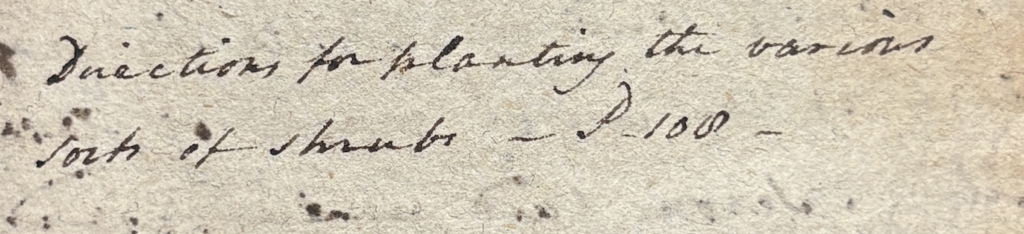
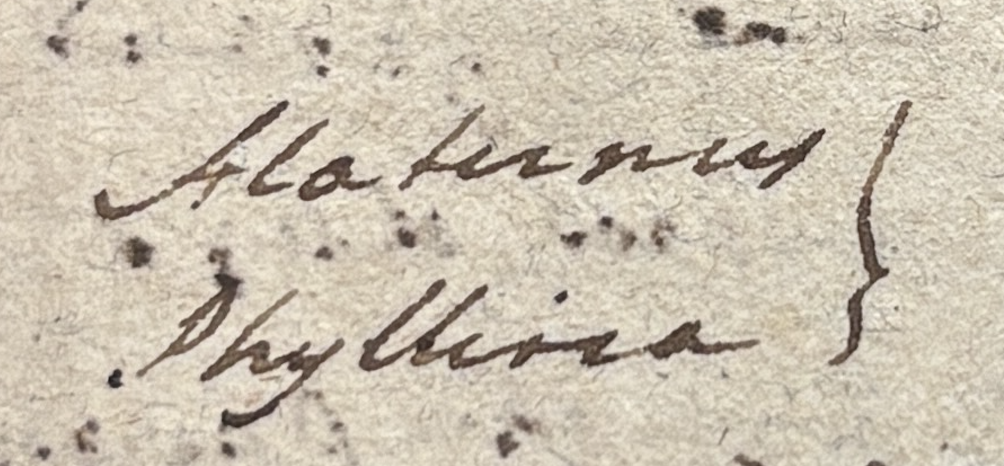
Directions for planting the various sorts of shrubs _ p100_
Alaternus Phyllira (may be an older spelling of Phillyrea)
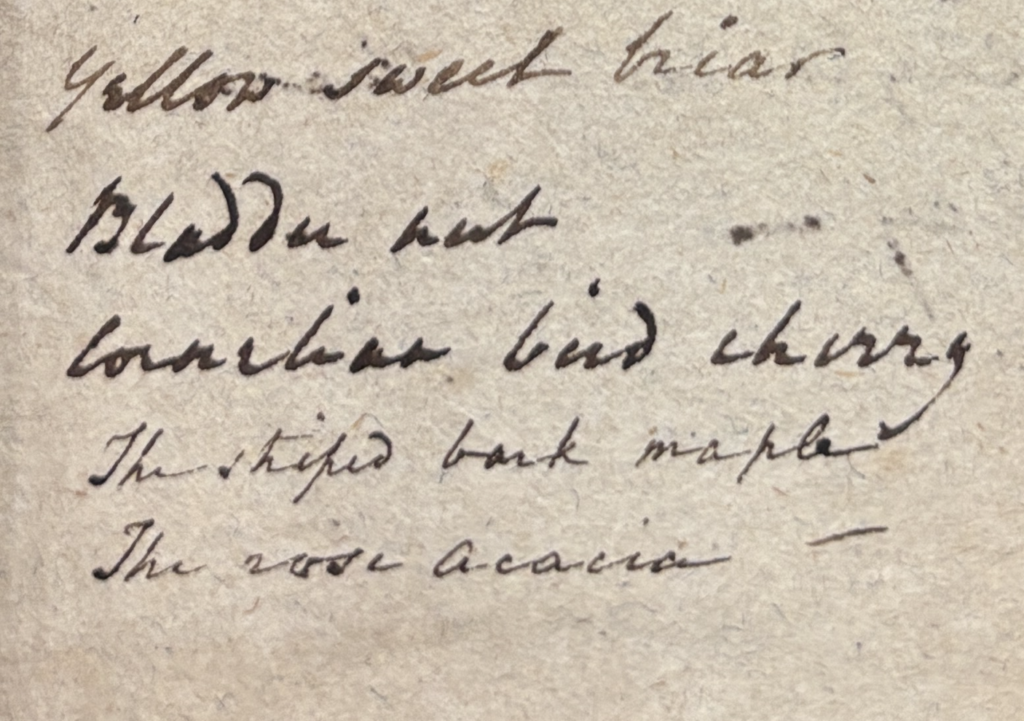
Yellow Sweet Briar Bladder Nut Cornelian Bird Cherry The Striped Bark Maple The Rose Acacia
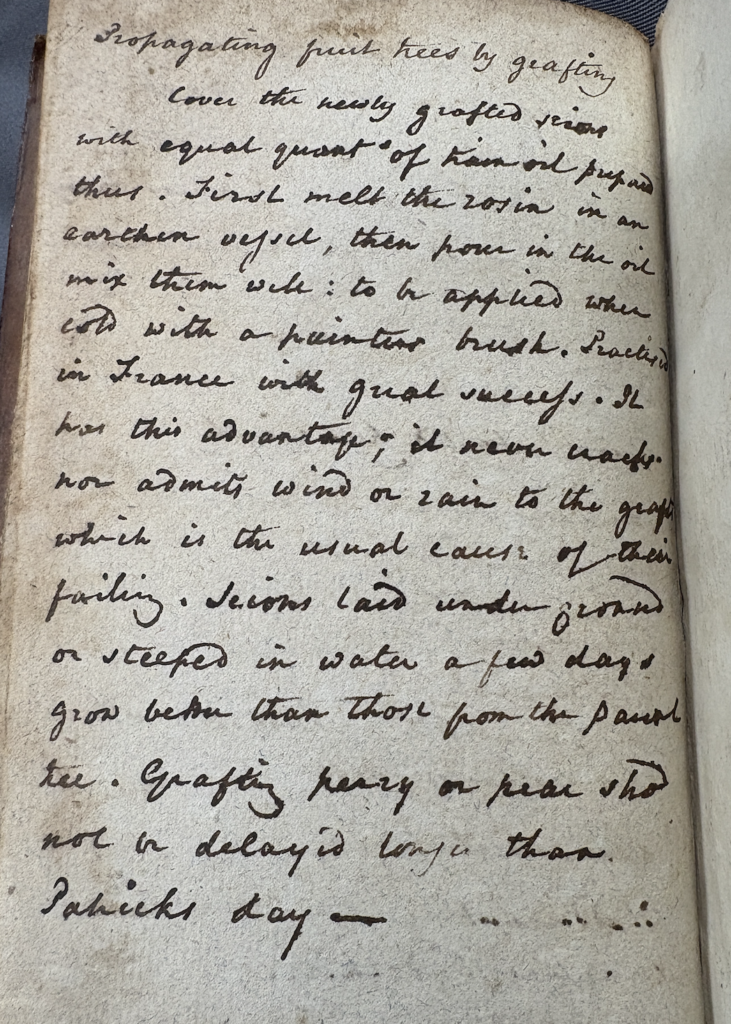
Propagating Fruit Trees By Grafting
Cover the newly grafted scions with equal quanties of hair and pulp oil thus. First melt the rosin in an earthen vessel, then pour in the oil, mix them well : to be applied when cold with a painters brush. Practiced in France with great success. It has this advantage; it never cracks nor admits wind or rain to the ground which is the usual cause of their failing. Scions laid under ground grow better than those from the parent tree. Grafting perry or pear should not be delayed longer than Patricks day.
Citations
The Journal of Horticulture, Cottage Gardener and Country Gentlemen. 1861. Vol. 30. London: George W. Johnson and Robert Hogg. https://www.biodiversitylibrary.org/page/9857375. ↩︎
Find A Grave. 2021. “Rev Henry Bagshaw Harrison (1764-1830) – Find A…” Findagrave.com. 2021. https://www.findagrave.com/memorial/150637240/henry-bagshaw-harrison. ↩︎
The National Archives; Kew, Surrey, England; Records of the Prerogative Court of Canterbury, Series PROB 11; Class: PROB 11; Piece: 1777↩︎
Holland, Kris. 2025. “Survivors Share Experiences of Jesus Army Cult for BBC Series.” BBC News, July 28, 2025. https://www.bbc.com/news/articles/cx2je7l06mgo. ↩︎
NSW, Sydney,. 2017. “Series 06.036: Invoice Received by Banks from George Gimber, Fish-Hook & Needle Maker, 1772.” State Library of NSW. August 3, 2017. https://bankspapers.sl.nsw.gov.au/banks/section-03/series-06/06-036-invoice-received-by-banks-from-george.html. ↩︎
Ancestry.com. U.K. and U.S. Directories, 1680-1830 [database on-line]. Provo, UT, USA: Ancestry.com Operations Inc, 2003. ↩︎
Created by AJ Jawad for Professor Brockey’s History of the Book in Spring 2026. Thanks to Andrew Lundeen and Tad Boehmer for helping me decipher all this cursive.