
Identification
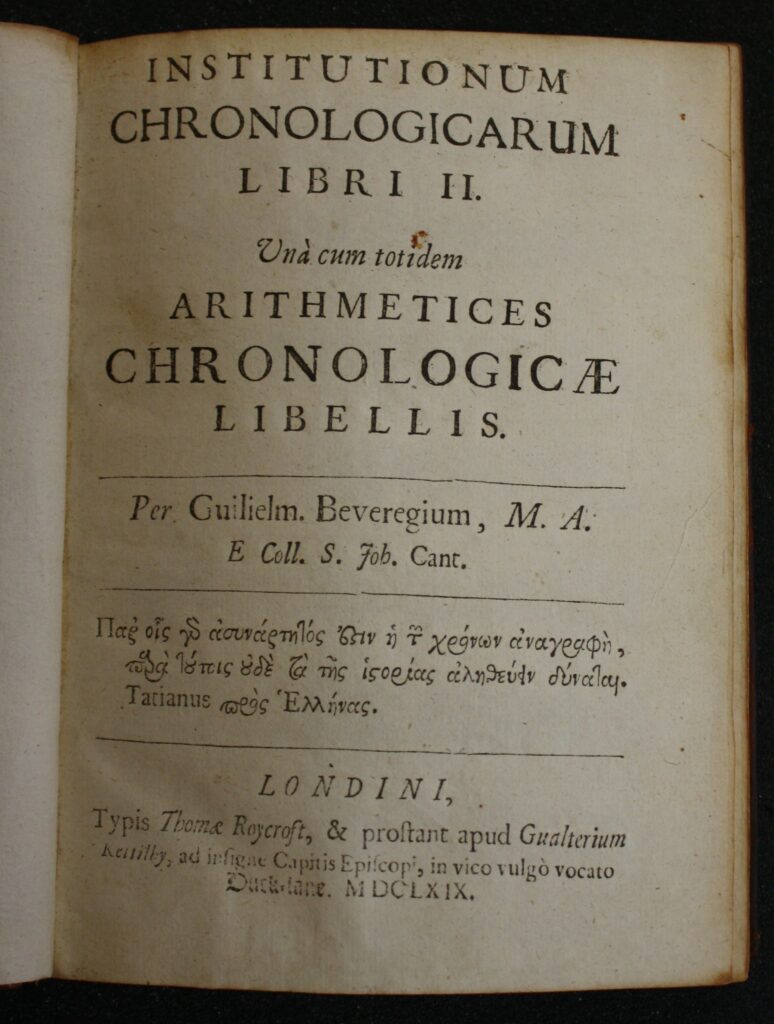
Author: William Beveridge
Title: Institutionum Chronologicarum Libri II. Unà cum totidem Arithemetices Chronologica Libellis.
Printer: Thomas Roycroft at Goldsmiths’ Alley near Cripplegate, London
Bookseller: Walter Kettilby at The Bishop’s Head, Duck Lane, London
Year Of Publication: 1669
Michigan State University Call Number: XX CE10.B57 1669
Reference: Wing, B2095
The Author
William Beveridge was born in 1637 in Barrow, within the town of Leicestershire. He was baptized that same year in Barrow, where his older brother and grandfather had both been a vicar. He was initially educated by his father for a few years before being sent to Oakham School, in Rutland. After his time at Oakham, he was matriculated as sizar at St. John’s College, Cambridge in 1653. He would go on to obtain his B.A. in 1656/7, and his M.A. in 1660.
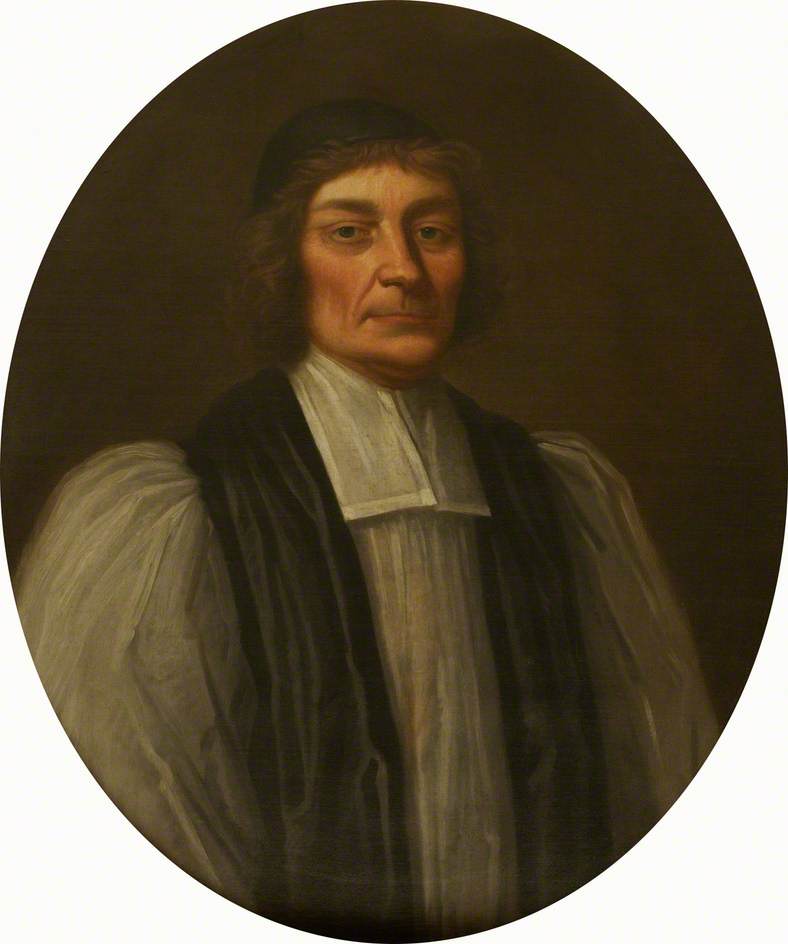
During his time at Cambridge he would also publish his first written work in 1658, a treatise on the use of oriental languages. Soon after obtaining his M.A. he was ordained as a Deacon in Lincoln, and as a Priest later that same year. He would go on to again be promoted as Vicar of Ealing, in Middlesex, he held this post from 1661-72. During the later years of his time as Vicar, in 1669, he was incorporated at Oxford University. While here he would go on to obtain his Doctorate of Divinity in 1679, and continued to climb the ranks of the church until he was made Bishop of St. Asaph, in Flintshire. He would serve dutifully at this post from 1704-08. He served as Bishop until his death on March 5th, 1708.
Beveridge grew up in the aftermath of the English Civil War (1642-51), and with much discourse being had on matter of the church in this aftermath, Beveridge wrote heavily on these matters. Beveridge had a great deal of zeal in relation to his personal piety, and sought to push many aspects of Anglican life he thought had been lost in the wake of the war. He published multiple works dictating the importance of matters such as daily prayer, frequent communion, catechism, benefits of religious societies and the singing of the Psalms among other topics. In such an era of turmoil, his methods could be summated as a return to and enhancement of the founding principles and practices of Anglican life.
William Beveridge’s Institutionum Chronologicarum
Although Beveridge was primarily a religious writer, he also had great personal interest on matters relating to linguistics and chronology. He is commonly regarded as an expert on oriental languages, having studied and practiced them throughout his life, as is evident in an earlier treatise entitled “Excellency and Use of the Oriental Tongues, especially Hebrew, Chaldee, Syriac, and Samaritan, together with a Grammar of the Syriac Language” (1658). His book, Institutionum Chronologicarum Libri II was finished in 1667 (Published 1669) while serving as Vicar of Ealing and clearly demonstrates his continued passion for such linguistic and chronological studies.
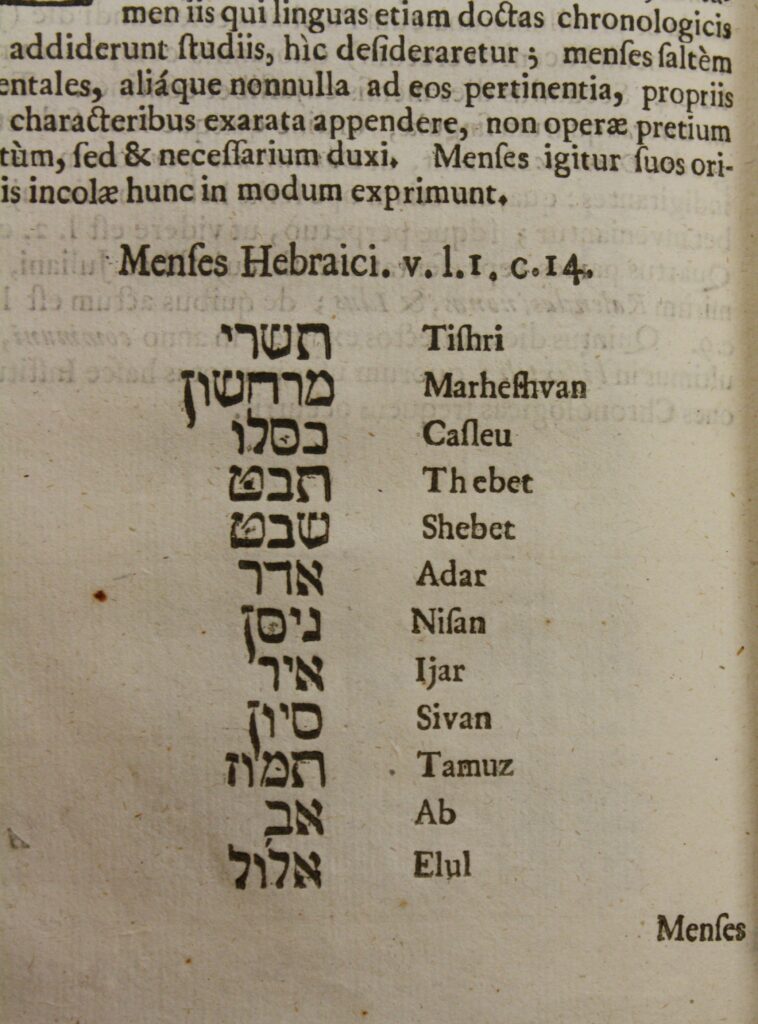
The book itself is a treatise describing multiple calendar systems, mathematical theorems, and commentary on some oriental languages and calendar systems. It is of particular interest due to its inclusion of many oriental characters in their original typeface. These include Greek, Hebrew, Arabic, Samaritan, and Syriac. In addition, for those who are not as learned as he is in these languages, he includes a translation of these characters in an appendix at the end of the book.
Physical Characteristics
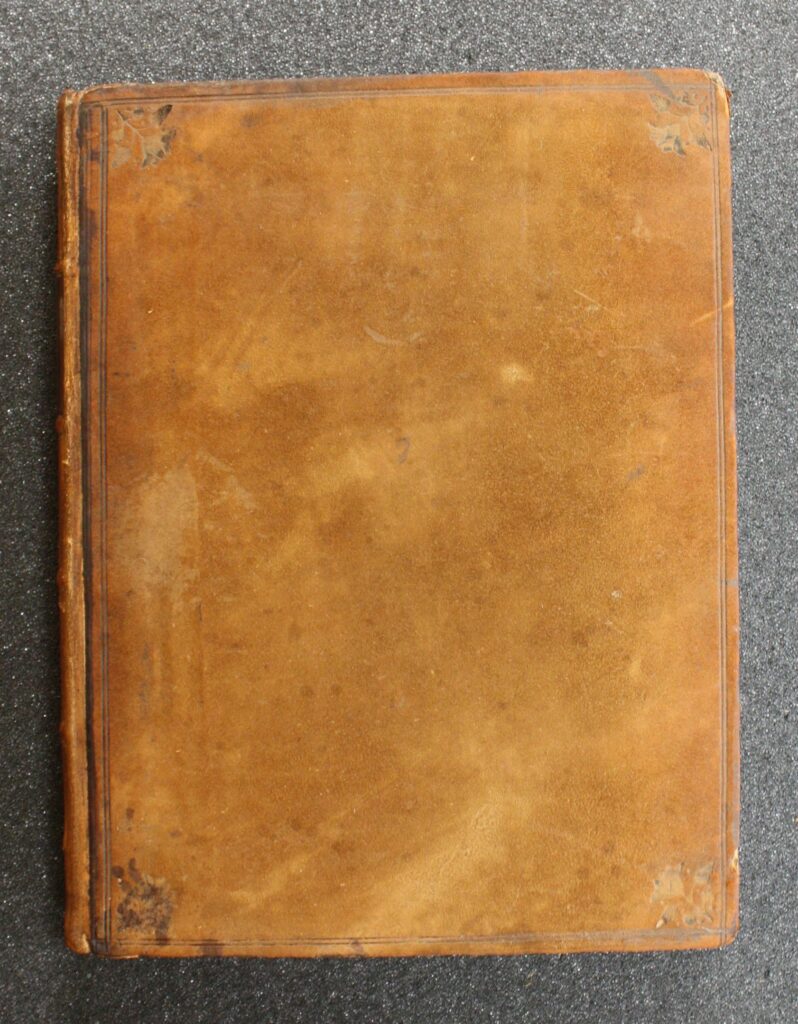
The binding of this particular copy is simple yet elegant. The front and rear cover of the book are a simple reversed calf binding, both with blind tooling impressions. The tooling patterns are simple, consisting of only a set of double lines about the border, as well as what appears to be a floral design in each corner.
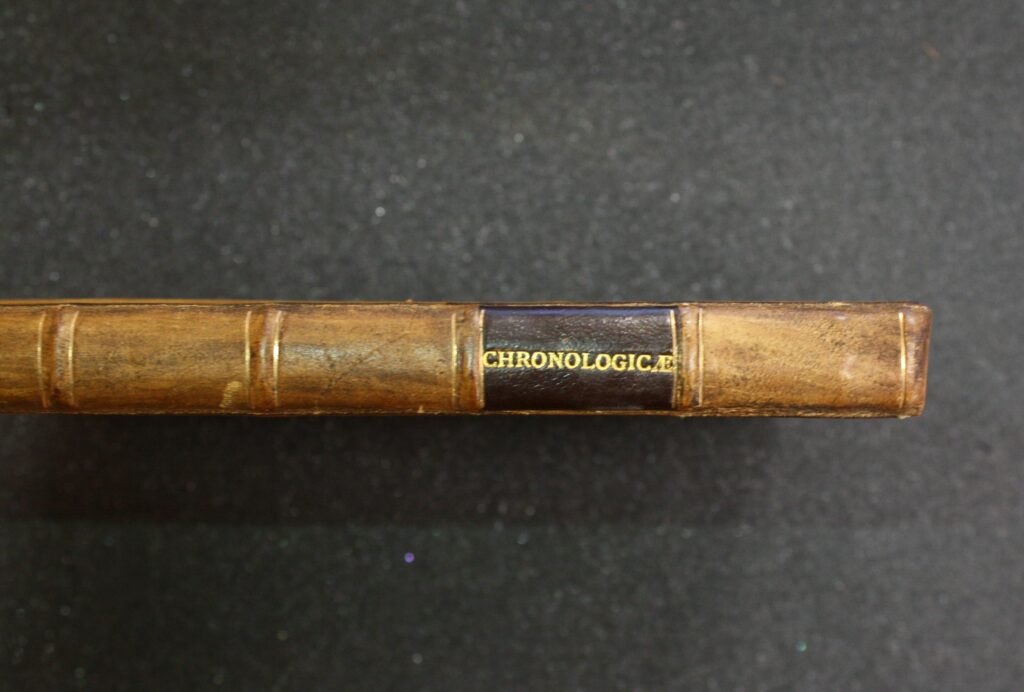
The Spine of the book varies slightly from the front and rear cover. On the spine, one can see that instead of the matte reversed calf, there is a polished calf binding. The blind tooling continues on the spine as well, only this time the tooling is done on either side of the raised bands. In addition, there also appears to be a later addition of the partial title of the book, in gilt tooling. The partial title labeled is “CHRONOLOGICA”, and is imprinted on a much darker piece of calf or leather, possibly added on when the label was put on or, the original spine section might have been dyed before the tooling took place.
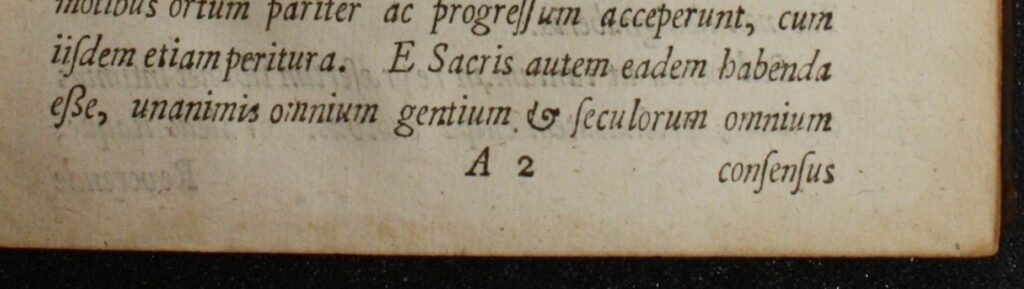
In terms of the book’s organization, there are a number of present elements. The pagination is as follows, [8], 259, [5] and the foliation is present in the following format, A-2L. In addition to the pagination and foliation, throughout the entirety of the text, the printer made use of catchwords at the bottom of each page.
Provenance
Within this copy of Institutionum Chronologicarum there are three distinct marks of ownership, all of which are visible on the front pastedown endleaf and front free endleaf just opposite of one another.
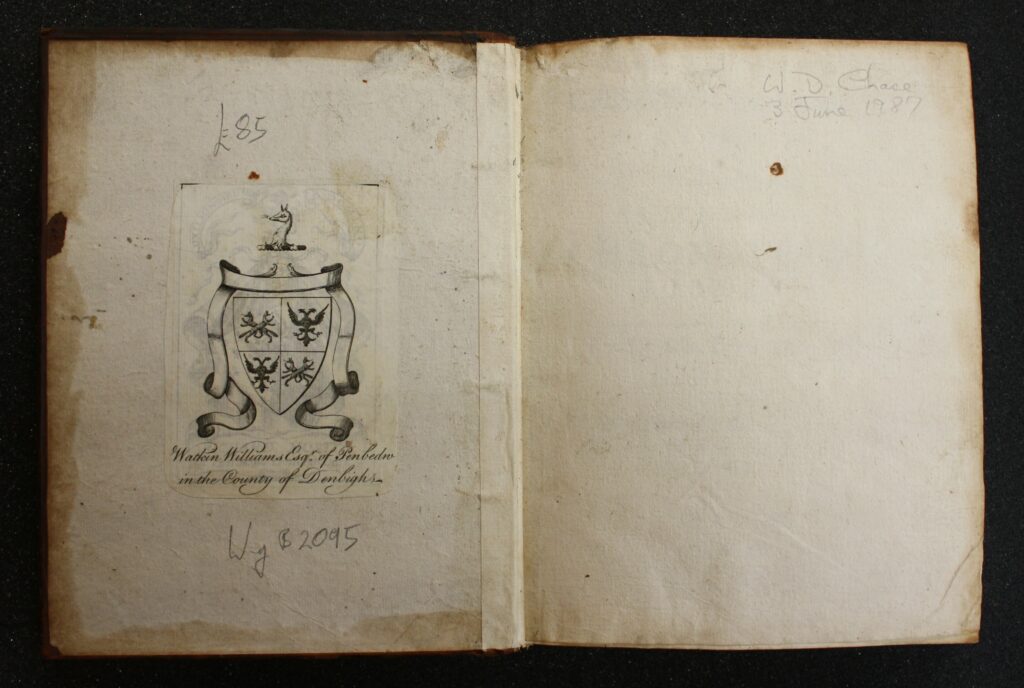
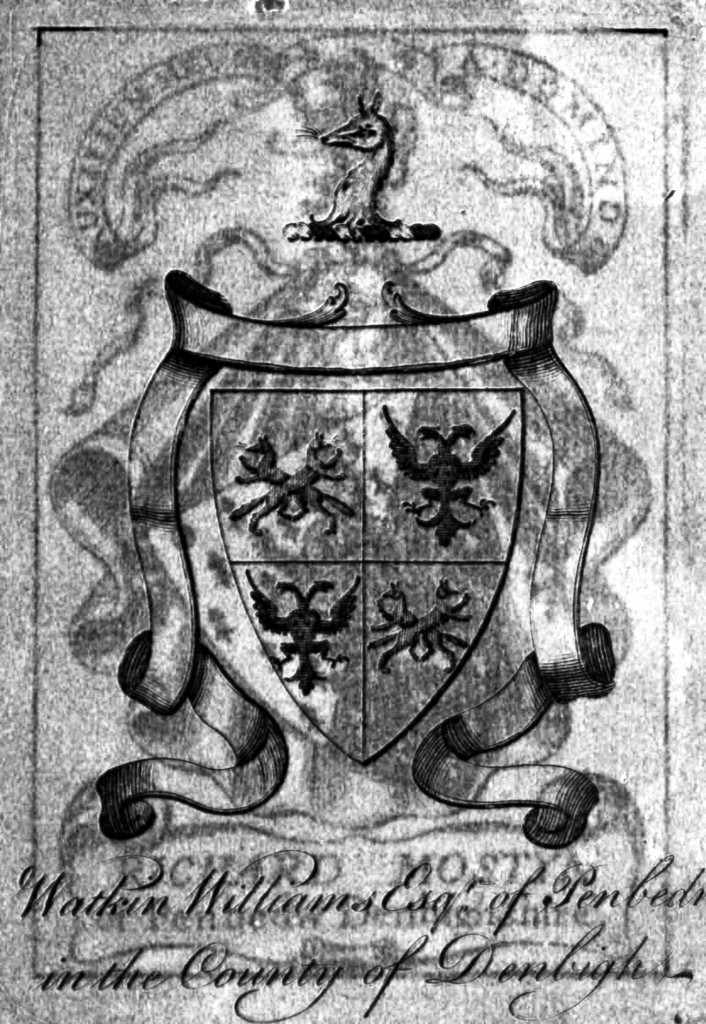
Starting in chronological order, I initially had to inspect quite closely to notice that there was in fact another book plate underneath the one visible in the image above. The naked eye alone was not enough to decipher the text that lay hidden underneath, so I made use of the free online service known as Retro Reveal to get a closer look. After running an image of the bookplates through the system, I was able to obtain the following image.
After closely examining the RetroReveal image, I was able to make out the text on the lower bookplate. The text says:
“AUXILIUM MEUM A DOMINO”
“RICHARD MOSTYN of Penbedw Denbighshire”
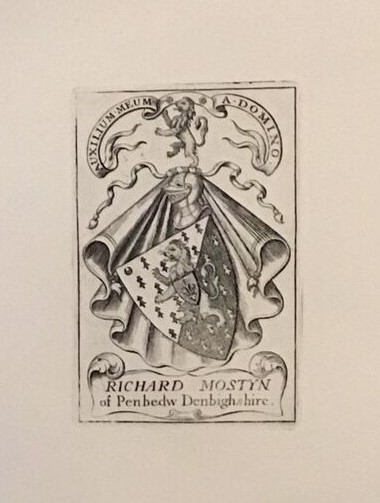
The text clearly references a previous owner, likely part of a personal library. This led me to researching a combination of these terms to find out who Richard Mostyn was. In my search though, I was lucky to find an online seller who had posted for sale an original example of Richard Mostyn’s bookplate. This allowed me to confirm the text described above. Before elaborating on the Mostyn family history, it is essential to analyze the upper bookplate, as the two are directly connected (literally and genealogically). The upper bookplate has the following inscription:
“Watkin Williams Esq,, of, Penbedw in the County of Denbigh”
After confirming the text of both of the bookplates, I was able to see that while the bookplates were put in the book many years apart from one another, the book itself stayed within the town of Penbedw. This led me to begin research on the Mostyn family. I was able to find a very detailed report online published by The National Library of Wales that covered almost 500 years of history surrounding the Peniarth Estate, the estate to which this book belonged. While one could elaborate on the Mostyn family history all the way back to 1414, the story of this book’s ownership begins in the mid 17th century
As a result of a post-nuptial settlement finalized in 1640 between Robert Mostyn (5th son of Sir Roger Mostyn of Mostyn) and Margaret Conway, the Nant estate in Wales was split up, and the majority of the estate went to Robert. Through a mildly unclear line of inheritance though, the Nant estate would eventually devolve upon Richard Mostyn, who is the third son of Sir Roger Mostyn and grandson of the Sir Roger Mostyn of Mostyn mentioned previously (Richard is a nephew of Robert Mostyn). Throughout the 1670s, the younger of the two Roger Mostyns made a number of considerable purchases to expand his estate. All of these purchases were eventually conveyed, by him, to his son Richard Mostyn in 1687 upon his marriage to Charlotta Digby. The most notable being the manor and mansion house of Penbedw, where I suspect the family library was housed. Richard himself made additional purchases for the estate throughout the 1680s and 1690s, including the other part of the Nant estate that had been separated in the 1640 settlement. Richard Mostyn and his wife Charlotta had a daughter (also named Charlotta) who was the heir to his then vast estate. Charlotta married a Mr. Richard Williams in Shropshire in 1729, and their first child was named Watkin, born in 1742. Richard Williams devised all of his estate onto Watkin in 1759, including the mansion house of Penbedw. Watkin Williams died childless in 1808, leaving the estate to his eldest sister. Throughout the 19th century, through financial and family complications, the estate was gradually split up and sold off, leading to a flurry of complications in tracking the precise ownership of specific aspects of the estate.
From this family history though, it can be assumed Richard Mostyn purchased this copy of Institutionum Chronologicarum sometime between its publishing date of 1669 and his death date of 1735. It is also likely the lower bookplate of Richard was put in sometime between these dates. The upper bookplate of Watkin Williams must’ve been put on the book sometime between 1759 when he became the holder of the estate and his death in 1808. Sadly, the history of this specific copy of Institutionum Chronologicarum between the dates of 1808 and 1987 are unknown, and will require additional research to find the trail of ownership as no provenance marks are present within the book between these dates.
The trail of ownership, as previously stated, picks up again via a series of penciled in inscriptions on the front pastedown endleaf. Both of the marks are from an auction or bookstore sale, likely done in the 1980s. They are present above and below the bookplates and read,
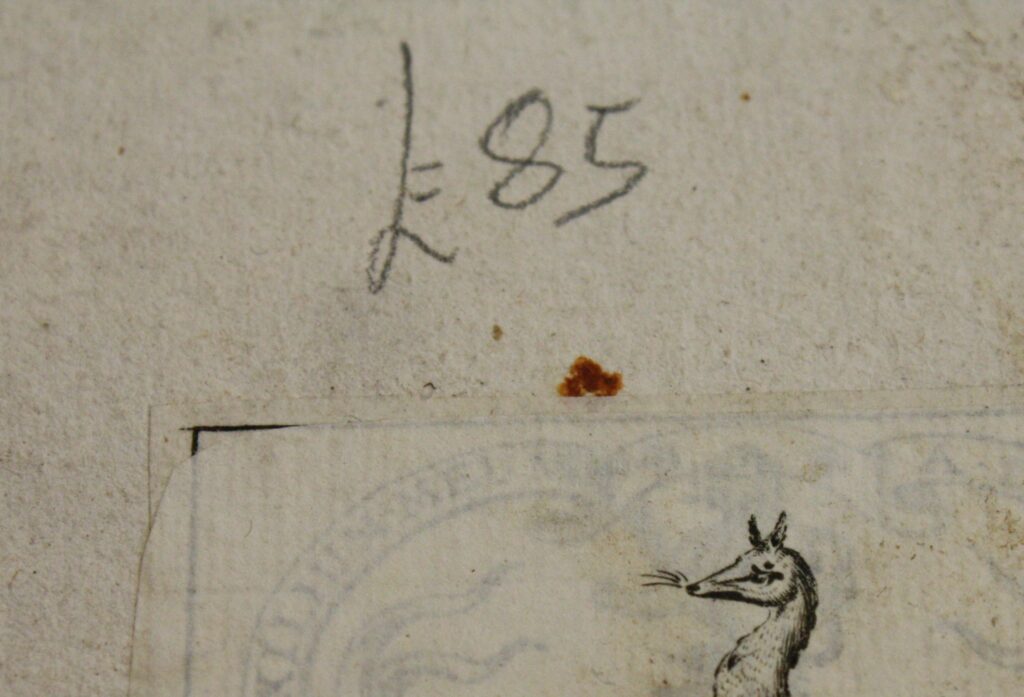
“£85”
“Wg B2095”
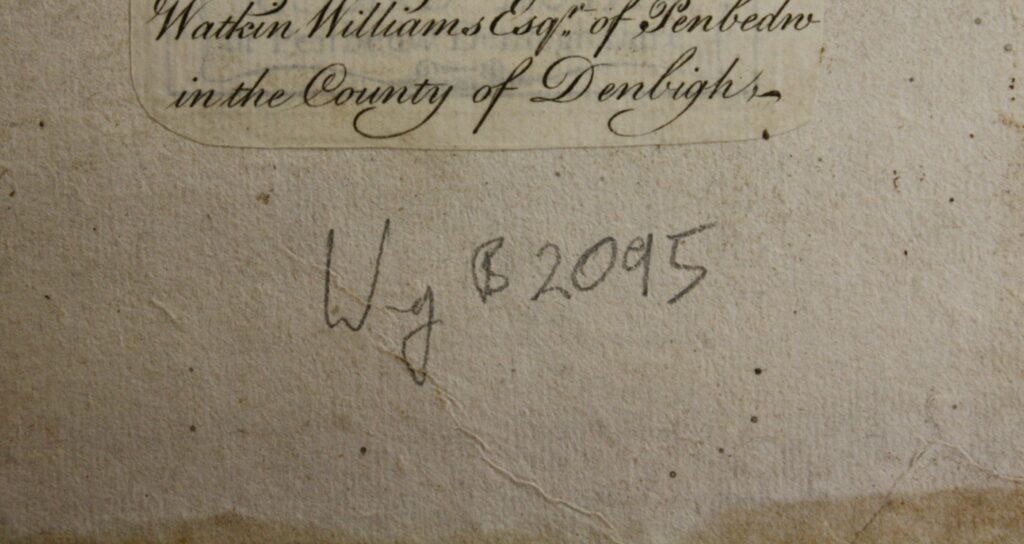
These are both marks from an auction or bookstore sale of the book, as previously stated. The upper “£85” is the price of the book, being 85 Pounds Sterling. The lower inscription of “Wg B2095” is a reference to Donald Goddard Wing’s Short Title Catalogue published by the Modern Language Association. Which, as it sounds is a title catalogue that was used before the founding and creation of the English Short Title Catalogue.
The final piece of provenance exhibited in this book is the one that connects it to its current resting place in MSU’s Special Collections library. In the upper right hand corner of the front free endleaf is an inscription that reads,
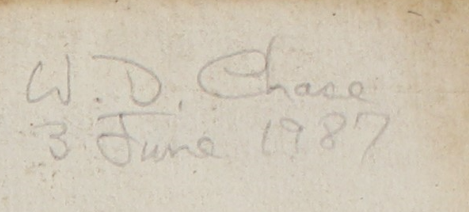
“W.D. Chase”
“3 June 1987”
This inscription is from William DeRoy Chase, a well accomplished man who began collecting books with his wife in 1943. His collection primarily consisted of books relating to almanacs, calendars and chronology. Its clear from this why he decided to purchase this copy of Institutionum Chronologicarum, as it must have piqued his interest. It is unknown where exactly he purchased this book, but from the use of Pounds Sterling from the listing price, it was likely purchased in the United Kingdom.
The book would remain in his personal collection until this copy, and the rest of his collection were donated to Michigan State University in 2016. From then on it, as well as the rest of his collection has proved to be a valuable asset to many Michigan State University scholars and will continue to benefit the University for the foreseeable future.
Bibliography
William DeRoy Chase
William Beveridge Education History.
William Beveridge Theological Work William Beveridge Portrait By Benjamin Ferrers
The Erwin Tomash Library on the History of Computing
The Royal Society Publishing, Book Review
Peniarth Estate Records
Richard Mostyn Book Collection
Watkin Williams Parliament Service
William D. and Helen M. Chase Collection
William DeRoy Chase Obituary
Donald Wing Catalogue Reference
Written By: Sean Montero
With Assistance From: Tad Boehmer & Andrew Lundeen
HST 475 Fall 2021
