
Gevolt na den beruchten Sebastian le Clerc.
Wel-standig verschikt, verteekent, en in’t licht gegeven, door Jan Goeree.
XX folio N 8079.G63 1730
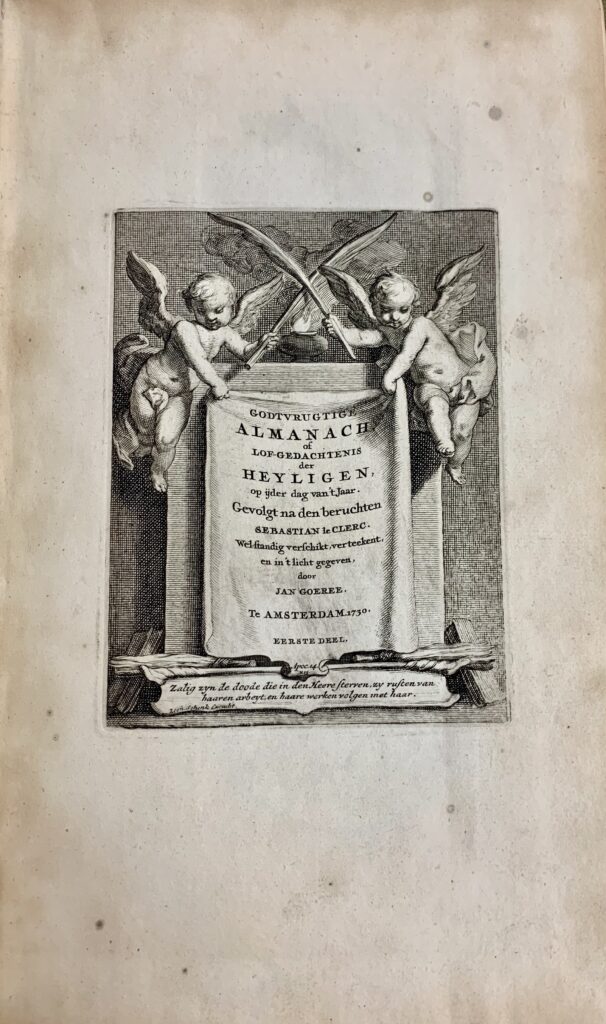
Printed in Amsterdam in 1730, Jan Goeree’s (1670-1731) Godly Almanach or Memorial of Praise of the Saints, every day of the Year is a calendar book printed in folio composed of 368 engraved medallions featuring the saint of the day and 3 engraved title pages all done by Goeree himself. It would appear however, that despite being an accomplished engraver himself, Goeree may have fashioned these engravings in the style of the widely renowned French engraver Sébastien LeClerc (1637-1714) – evidenced by the inclusion of “Followed after the infamous Sebastian le Clerc. Carefully arranged, interpreted, and illuminated, by Jan Goeree” on the initial title page. Although Dutch printshops and publishing at the time were known to be some of the best in Europe, French-created art and literature were sometimes held in higher regard than those of Dutchmen. Perhaps in imitating the style of and crediting LeClerc – who held the title of “King’s Engraver” during the reign of King Louis XIV – Goeree hoped to lend himself some credibility and allure in the Dutch and foreign markets.
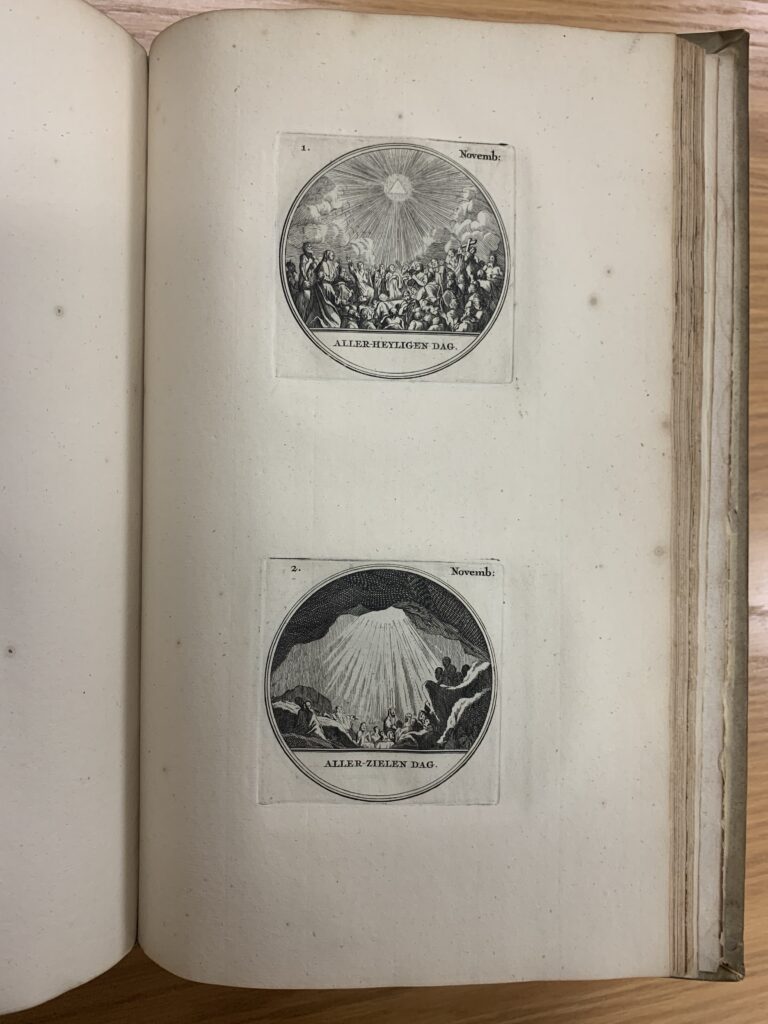
The Almanach is split into three parts, each spanning four calendar months, and each with its own distinct title page engraving. The purpose of this division is unclear since the two subsequent title pages do not include enough information for those sections to have been sold separately. 3×3″ engraved medallions fill the rest of the book, printed either one or two to a page – only on the rectos of the leaves (no verso printing). The medallions themselves are printed from detailed engraved copper plates, the edges of which are clearly embossed onto the page from the pressure of printing.
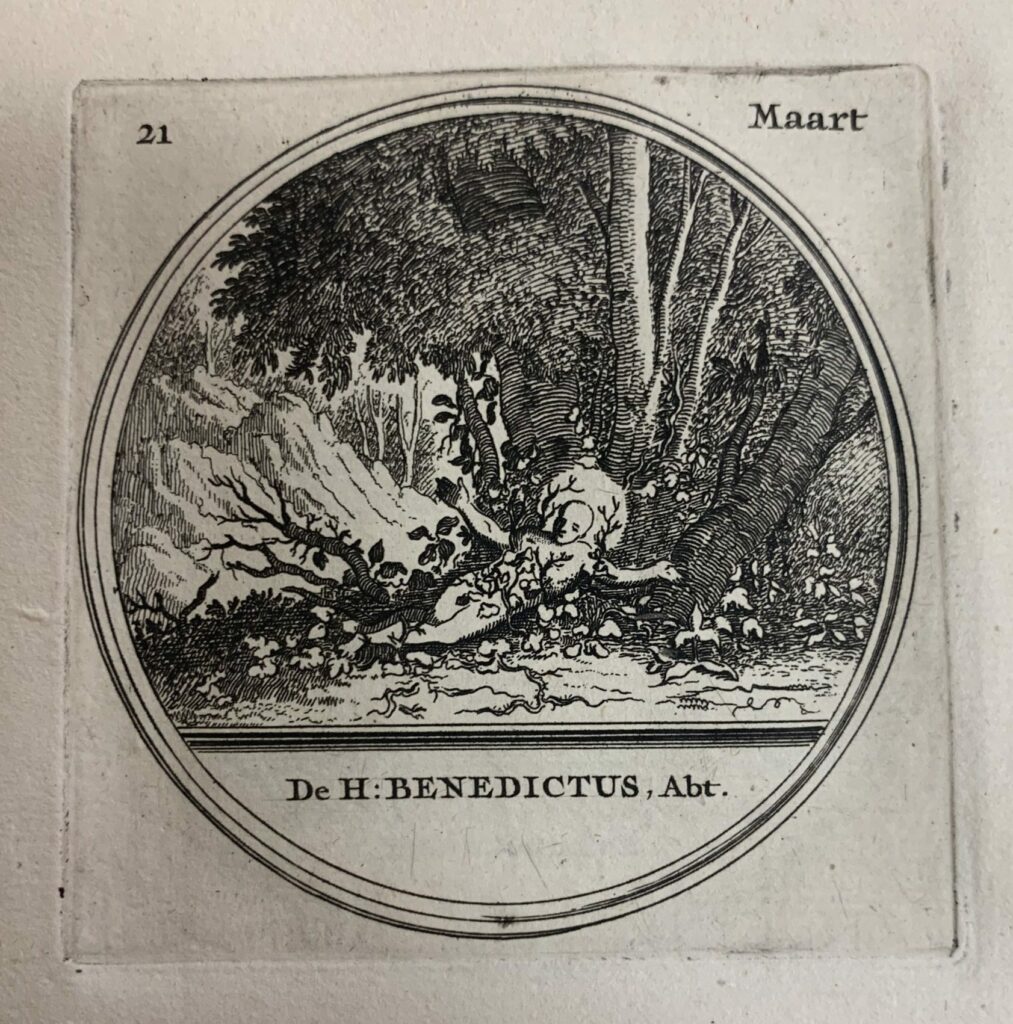
Each one depicts a unique and intricate scene relevant to the saint of that day. Despite being somewhat lacking in actual literature, it would be easy to spend hours poring over this book observing the artistry.
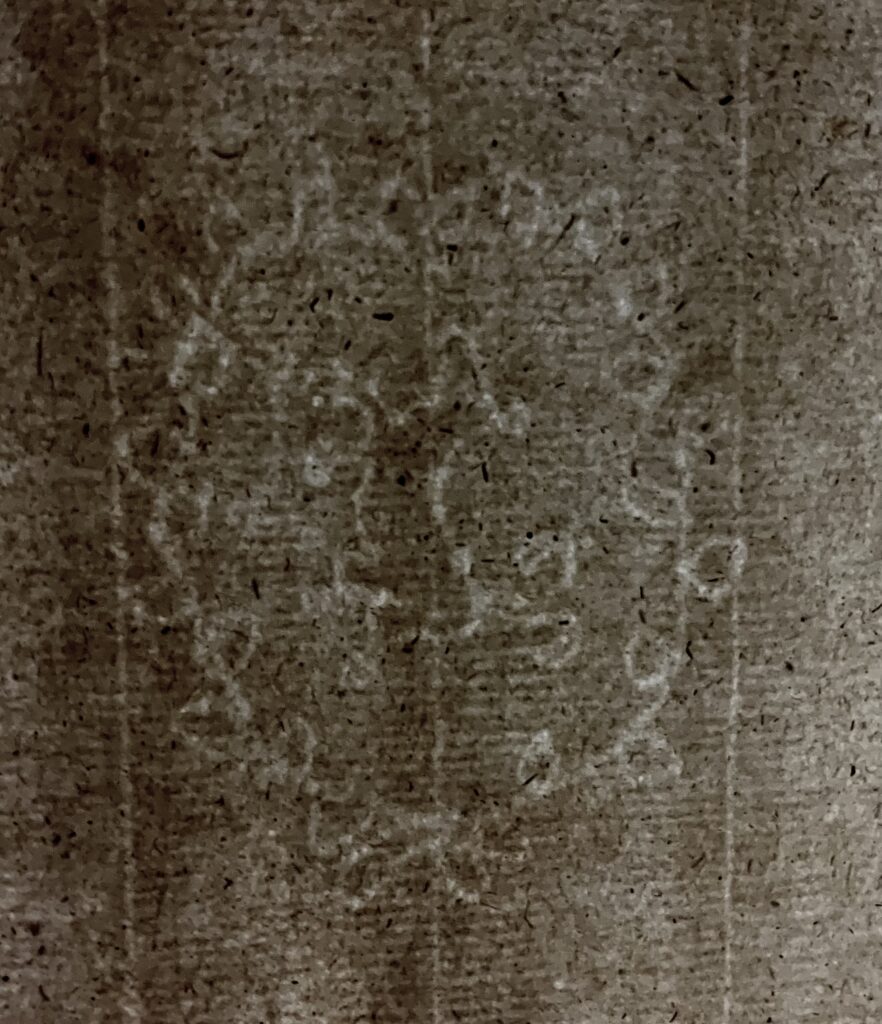
This copy of Goeree’s work remains in generally good condition. The paper used in the body of the work feels of high quality and is undamaged besides minor discoloration. The flyleaves seem to have sustained more wear, despite having likely been replaced once already in rebinding – suggested by the fact that the flyleaves have a different watermark than the watermark and countermark found in the rest of the book. However, this could also simply be do to being bound separately from being printed. While the flyleaf watermark was unidentifiable, the text block marks are the London coat-of-arms – a standard mark among multiple London papermakers – and the George Rex watermark that refers to King George and was used to indicate that the paper was of high enough quality for printing. Unfortunately, because these marks are so common, it is not so easy to identify the specific papermaker. Knowing it was produced in London, though, does reconfirm the idea that the makers of this book might have wanted it to present as closer to English/French productions.
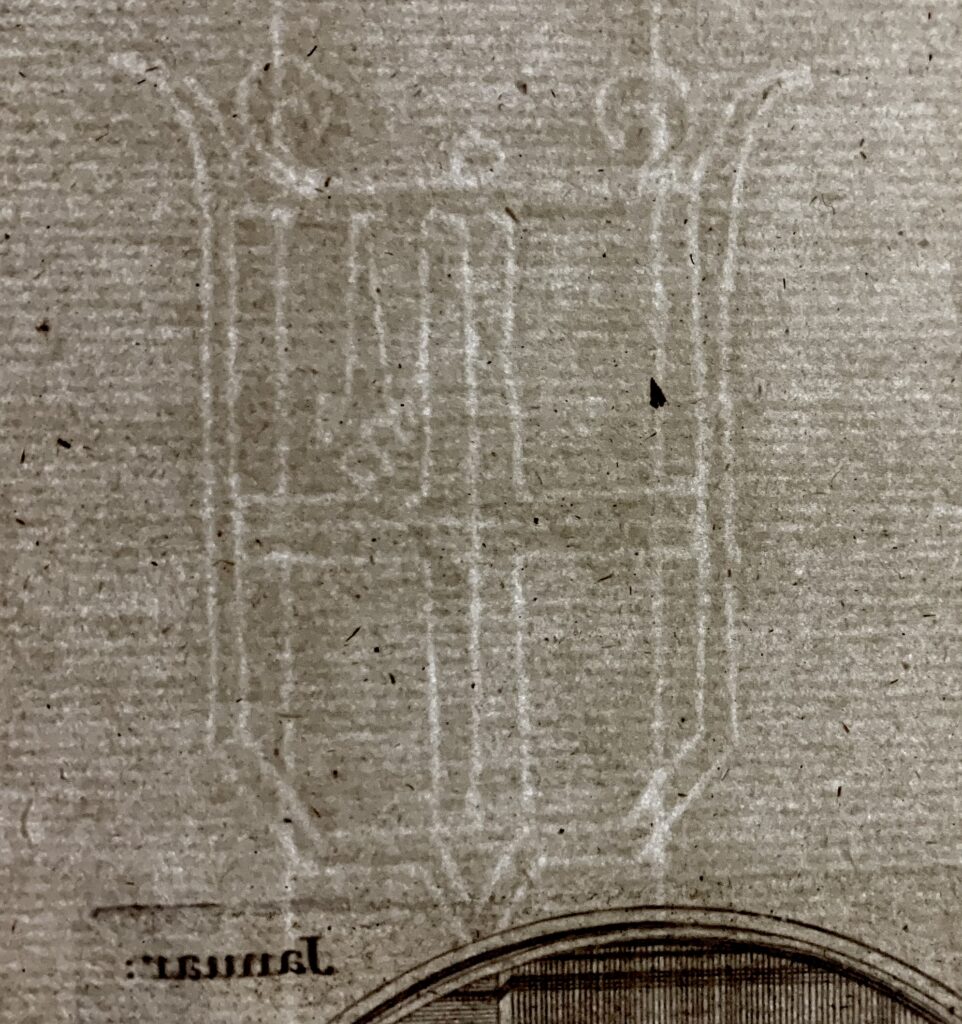
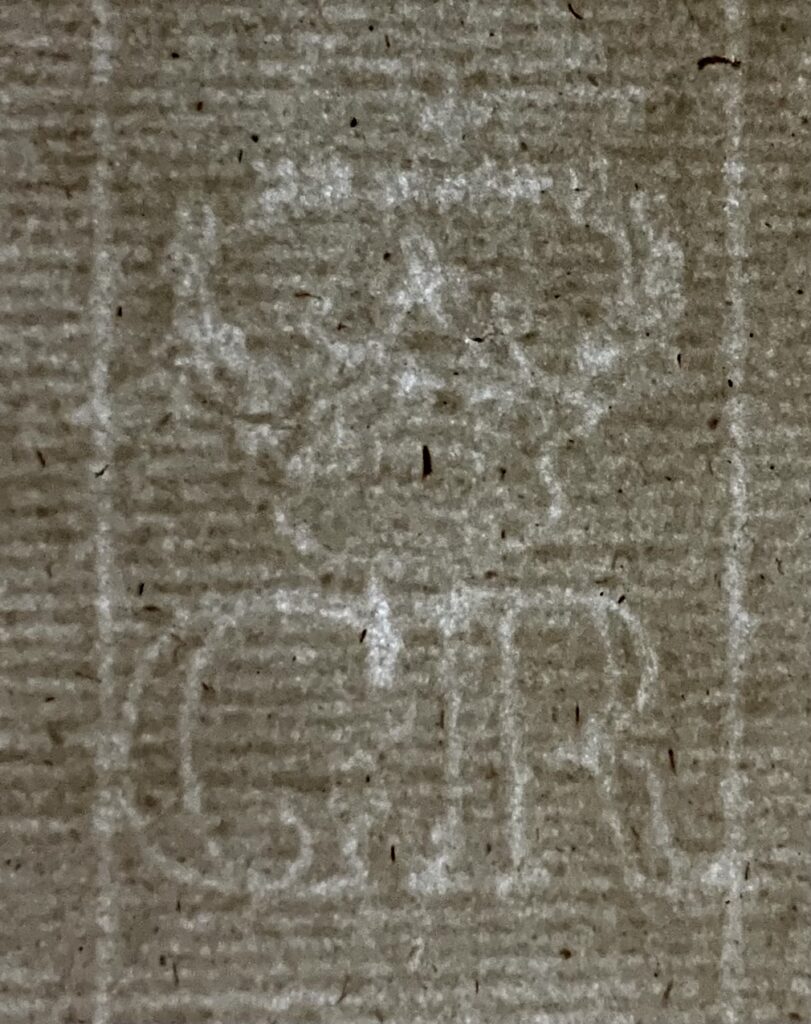
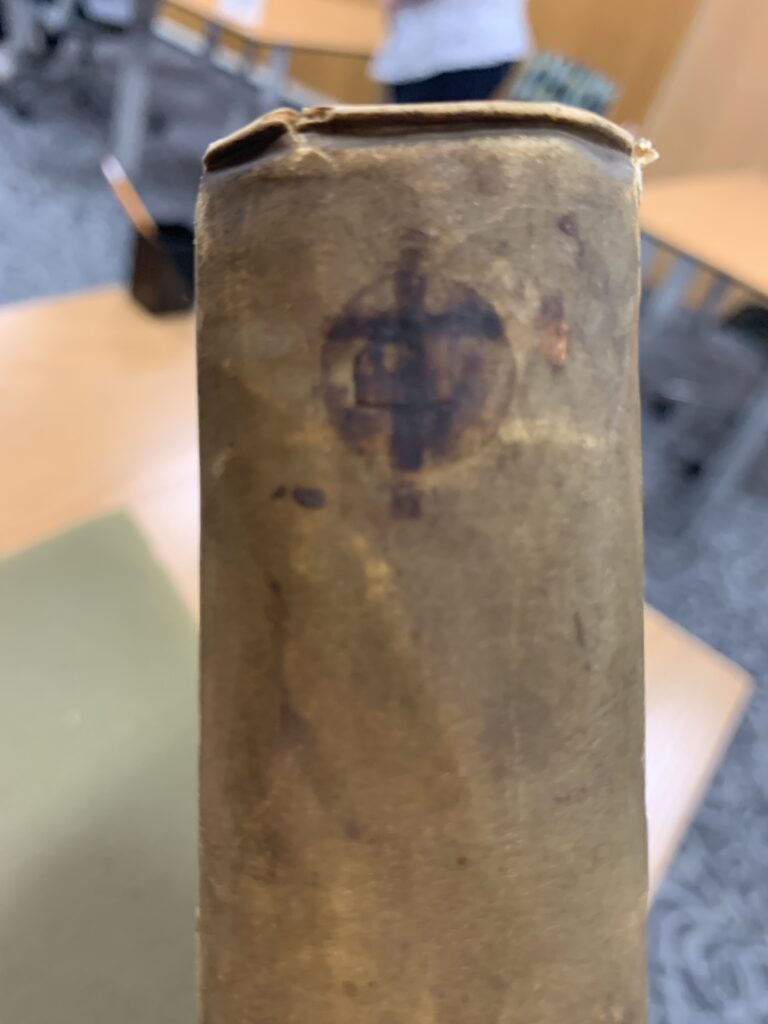
The binding is plain vellum-covered boards. Though the vellum is predictably dirty and dented, it is still sturdily attached to the text block, which it has done a quite proficient job protecting. There is a small, mutilated former bookplate in the top left corner of the front cover. The spine is unembellished besides a faded marking that appears to be a cross, likely to remind of the contents of the book. The pastedowns are in rough condition, but this is not unexpected, especially with the multiple marks of provenance located on the front pastedown.
Provenance
So how did this Almanach make its way from 1730s Amsterdam all the way to Michigan State University Special Collections? Unfortunately, over 150 years have been lost from its story until it made its way into the hands of a Dutch bookseller.
Burgersdijk & Niermans
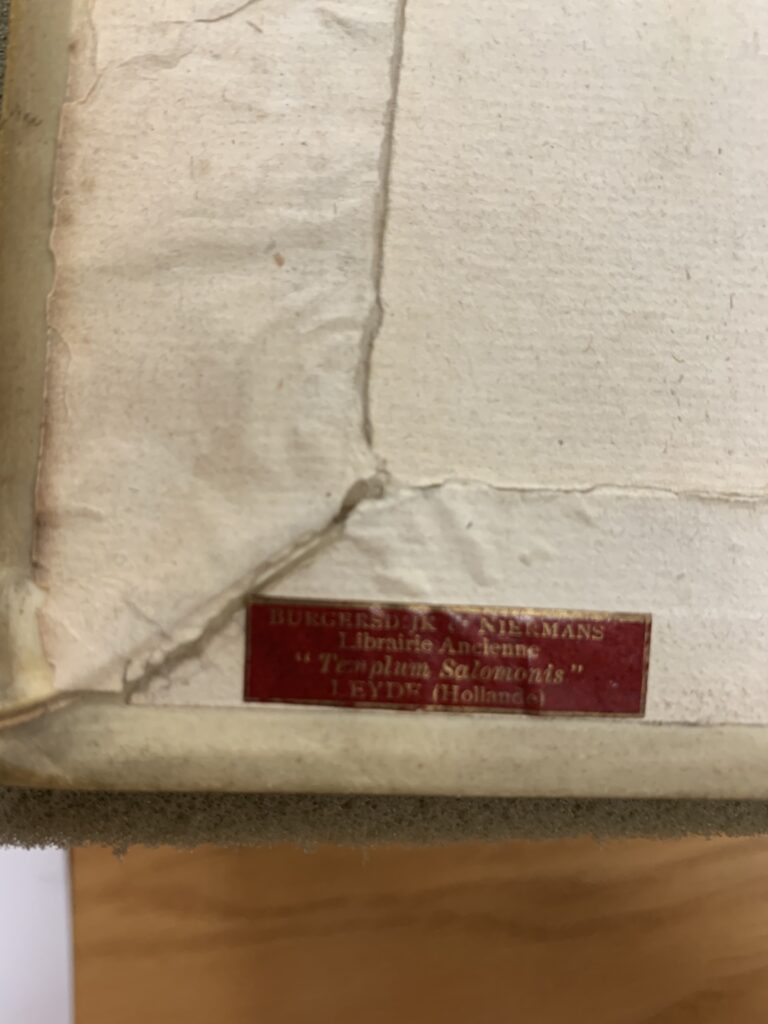
The bottom lefthand corner of the front pastedown holds this small bookplate from the Burgersdijk & Niermans antiquarian booksellers in Leiden about an hour outside of Amsterdam. The bookplate itself is unfortunately undated, but B&N was not established with this name until 1894, making this the earliest it could have been in their hands. However, its close proximity to the original publishing location suggests the Almanach remained in the Netherlands for over a century after printing.
Joseph Francis Daly
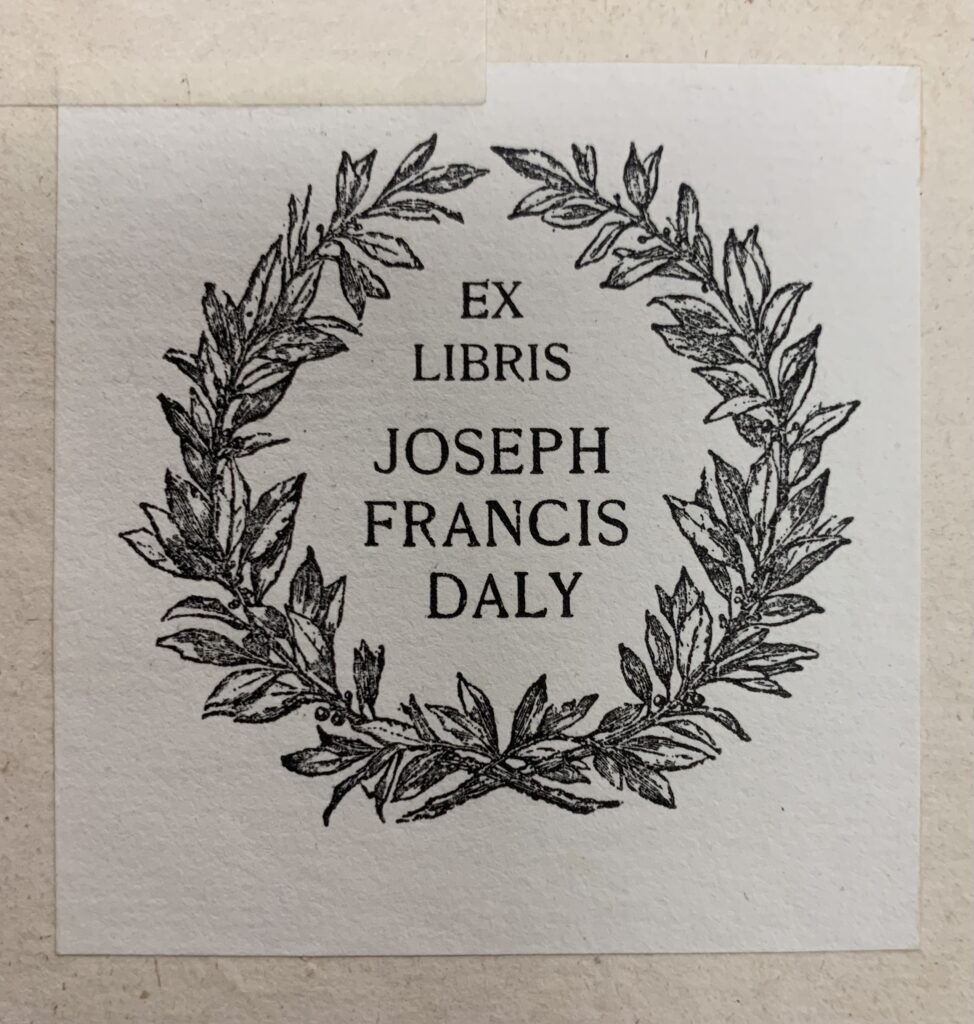
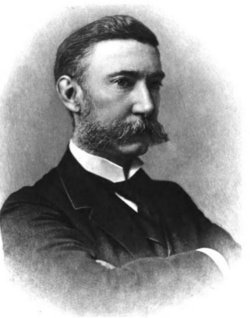
The next bookplate is centered on the front pastedown and is that of Joseph Francis Daly (1840-1916). Daly was elected in 1870 as a Justice of the Court of Common Pleas of New York, eventually working his way to Chief Justice of the Supreme Court of New York from 1896-98. Daly was also a playwright and author, collaborating with his brother Augustin John Daly on his famous plays and later writing a biography of Augustin’s life. He was a devoted Catholic and a virtuous man, even being inducted into the Order of St. Gregory as a Knight Commander by Pope Benedict XV in early 1916. Given this, his interest in the heavily Catholic Almanach is unsurprising. When and how exactly the Almanach came into Daly’s hands is unclear, but would have been between 1894 and his death in 1916. Perhaps he even made the trip to Leiden himself after leaving the court bench.
George Kamperman
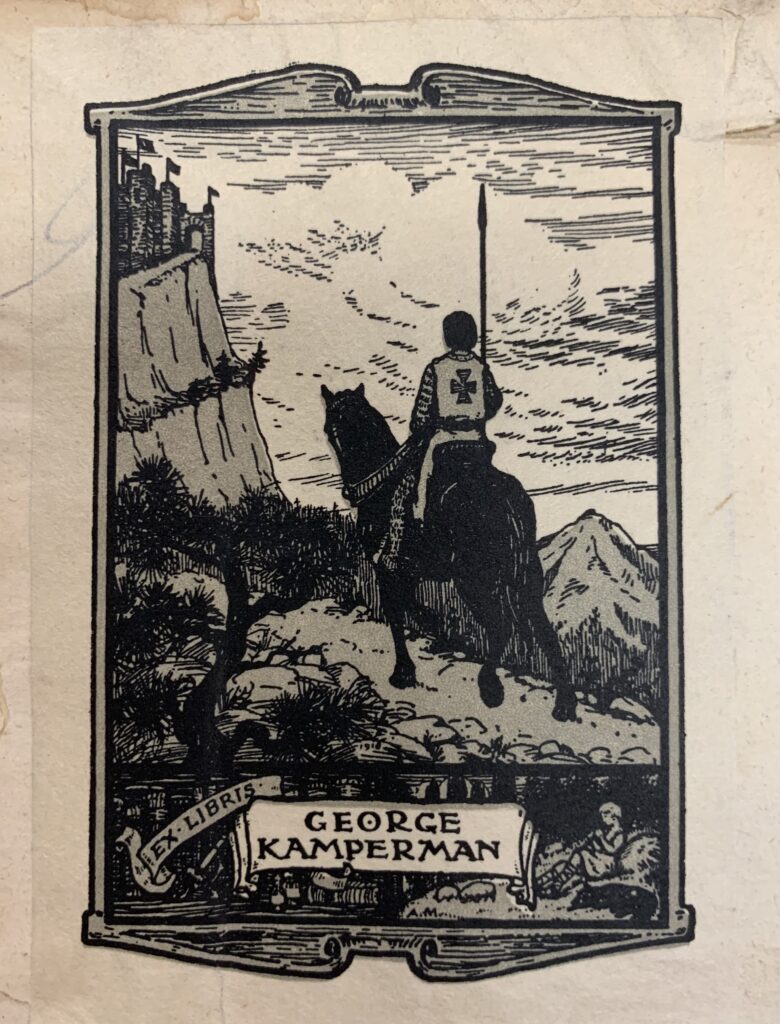
Dr. George Abel Kamperman (1880-1961) was a Detroit physician and the next recorded owner of the Almanach. His illustrious bookplate, seemingly depicting a Knight Templar astride his horse (suggesting a connection to Catholicism to fuel an interest in the book), is found in the top lefthand corner of the front pastedown. Dr. Kamperman and his wife, Abigail, were highly-regarded patrons and friends of the Michigan arts. They had an annual party for each opening of the Detroit Institute of Arts’ Michigan artists exhibition, inviting many of the artists, collectors, and curators – who all remember the events with great fondness. The Kampermans developed close relationships with a great number of these artists, welcoming them to drop in for an afternoon visit and even providing medical services free of charge (though the doctor was often repaid in paintings and sculptures). Dr. Kamperman was remembered very fondly as a modest, genuine, and generous man – and indeed as a father figure to many of the young artists he and his wife supported throughout the years.

George and Abigail regularly traveled to New York to acquire new works for their collections, and it is not unlikely that it was on one of these trips that the Almanach made its way into their hands – which, with its numerous engravings, is not hard to imagine the Kampermans appreciating. After George’s death in 1961, Abigail gifted the bulk of their collections to the Detroit Institute of Arts, much of which remains there today.
W. D. Chase
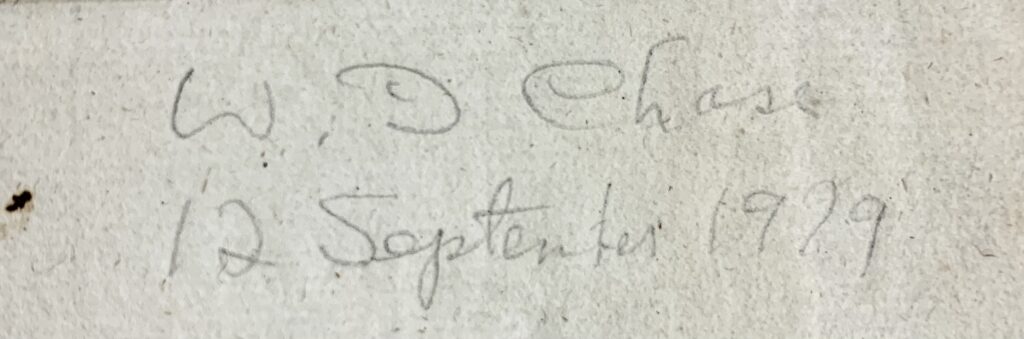

William DeRoy Chase (1922-2020) of Ann Arbor provides the only dated ownership information with his inscription on the recto of the first flyleaf dated September 12, 1979. Chase was described as never having been tied down to one career, trying everything from geographer to taxi driver to journalist to librarian. In 1943, he and his wife, Helen, began collecting books, with the bulk of their collection made up of early almanacs and calendar paraphernalia. He was so enamored with the subject that in 1957, he, his brother Harrison, and Helen launched Chase’s Calendar of Events, a yearly publication of the notable events or dates of every day. Although the Chases retired from direct involvement in 1983, the Calendar continues to be updated and printed every year, now containing over 12,000 entries in each edition. Chase’s fixation on almanacs makes the addition of this Almanach to his library make sense, though it is unclear why this one specifically might have interested him. And although there are at least almost two decades of its history unaccounted for, it is likely that the Almanach remained in the Detroit/Ann Arbor area from the time it left the Kamperman collection until it was acquired by the Chases. In 2016, Chase donated he and his late wife’s entire collection to MSU, creating the freely accessible William D. and Helen M. Chase Collection.
Miscellaneous
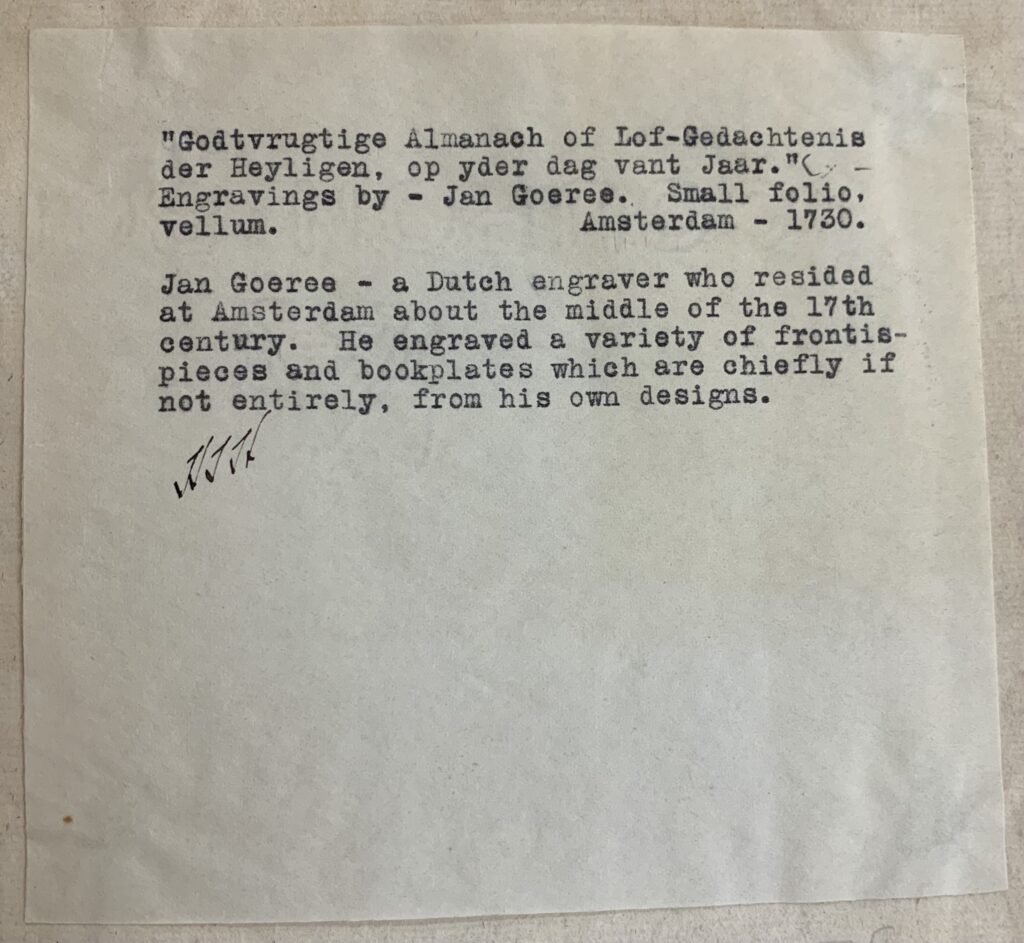
In addition to the story told by the Almanach’s ownership marks, there is also what appears to be a bookseller’s description pasted onto the first flyleaf just above the W.D. Chase inscription. Unfortunately, it is not dated and does not give the bookseller by name. Considering that it is written in English, however, does rule out the possibility of it being installed by Burgersdijk & Niermans while in their possession.
Besides what is found in the front matter, this copy of the Almanach is quite clean with no marginalia in any part of it. Over its lifetime, it seems to have been appreciated more as a piece of art to sit in a collection than as a piece of literature to be pored over and analyzed. Either way, this copy of Goeree’s Godtvrugtige Almanach of Lof-Gedachtenis der Heiligen has been fortunate to have found homes with such great appreciators of the arts.
Bibliography
“ANTIQUE: Taylor ‘Posthorn’ – 1776 to 1790s.” Vintage Paper Co, vintagepaper.co/products/taylor-gr-1770-to-1790s.
Churchill, William Algernon. Watermarks in Paper in Holland, England, France, Etc., in the XVIIth and XVIIIth Centuries and Their Interconnection. Amsterdam, Menno Hertzberger & Co., 1935, archive.org/details/b31345736/page/n6/mode/1up.
Culver, Charles. “The Kampermans – Art Collectors.” Bulletin of the Detroit Institute of Arts, vol. 44, no. 1, Detroit Institute of Arts, 1965, pp. 3-1, http://www.jstor.org/stable/41505314.
“History.” Burgersdijk & Niermans, b-n.nl/en/history.
“Joseph Francis Daly (1840-1916).” Find a Grave, www.findagrave.com/memorial/86351628/joseph-francis-daly.
McGuire, E. J. Joseph Francis Daly. New York, United States Catholic Historical Society, 1917, archive.org/details/josephfrancisdal00mcgu.
Oral history interview with William Bostick, 1981 August 11-19. Archives of American Art, Smithsonian Institution.
“Sébastien LeClerc.” Google Arts & Culture, Google, artsandculture.google.com/entity/sébastien-leclerc/m09rsvpq?hl=en.
Watkins, Franklin. Dr. George Kamperman, 1946, www.dia.org/art/collection/object/dr-george-kamperman-64569.
“William D. And Helen M. Chase Collection.” MSU Libraries, Michigan State University, lib.msu.edu/ebookplates/view/?id=1263.
“WILLIAM DeRoy CHASE Obituary (1922- 2020) Ann Arbor News.” Legacy.com, Mar. 2020, obits.mlive.com/us/obituaries/annarbor/name/william-chase-obituary?id=8475957.
Compiled by Kassian Pavlak
HST 475 FS21
