
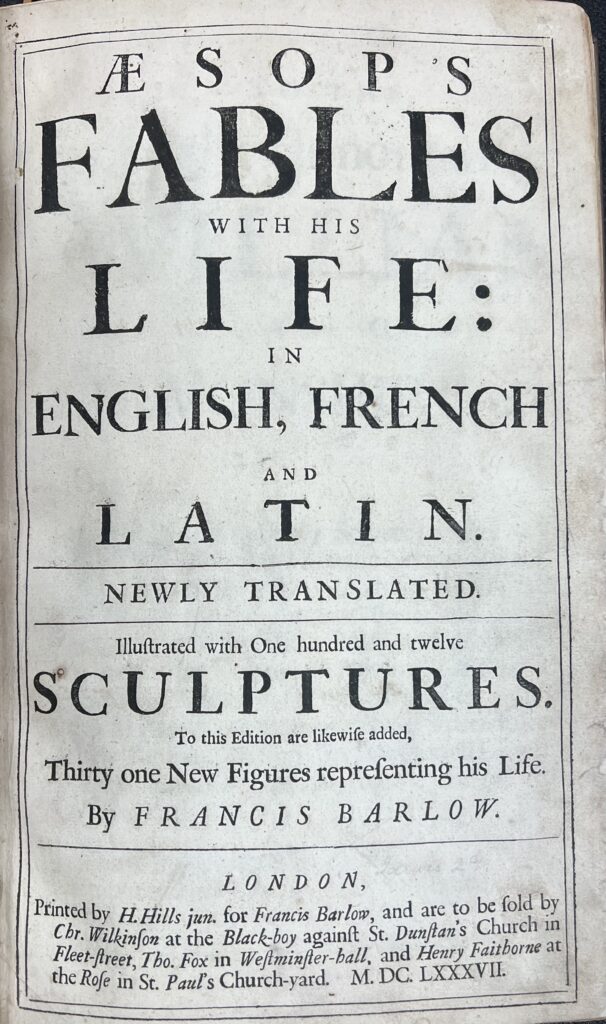
Michigan State University holds a copy of Aesop’s Fables from Francis Barlow that includes several interesting examples of provenance. Anyone interested in analyzing provenance must pick up this book and learn about the stories living between these pages.
Francis Barlow
Francis Barlow was one of the most prolific engravers of the time. He was known as the first wildlife painter and was a trailblazer in his field. He was also known as an early user of the comic like style of telling stories.
Henry Hills
Henry Hills was one of the printers of this edition of Aesop’s Fables. He was well known for his printing of the King James Bible. He printed for every side of the political and religious fight and was even jailed briefly for being an adulterer.
Where It Was Sold
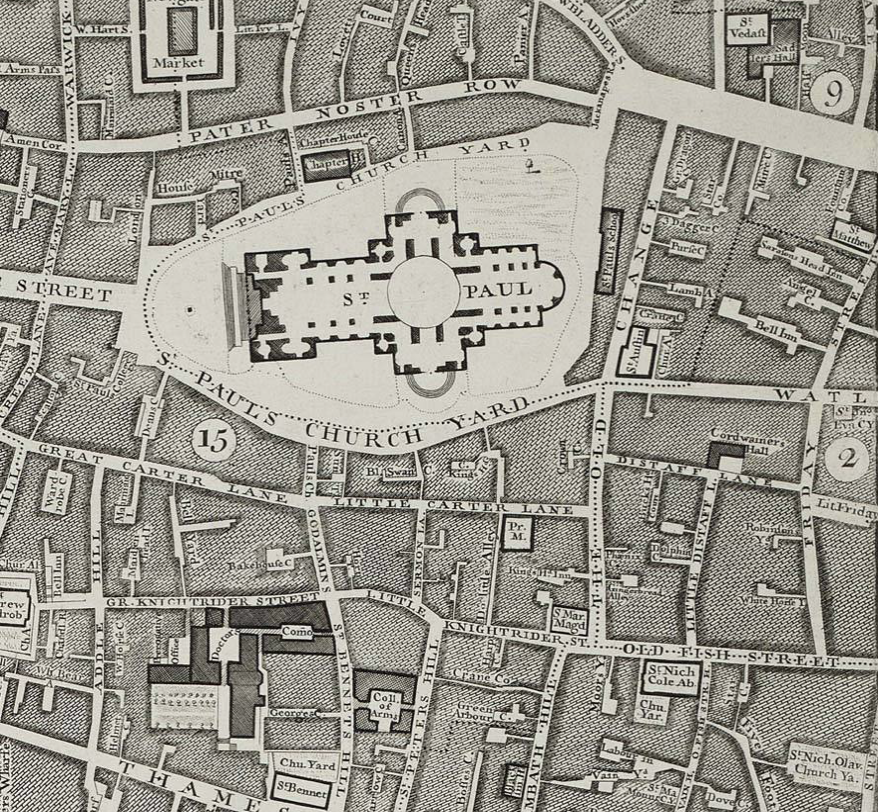
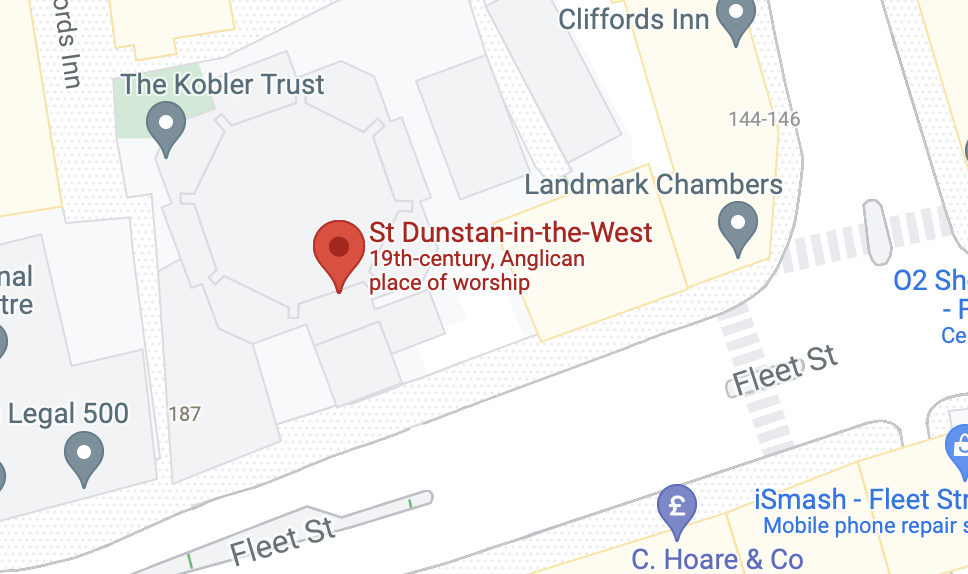
Christopher Wilkinson sold the book at the Black-Boy against St. Dunstans Church on Fleet Street. It was also sold at the Rose in St. Paul’s Churchyard by Henry Faithorne. It is possible that this was also known as the Rose and Crown. Paternoster Row and Fleet Street are common places in the London book trade.
Provenance
This book is filled with provenance from different readers, including some nonhuman readers too…
Thomas Benson
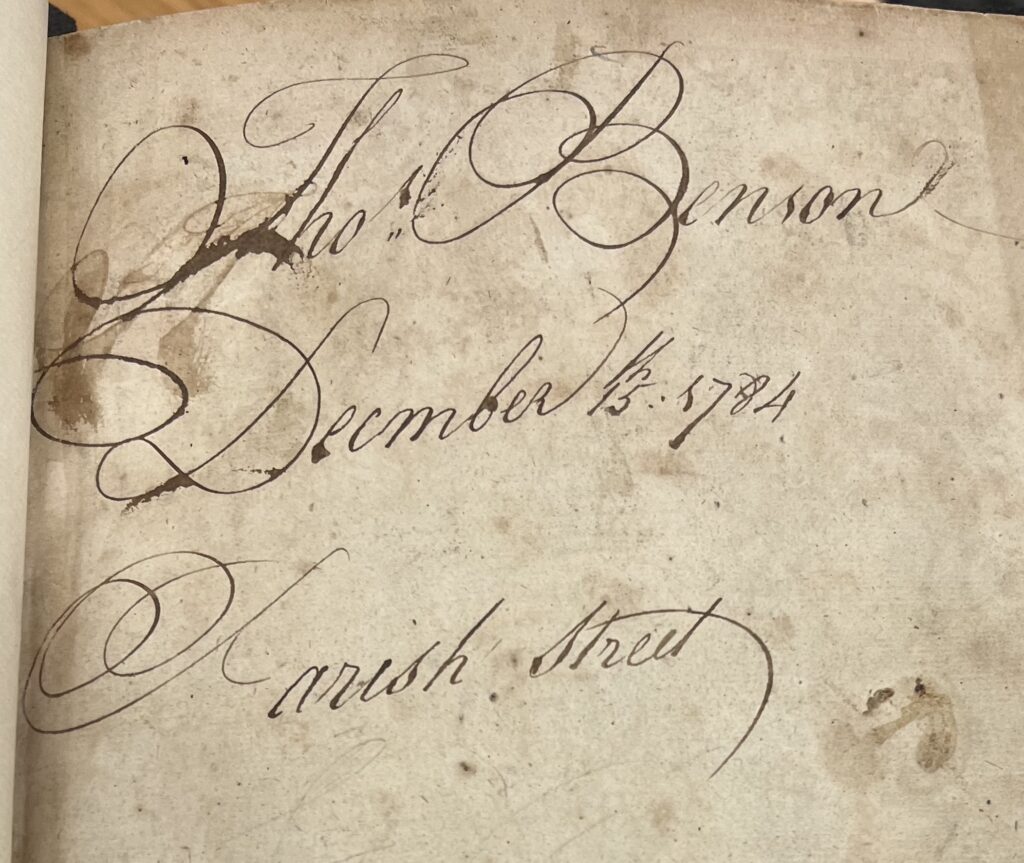
Thomas Benson December 15th 1784 Parish Street. Ownership of this book is established on the first page. Thomas Benson owned the book in 1784. The book was published in 1687 and it is unclear where the book was between 1687 and 1784.
Bookplate
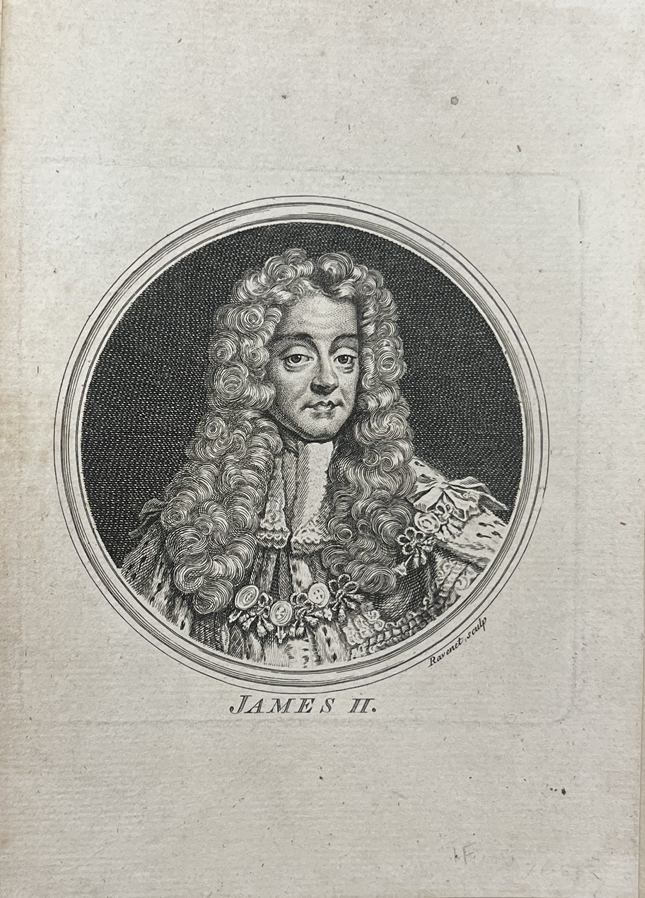
The bookplate in this copy is of James II and is done by Simon François Ravenet I. James II was exiled in the year 1688, one year after this book was published because of this devout Catholicism. Because of this, I wonder if the person who put this bookplate in was a Catholic themselves.
Mary Benson
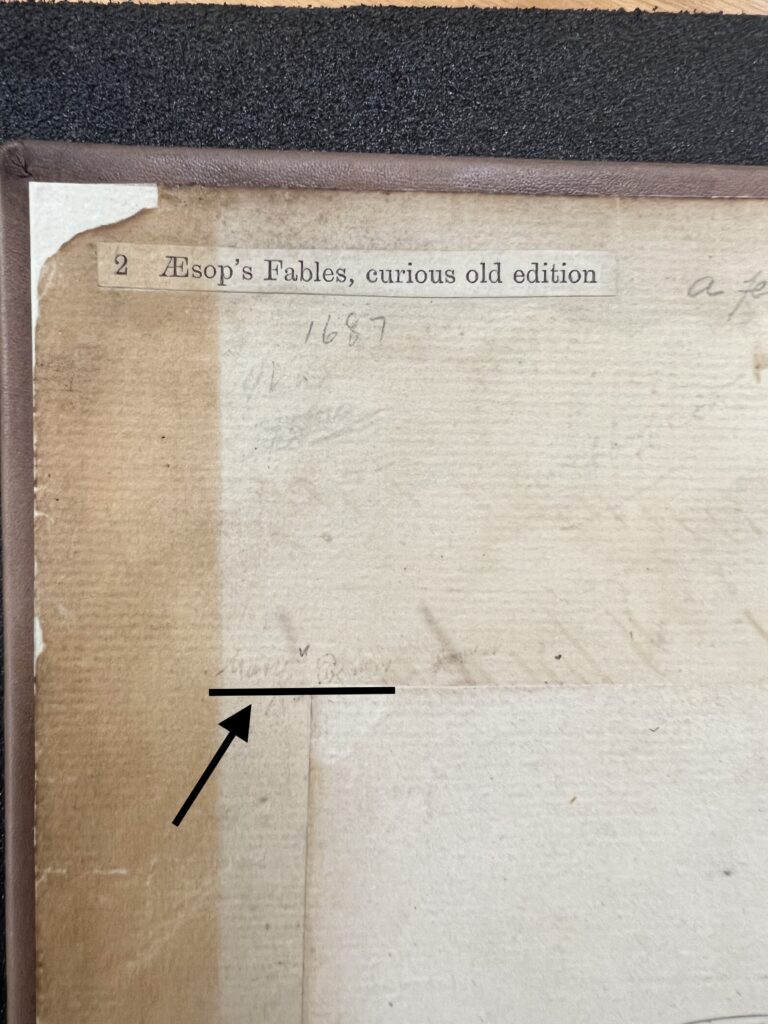
On the cover, it looks as though the name Mary Benson is written faintly on the page. Using the last name Benson, located provided in Thomas Benson’s signature, and the Catholic king on the bookplate, I searched baptism and Catholic marriage records, but was unable to find a Mary or Thomas Benson in relation at this time.
The Ratings Are In
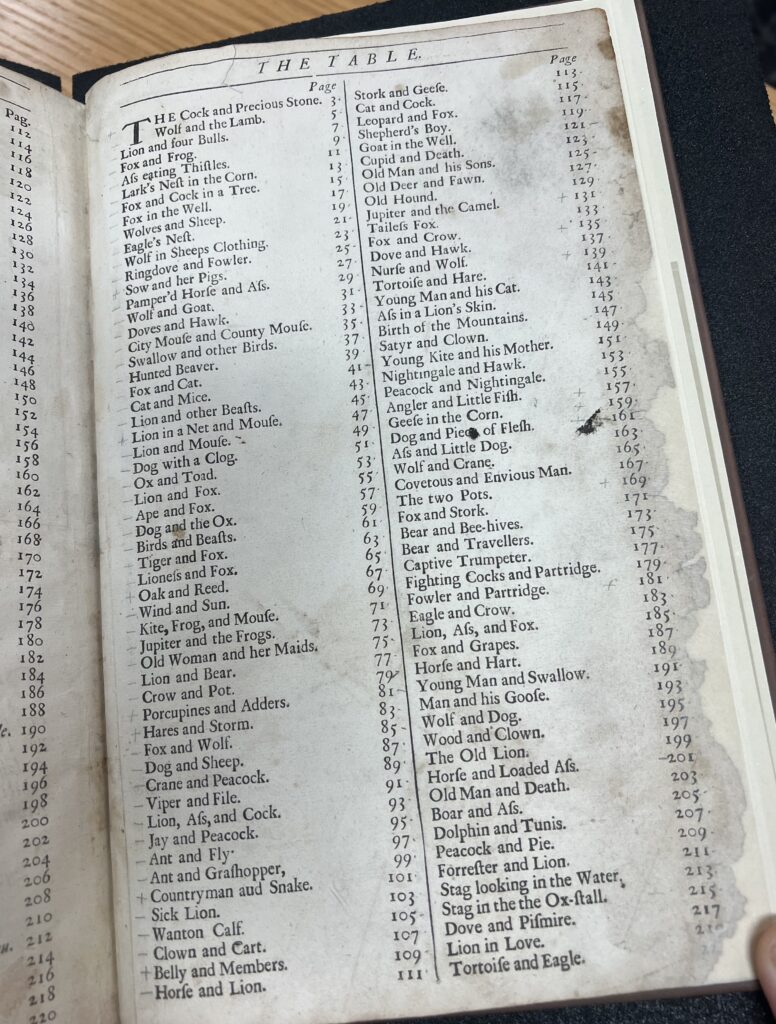
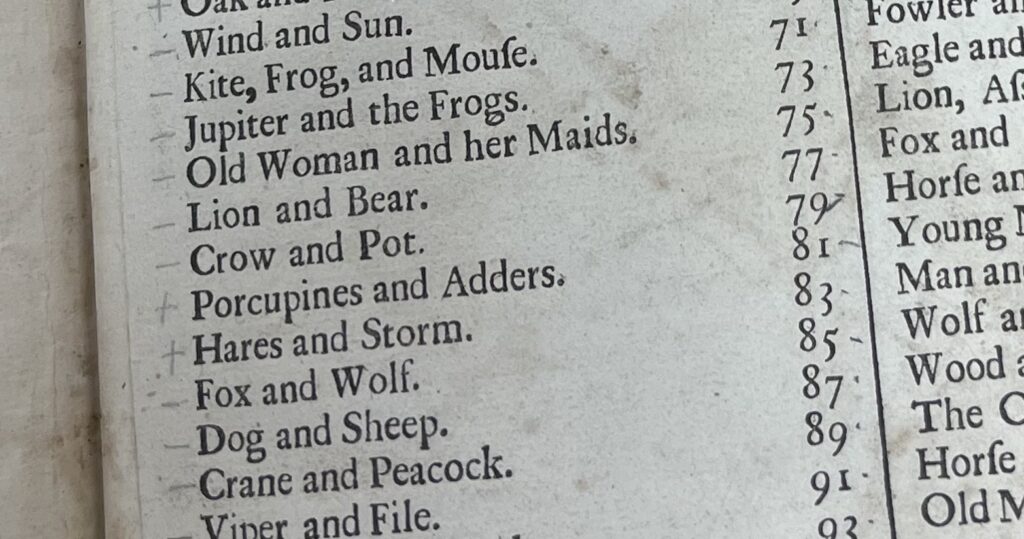
In the back of the book, there is a list of all of the fables. Next to each fable, there is either a + or a -. It is possible that the reader was cataloguing which fables were included or cross referencing which fables were in this copy compared to another. There were many editions of Aesop’s Fables published at this time, and we see evidence that at one time, someone owned two copies of Aesop’s Fables and pasted in parts of another edition into this one. It is possible that the reader was making sure they had a complete collection of fables. I would still like to believe that this reader was giving ratings of how much they liked or disliked each fable though.
The Additions
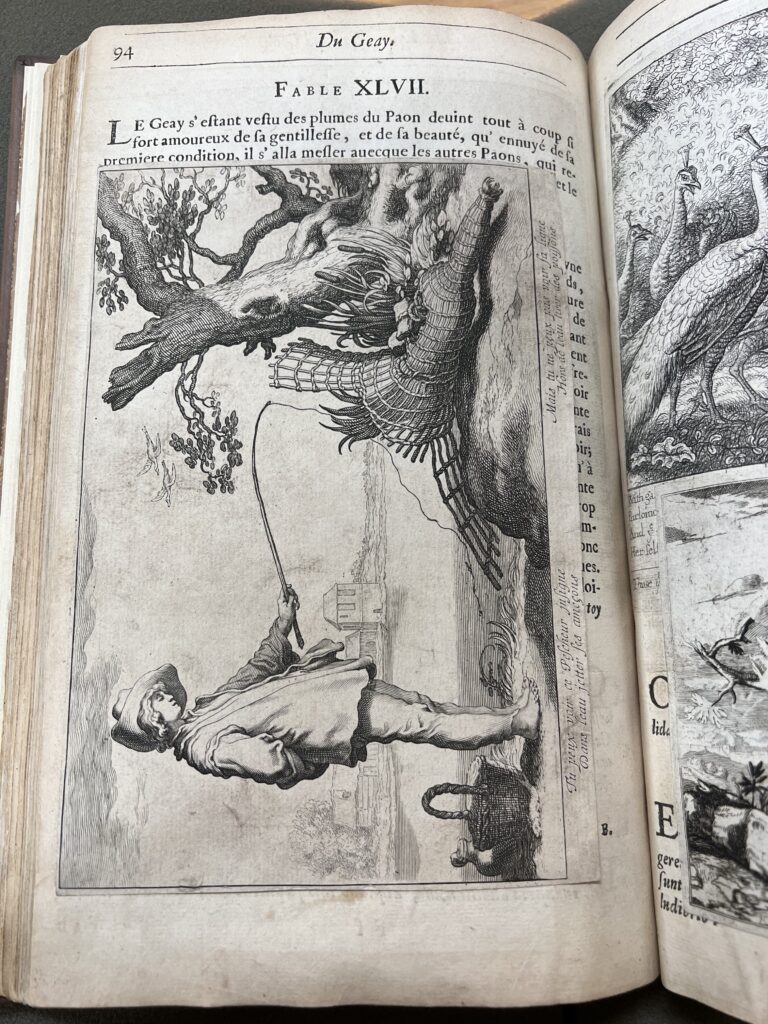
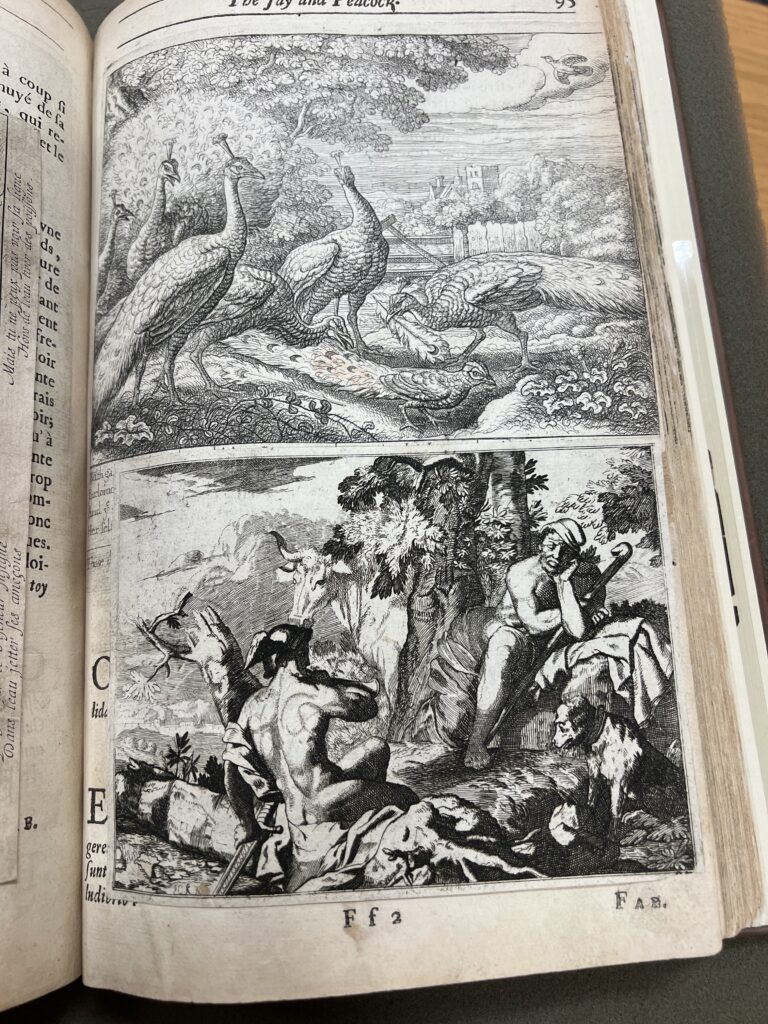
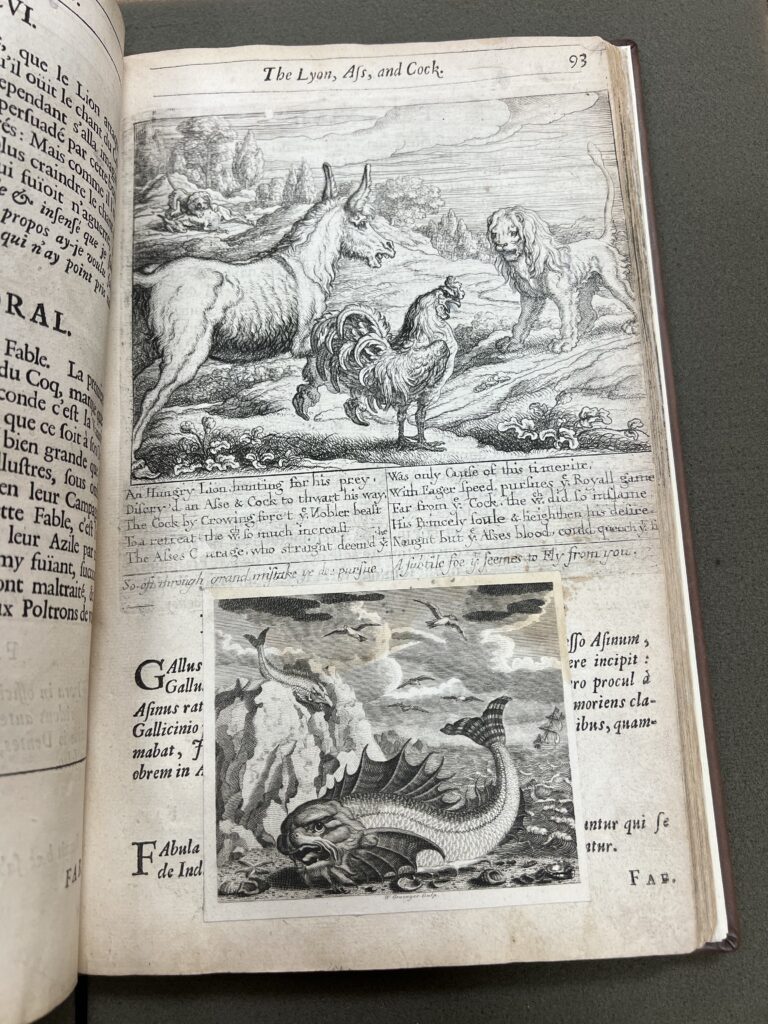
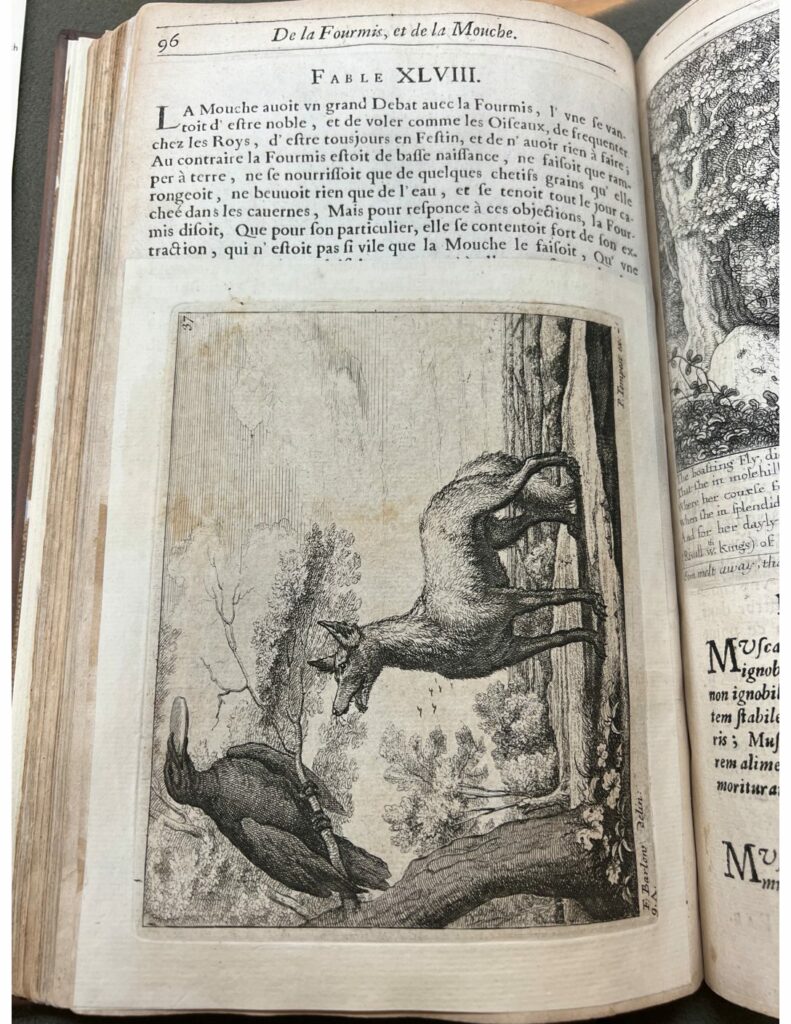
While all of the engravings in this book are done by Thomas Dudley, another artist is included within these pages. These engravings were not originally included within this book but made their way in when the owner pasted in engravings from other copies of Aesop’s Fables. William Grainger and Pierce Tempest are the artists of these pasted in engravings. We know that these engravings were pasted in after 1793 because the engravings done by Grainger come from a 1793 edition of The Fables of Aesop.
Colorful Pictures
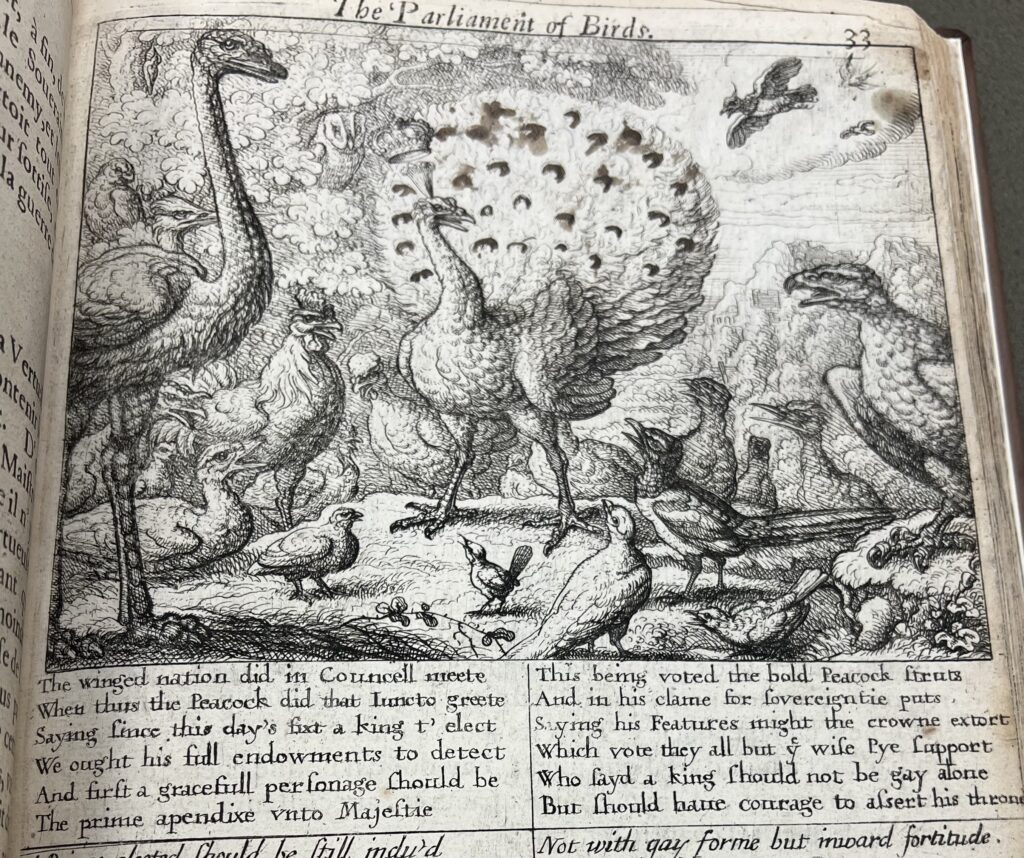
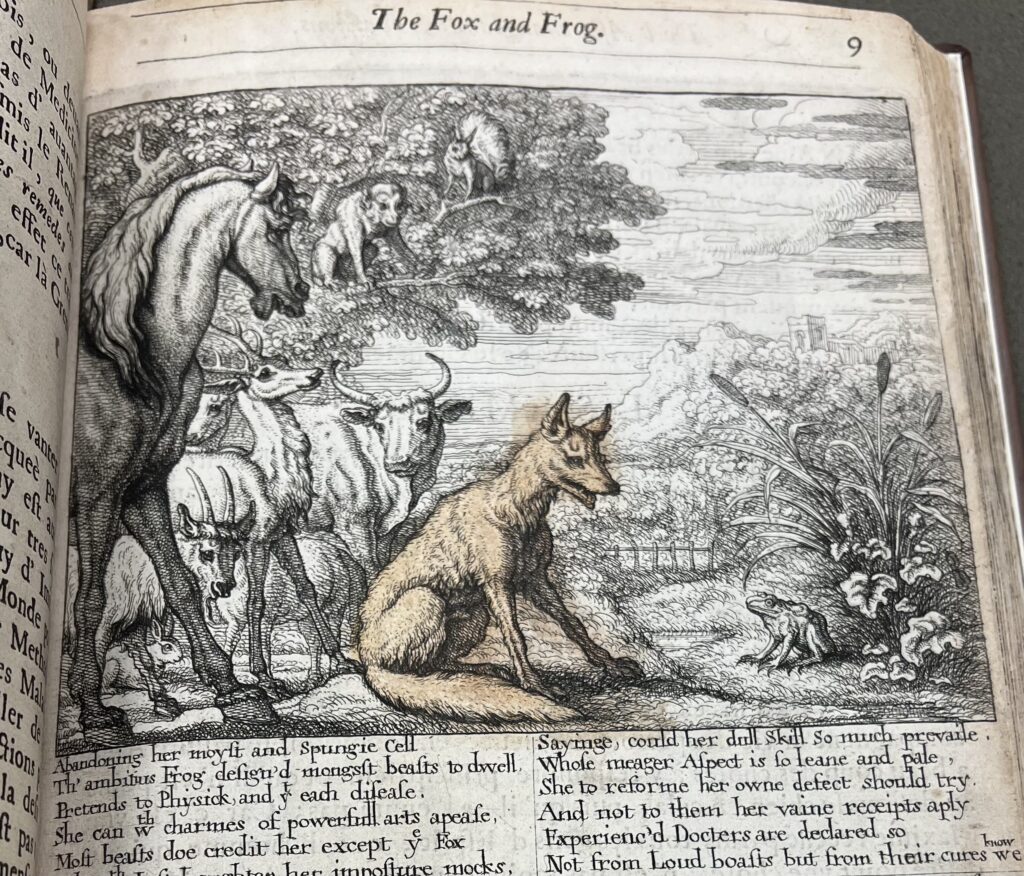
One reader of this book decided that they wanted to color in a few of the engravings, however, they did not get very far with it. Below we see that the owner colored in a fox on page 9 and a few feathers on a peacock on page 33.
Read And Enjoyed By All
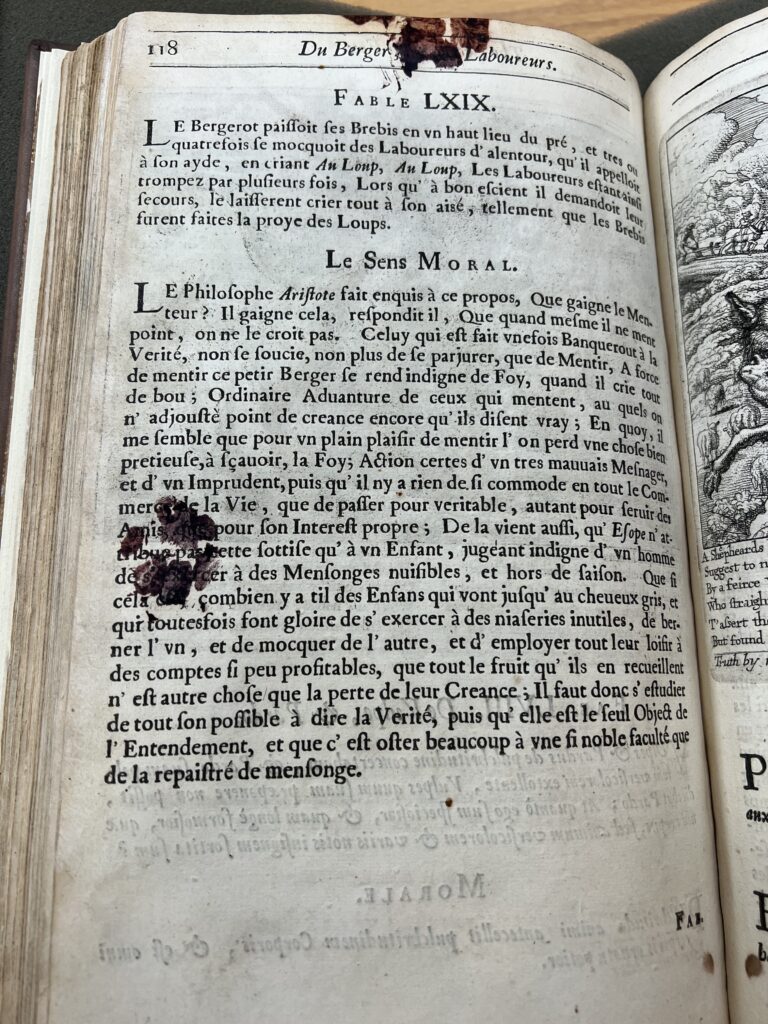
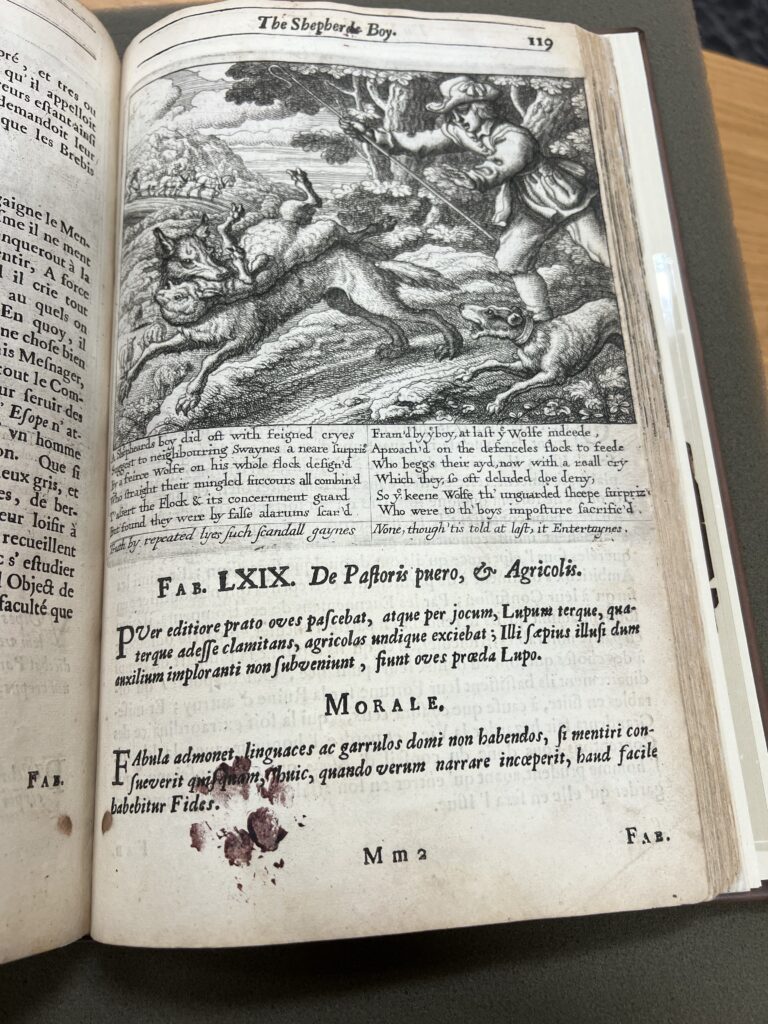
We know that Thomas and possibly Mary Benson marked their ownership of this book, but so did another reader. A cat, possibly Fluffy Benson, decided to take it upon themselves to take their ink covered paws and mark ownership over the pages.
An Unknown Signature
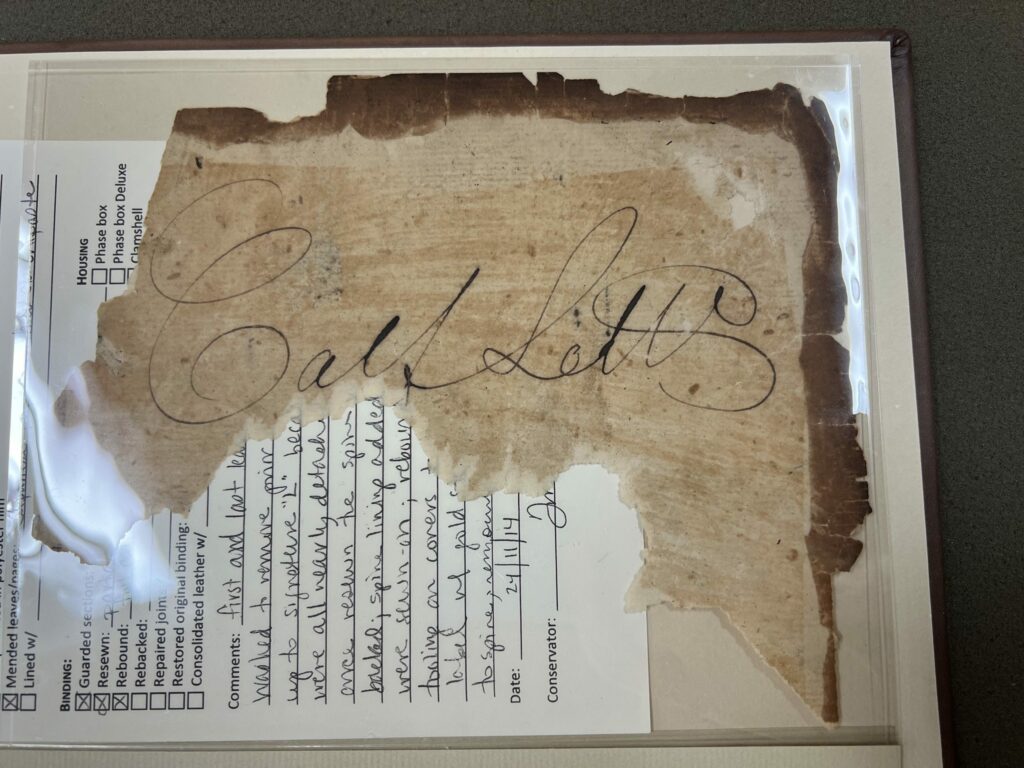
Enclosed in plastic, there is a signature being held in the back of the book. After analyzing this signature and asking almost everyone I know, I have not been able to decipher who this signature belongs to. In addition to checking records for relation of Thomas and Mary Benson, I also looked for a name that might match these letters but was unable to determine what it says.
Restoration
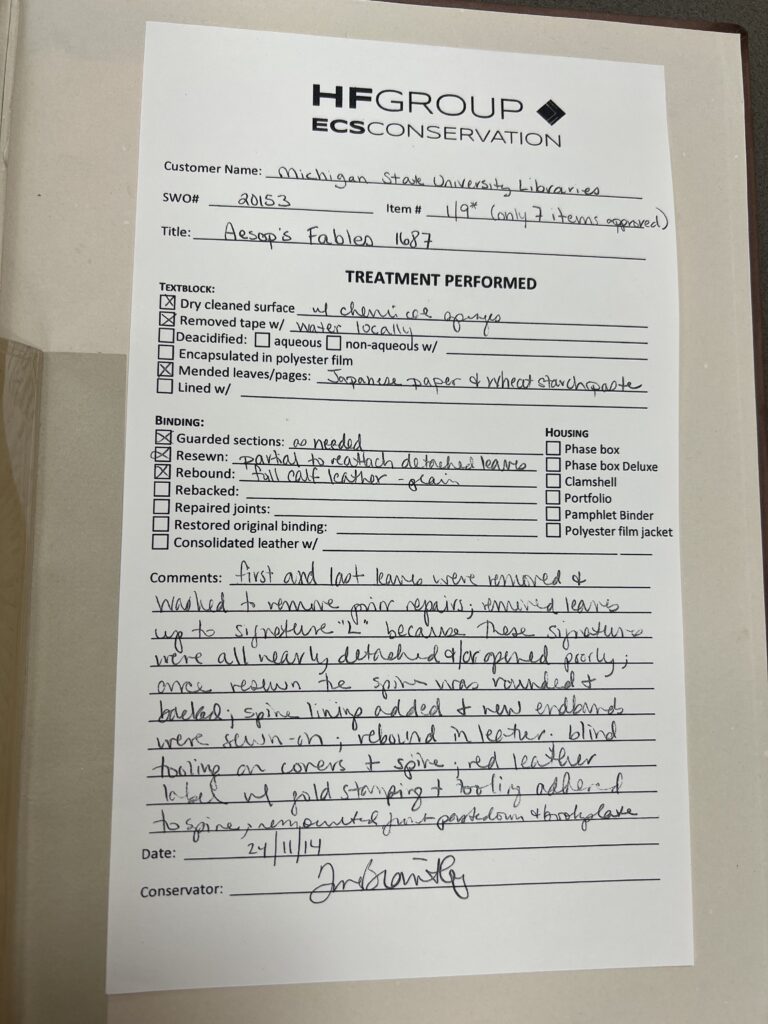
We know that this book was restoed in 2014 at HFgroup ESCconservation. We are able to see exactly what was done by the restorer because they pasted in a detailed record of what retreatment was preformed. The book had its first and last leaves removed because of their fragility. The cover was rebound in leather, giving new life to the book.
Condition
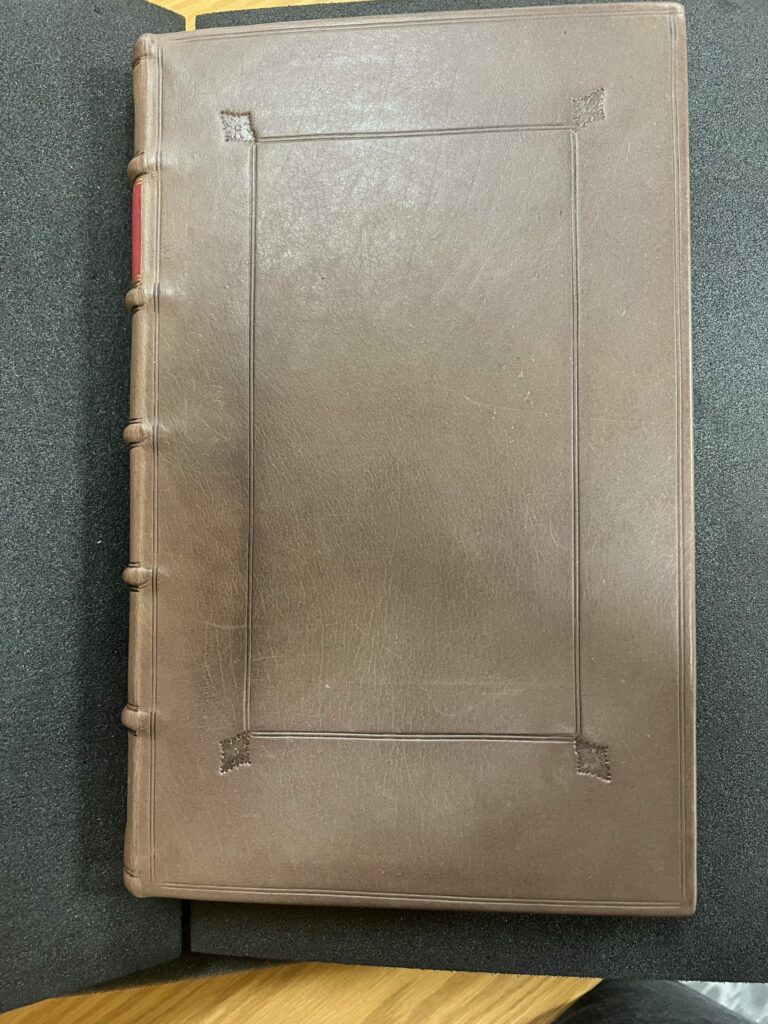
Because of the conservation, Aesop’s Fables is in great condition The book was rebound in leather and the spine was reinforced. The spine has red leather with gold stamping that reads Aesop’s Fables.
References
Michigan State Library Copy
Yale Center For British Art
James II Bibliography
Ancestry Library
Campbellsville University
Benjamin Spademan Rare Books
Completed by Genevieve Kozak for HST 475 Fall 2021
