
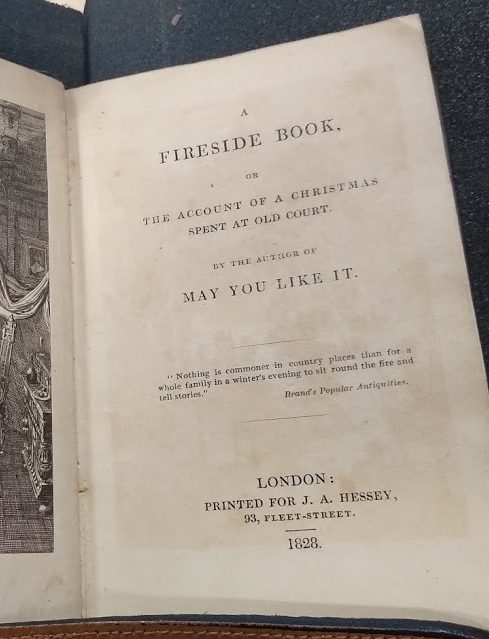
Bibliographic Data
Author: Charles Benjamin Tayler Listed in book as “By the Author of May You Like It“
Title: A fireside book a The account of Chistes spent of Old Court
Publisher: JA Hessey, at 93 Fleet Street, London
Year of Publication: 1828
MSU Library Holding: XX PRS5548.T57 F51828 c.2
Intellectual Context
The author, Charles Benjamin Tayler, was an English Clergyman and author,. In order to find out anything substantive about Tayler, I had to consult Volume 55 of the First Edition of the British reference work, the Dictionary of National Biography, published in 1898. In the entry regarding Tayler, the following is stated:
“TAYLER, CHARLES BENJAMIN
(1797-1875), was born at Leytonstone, Essex, in 1797. He was educated at Guildford under the Rev. William Hodgson Cole, and entered Trinity College, Cambridge, as a fellow commoner on 23 Oct. 1815, graduating B.A. in 1819 and M.A. in 1822. Taking holy orders,…he adopted strong protestant views and a rooted antipathy to Roman Catholicism. He left Hadleigh in 1826, and successively served, each for a short time, curacies in Kent, in Surrey, and in Hampshire…. In 1836 John Bird Sumner, bishop of Chester, presented him to the living of St. Peter’s in Chester, where he was also evening lecturer at St. Mary’s, a large church in which he usually preached to twelve hundred persons. While at Chester he published from 1838 a series of Tracts for the Rich: In 1846 he was appointed rector of Otley in Suffolk, which he resigned shortly before his death. Here he specially laboured among the young. He died… on 16 Oct. 1875… [His] numerous books and tracts consisted either of warnings against the errors of the catholics, or of manuals of religious in-struction for the young.”
This brief biography lays out Tayler’s intensive Christian ministry, making note of the fact that he served a rather large congregation, and was quite prolific in his writing, especially regarding his anti-Catholic stances and his perspectives on Christian education. The book in question here, A Fireside Book, is simply a fictional account of a Christmas at the English location Old Court, most likely meant to represent a proverbial romanticized “place of old.” The book tells the story in order to provide moralization through examples of Protestant living, with the hopes of these morals being passed on to the readers. It was published in the same era as Charles Dickens’ The Christmas Carol, apart of an epoch of tales meant to spread virtue and make a social statement using Christmas as a centerpiece.
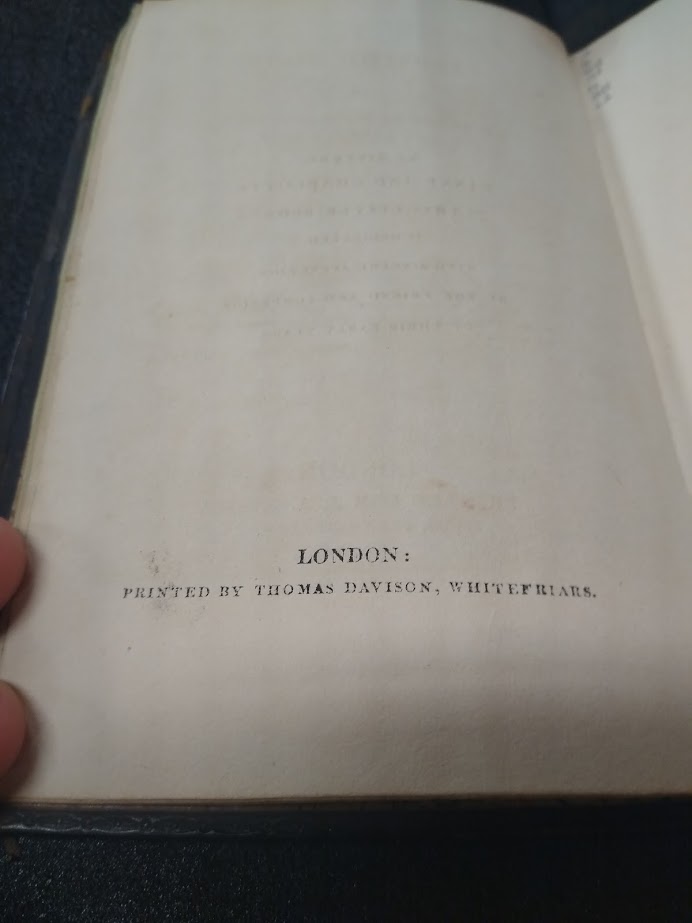
The book contains a note that the book was printed by Thomas Davison, a printer in Whitefriars, which is a district in London. This Thomas Davison is also thought to have printed some of the works of Mary Shelley and portions of Lord Byron’s Don Jaun.
Physical Attributes
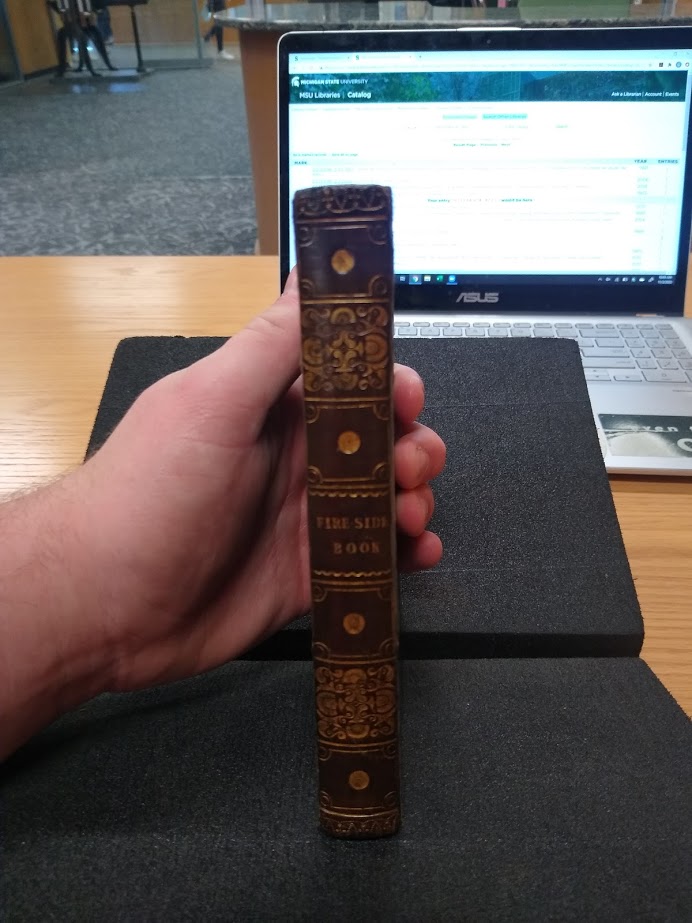
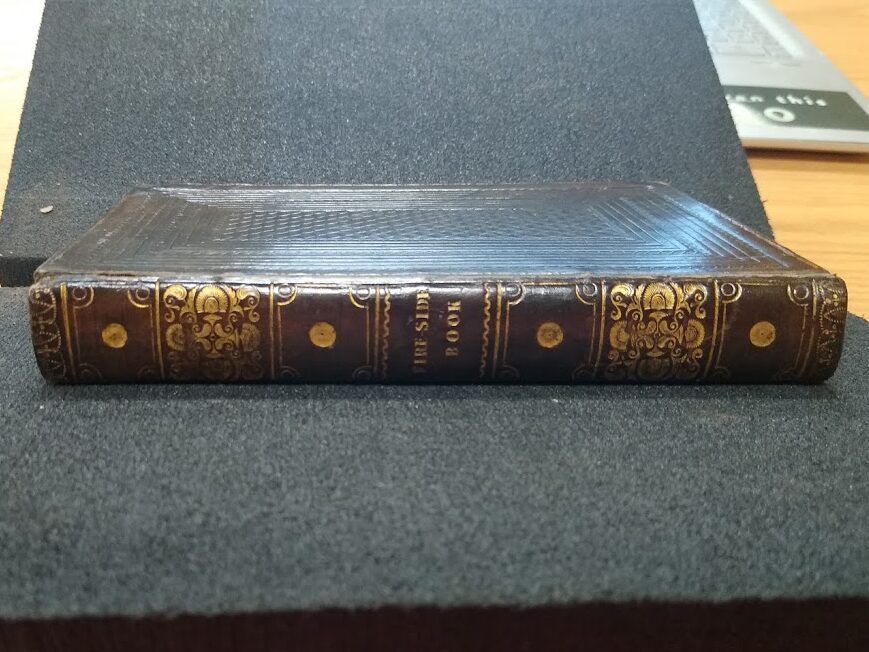
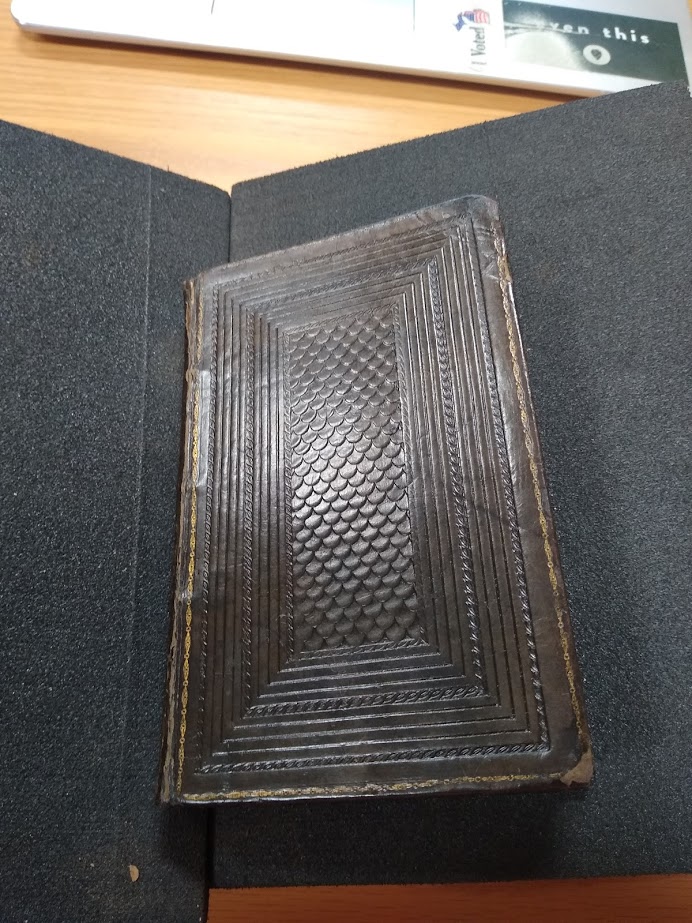
The book is held together in a leather binding, with what I presume is a board, or thick leather, on the front and back covers maintaining the firm nature of the book. The leather covers are decorated with blind tooling, and the spine is decorated with golden gilted tooling, along with the short title of the work.
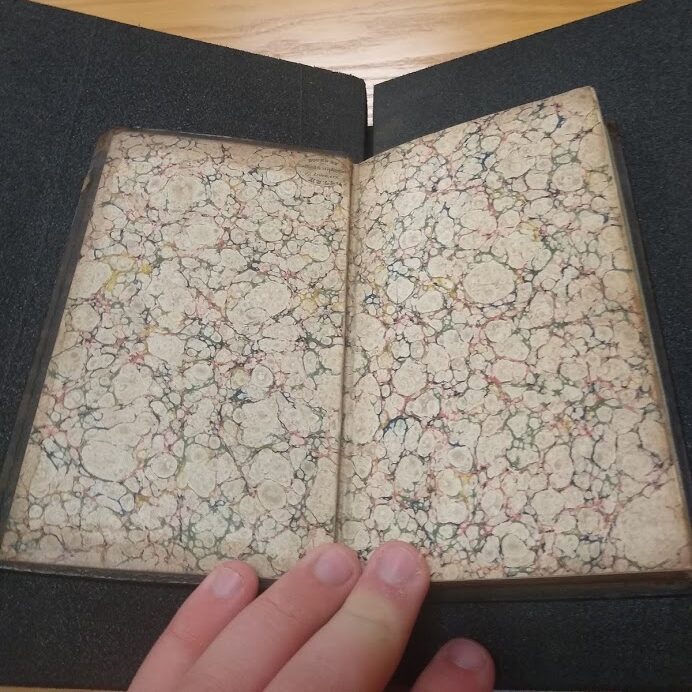
The front and back pastedowns, along with first leaf, are decorated with brightly colored marbling of sorts.
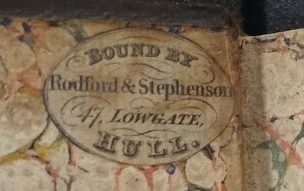
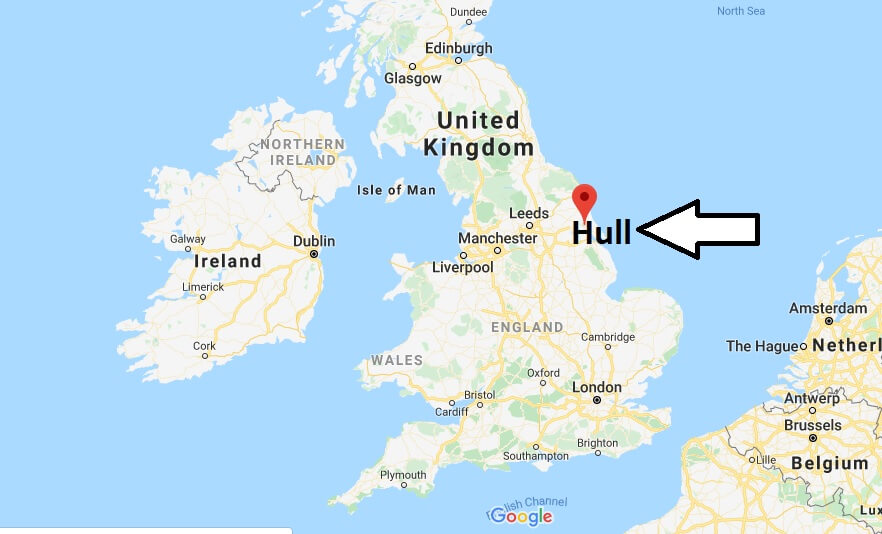
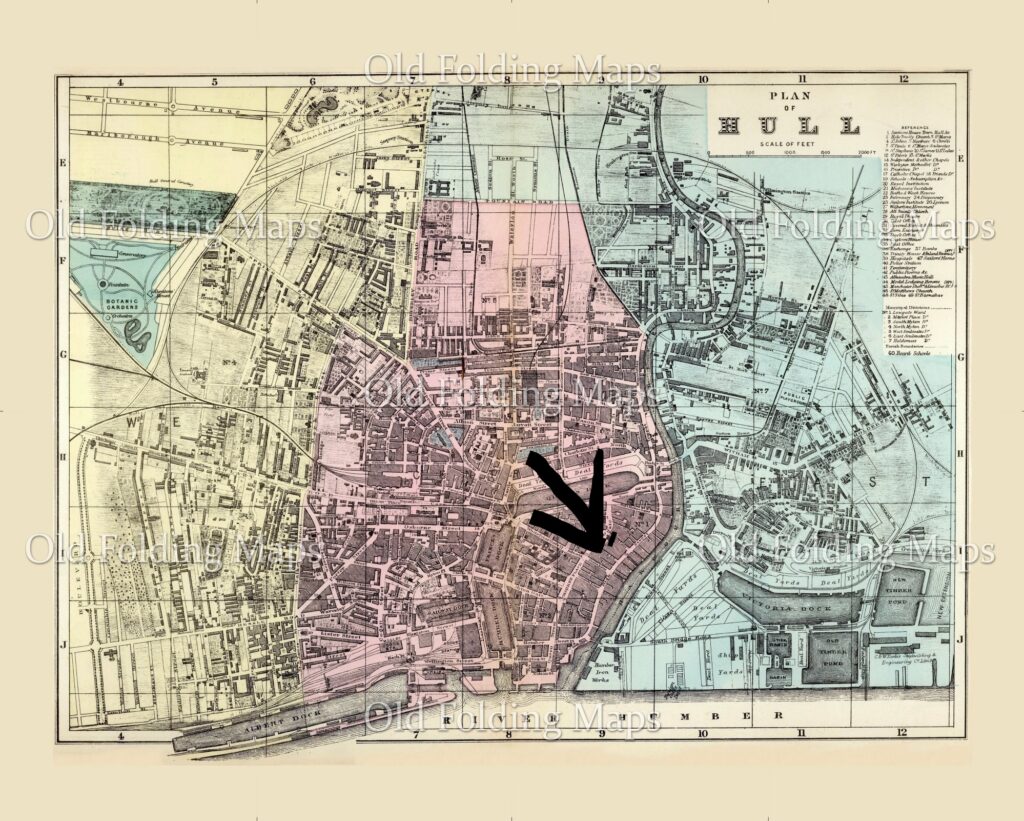
On the top left of the front pastedown, one can see a stamp or bookplate, stating that the book was bound by Rodford and Stephenson, at 47 Lowgate, Hull. In the 1828 edition of Pigot’s Directory, a major directory in Britain, I found Rodford and Stephenson listed as booksellers in Hull, which is a city in East Yorkshire, England. The map below shows where Hull is in England.
The map below, of Hull in 1832, shows the approximate location of the bookshop in Hull.
Depending on which way the book is oriented, 2 fore-edge paintings can be viewed on the side. The 2 different paintings can be viewed by viewing the 2 fore-edges of the book when it is open flat.
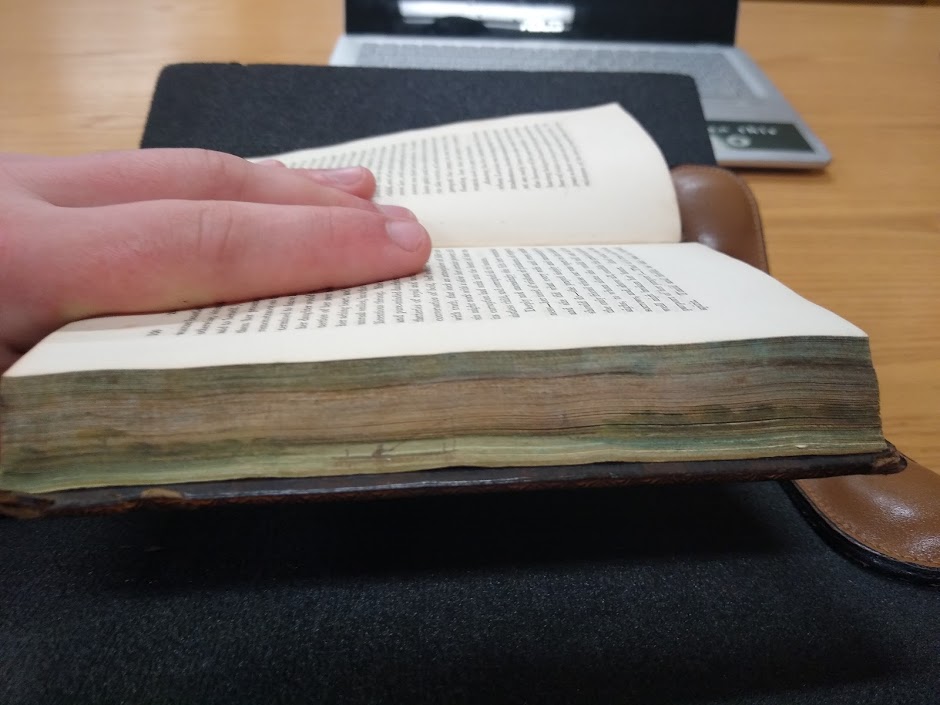
The first is an image of a man fishing in a boat on a lake.
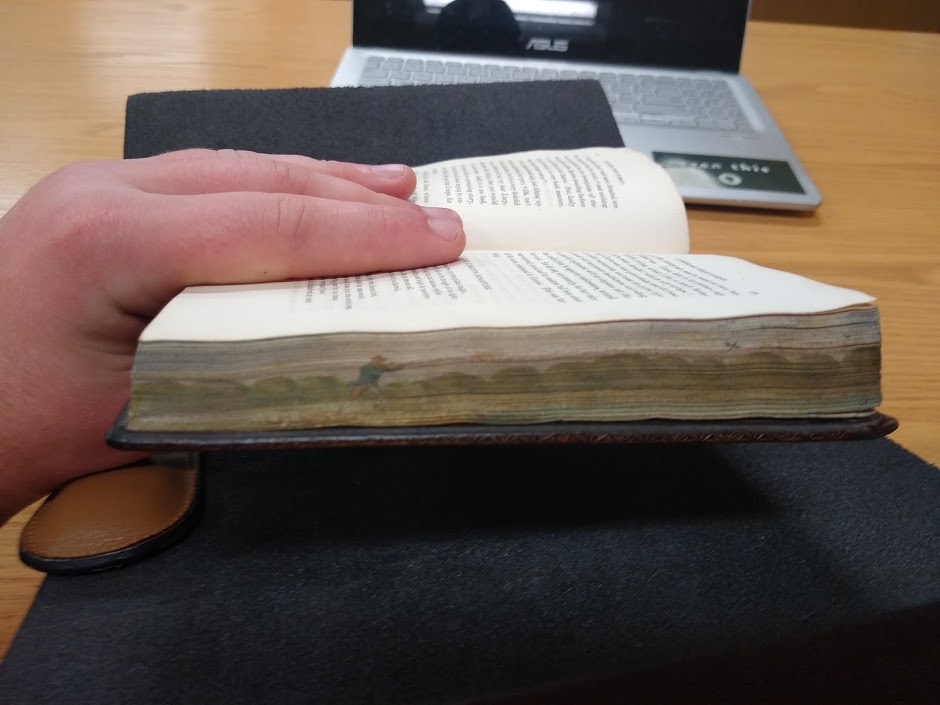
The second image is of a man shooting into the air, likely engaging in a hunt for ducks, geese, or another form of fowl. A fascinating line of inquiry would be into the history and practice of fore-edge painting, to attempt to hypothesize the circumstances around which this book was painted, and to determine if the images have any sort of significance.
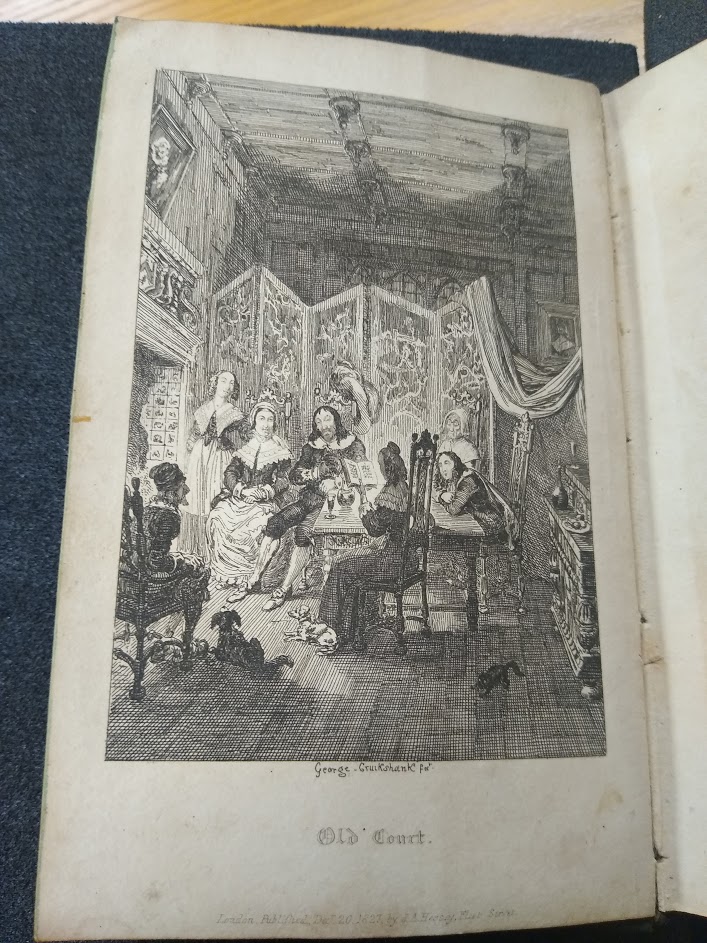
Adjacent to the title page, there is an illustration, likely depicting a scene from the book. The illustration is notable because, in keeping with the book’s connections with A Christmas Carol, the illustration was done by George Cruikshank, the man who illustrated the Dickens work.
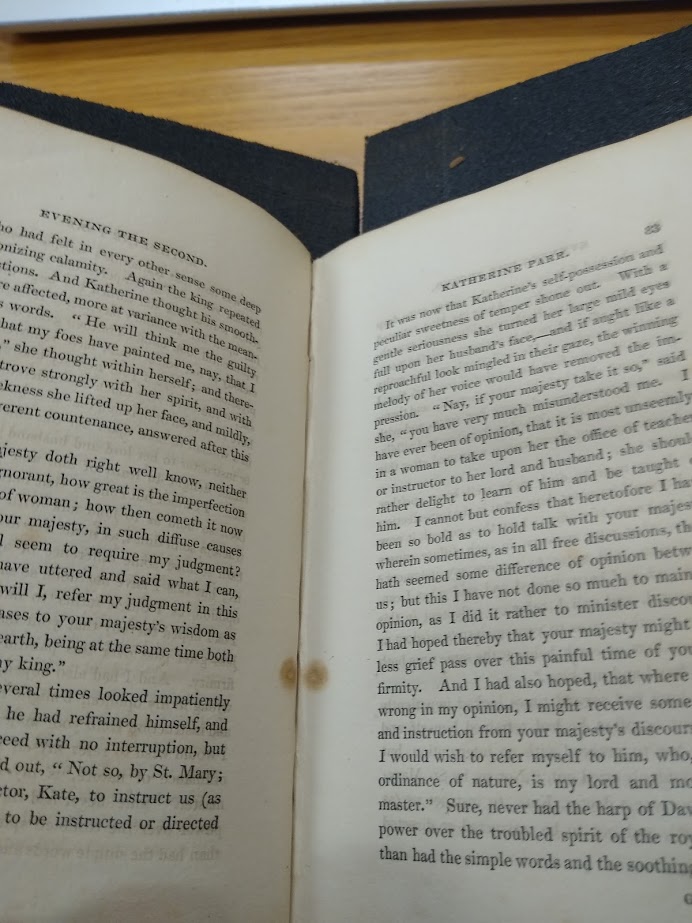
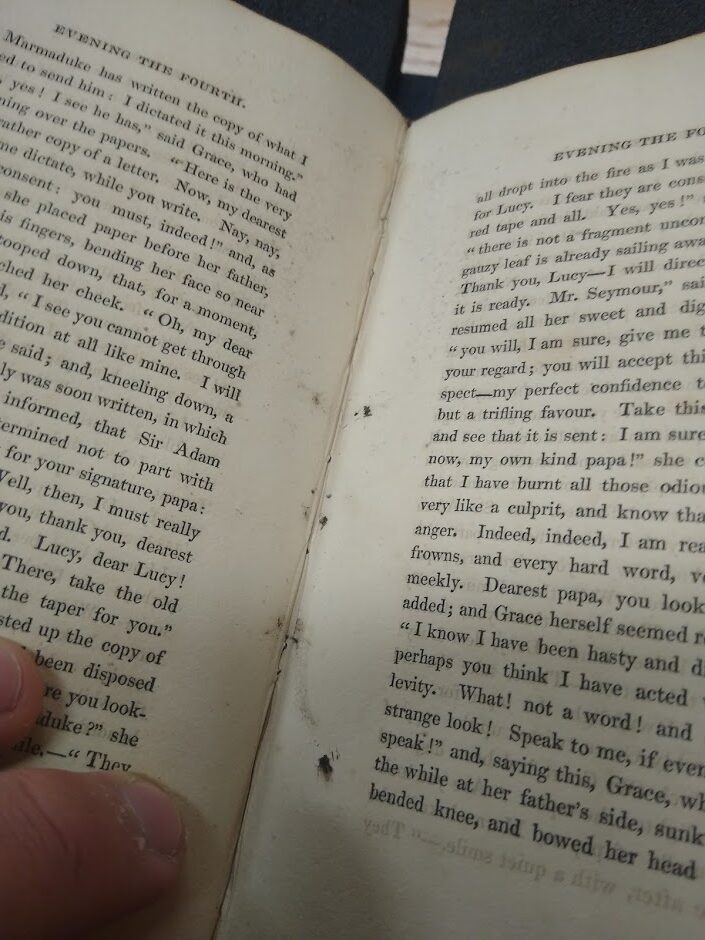
In looking through the book I did find 2 things incredibly unexpected, which were the remains of a leaf in between 2 pages, and the remains of a dead insect, both of which seemed to have been contained within the book for a considerable period of time. Both left marks on the pages, and they also both seemed to fall apart when I found them in the open book.
Provenance Data
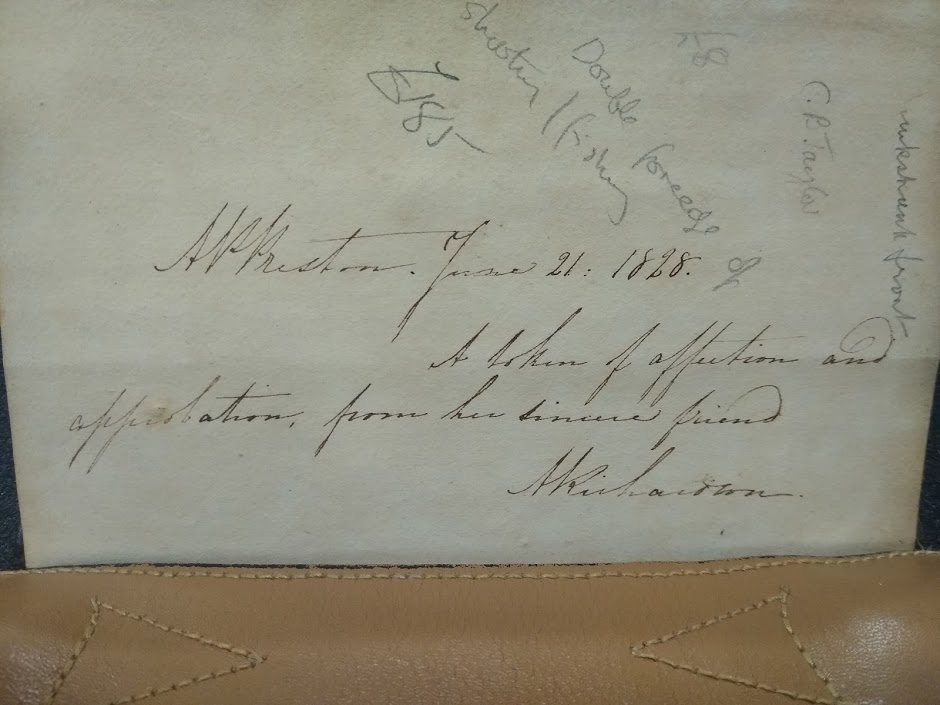
The above image, of a page in the introductory leaves, displays the extent of the marks of ownership contained within the book. The main piece of text, written in cursive in ink pen, is a note written in presenting the book as a gift, which, thanks to my own guesswork, assistance from MSU Library staff, and social media crowdsourcing, I have transcribed as follows:
"AP Preston. June 21:1828
A token of affection and approbation, from her sincere friend
A Richardson"
Due to the fact that these are the only marks of ownership in the book, and only first initials and last names are given, finding further information about the giver and recepient of the book will be difficult. Due to the indication of binding being done by Rodford and Stephenson in Hull, I can assume that the sale was made in Hull, but finding information about these individuals is largely a dead end.
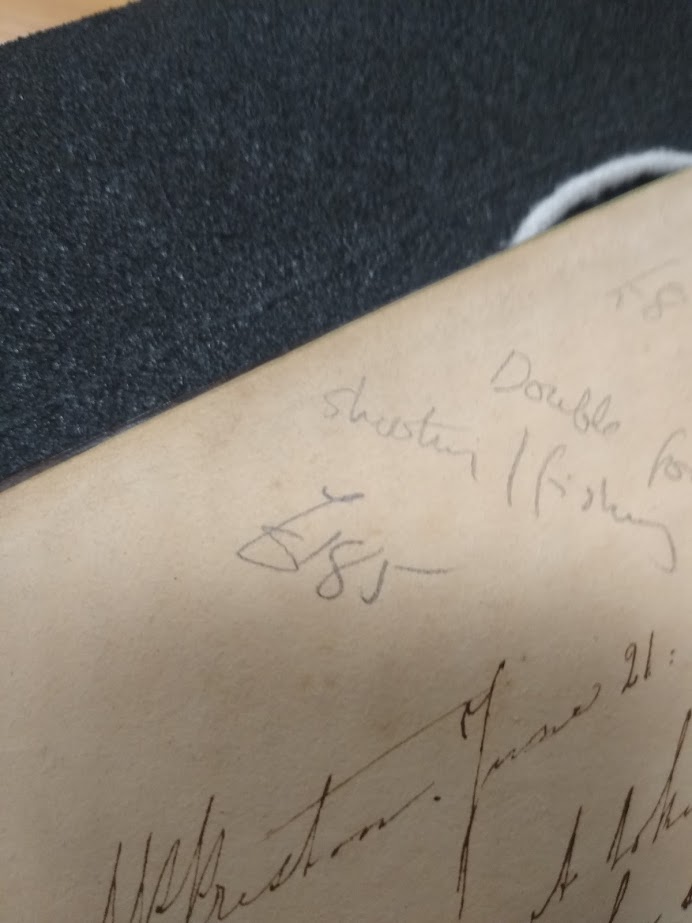
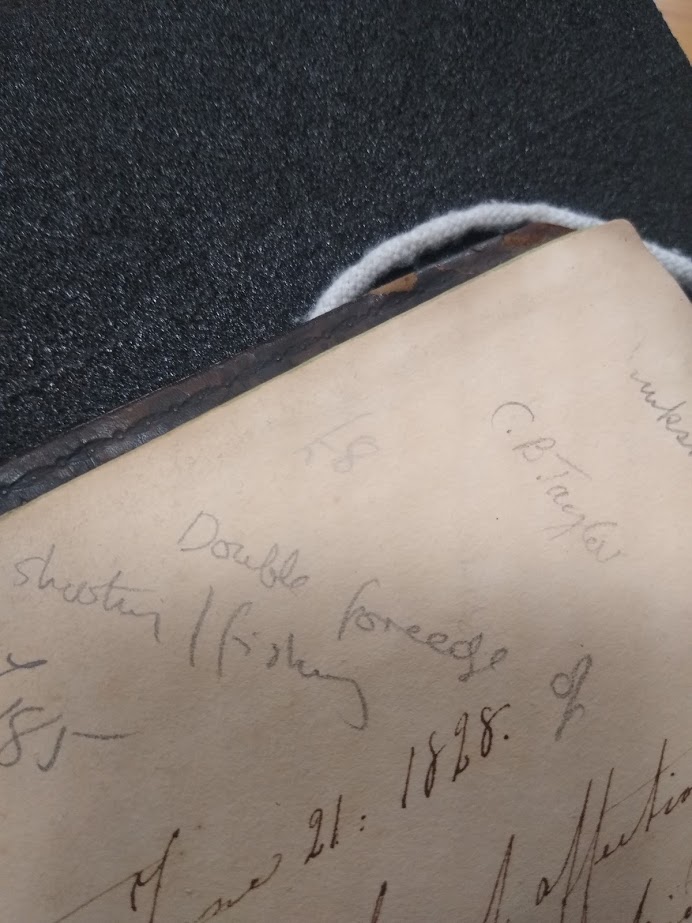
Beyond this note, a few different marks are contained on this same page, which comment on different features of the book and are likely marks made by a bookseller or librarian. These definitely comment on authorship the fore-edge paintings, and likely the identity of the artist who drew an engraving included near the title page in the book.
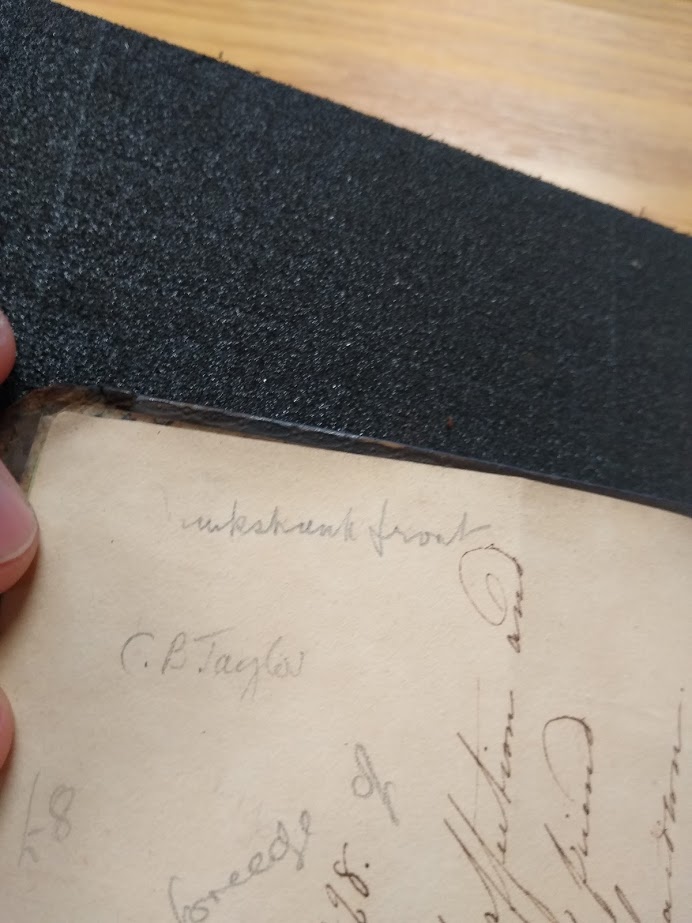
Even though there is no more provenance data recorded in the book, the MSU Library catalogue entry for this book indicates that it was donated to the library as apart of the William D. and Helen M. Chase Collection, which focuses mainly on books relating to calendars, chronology, and the reckoning of time. William Chase devoted much of his life to the creation of Chase’s Calendar of Events, an almanac and calendar of holidays and other major dates. The Library’s description of the collection, though, explains that the Chase’s were also interested in collecting books with fore-edge paintings, which provides an explanation of this book’s presence in their collection.
Sources
https://www.google.com/books/edition/Pigot_and_co_s_national_commerclal_direc/hdMHAAAAQAAJ?hl=en&gbv=1&dq=preston%20hull%201828&pg=PA972&printsec=frontcover&bsq=hull
https://archive.org/details/dictionaryofnati55stepuoft/page/398/mode/2up?q=tayler
https://lib.msu.edu/ebookplates/view/?id=1263
Created by: Greg Stevens, History/English 475, Fall 2020
