
Identification Information
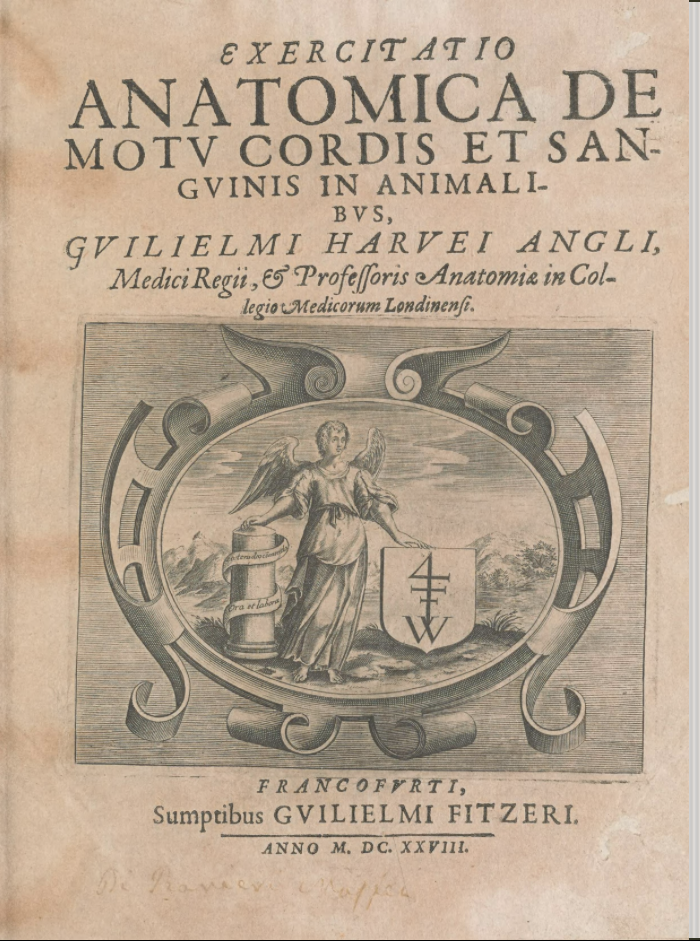
Title: Exercitatio anatomica de motv cordis et sangvinis in animalibvs
English Title: Anatomical Exercise on the Motion of the Heart and Blood in Animals
Author: William Harvey 1578-1657
Imprint: Frankfurt am Main, William Fitzer, 1628
Topics: Blood, Circulation
Collection: Smithsonian
Language: Latin
Call Number: 39088002685501
USTC Identifier No: 2020568
Pages: 88
Pagination: pp. 72, [4]
State of the Book
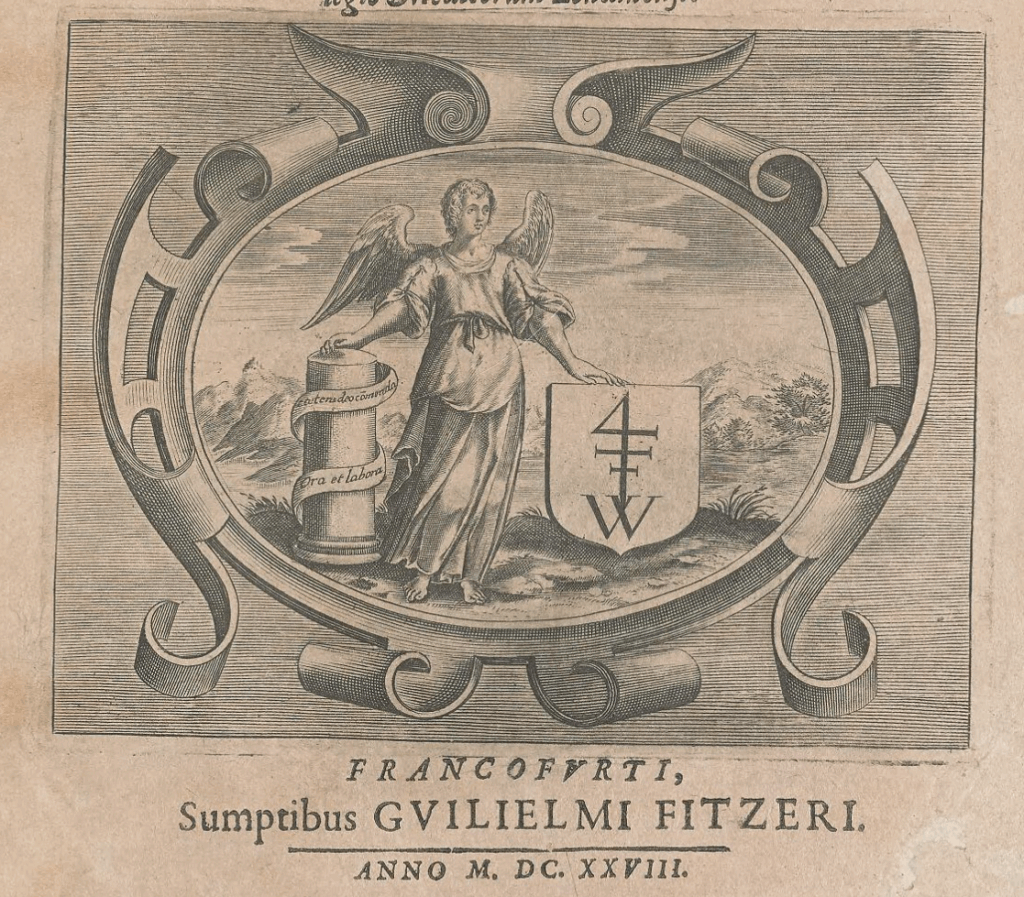
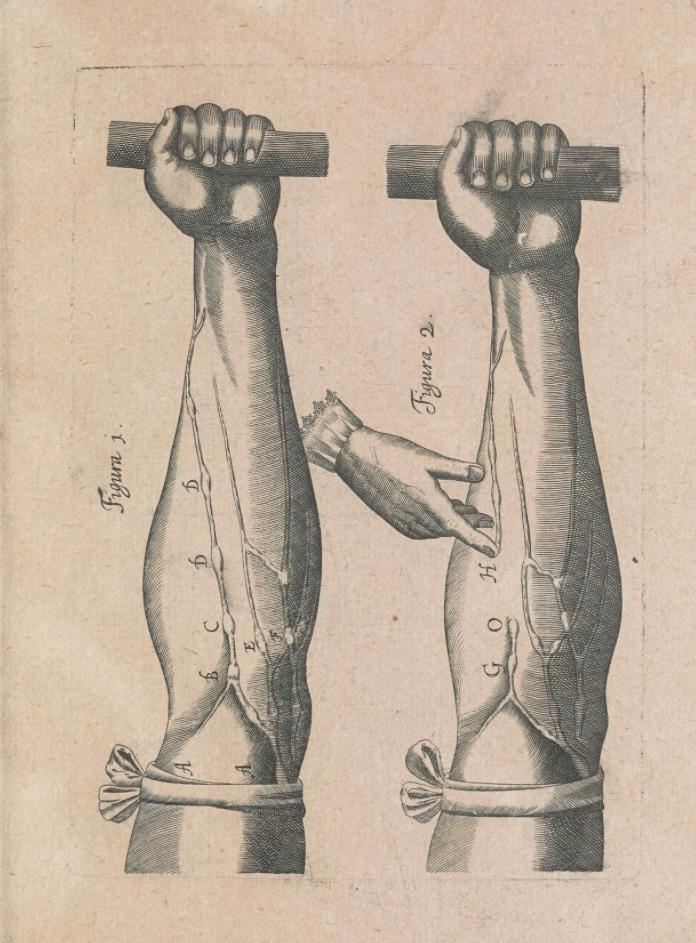
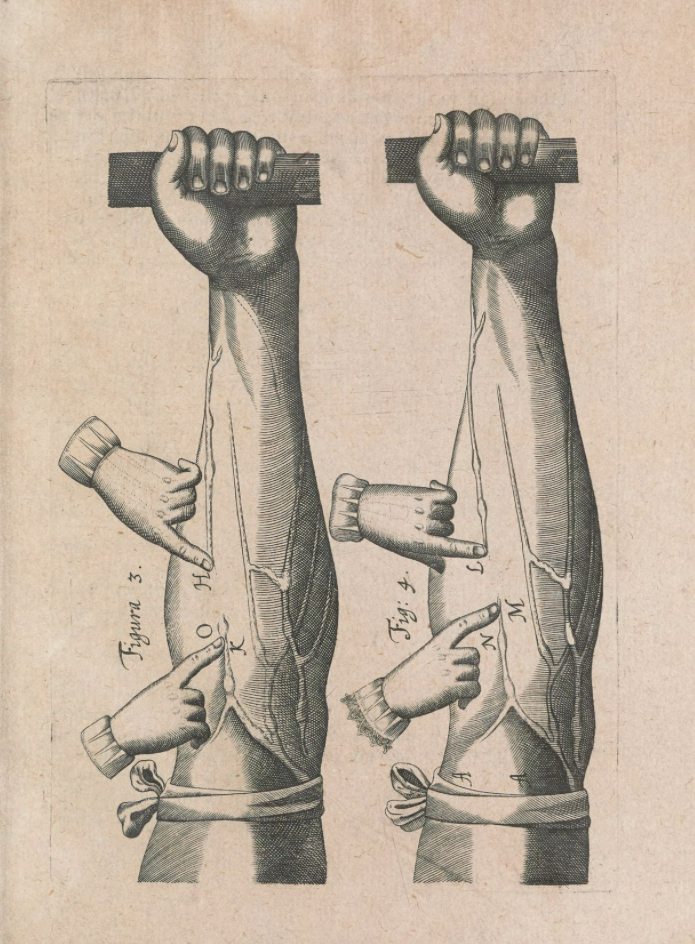
Exercitatio anatomica de motv cordis et sangvinis in animalibvs is a quatro. Each section begins with a different printed illumination as well as printed initialing of the first letter of the section. The anatomical diagrams on pages 57 and 59 and the printers mark on the title page, judging by the the plate marks and the crispness of the lines, are intaglio prints.
The book is bound in a thin, light brown vellum. On the front and back cover there is a rectangle where the brown is darker with holes punched throughout. This indicates the possible absence of a strap.
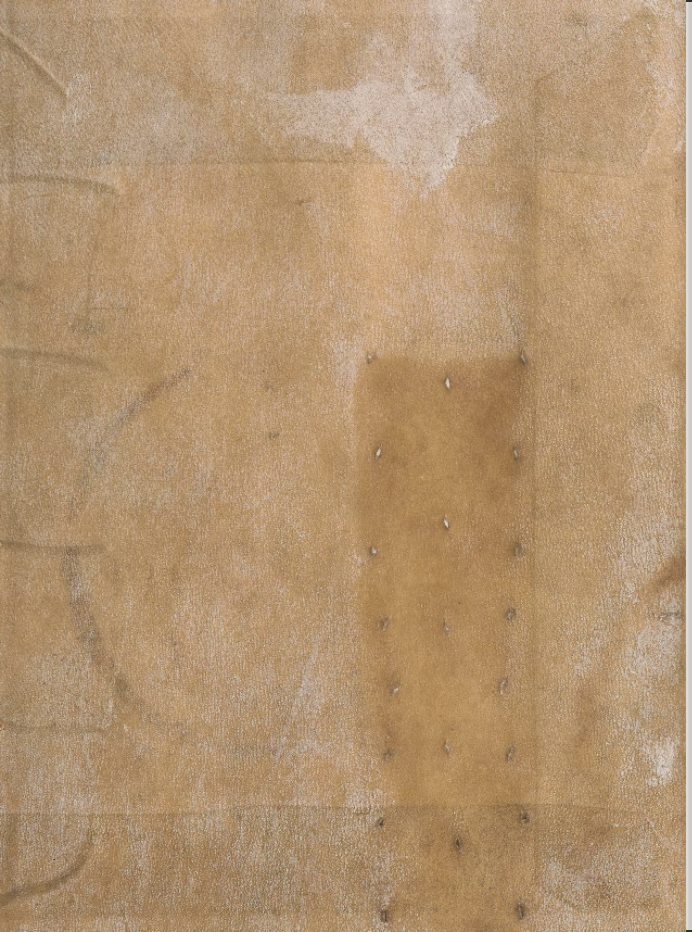
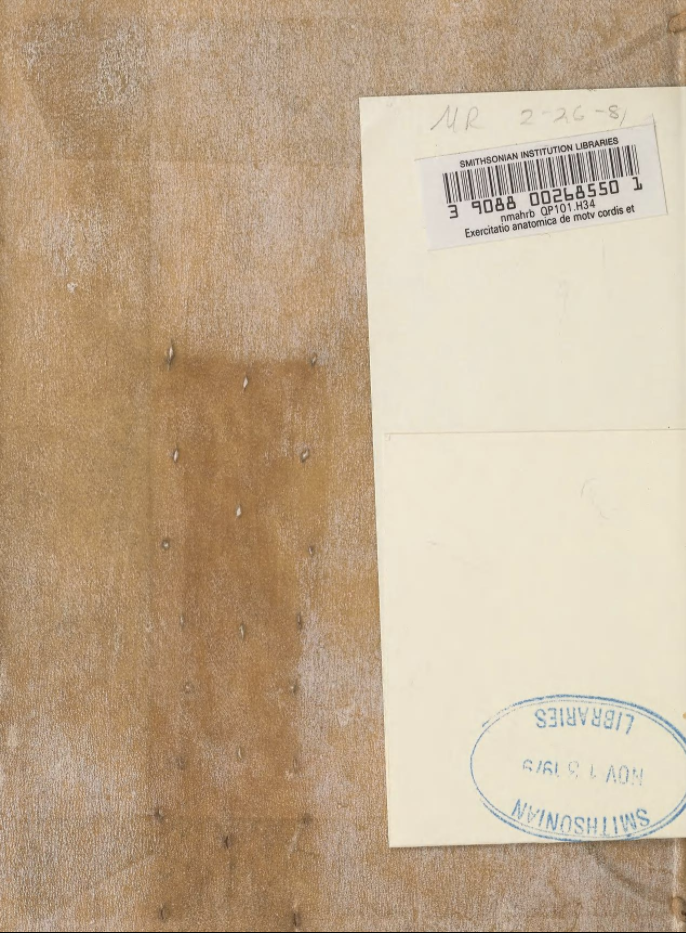
The pages of the book are discolored. White spots appear frequently on the leaves and on some pages, such as page 47 and 48, there are visible orange stains. In many places, such as page 23 and 27, the ink is fading but remains legible. On pages 37 and 38, the manicules have been covered with orange stains. Ink smudges appear on pages 26 and 66.
The book uses black ink with a Roman typeface, varying in size with some portions italicized and some not.
Book Content
Exercitatio anatomica de motv cordis et sangvinis in animalibvs is a description and evaluation of the circulation of blood throughout the body. William Harvey, an English physician, was the first to experiment with and recognize the extent of and mechanics behind the circulation of blood. This book contains his findings through careful experimentation. He describes the function of veins and arteries, as well as the delicate flaps within. The book contains two detailed diagrams of blood-flow in forearms to indicate how, as proven by Harvey, blood flows through the veins toward the heart rather than away from it as previously believed.
There had been previous suggestions of a circulatory system, by 16th century Spanish physician Servetus and 13th century Muslim physician Ibn al-Nadis. They proposed a system where blood circulated from the heart to the lungs and back, never going through the entirety of the body. There was believed to be a second circulatory system that brought lungs to the rest of the body. Harvey, though not knowing the significance of oxygenated and deoxygenated blood, correctly realized there was in fact one system. The two-fold circulatory system was not the post prominent belief during Harvey’s time. Credit to that belongs to the physician Galen, who proposed that blood was created in the liver and absorbed in the tissue, moving away from the heart. Galen’s system was the predominately used system as he was a well-respected physician, so when Harvey proposed otherwise it was a great change to medicine and anatomy at the time. Harvey waited longer than he would have needed to to publish this book because he had to be sure he was correct through extensive experimentation mostly involving cold-blooded or dying animals as their heart rates were the slowest and therefore easiest to track. A second book, Exercitationes Duae Anatomicae de Circulatione Sanguinis, ad Joannem Riolanem Filium, Parisiensem (Two Anatomical Exercises on the Circulation of the Blood) was published in 1649 in response to the criticism Harvey recieved upon publishing his findings.
The book is dedicated to the king of England.
About the Author
William Harvey was a well educated Englishman. He was first educated at the King’s School in Canterbury, then in arts and medicine at Gonville and Caius College, Cambridge before going on to study at the leading medical school in Europe, the University of Padua. Upon receiving his doctorate, he went on to become a fellow of the Royal College of Physicians of London in 1607 and was the personal physician of both King James I and King Charles I. Harvey became friends with King Charles I and was allowed to experiment on the royal herd of deer and present his findings to the king. He also had the responsibility of leading the group of doctors treating Sir Francis Bacon. In practice, he opposed the mechanical philosophy of Rene Descartes and any purely mechanical conception of the human body. He preferred to view it instead as organic.
Provenance Information
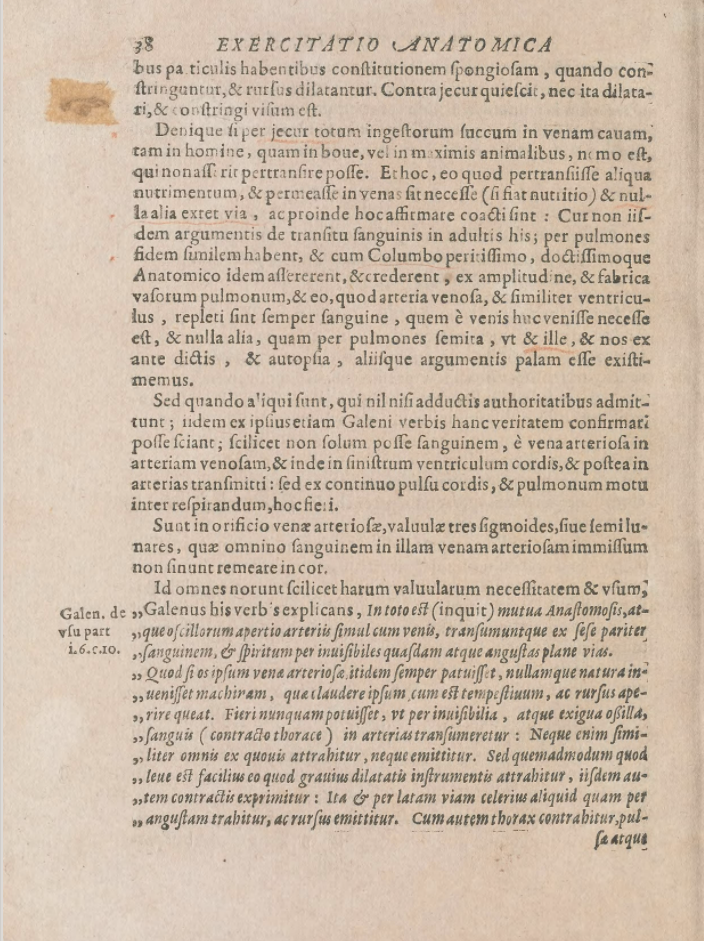
Above is one example of a manicule being blocked out by an orange marking. There is also evidence of underlining (done in red) that appears on this page and many others throughout the book. It’s interesting that a manicule meant to point out important information would be covered in the same place as information is underlined. It’s likely that the underlining and covering of the manicule were done by two separate owners.
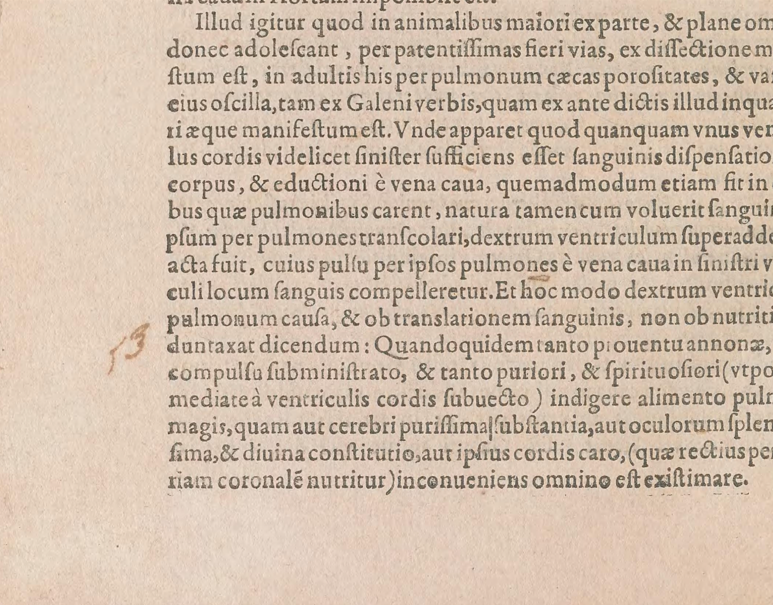
Above is what appears to be a hand-drawn manicule in a similar ink color to much of the underlining in the book. One owner of this copy must have thought that the pictured section had important information that they wanted to be able to easily find.
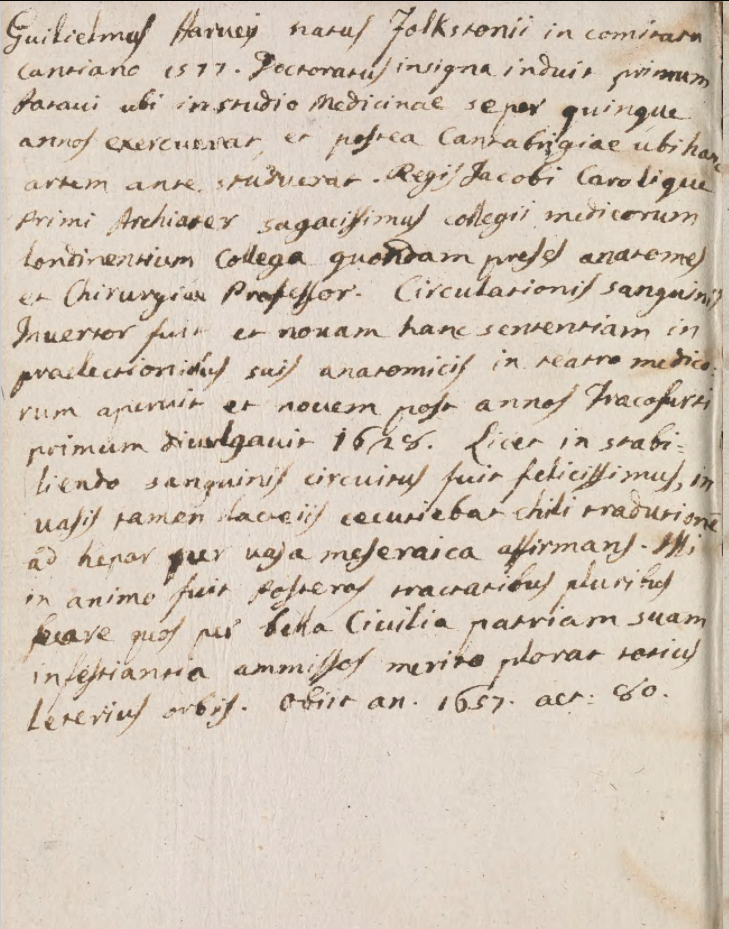
The back of the final leaf there is a long section handwritten in latin or italian. This is from one of the owners of the book, though it is difficult to make out what it says.
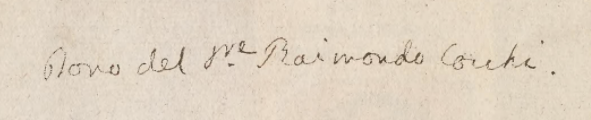
The name Raimondo Cocchi is written on the page before the title page, indicating that at one time he was an owner of this book. He was an Italian antiquarian and prefect for the Archducal Museum in Florence. He was born in Florence in 1735 and his father saw to it that he be educated in modern and classical languages. Cocchi also went on to study medicine in university, so a text such as this would have been of special interest to him.
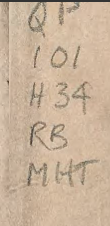
The above series of numbers and letters is on the upper left corner of page 3.
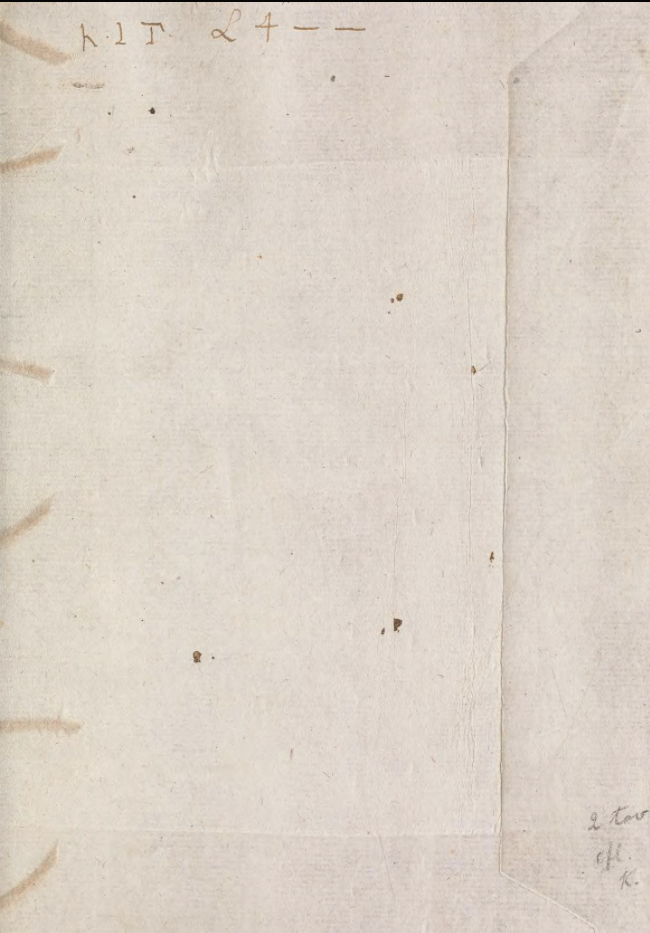
The inside of the back cover has markings at the top and the bottom right corner. The top markings describe the price fo the book and the bottom markings are likely from the current library or a recent owner as they are done in pencil. The inside of the front cover features four different bookplates.
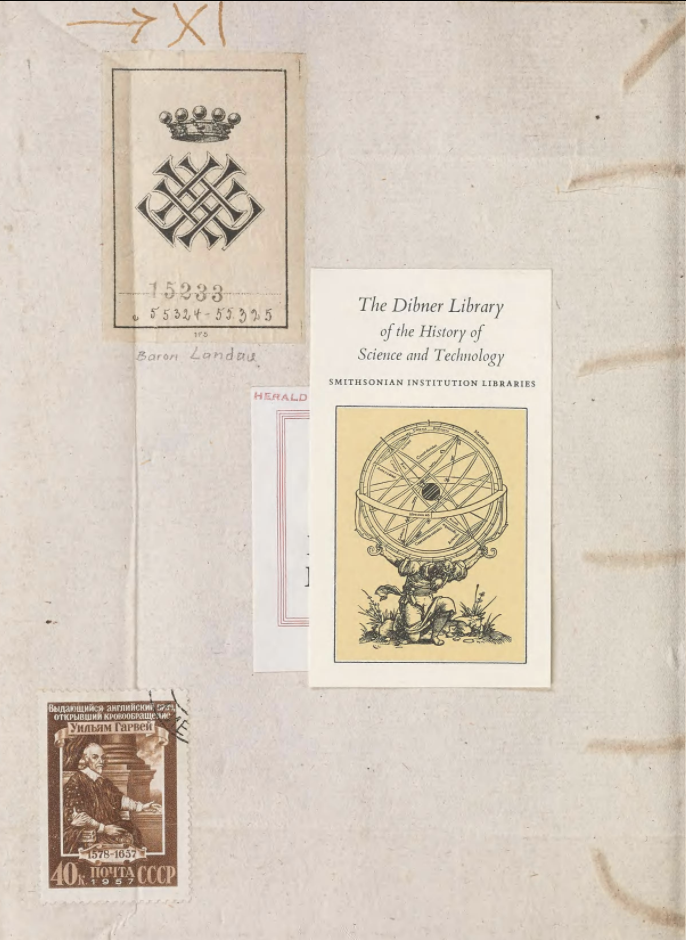
The upper left bookplate is above a handwritten name, Baron Landau. The number 15233 is stamped on it and under that “e 55324-55325” is written in ink. Baron Horace de Landau was an Austrian banker and collector who lived from 1824-1903. The center bookplate is from the Dibner Library of the History of Science and Technology (Smithsonian Institution Libraries). This is where this copy of the book is currently housed. That bookplate is covering the fourth bookplate. Not much can be told from this other than the word “Herald” printed in red in the top corner. The bottom left bookplate is an anniversary stamp commemorating three hundred years since William Harvey’s death. The stamp depicts an image of William Harvey with the years of his life beneath it. The date of the bookplate is 1957.
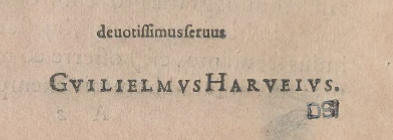
At the end of the dedication, there is a small library mark just under William Harvey’s name that reads “DSI”. This is the mark of the Dibner Library of the History of Science and Technology.
Bibliography
Baron Horace de Landau. The British Museum. https://www.britishmuseum.org/collection/term/BIOG34671.
Baldini, Udo. COCCHI, Raimando. Treccani. https://www.treccani.it/enciclopedia/raimondo-cocchi_%28Dizionario-Biografico%29/
Bolli, Roberto. William Harvey and the Discovery of the Circulation of the Blood Part II. American Heart Association, April 25, 2019. https://www.ahajournals.org/doi/full/10.1161/CIRCRESAHA.119.314977.
Gregory, Andrew. William Harvey. Encyclopædia Britannica, May 30, 2020. https://www.britannica.com/biography/William-Harvey.
Raimando Cocchi. The British Museum. https://www.britishmuseum.org/collection/term/BIOG210720
Camellia Landman, HST 475, Fall 2020.
