
Miscellanies by the Right Noble Lord, the late Lord Marquess of Halifax
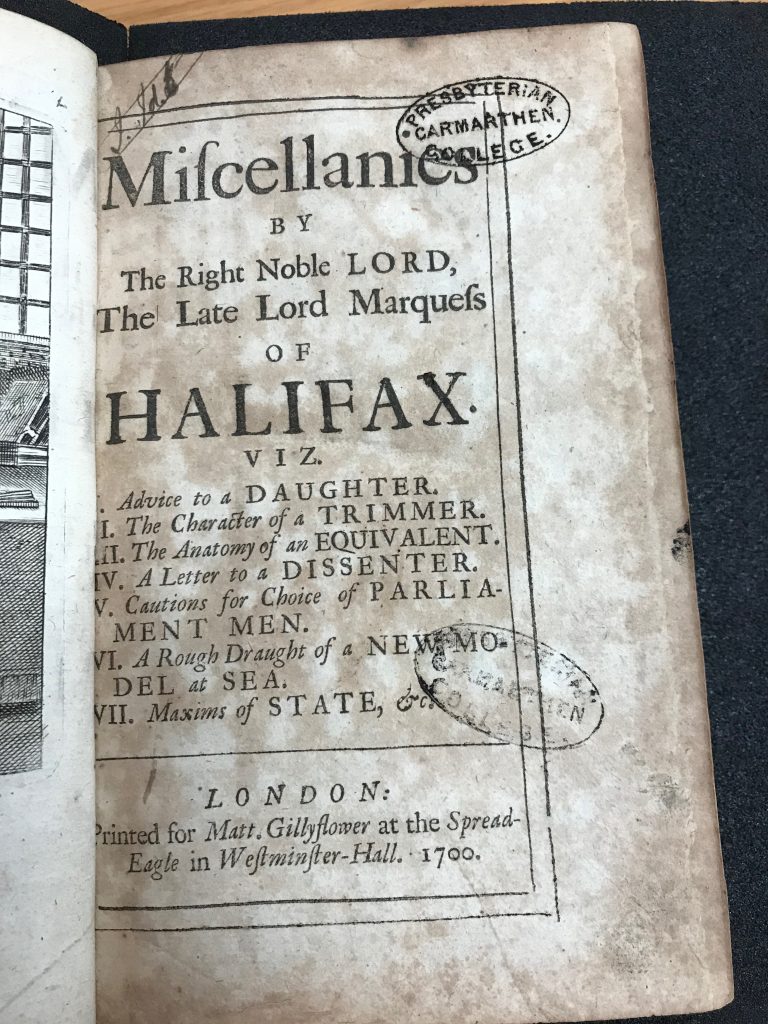
Viz. I. Advice to a daughter. II. Thecharacter of a trimmer. III. The anatomy of an equivalent. IV. A letter to a dissenter. V. Cautions for choice of Parliament men. VI. A rough draft of a new model at sea. VII Maxims of the state
Richter, C.S. Anweisung zur guten Pferdezucht und Wartung, auch wie man ein guter Pferdekenner werden könne.:
A collection of works by George Savile, I marquess of Halifax, a politician and nobleman during the reign of King Charles II. Printed for Matt. Gillyflower at the spread-Eagle in Westminster-hall, London, 1700.
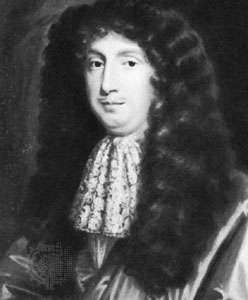
Highly revered, Sir Halifax was considered a “trimmer,” which meant that he was a moderating voice between the fierce party struggles of the day. In this collection of his works, he shares his political feelings as a moderate and gives advice to parliament. Furthermore, he gives advice to his daughter, Elizabeth, about subjects such as friendship and husbandry.
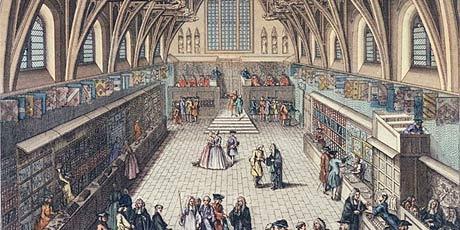
Matt. Gillyflower, otherwise known as Matthew Gillyflower, was a bookseller in Westminster Hall, London. His trading sign that would be posted on his selling stall was the Spread-Eagle, and he sold English titles of many subjects.
Binding and Condition
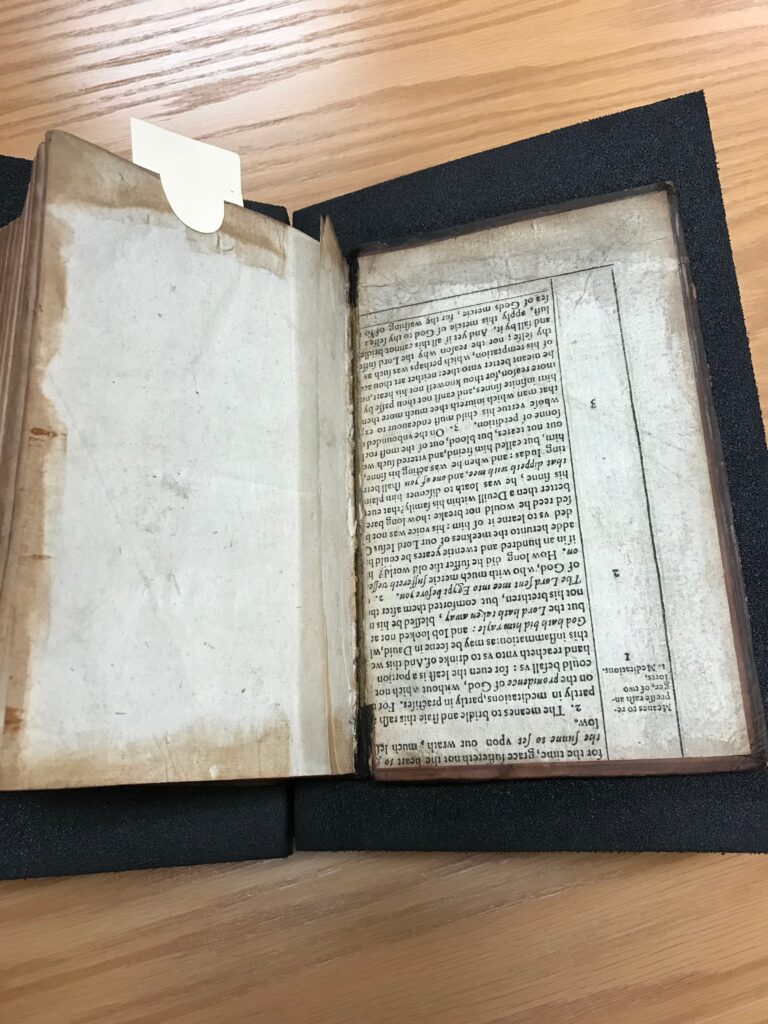
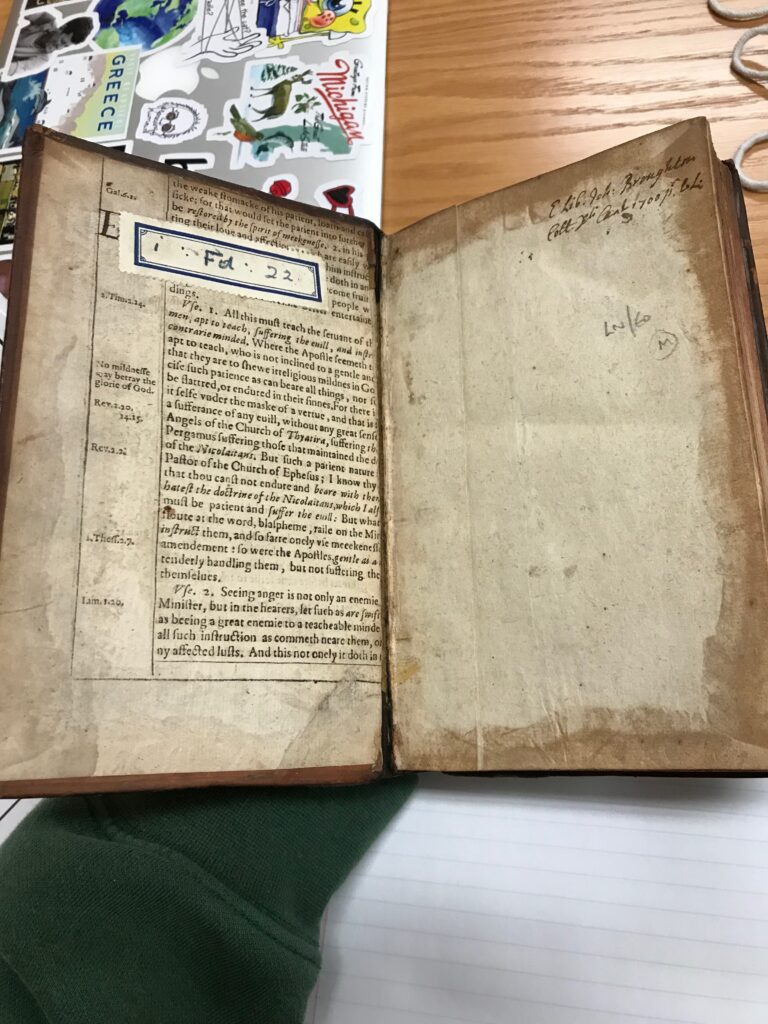
The book is comprised of several works by Sir George Savile, and includes a funeral poem to honor his death. The book is in fair condition, but the binding is noticeably fragile, with the pages separating from the binding. The pages are in good condition, with minimal repairs. There is staining throughout the book, but the text is easily readible.
The binding is in fair condition, and seems to be re-bound in panelled calf. On the inside, there are paste-downs on inside and back cover used from Thomas Taylor’s ” A commentaire upon the Epistle of St. Paul written to Titus.”
Inscriptions
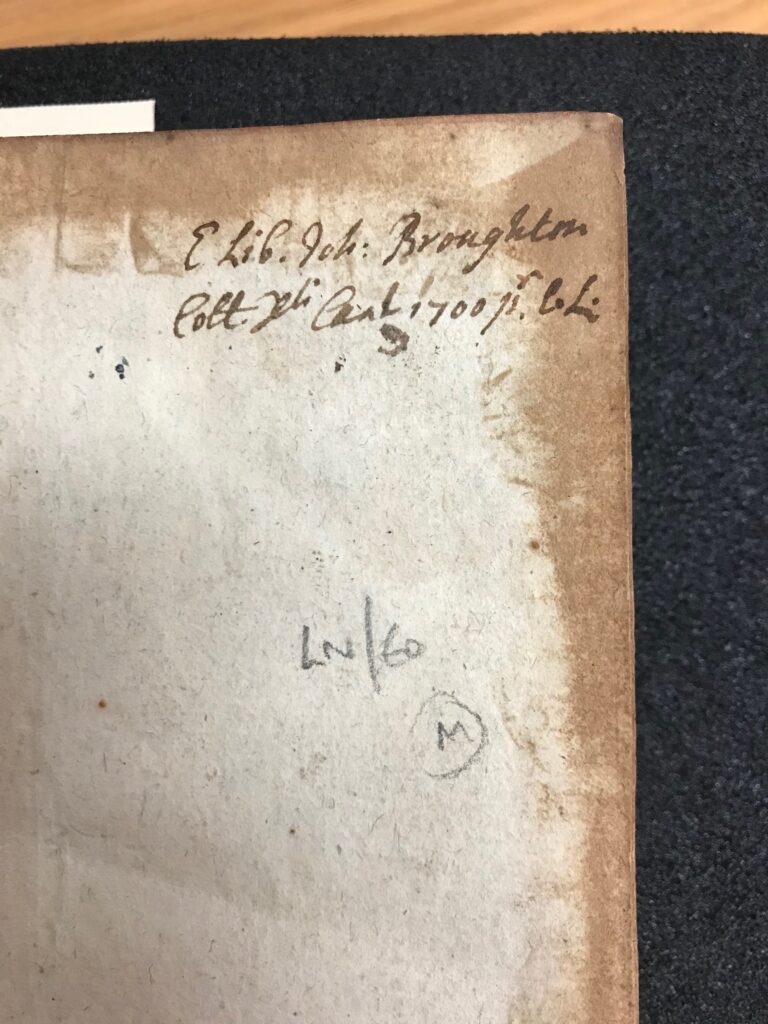
Written inscription in ink on the first front leaf reads: “E lib. Joh. Broughton, Coll. Xti Cant. 1700” written by owner most likely in the 18th century. Assumed that “Joh. Broughton” is John Broughton.
Upon further investigation, two Englishmen stood out as the most possible owners: one a famous English Boxer and the other a Scottish poet. The boxer, John Broughton 1704-1789, lived in London and pioneered boxing rules that have evolved into what modern boxing is. He also printed a pamphlet on these rules. I suspect he could be a possible author because he would be wealthy enough to purchase a book and because of the the time period in which he lived. However, his profession and the subject matter do not necessarily correlate. The other John Broughton was a poet born in Scotland in 1799, but mainly resided in Grassington, Yorkshire until his death in the 19th century. He published a work of poetry in 1828 called, “Poems; Moral, Sentimental, and Satirical”. It is possible that his father was also named John Broughton and this book was passed down paternally, but there was not enough information to confirm.
Inscription in pencil by previous bookseller, Bow Windows Bookshop in Sussex, UK or possibly Michigan State University.
Bookplate Label
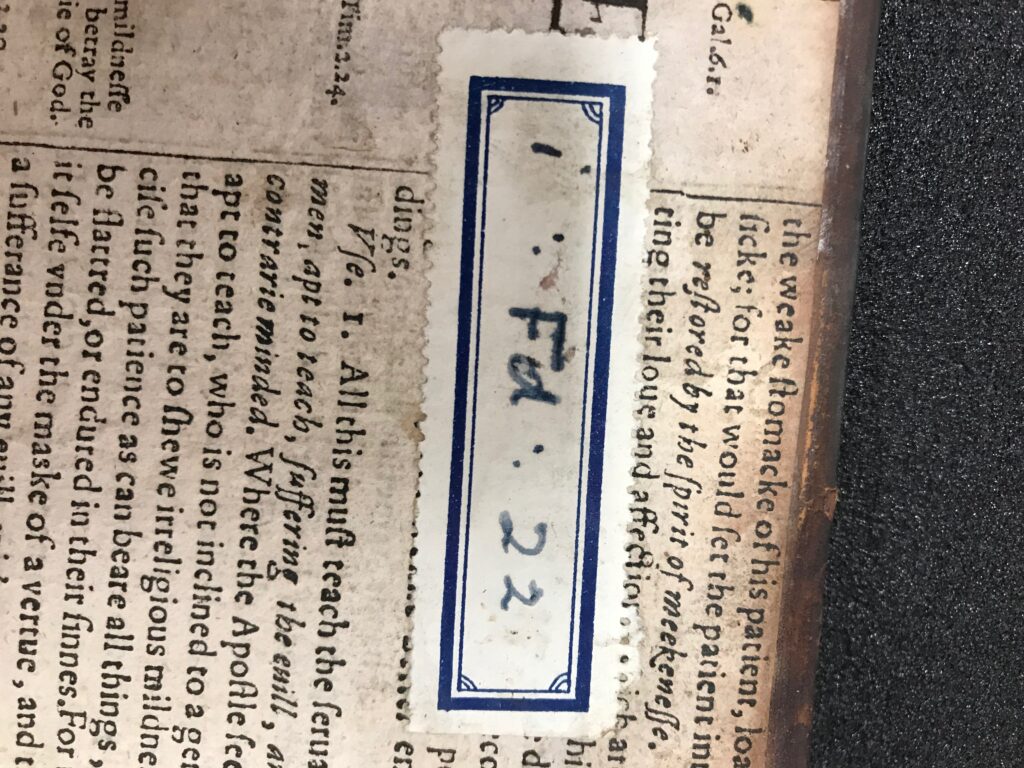
Perpherated white label with a blue border on the front paste-down, with shelf-mark ink in blue: i. Fd. 22. Most likely a shelf mark from previous owner, pre-made label indicates that the owner needed shelf marks for their collection.
Stamps
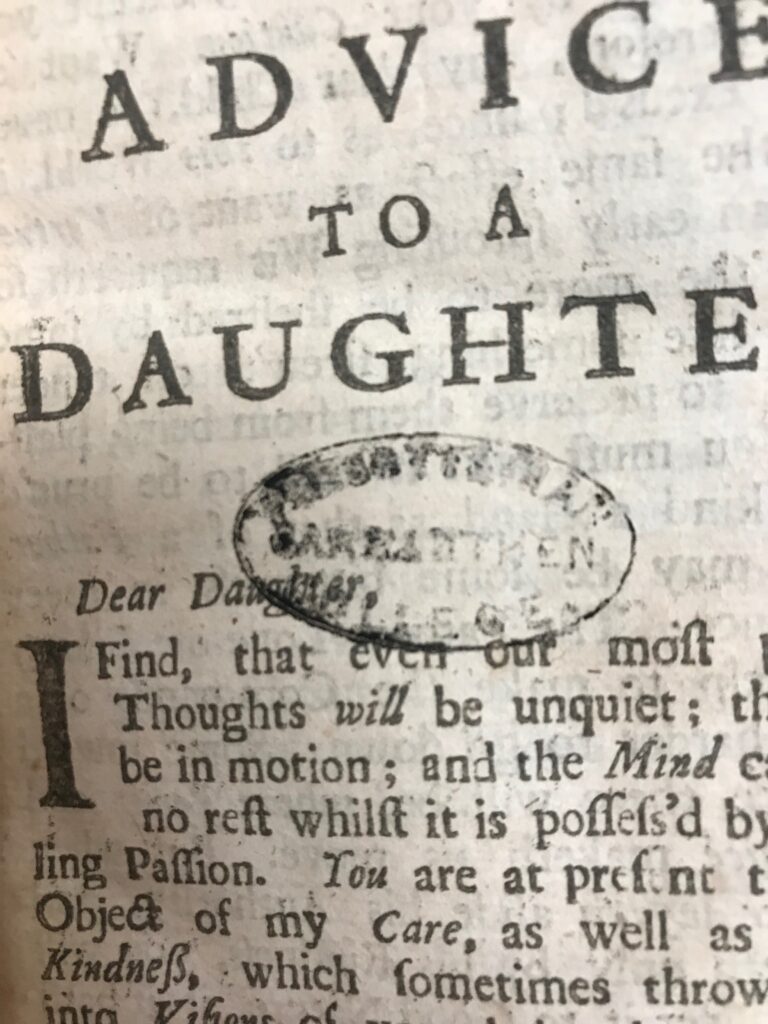
On the title page and lead B1, “Advice to a Daughter,” there is an oval stamp in ink over the text (also transferred to the previous leaf, creating a mirror image of the stamp) from the Presbyterian College in Carmarthen, Wales, most likely in the 19th Century.
The Journey
The book was originally printed in 17th century England, and according to the inscription found on the front leaf was owned by John Broughton (an Englishman) in the 17th or 18th century. The owner(s) before John Broughton are unknown. The next owner that can be tracked is the Presbyterian College in Carmarthen, Wales. The book was then owned by Bow Windows Bookstore in East Sussex, UK. Michigan State University Special Collections is the current owner, and purchased the book from Bow Windows Bookstore. Before coming to MSU, the book remained in the United Kingdom.
Because there is not much provenance evidence, it seems to suggest that this book was not read or used very often. There are minimal repairs and the book is in good condition. I suspect that the shelf mark label suggests that this book was part of someone’s collection for awhile and not necessarily used but displayed.
Works Cited
Halifax, George Savile, and Daniel Defoe. 1700. Miscellanies by the Right Noble Lord, the late Lord Marquess of Halifax. London: Printed for Matt. Gillyflower.
Morrill, John S. “George Savile, 1st Marquess of Halifax.: Encyclopædia Britannica. March 29th, 2018. Accessed October 18th, 2018. Https://www.britannica.com/biography/George-Savile-1st-Marquess-of-Halifax.
Pixeltocode.uk, PixelToCode. “George Savile, Marquess of Halifax.” Westminster Abbey. Accessed October 18, 2018.
