
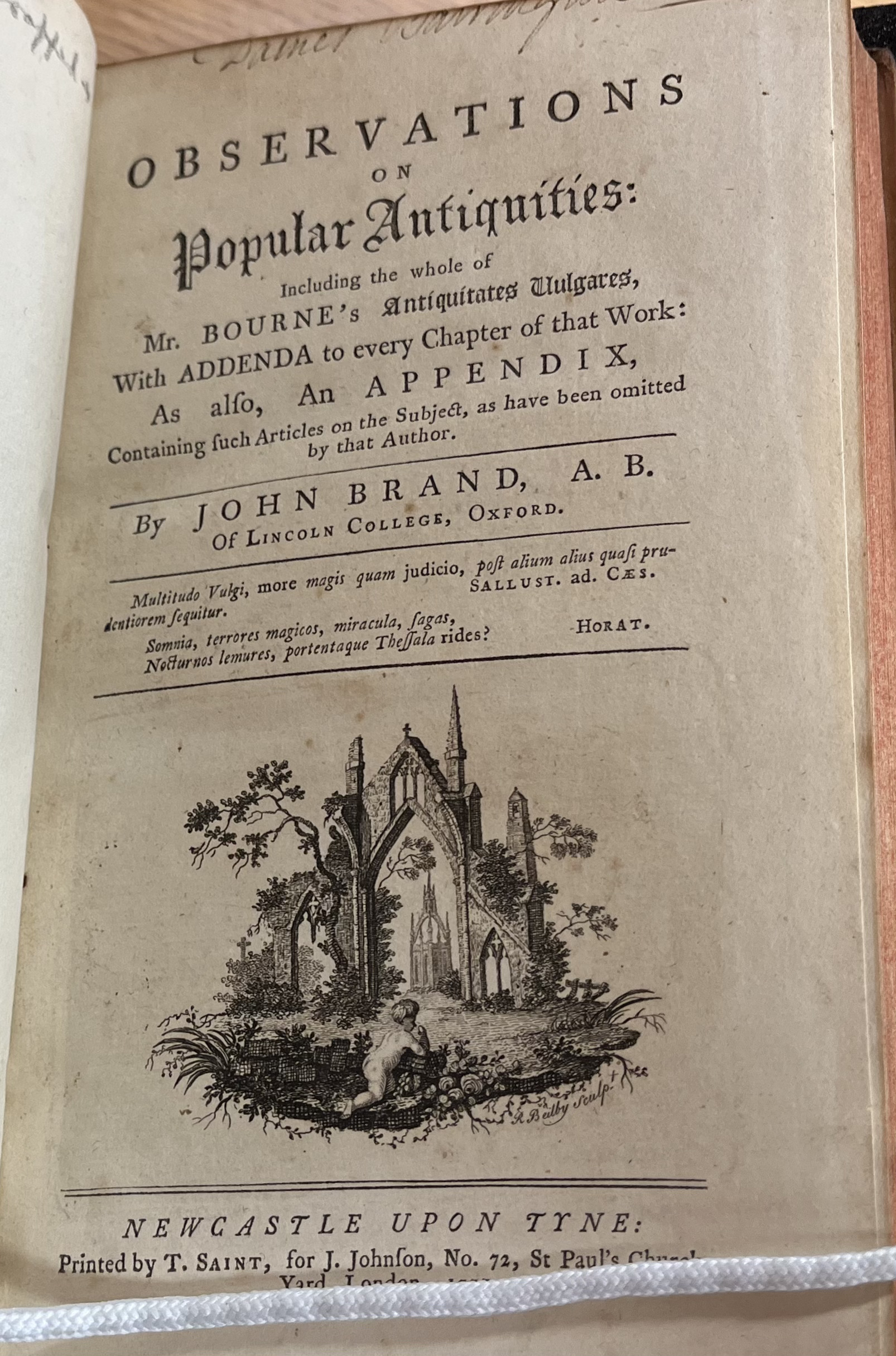
Including the whole of Mr. Bourne’s Antiquates vulgares, With Addenda to every Chapter of that Work: As Also, An Appendix, Containing such Articles on the Subjects, as have been omitted by that Author
Author: John Brand (1744-1806)
MSU Call Number: XX DA 110 .B82 1777
This was originally printed by Thomas Saint, in Newcastle upon Tyne, and was finished in 1777
Overview
This book was written by John Brand, an English clergyman and historian, to serve as a historical guide for English “antiquities,” or old traditions and folklore. He wrote this as a follow-up to Henry Bourne’s work, Antiquities Vulgares, which was published in 1725. Brand felt as though Bourne’s research was limited to only the northern part of England, and used his education obtained at Lincoln College at Oxford to correct Bourne’s misconceptions.
In the MSU Collection, we have two copies of this work, both of which hold varying levels of provenance that is seemingly equal to the damage which they have received. These books show that it is not only the contents of a book which tells us a story, but also the evidence humans have left behind long after they have gone.
Book A:
Nicknamed: “The Daines Barrington Copy”
I called this one the “Daines Barrington” copy, because proof of his ownership was the most obvious. It is also has substantial provenance from other parts of its life, including an armorial plate and a note from Mr. Chase himself. Although this book is in worse condition, the history of this copy was much easier to find; the provenance of this book might not be so clear without all the wear that has happened to it.

The history of this book most likely began with a man named Daines Barrington (1728-1800). A future owner wrote “first edition” on the cover, and it just so happens that Barrington was alive during its publication, meaning there is a very good chance he bought this book as it was released. Also, this work was sold in London, just a short walk from where Barrington was living at the time, meaning he had easy access to it. This is also a subject that might have interested him; as well as being a lawyer, Daines Barrington was a famous naturalist, having exchanged several letters with another very important naturalist, Gilbert White. Barrington received most of his fame via White’s mentioning of their letters in his book, Natural History of Selborne, which is one of the most well-known works of naturalist literature in England.
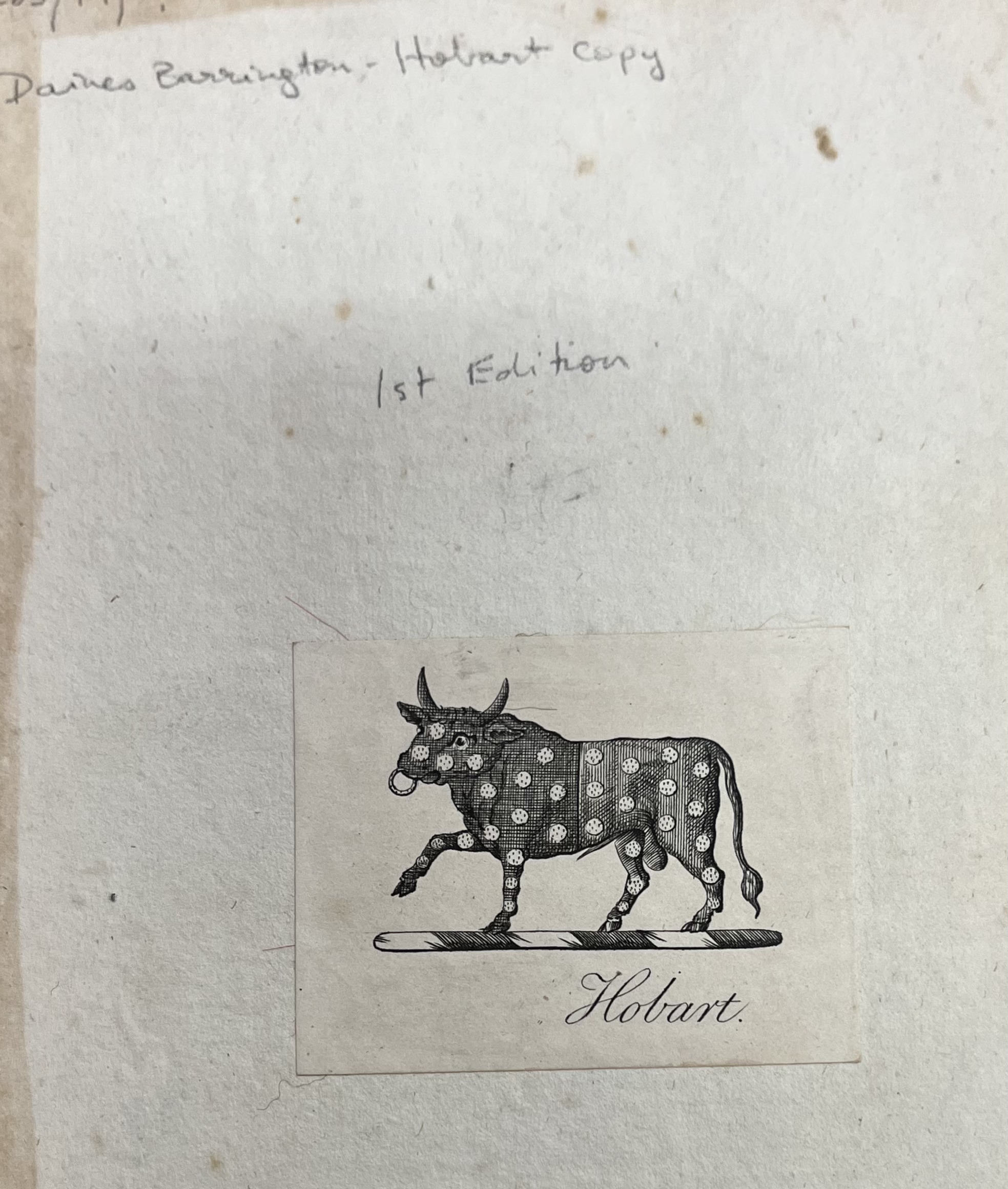
Barrington was not the only important person to own this book. This seal belongs to the The Hobart Baronetcy, who were also known as the Earls of Buckinghamshire, which is a small town in the middle of the island.
Barrington died in London in 1800, and since he had no children or wife it can be assumed his things were simply sold off. Coincidentally, during this time Robert Hobart, the 4th Earl of Buckinghamshire (1760-1818), was studying at Westminster College in London, near place where Barrington lived and was buried. Robert Hobart most likely bought this book, and marked it with this seal from his family coat of arms.
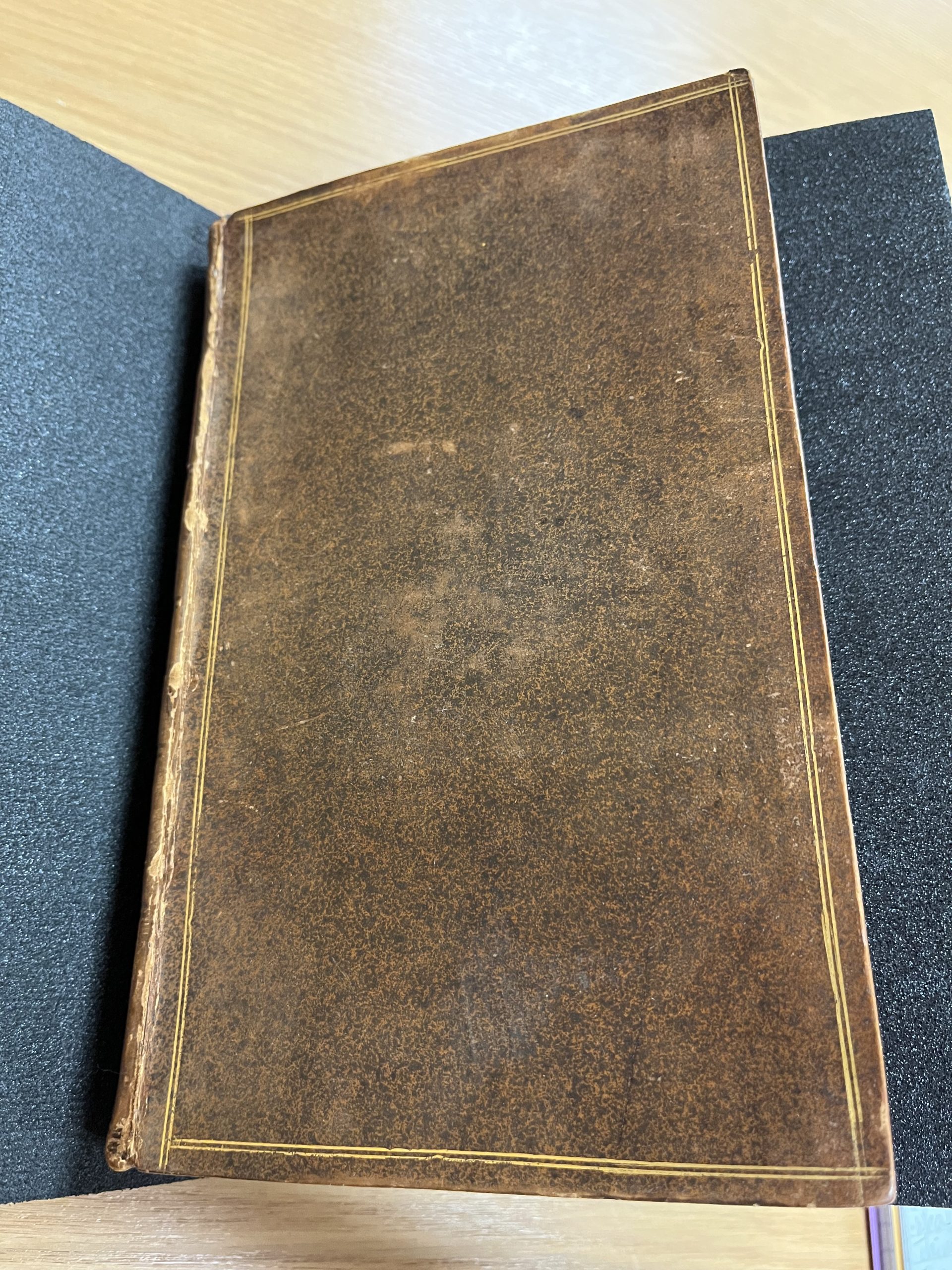
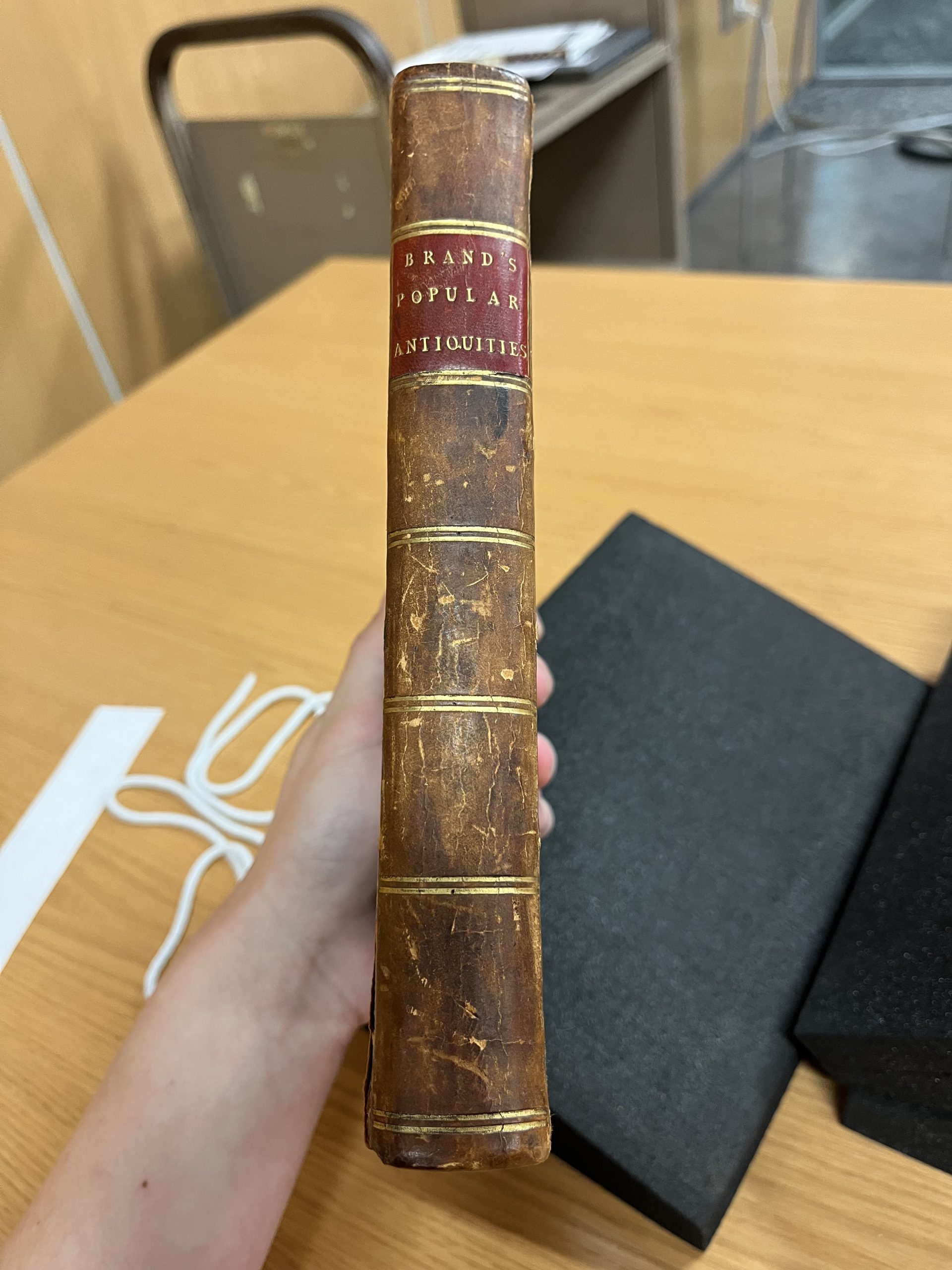
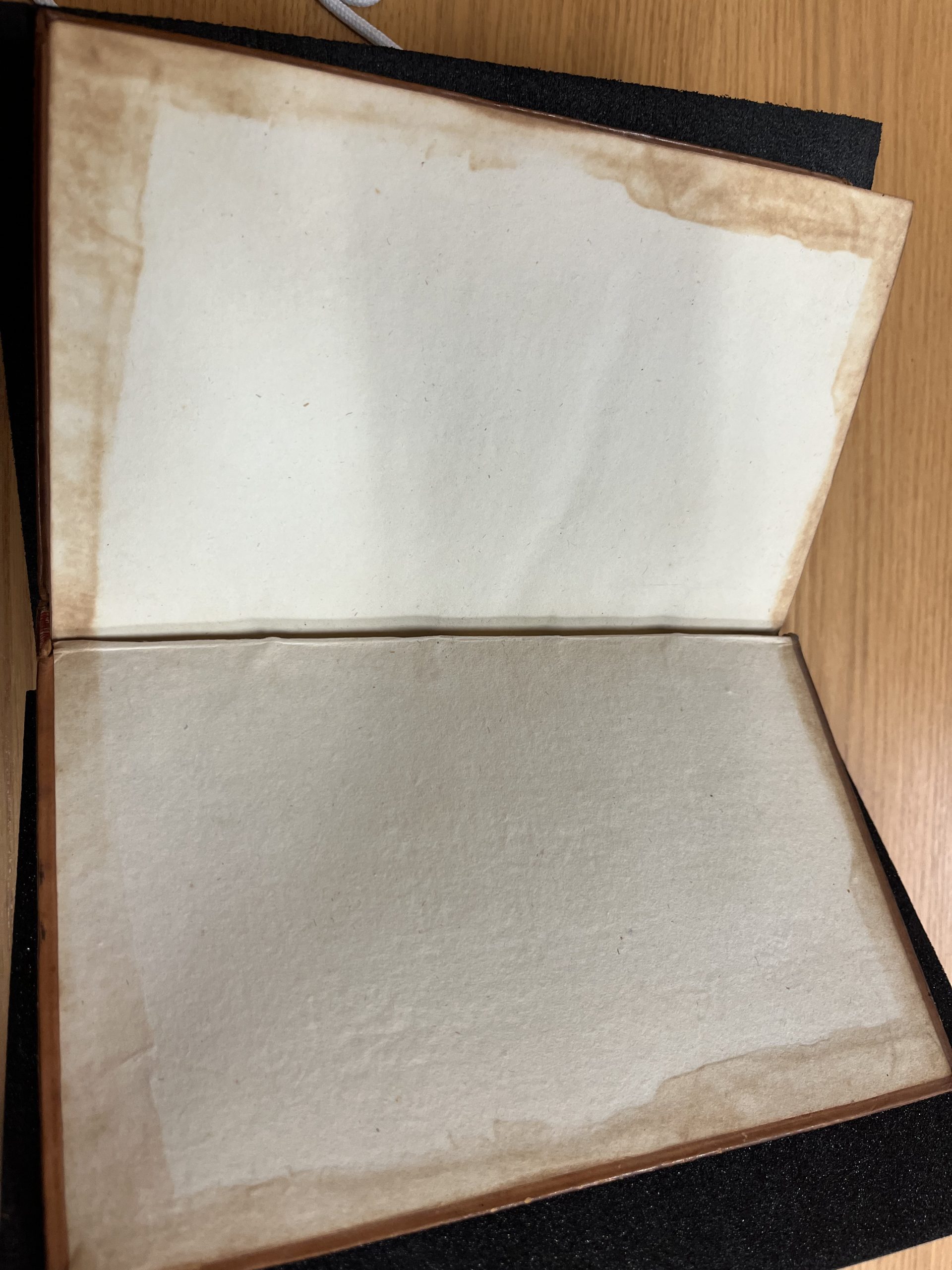
Although this book was in the hands of some very important figures, its condition is poorer than the other copy (who seemingly did not live such an extravagant life). Nearly all the pages are tinged brown around the edges, and the spine seemed very weak. It is also missing the secondary title page of the book, which introduces Henry Bourne’s work. However, the gold tooling on the cover and spine have remained intact, and furthermore the entire outside of the book seems to be in relatively good condition, with the exception of the spine.
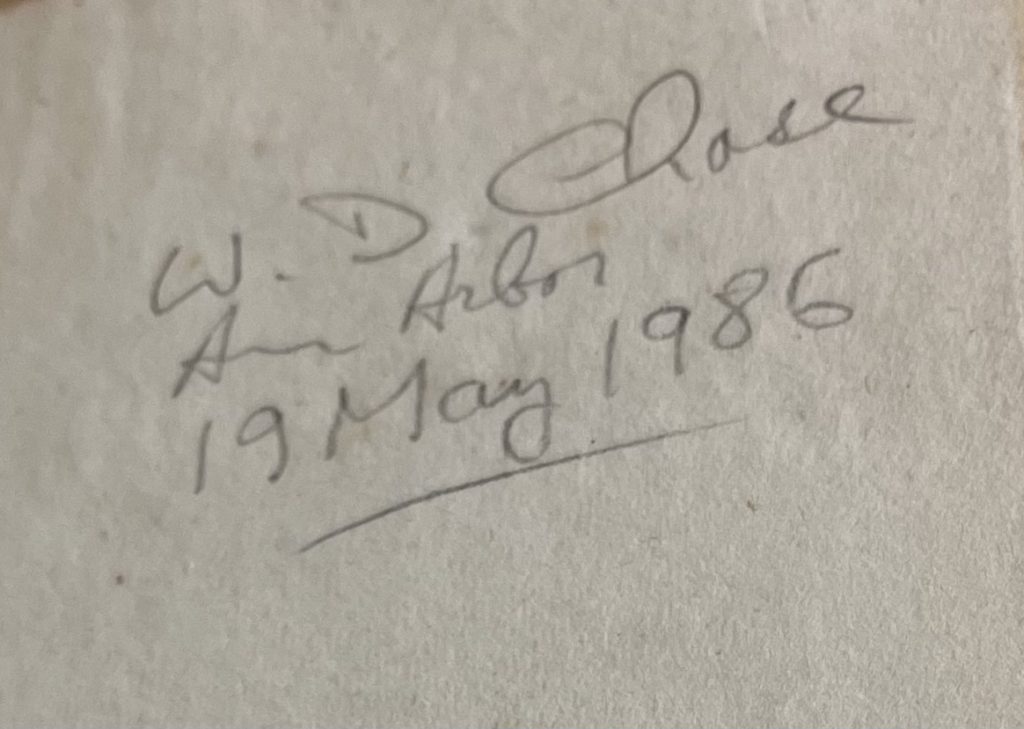
Unfortunately, from here on the whereabouts of this book aren’t that well known, as there is not much evidence pointing to any owners besides the Hobart’s. It can be assumed the book stayed within the family, possibly due to the fact that it was signed by Daines Barrington. However, it was eventually purchased by a man named William D. Chase (1922-2020). Chase was a journalist and avid book collector, often traveling across the world to purchase old and rare books with his wife Helen. However, even though his collection was of great importance to him, his most famous work would certainly be Chase’s Calendar of Events. This calendar includes holidays, historic anniversaries, government observances, and other “celebrations,” and is often what is referenced for “national holidays” such as “national almanac day.”
As we can see from this note Chase left on the front fly page, this book arrived at his home in Ann Arbor in May of 1986. From there, it stayed in his possession until his donation in to MSU in 2016, which is what started the William D. and Helen M. Chase Collection.
Book B:
Nicknamed: “The Elizabethan Copy”
I named this book after the small bookplate on the inside of the cover, that deceivingly seemed like a promising lead. This book is a great example as to why we shouldn’t be ashamed to use our items with love, because the marks we leave behind on our items are the only history people may find of ours someday.
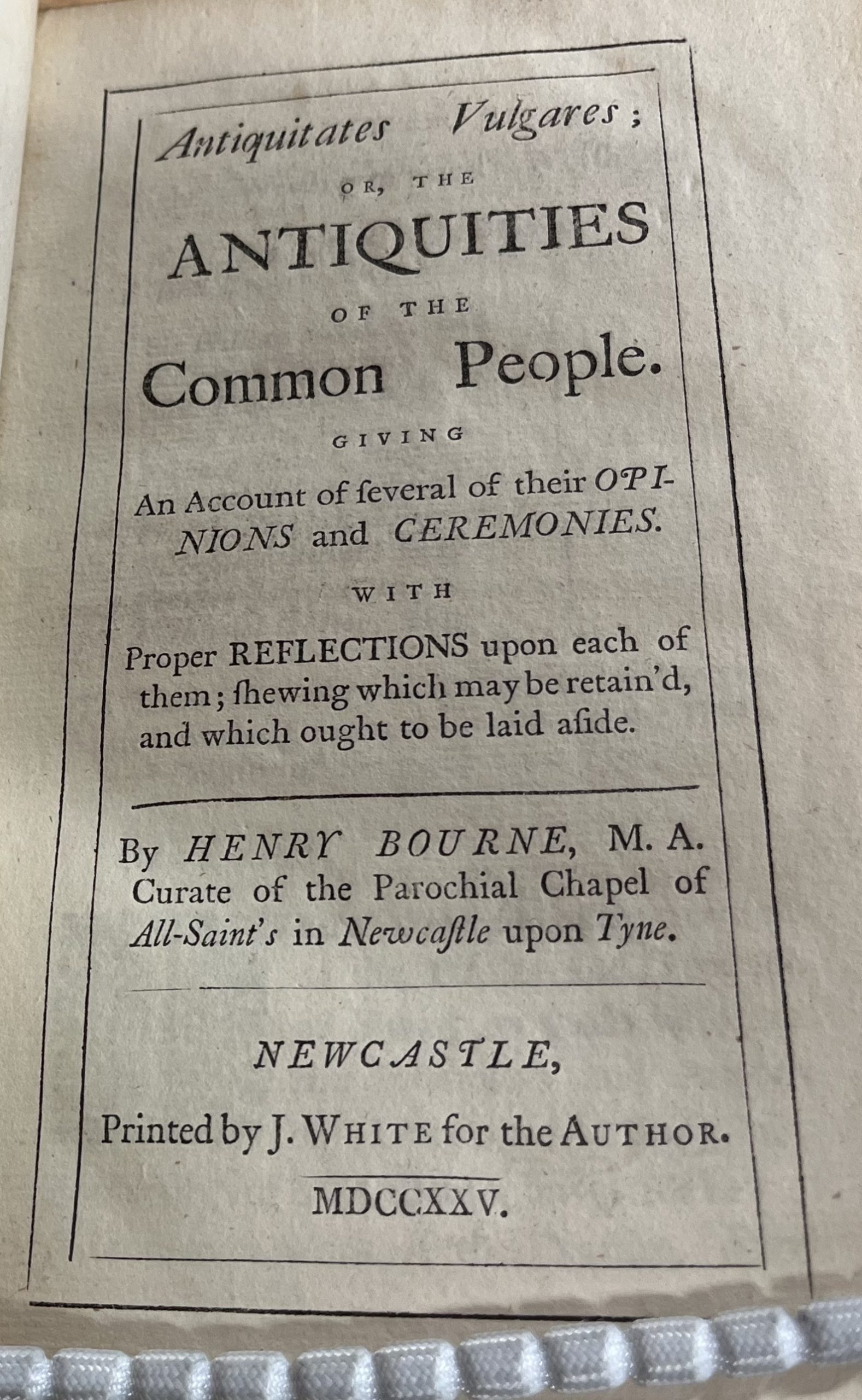
As hard as I searched, I could not find provenance for this book that would trace it all the way back to the time it was originally published. I am inclined to believe that this is a first edition, like the “Daines Barrington Copy,” due to the fact that it has this secondary title page, which even the confirmed first edition does not have. This is the title page that would have appeared before the piece that Brand was responding too, which was originally written by Henry Bourne and was published in 1725.
Although this is interesting, and helps show the condition of the book (which I’ll elaborate on further), it didn’t help me find the origins of this book. Thus, the provenance of this book doesn’t begin until the 1800’s.
The most proof of ownership this book can be found within this note. Although we don’t have evidence from this owner directly, this note states that this once belonged to a man named Sir James Richard Thursfield (1840-1923). Thursfield was a journalist, but also an Oxford alumni like the author of this work, John Brand. According to the Murray & Hong Special Collections Twitter page, Thursfield was also a tutor for Oscar Wilde when they attended school together.
If I had to guess, I would assume Thursfield may have purchased this book during his time in college; perhaps the university had copies for sale, or maybe he bought one on a visit into London. However, there is no definitive proof of how he acquired this, so any guess is just speculation.
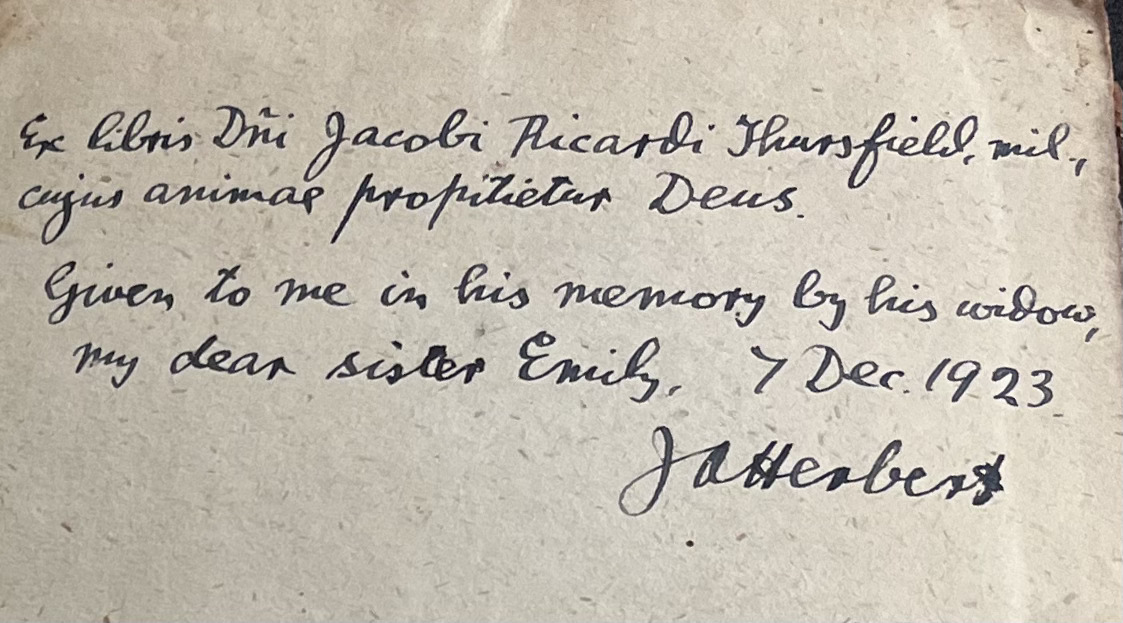
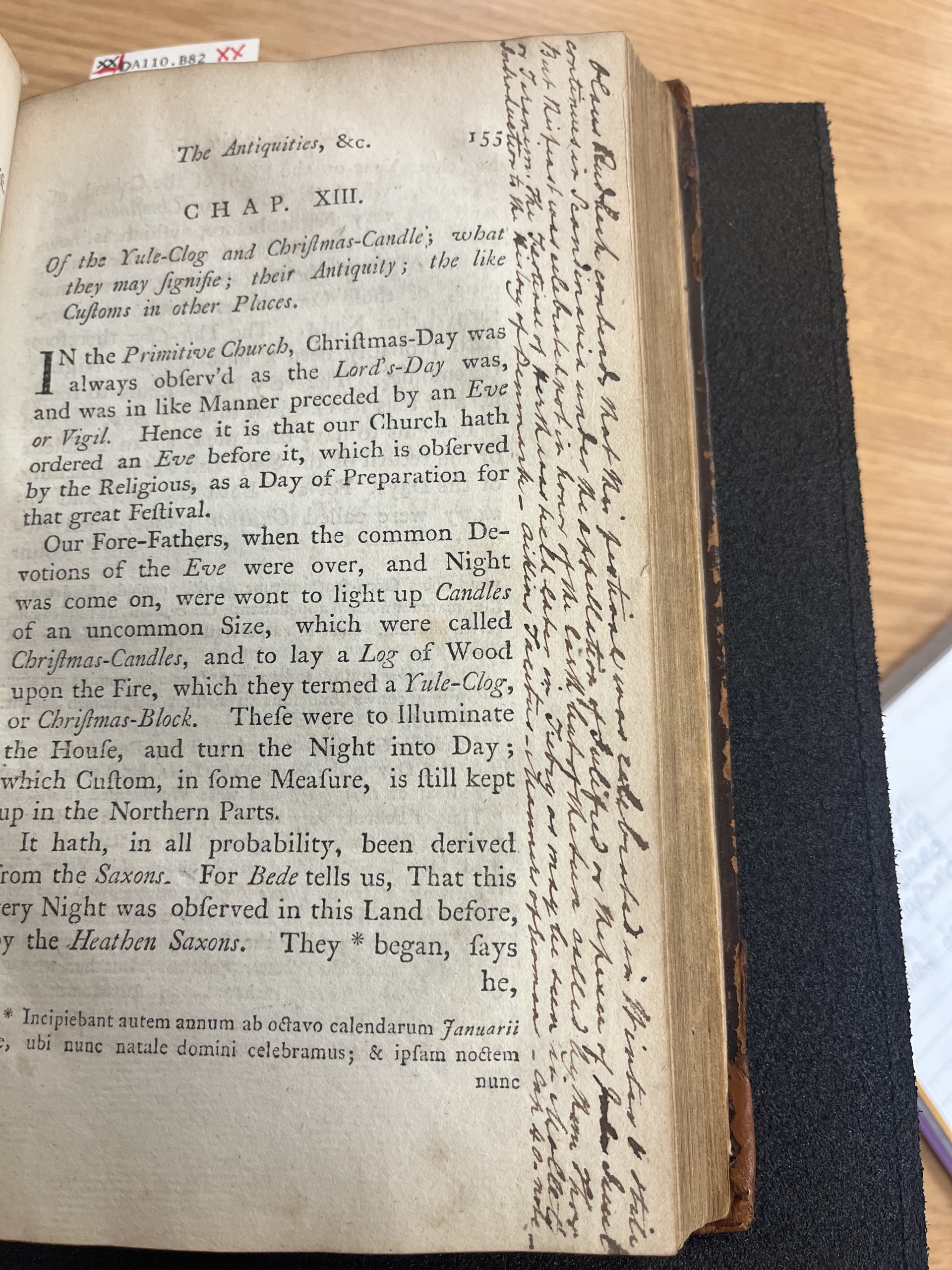
As the note above says, Thursfield died in 1923, after which the book exchanged hands. It was originally inherited by his wife, Emily Thursfield, who then gave it to her brother, John Alexander Herbert (1862-1948). At the time, Herbert was the Deputy Keeper of Manuscripts for the British Museum, and while working there he contributed a considerable amount to the collection. For example, Herbert wrote and illustrated a book titled Illuminated Manuscripts, in which he recreates the images found in some manuscripts, and also explains the history behind those works.
There is no evidence that John Herbert got rid of the book, and the link between him and the Bookseller is unclear. The only other provenance in this book, besides what the bookseller left behind, is this writing that is entirely illegible to me. I believe the writing may belong to Herbert because the ink is the same color as his previous note, but I have no way of knowing for sure.
Finding out how this book came from England to Illinois proved itself to be a sysiphean level task. There was very little information I could find about this bookseller online, but with Tad’s help I was at least able to find the owner of this business.
Howard Calvin Howe is the famous Elizabethan Bookseller. He died in 1977, and his business was located at 508 W. Madison Street, in Waukegan, Illinois. Sadly, it appears the shop was demolished sometime after Howe’s wife passed away, and the business did not continue.
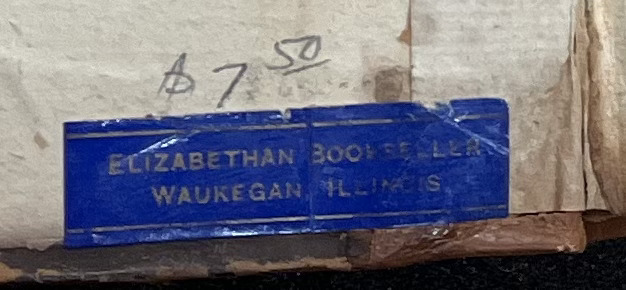
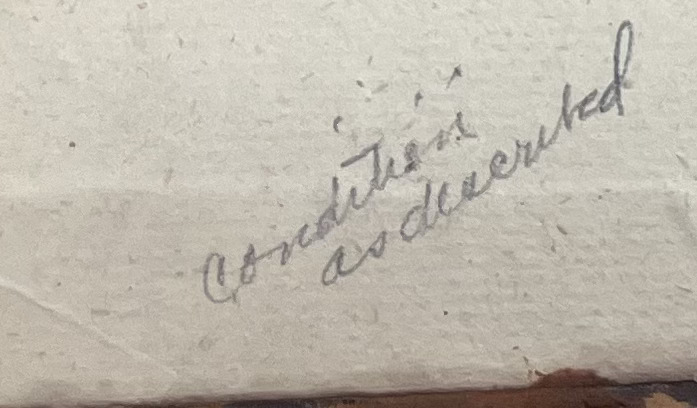
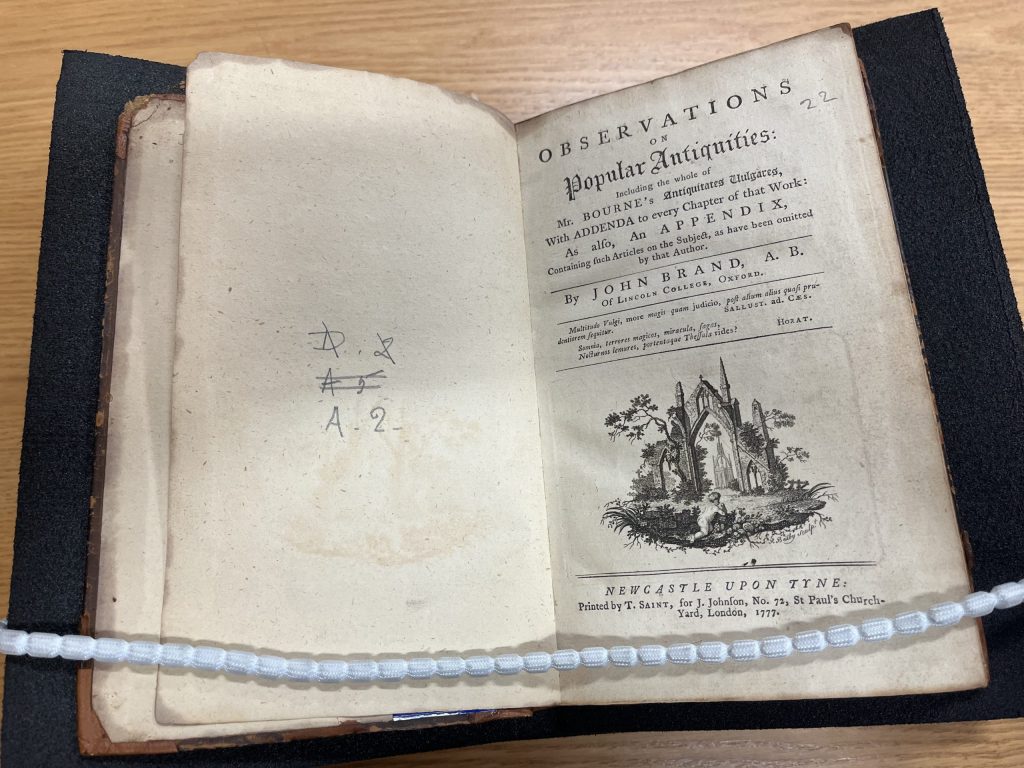
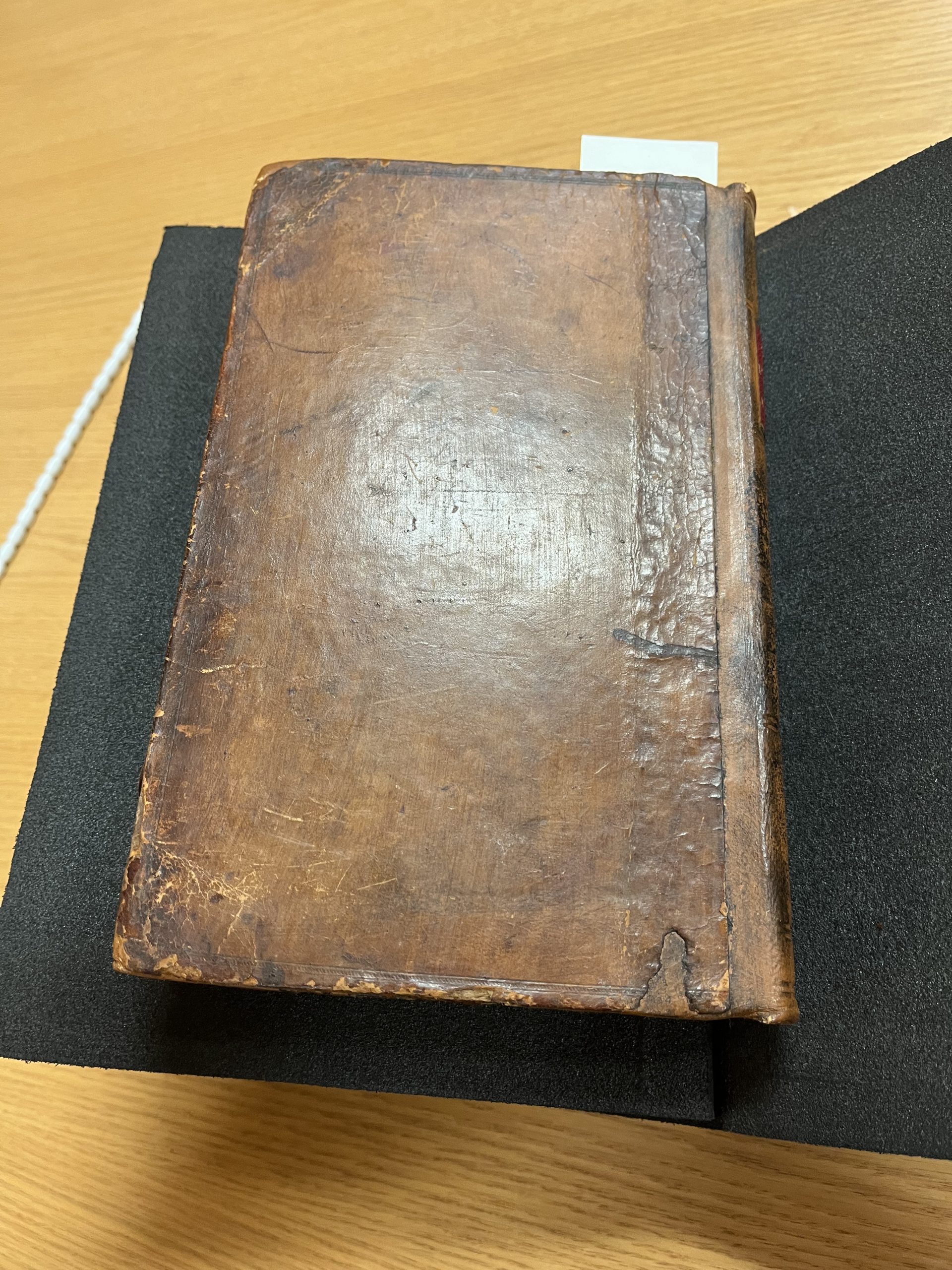
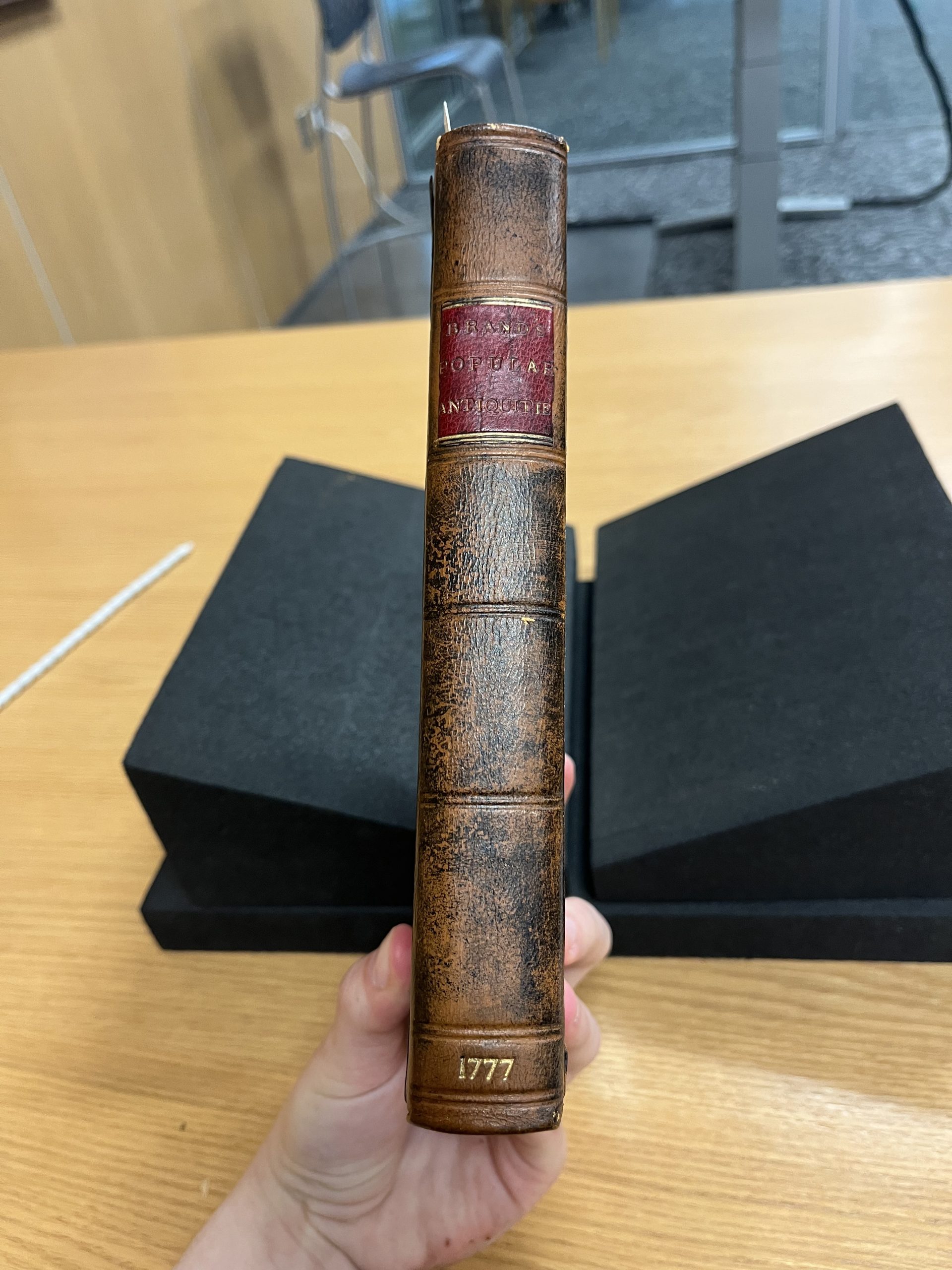
The condition of this copy is much better than that of the other edition of this piece. The pages are a little worn and discolored, but are relatively intact by comparison. However, the cover of this book is in a much more degraded condition, with the bottom corners of the fore edges being very worn. It is also missing the gold tooling that the other edition has, however it does have a vibrant “1777” stamped onto the bottom of the spine, most likely done after publication.
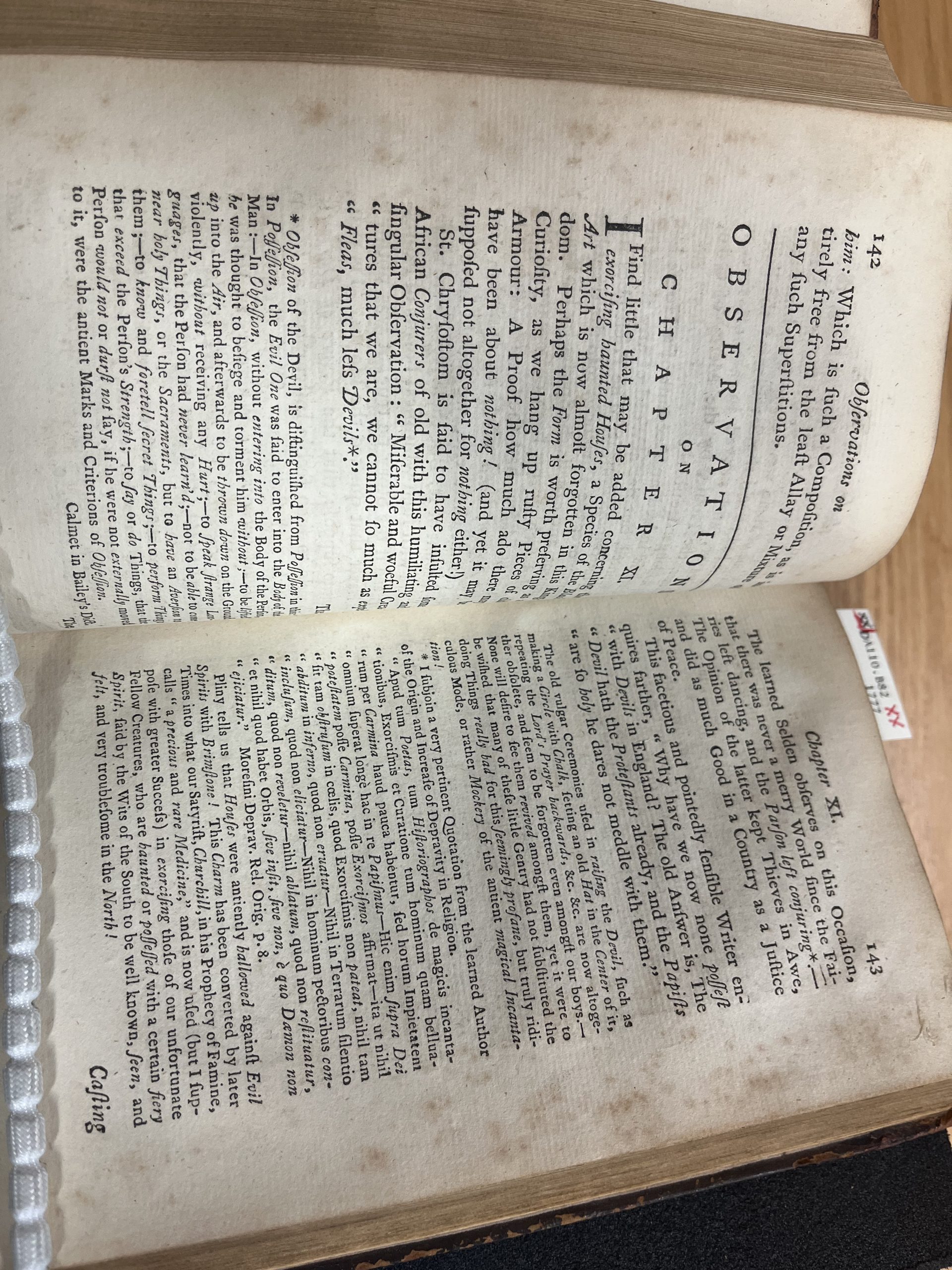
Sadly, the story of this books journey seems to end here. Throughout my research, I was unable to find any connections between the Elizabethan Bookseller and MSU, and I also wasn’t able to find out when exactly MSU acquired it. I tried very hard not to look at the catalogue during my research, but for the sake of answering any lingering questions I felt it was only necessary; the catalogue says that this book came from Thomas W. Coleman Bookbinders in London, in 1970. My most educated guess is that this book was purchased from Howard Howe by Thomas Coleman (whom I could not find information on), and then somehow ended up in the care of MSU Special collections.
Although researching this book proved to be one of the most tedious thing I’ve yet to face in my academic career, it proved a very valuable lesson: always write in your books, if you want people to know you existed at least.
Thank you to Tad, for helping me find the Elizabethen Bookseller, and for helping me figure out who the Hobart plate belonged to.
Citations
“Ancestry Library Edition.” 2025. Ancestrylibrary.com. 2025. https://www.ancestrylibrary.com/family-tree/person/tree/165747785/person/392301440511/facts?_phsrc=enV11&_phstart=successSource.
“Daines Barrington.” 2023. The Linda Hall Library. 2023. https://www.lindahall.org/about/news/scientist-of-the-day/daines-barrington/.
“Deaths | Dartmouth Alumni Magazine | DEC. 1977.” 2025. Dartmouth Alumni Magazine | the Complete Archive. 2025. https://archive.dartmouthalumnimagazine.com/article/1977/12/1/deaths.
“Earls of Buckinghamshire – 1911 Encyclopedia Britannica -.” 2025. StudyLight.org. 2025. https://www.studylight.org/encyclopedias/eng/bri/e/earls-of-buckinghamshire.html.
“John Alexander Herbert – Wikisource, the Free Online Library.” 2022. Wikisource.org. 2022. https://en.wikisource.org/wiki/Author:John_Alexander_Herbert.
“Lot 392 – Royal Binding; Gunpowder Plot.” 2019. Dominicwinter.co.uk. 2019. https://www.dominicwinter.co.uk/Auction/Lot/392-royal-binding-gunpowder-plot/?lot=336625&sd=1.
“Thomas.” 2025. Saxonlodge.net. 2025. https://www.saxonlodge.net/getperson.php?personID=I0944&tree=Tatham.
“Thursfield, Sir James Richard, Journalist, 1840-1923. | Royal Museums Greenwich.” 2025. Rmg.co.uk. 2025. https://www.rmg.co.uk/collections/archive/rmgc-object-491938.
Murray & Hong Special Collections at MSU Libraries (@MurrayHongSPC), “Joy of a cataloger, part 457: While recataloging our copy of Brand’s Observations on Popular Antiquities, it was discovered that Sir James Richard Thursfield, one of Oscar Wilde’s Oxford tutors, once owned it…” X, 13 July, 2021, 11:24am, https://x.com/MurrayHongSPC/status/1414969025910636545.
Bo Hammond, ENG472, Spring of 2025
