
Identification
Author: Leonard Digges
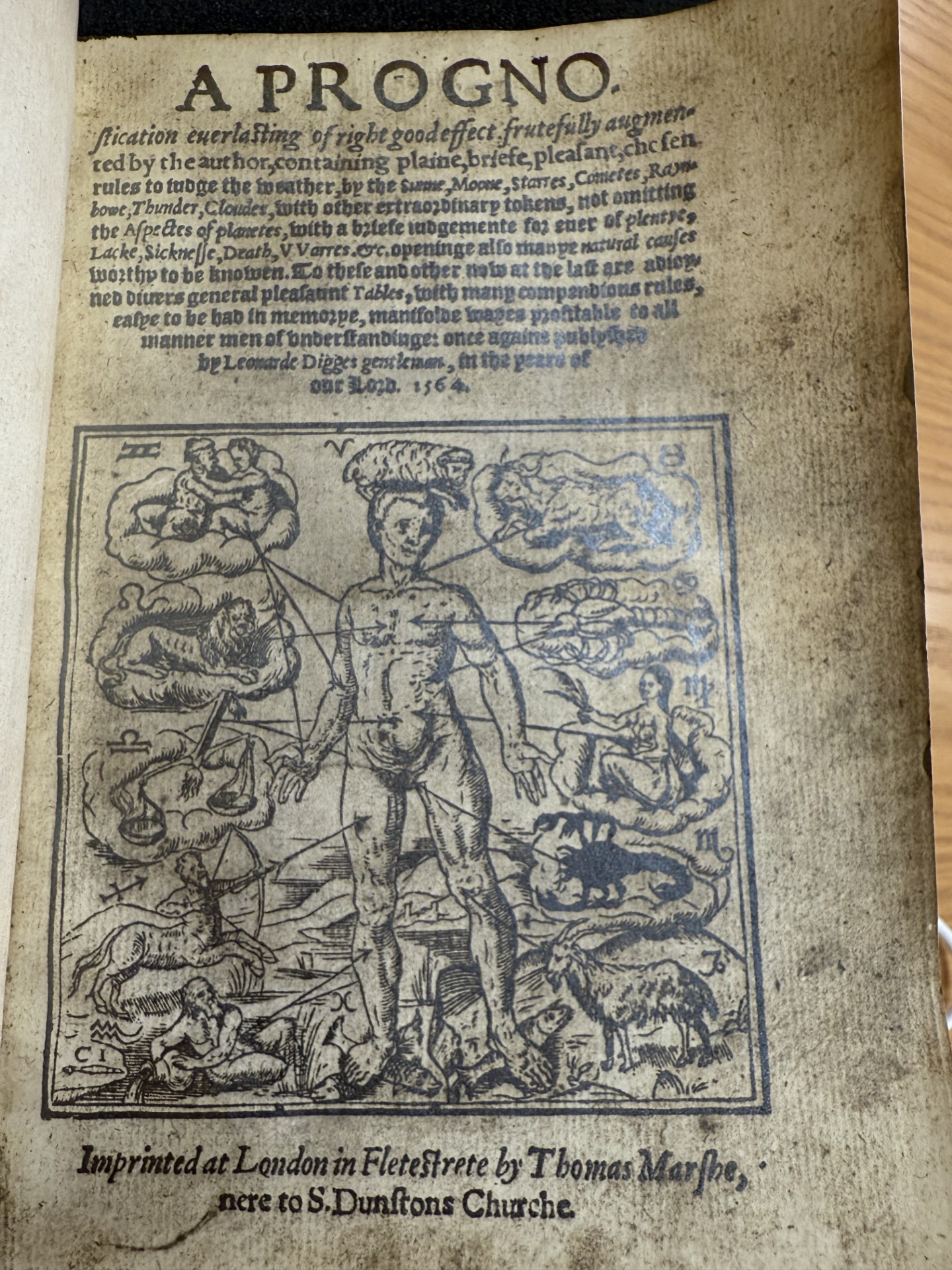
Full Title: A prognostication everlasting of right good effect : frutefully augmented by the author, containing plaine, briefe, pleasant, chosen rules to iudge the weather, by the sunne, moone, starres, cometes, raynbowe, thunder, cloudes, with other extraordinary tokens, not omitting the aspectes of planetes, with a briefe iudgemente for euer of plentye, lacke, sickenesse, death, vvarres, &c. openinge also manye natural causes worthy to be knowen : to these and other now at the last are adioyned diuers general pleasaunt tables, with many compendious rules, easye to be had in memorye, manifolde wayes profitable to all manner men of vnderstandinge : once againe publyshed by Leonarde Digges gentleman, in the yeare of our Lord, 1564
Printer: Thomas Marshe
Place of Publication: London in Fletestrete
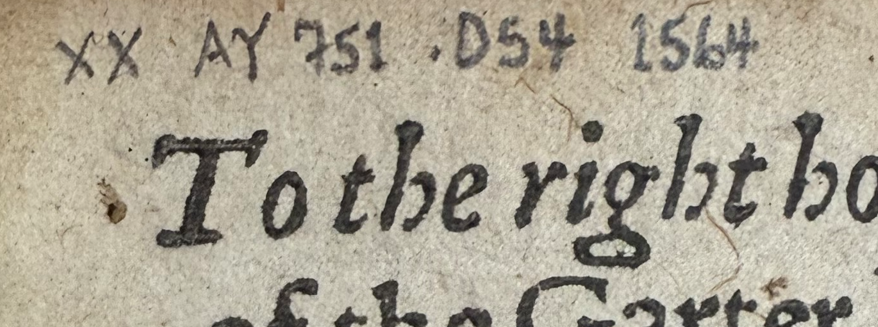
MSU Call Number: XX AY751 .D54 1564
Description of the book
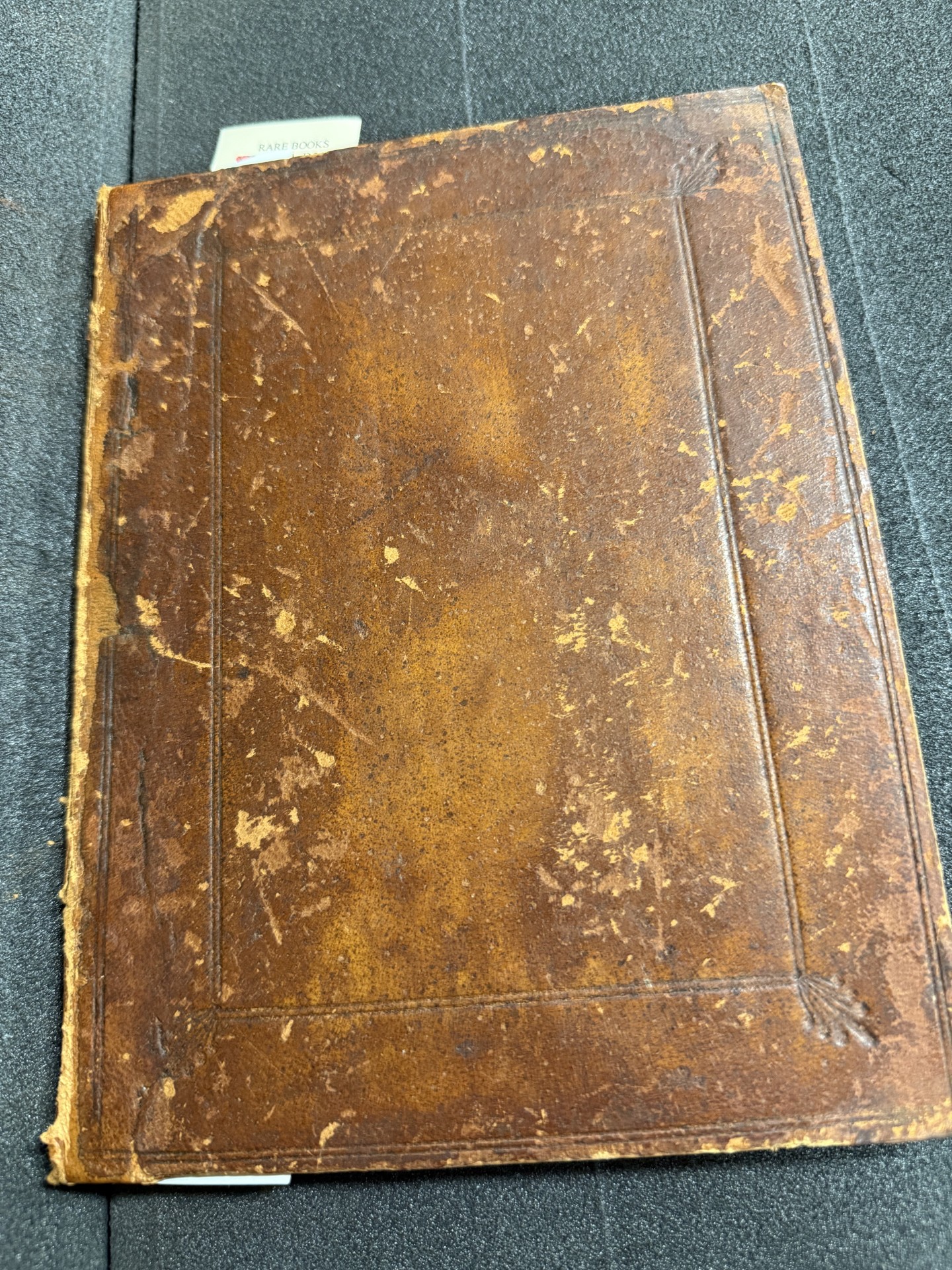
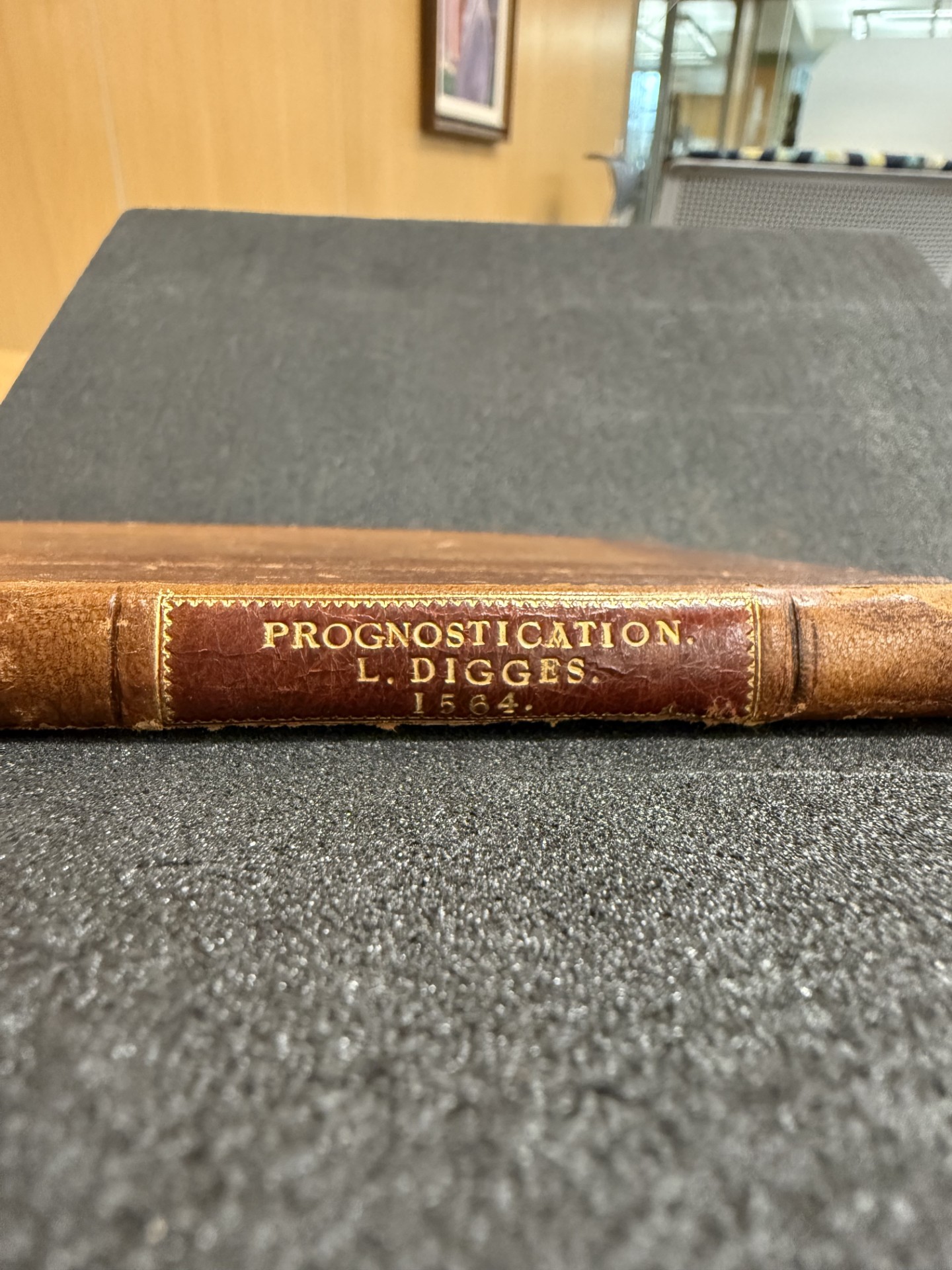
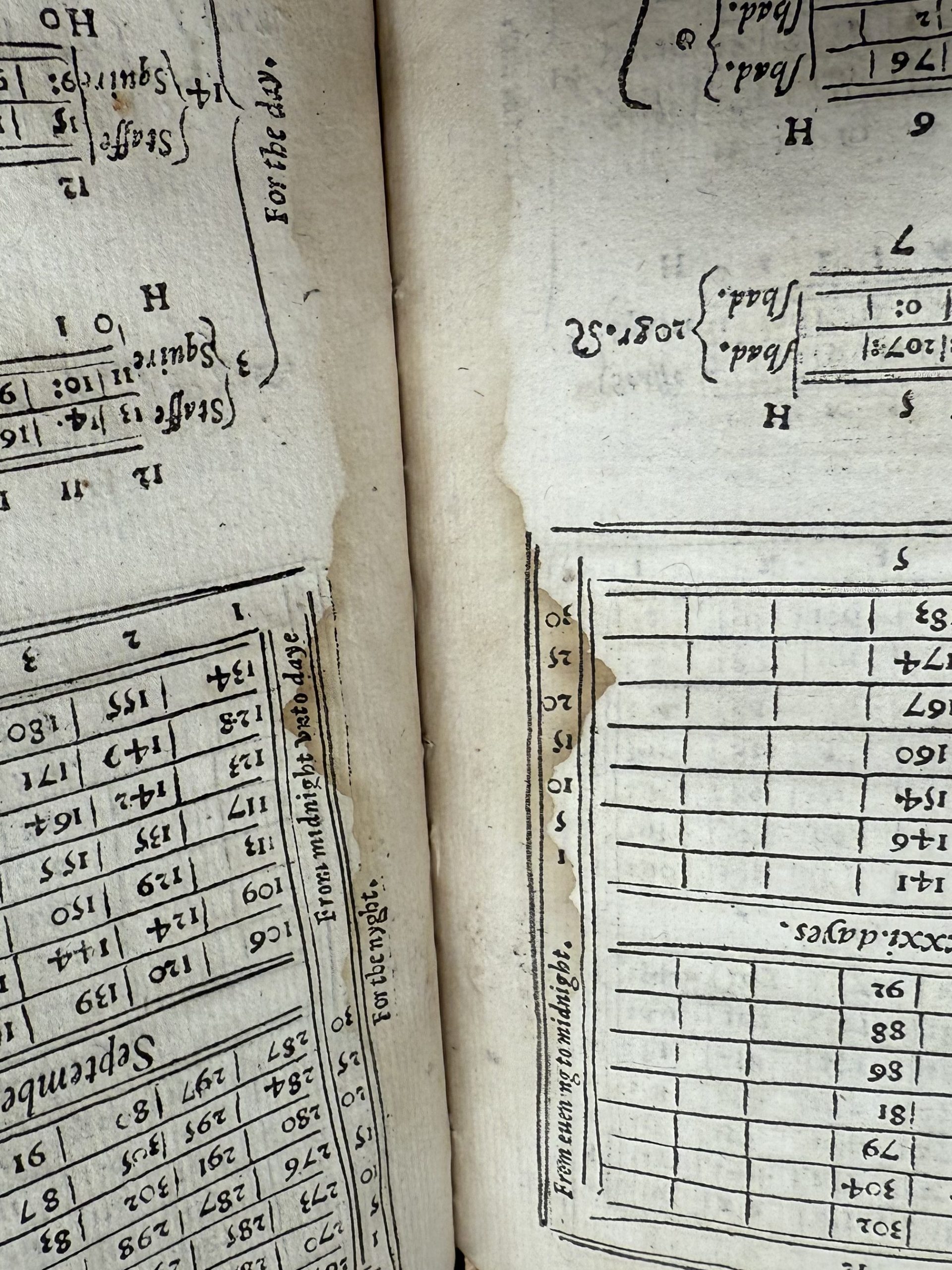
This copy of the book is bound in brown leather that looks quite worn and contains blind tooling on the front and back boards. Along the spine the book includes some slightly raised bands as well as gold tooling of the title, author, and publication year that look slightly faded. Along with the scuffs and such on the outside of the book there are also a few stains on a couple of the pages towards the end of the book that look like they could be water stains.
Author: Leonard Digges
Leonard Digges was an English mathematician and inventor, Digges developed instruments to measure angles and distances, including an early version of the theodolite, that was a critical tool for land surveying and navigation. Digges practiced judicial astrology, a form of astrology concerned with predicting events and outcomes. His work as an astrologer reflects the intermingling of science and mysticism during the Renaissance period. His contributions influenced later developments in surveying, with his son Thomas Digges furthering his work.
Printer: Thomas Marshe
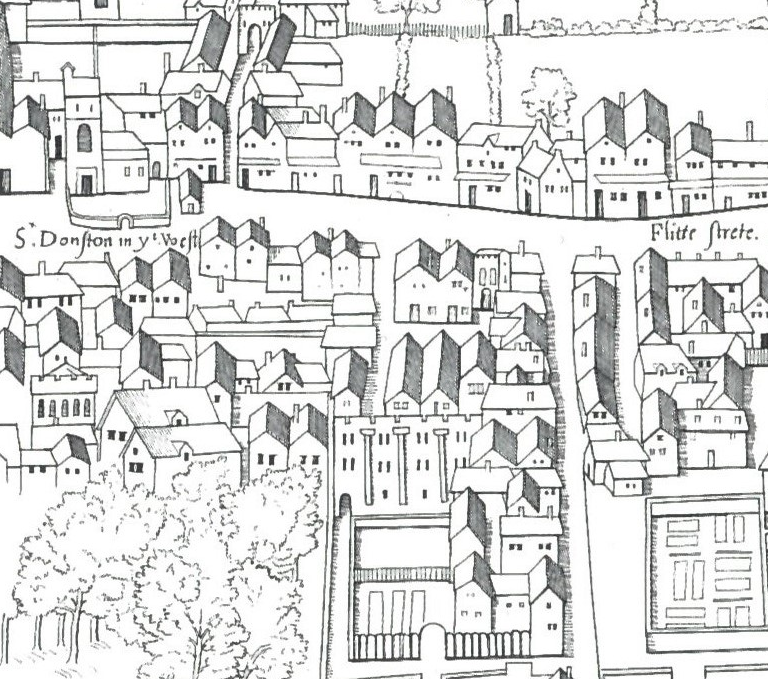
The book was imprinted in 1564 by Thomas Marshe, as indicated by the writing adjacent to the imprint statement. Marshe, a notable printer of the 16th century, who’s shop operated across from St. Dunstan’s Church on Fleet Street in London, from 1554 until about 1587. He is credited with inventing the press figure, a method for marking sheets to assist in their organization and sequencing, highlighting his role in the advancement of printing techniques.
Provenance
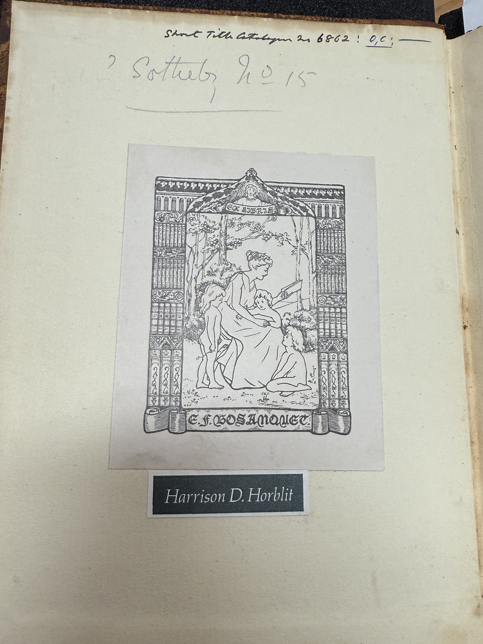
Eustace Fulcrand Bosanquet (EF Bosanquet)
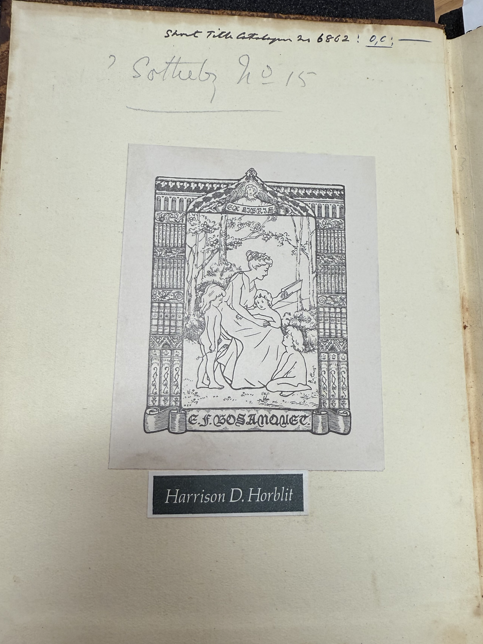
This book likely belonged to Eustace Fulcrand Bosanquet sometime during his lifetime between 1871-1940. A bookplate with the initials “E.F. Bosanquet” is on the front paste-down, and these initials match his name based on searches across various sources. The same bookplate can also be found in a copy of the Tectonicon 6th edition at Harvard University, which shows that Bosanquet owned multiple books and marked them in this way.
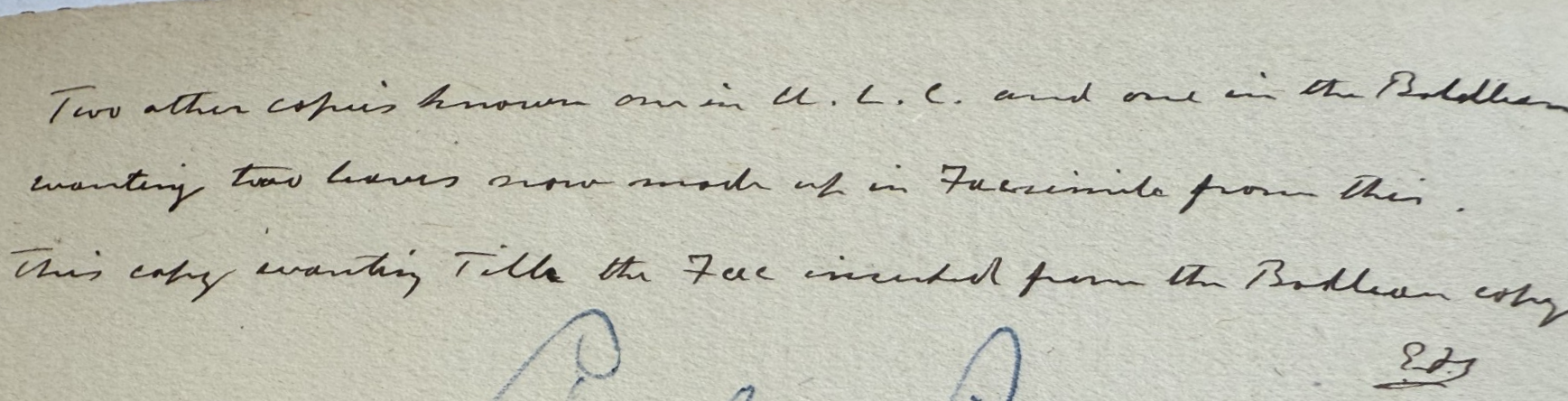
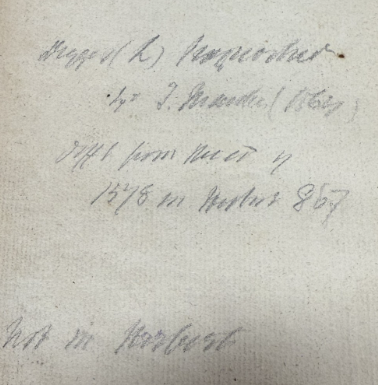
There’s also a note in this book that says, “Two other copies known, one in U.L.C. and one in Bodleian, wanting two leaves now made up in facsimile from this. This copy wanting Title the Fac inserted from the Bodleian(?) copy.” The note is signed “EFB,” which matches Bosanquet’s initials and is assumed to be him. Also the paragraphs statement matching one of the copies found on the Bodleian libraries website while the U.L.C copy is an is the University College of London which means that this note was written between 1871 and 1907 where the College was named that and during Bosanquet’s lifetime.
Bosanquet’s knowledge in early printed almanacs, as seen in his book English Printed Almanacks and Prognostications: A Bibliographical History to the Year 1600, makes it easy to see why he would’ve been interested in owning Prognostication everlasting of right good effect. The bookplate, the handwritten note, and his known interest in Almanacs show why he would have owned this book at some point in his lifetime although the exact time is not known.
Charles Singer
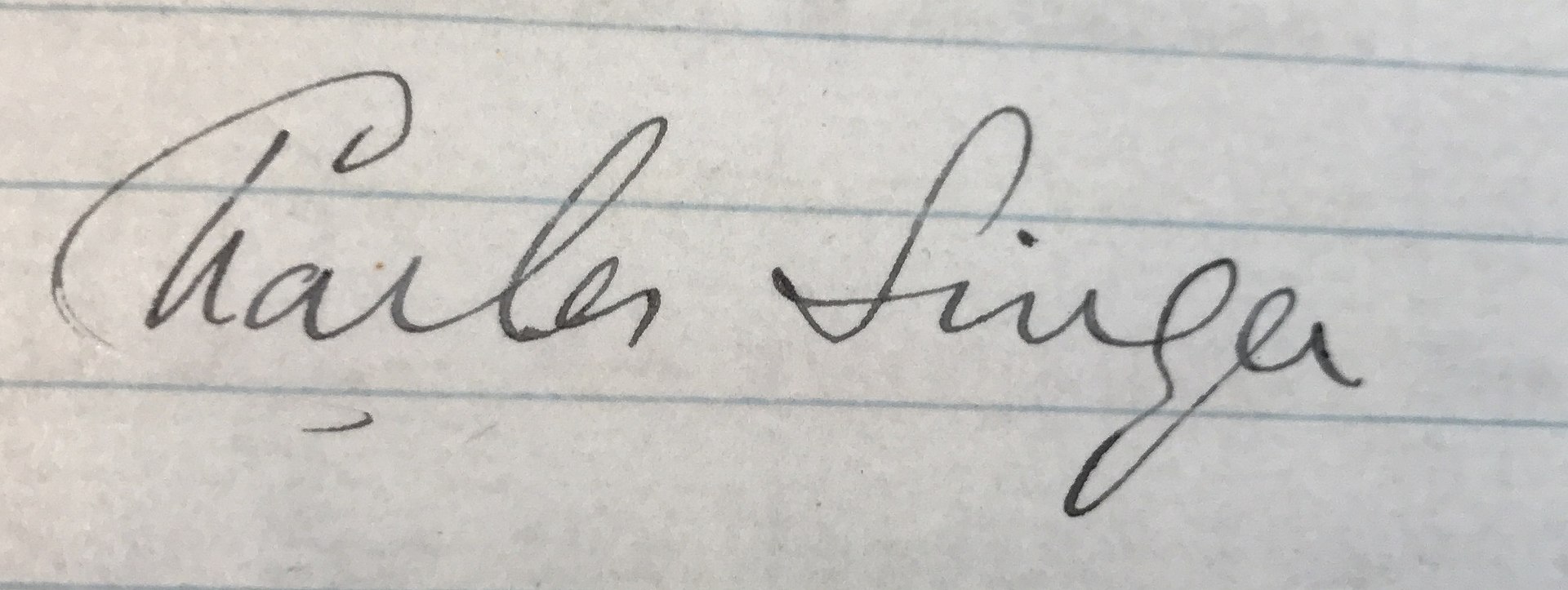
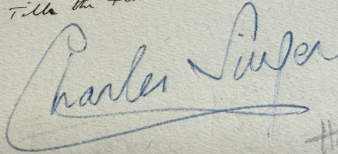
The first page of the book features a signature and the initials “C.S.” on the front paste down, which have been matched to a signature on a Wikipedia page, showing the owner as Charles Joseph Singer. Singer is a historian of science and medicine, is known for his large collection related to the history of these fields. The presence of his signature and initials suggests that the book was in his ownership at some point during his lifetime between 1876–1960.
Harrison D. Horblit
Another piece of provenance is a bookplate that links this book to Harrison D. Horblit, a philanthropist with a passion for collecting rare books, manuscripts, and early photographs. Horblit had immense dedication to preserving historical materials, and his extensive collection eventually became known as the Harrison D. Horblit Collection of Early Photographs. This collection is now regarded as an important resource for the study of early photography. The presence of his bookplate on the front paste down ties this book to his library. It shows that the book was once part of a collection in the U.S. within his lifetime between 1912 and 1988.
Huxley Scientific
Not much is known about the books history at the Oxford bookseller Huxley Scientific, but it is known to have been there before W.S. Cotter Rare Books. This is due to an email inquiry I had with the owner of W.S. Cotter where he stated that he bought the book in mid-2019 from Huxley Scientific.

W.S. Cotter Rare Books and Michigan State University
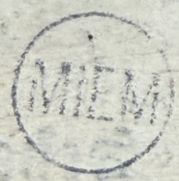
W. S. Cotter bought the book from the Oxford bookseller Huxley Scientific in mid-2019. Later that same year, he sold it to Michigan State University for $7,200. MSU officially added it to their Special Collections catalogue, with their call number and the “MIEM Stamp” on the first page confirming its place in their library.
Miscellaneous Provenance
- “Short term catalogue no. 6862” inscribed on a page that was found in A Short-Title Catalogue of Books Printed in England, Scotland & Ireland and of English Books Printed Abroad 1475-1640 page 20

Unknown Provenance
- Underlining and marginalia throughout possibly from an unknown person since in different ink
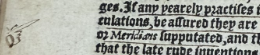
- Sotheby’s inscribed but origin of it is unknown
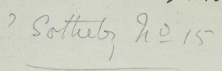
- Inscription talking about another version of the book, but who wrote it is unknown
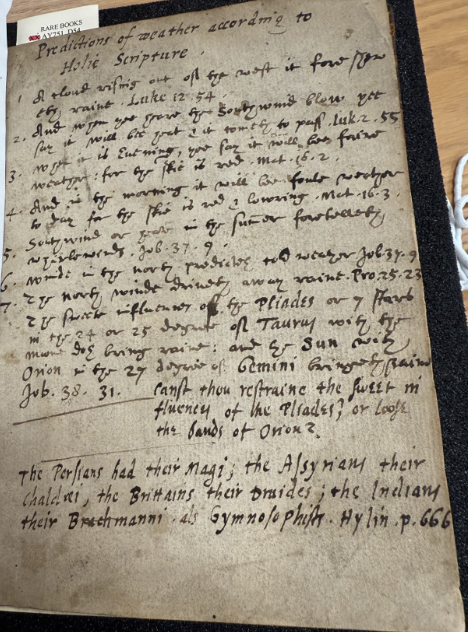
- This page of handwritten notes of predictions according to “Holic Scripture”, who wrote it an when is unknown.
Works Cited
- https://en.wikipedia.org/wiki/Leonard_Digges_(scientist)
- https://academic.oup.com/library/article/19/4/455/5231569
- https://archives.trin.cam.ac.uk/index.php/bosanquet-eustace-fulcrand-1871-1940-bibliographer
- https://hist1318.omeka.fas.harvard.edu/items/show/8
- https://digital.bodleian.ox.ac.uk/objects/7e772f0f-8ee6-4757-96ff-73adbae61c27/
- https://archive.org/details/englishprintedal00bosauoft/page/iv/mode/2up
- https://en.wikipedia.org/wiki/Charles_Singer
- https://en.m.wikipedia.org/wiki/Harrison_Horblit
- https://curiosity.lib.harvard.edu/harrison-d-horblit-collection-of-early-photography
- https://catalog.lib.msu.edu/Record/folio.in00006047132#description
- https://archive.org/details/shorttitlecatalo0001poll/page/20/mode/2up?q=6862
- Magna Carta UMLL
- Thomas Becon’s A New Postil, printed by Thomas Marshe and John Kingston · Fragmented Libraries: an exploration of the material culture of 16th century books · Rare Books Collection at W.D. Jordan Rare Books and Special Collections
- St Dunstan-in-the-West – Wikipedia
- University College London – Wikipedia
Created by Francesca Hagle in Spring 2025 for Professor Brockey’s HST 475 History of the book at Michigan State University
Special thanks to Tad Boehmer of MSU Special Collections and William Cotter of W.S. Cotter Rare Books
