
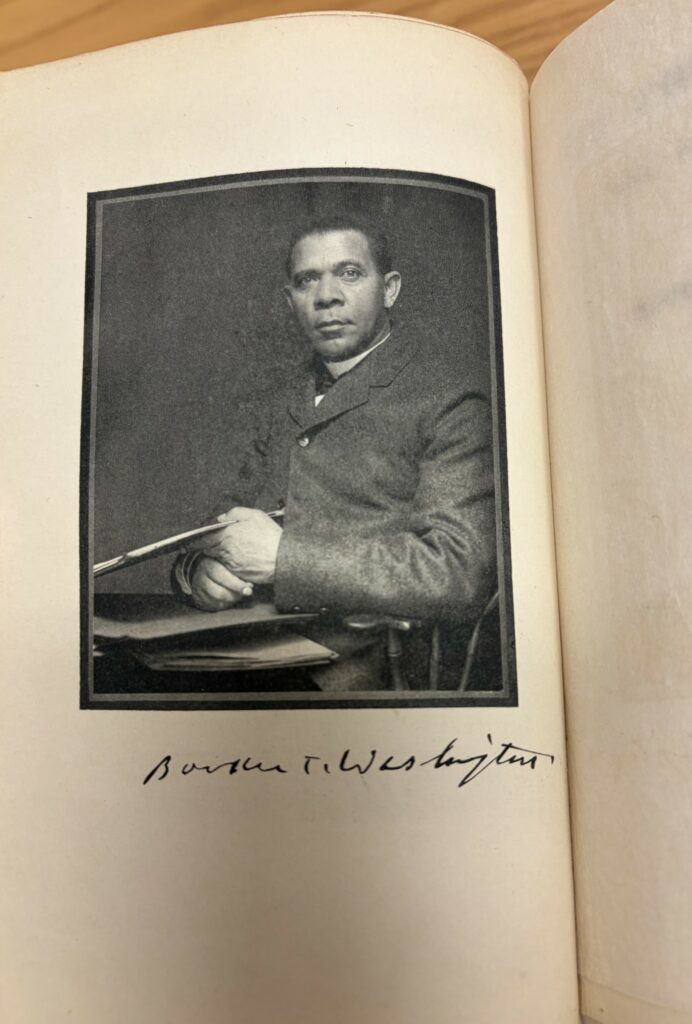
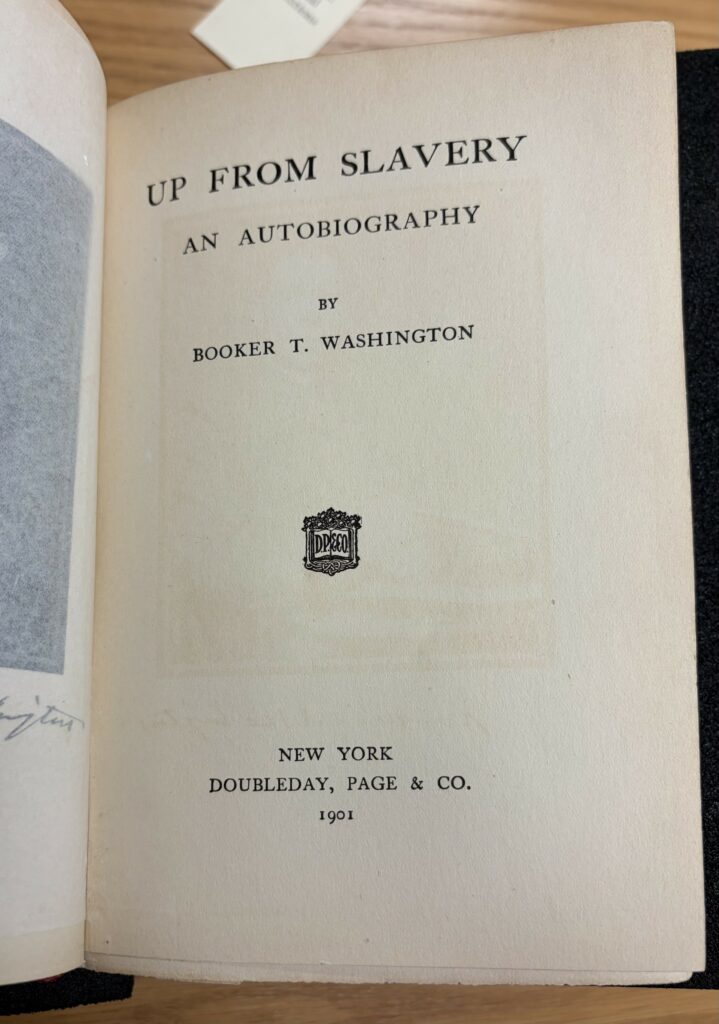
Identification
Author: Booker T. Washington
Publisher: Doubleday, Page & Co.
Place of Publication: New York
Date of Publication: 1901
Printer: Norwood Press, J. S. Cushing & Co., Berwick & Smith
Place of Printing: Norwood, MA, United States
MSU Call Number: XX E185.97 .W3

Physical Description
Overview
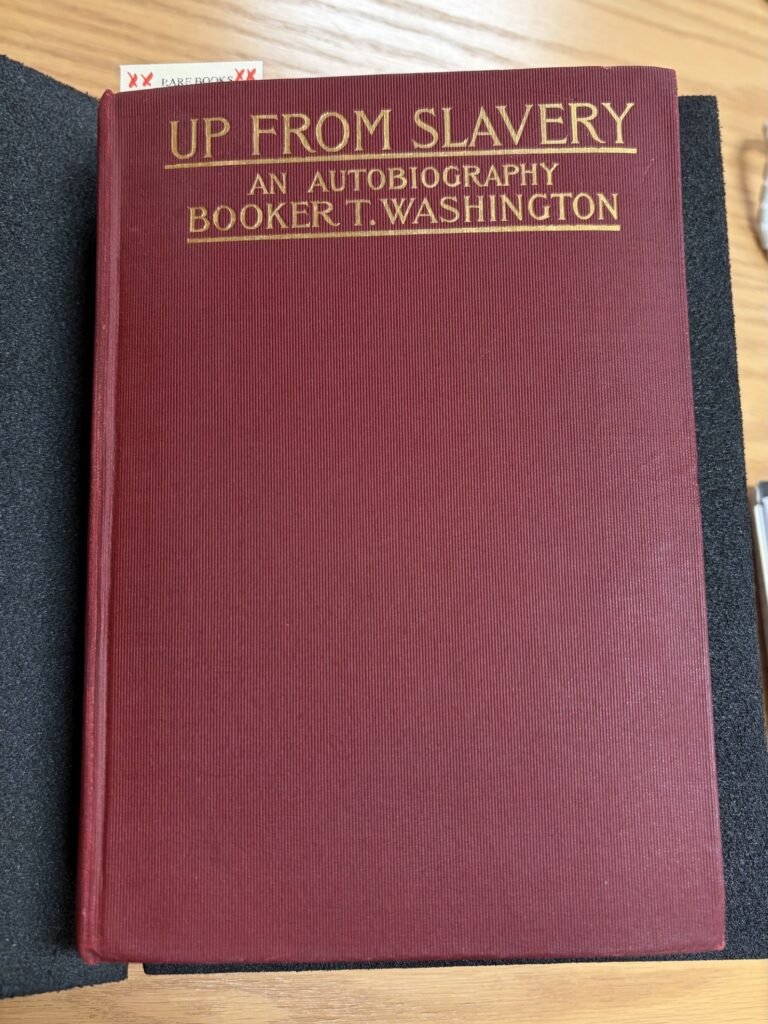
- Bound in the publisher’s red, ribbed cloth
- Title gilt into the front board and spine
- Doubleday, Page & Co. gilt into spine
- Top edge gilt; all other edges untrimmed
- First edition copy1
Detailed Information
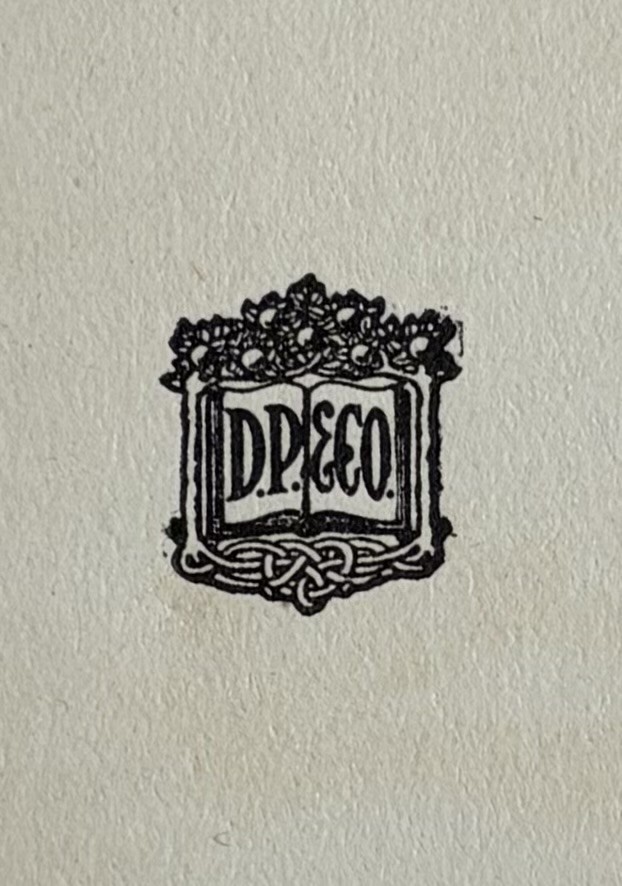
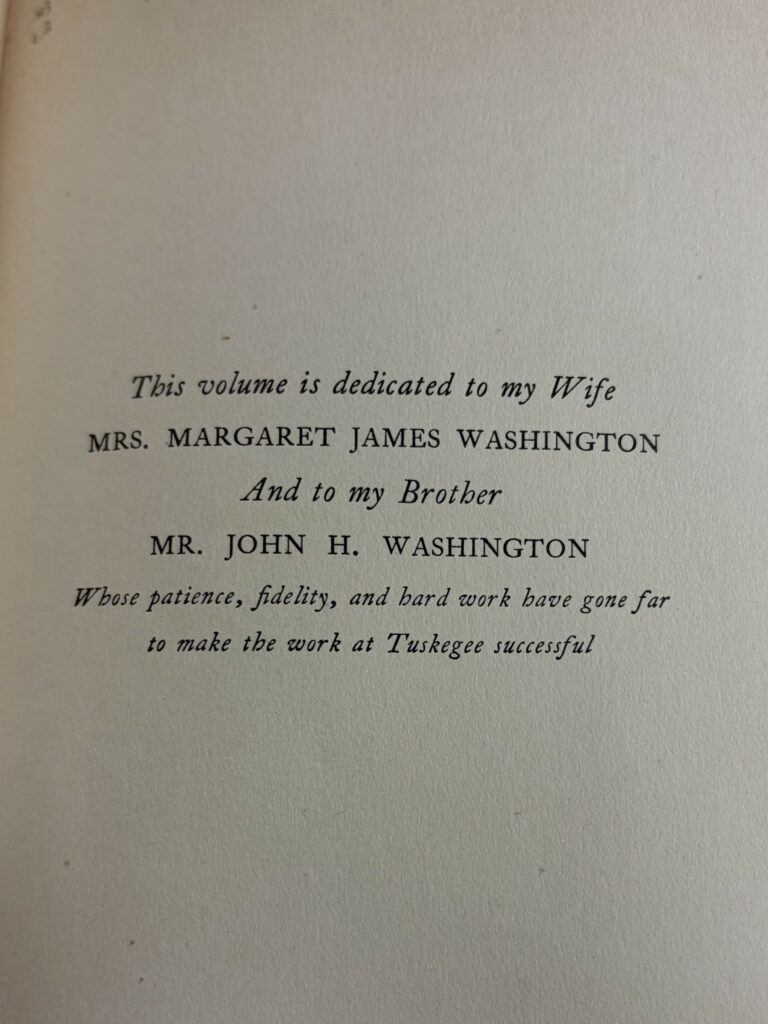
This copy of Up From Slavery has 330 pages, 1 unnumbered page, and 1 unnumbered frontispiece (Michigan). The recto of the unnumbered title page has a beautiful woodcut of the Doubleday and Page & Co. logo. After consulting the MSU catalog and comparing other editions, the binding seems to be original. Newspaper clippings and posters collected by the McCracken family were stored between the front end leaves and back end leaves. The copy is in excellent condition with little to no damage or signs of use.2
Contents
Up From Slavery is the autobiography of activist and intellectual Booker T. Washington. He was an important Black figure, speaking at colleges and to crowds across the U.S. and Europe. Washington advised two presidents: Theodore Roosevelt and William Howard Taft and was the first Black American to be invited to the White House for dinner. Washington’s opinions were widely circulated throughout the U.S. and highly respected by many white intellectuals and some high ranking political figures. Each section of Washington’s autobiography was compiled from writings he published in Outlook magazine. It detailed his life from his birth into slavery in Franklin County, Virginia in either 1858 or 1859 (no exact record of his birth) to his journeys in Europe with his wife. Washington recounted the hard labors and violence growing up in slavery then his freedom after the Civil War and fight for education. He attended the Hampton Institute and recounted how the Ku Klux Klan patrolled at night to keep Black Americans out of politics, burning down homes and churches. Washington then discussed his move to Tuskegee, AL and how he helped found the Tuskegee Institute, strengthening his community there. The rest of the autobiography covers his activism and family life.3
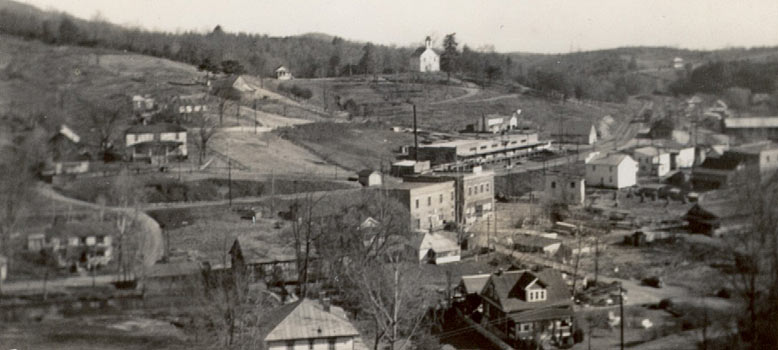
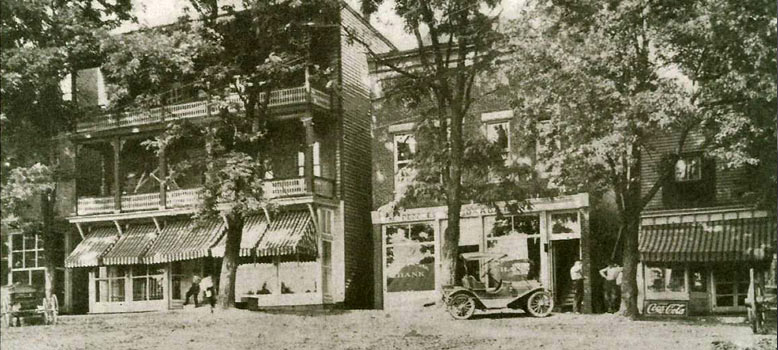
Booker T. Washington was a popular Black thinker, teaching at Hampton Institute in 1879 and later working as the principal of Tuskegee Institute from 1881 to 1915. Because of experiences with the Ku Klux Klan and Jim Crow laws, Washington called for a segregated country. He thought it would be easier and safer for Black communities to separate from white ones as long as Black Americans had equal access to education, justice, and economic prosperity under US law. Washington thought it was best for Black people to work hard and develop skills, ignoring discrimination.5 He believed this would win the respect of white people. Washington’s philosophy was appealing to whites, especially those who did not want or were not interested in learning how to live as a desegregated country. Many whites still held racist beliefs about Black Americans and living apart from them satisfied white paternalistic self interest. They wanted to continue to separate their day to day lives from Black Americans, not ever respecting them as equals. Washington famously faced criticism from author, activist, and teacher W.E.B. DuBois. DuBois believed that Washington’s plan would only expand the power of white oppression, keeping it embedded in cultural and governmental systems.6
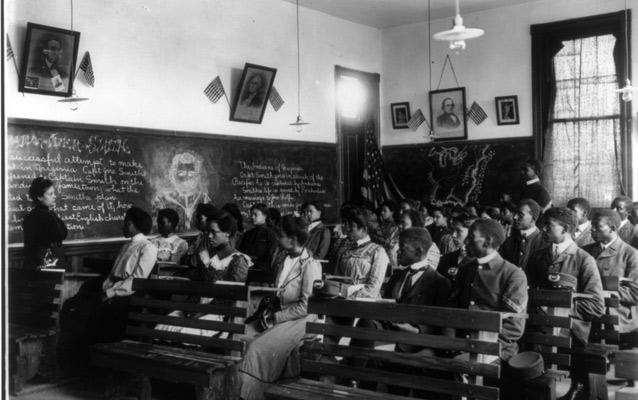
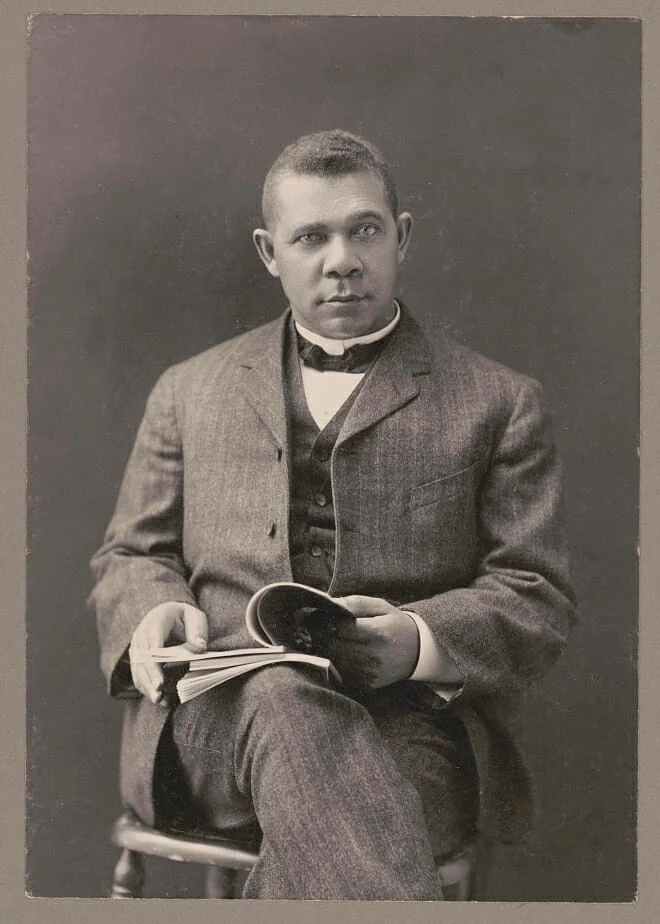
Upon its release, Up From Slavery received positive reviews from whites across America as it suggested that Black Americans needed to embrace hard work and learn in order to earn equality. However, Black scholars and activists criticized Washington’s perspective. They thought his story ignored the realities of white violence and racism in the South. It suggested a moving on from the horrors of slavery that was not possible (and still is not today). Not all African Americans wanted to sacrifice social standing and political power to achieve economic success. W.E.B. DuBois countered Washington’s approach and founded the NAACP (National Association for the Advancement of Colored People) to put his ideas on achieving Black success in all aspects (life, politics, art, etc.) into action.7
Provenance
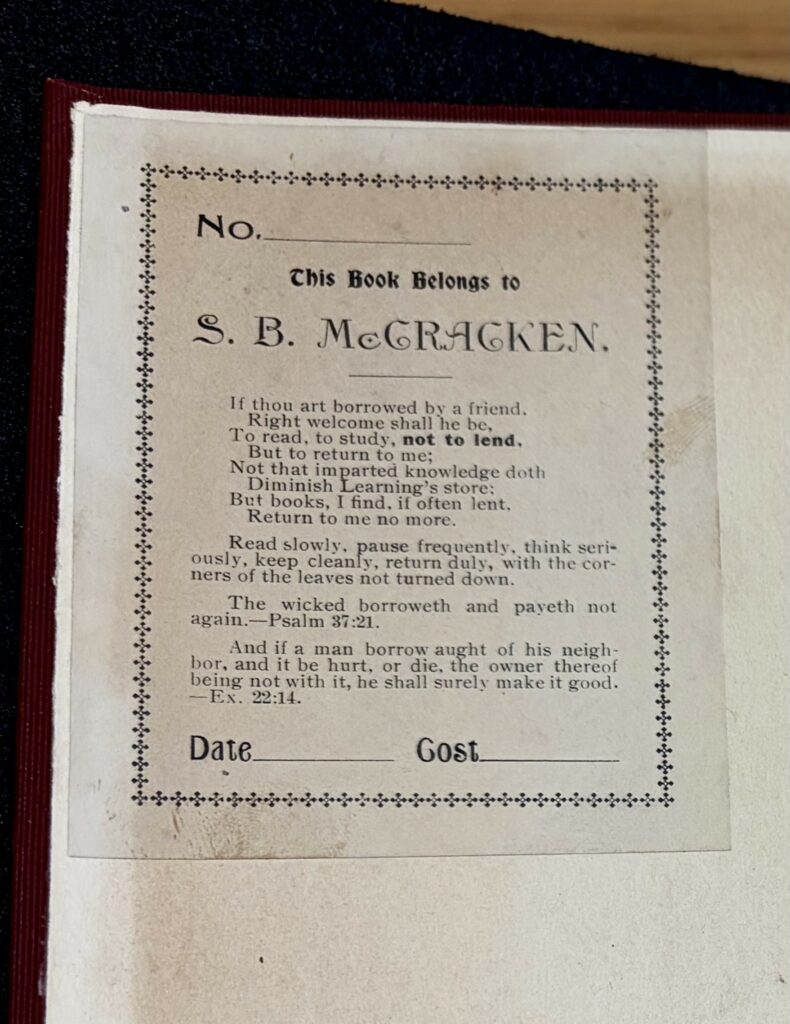
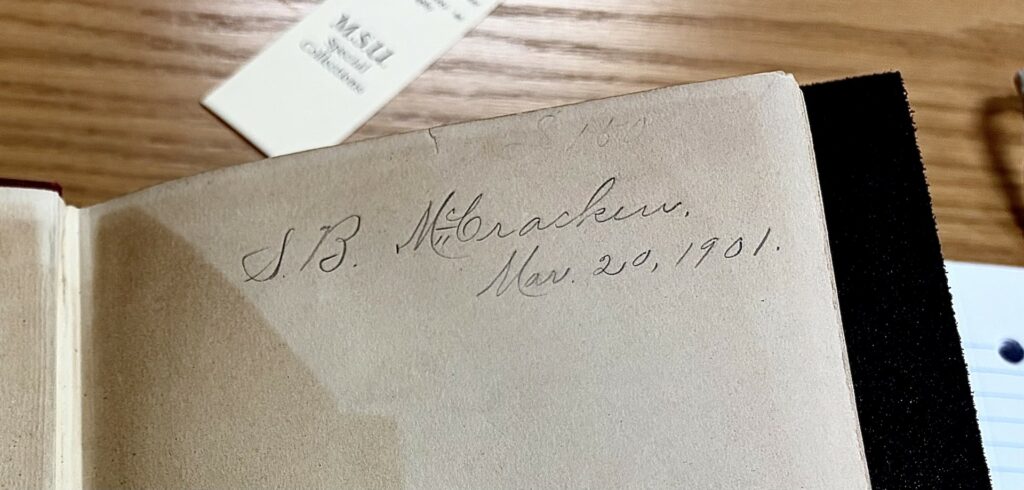
Stephen Bromley McCracken acquired this book in the year it was published in 1901. He was a writer and political figure in Michigan, publishing articles in many local newspapers and magazines. His bookplate is attached to the upper left corner of the front pastedown. It has his name printed on it as well as a book curse and two Bible verses. Additionally, on the recto of the first front end leaf, S.B. McCracken signed his name and dated it as March 20th, 1901. S.B. McCracken (Sept. 30th, 1824 to Aug. 3rd 1902) was an an influential journalist and local politician from Oakland County, Michigan. He started the Washtenaw Whig newspaper, wrote for The Shrapnel, and authored Michigan and the Centennial. McCracken held radical Democratic views and aligned himself with the Conscience Whigs, expressing this in his articles. The Conscience Whigs were primarily located in the northern U.S. and opposed slavery. This party acted against Andrew Jackson’s presidential vetoes and protested for representative democracy. Because of this, he was likely a fan of Washington who also believed in the rule of law.8 Both men were against slavery, and they had similar ideas about Blacks separating from whites and using governmental systems to represent their needs and interests.9
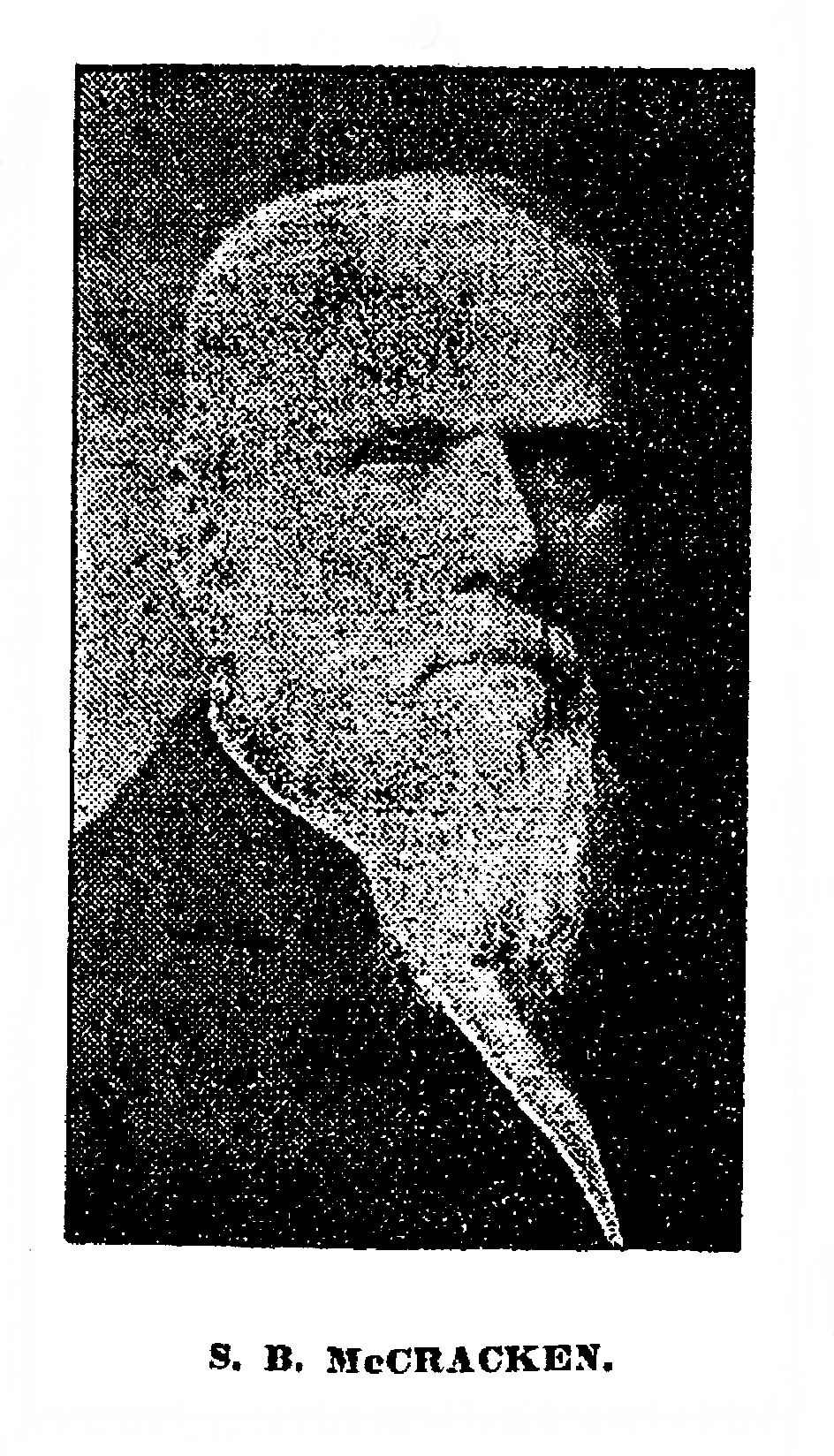
McCracken purchased this copy of Up From Slavery about a year before his death in 1902 making it one of the last books he ever read. He passed away at age 77 and is buried at Oak Hill Cemetery in Pontiac, Michigan.
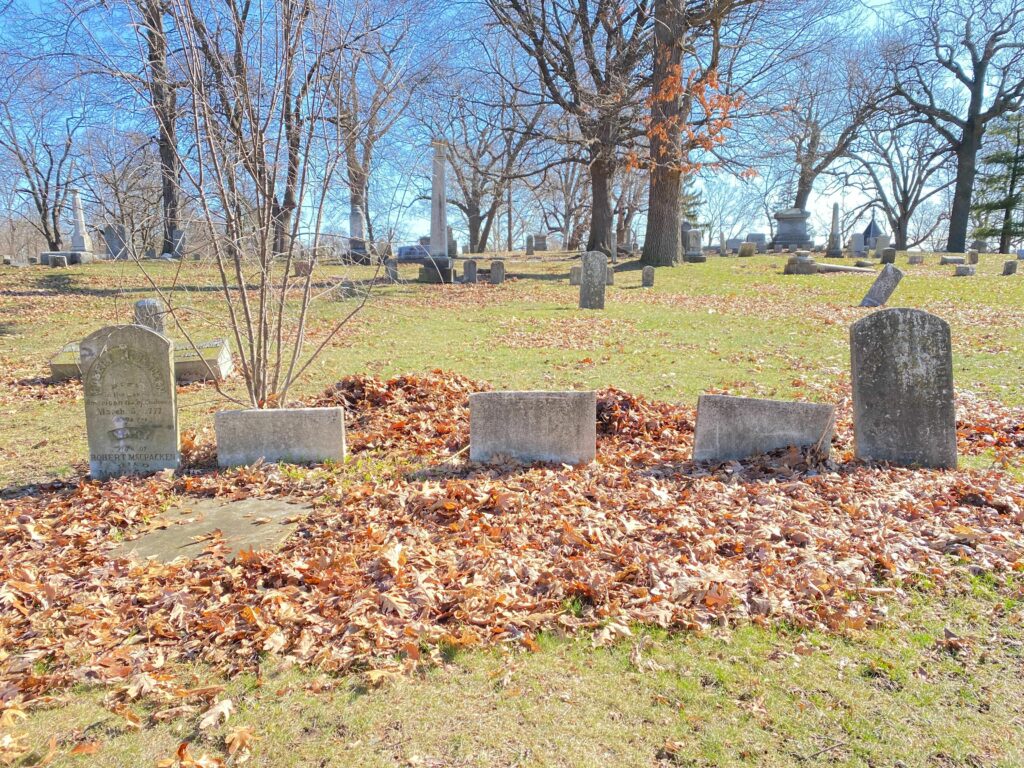
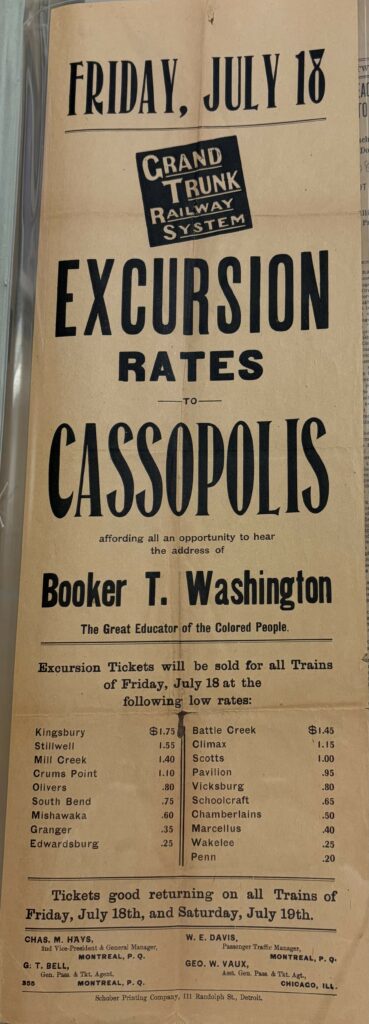
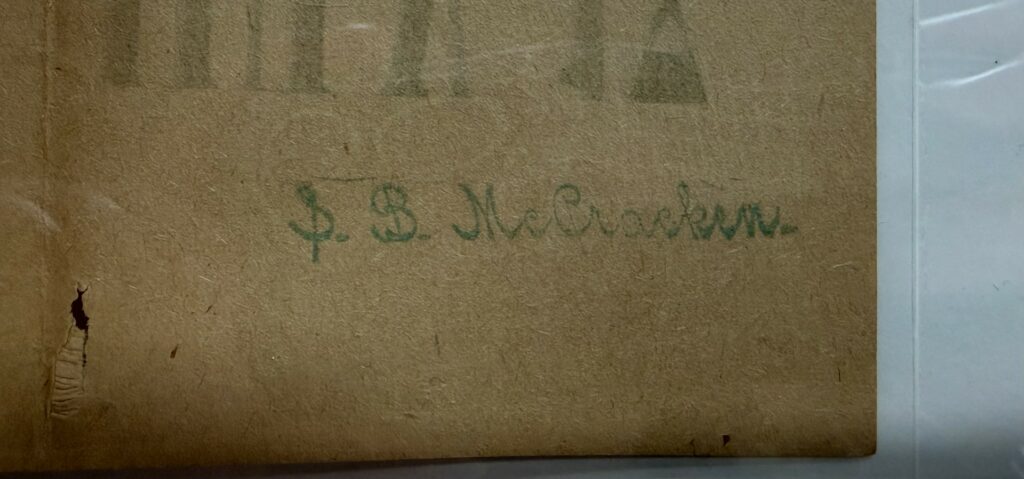
This edition also includes a poster and newspaper clippings that were folded and stored between the front and back end leaves. A poster for lowered train ticket prices to Booker T. Washington’s address in Cassopolis, Michigan was stamped by McCracken (as it looks different from his signature on the book and is green). He likely did not attend the speech as was supposed to take place about a month before he died (July 18th, 1902), however, as he owned the poster, McCracken planned on attending. It is also possible that he knew some of the people at Schober Printing Company in Detroit who printed this poster because he worked with the Detroit Free Press nearby.
Historical Interlude
Booker T. Washington was scheduled to speak at Cassopolis because a Mr. Bedford encouraged him to. In Up from Slavery, Rev. Robert C. Bedford is mentioned as a trustee and friend of Tuskegee institute. Bedford was a white man originally from Wisconsin who ran a Black Church in Montgomery, Alabama. Washington met him while looking for someone to lead the Thanksgiving sermon while the chapel at the Tuskegee Institute was being constructed. The sermon went incredibly well, and Bedford was hired on as a staff member, later telling Washington to speak at Cassopolis, Michigan.10
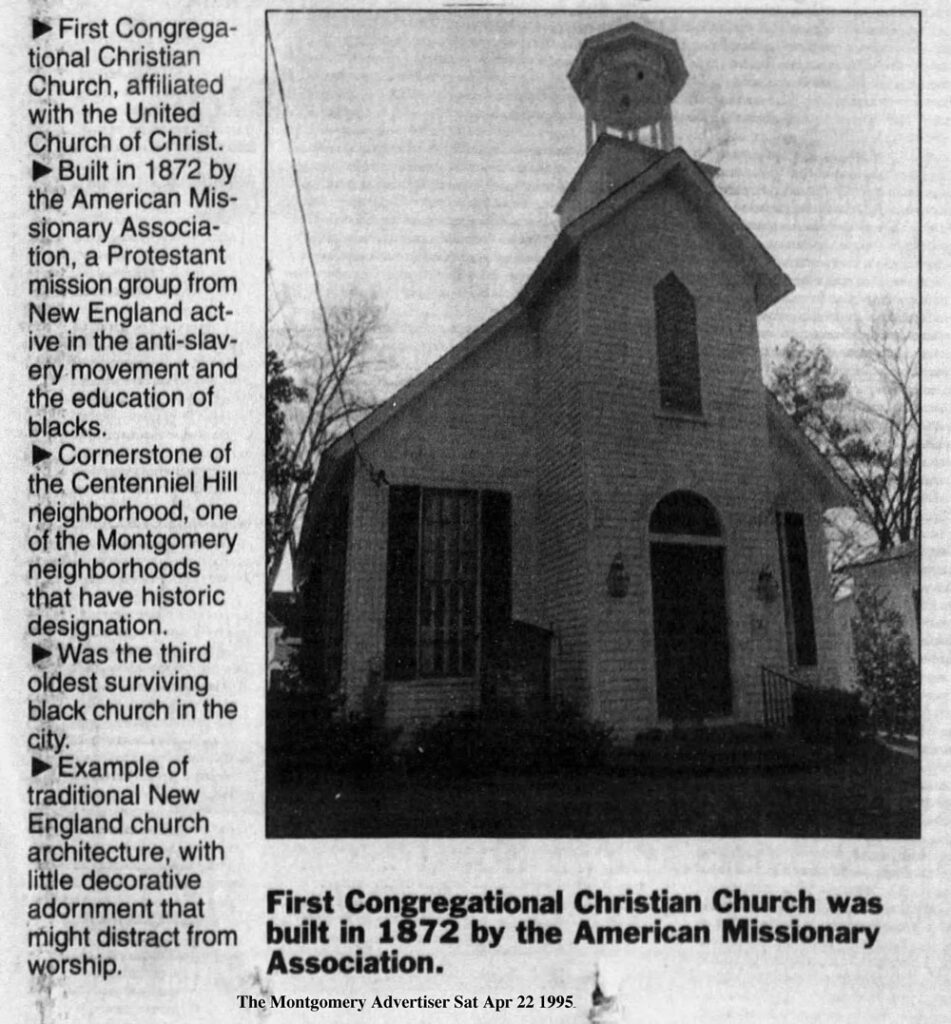
Cassopolis was a significant part of the Underground Railroad and was home to many free Black families. A group of Quakers from Wayne County, Indiana relocated to Cass County, Michigan in the 1830s and formed the “Quaker Line” of the Underground Railroad, helping former slaves cross the border into Canada (where slavery had been outlawed in 1833). Some free African Americans stayed Michigan and bought land, becoming farmers. In Cass County, they “founded Chain Lake Baptist Church and Mt. Zion” Church. In 1847, there was the Kentucky Raid where slave catchers from Kentucky kidnapped former slaves who had taken the Quaker Line to Cass County, Michigan. Meanwhile, a crowd emerged around the slave catchers, protesting their actions. The matter went to court. The judge was a secret abolitionist and asked the slave catchers to show him the state constitution of Kentucky to prove it was a slave state. Meanwhile, the Underground Railroad helped the freedom seekers get to Canada before the slave catchers brought the document. Years later, after the Civil War, many from the 102nd Colored Troops (a group of African American soldiers who fought in the Civil War) were buried in Cassopolis. To Booker T. Washington, Cassopolis was likely a representation of his belief that hard work would prove the value and dignity of Black Americans to whites.11
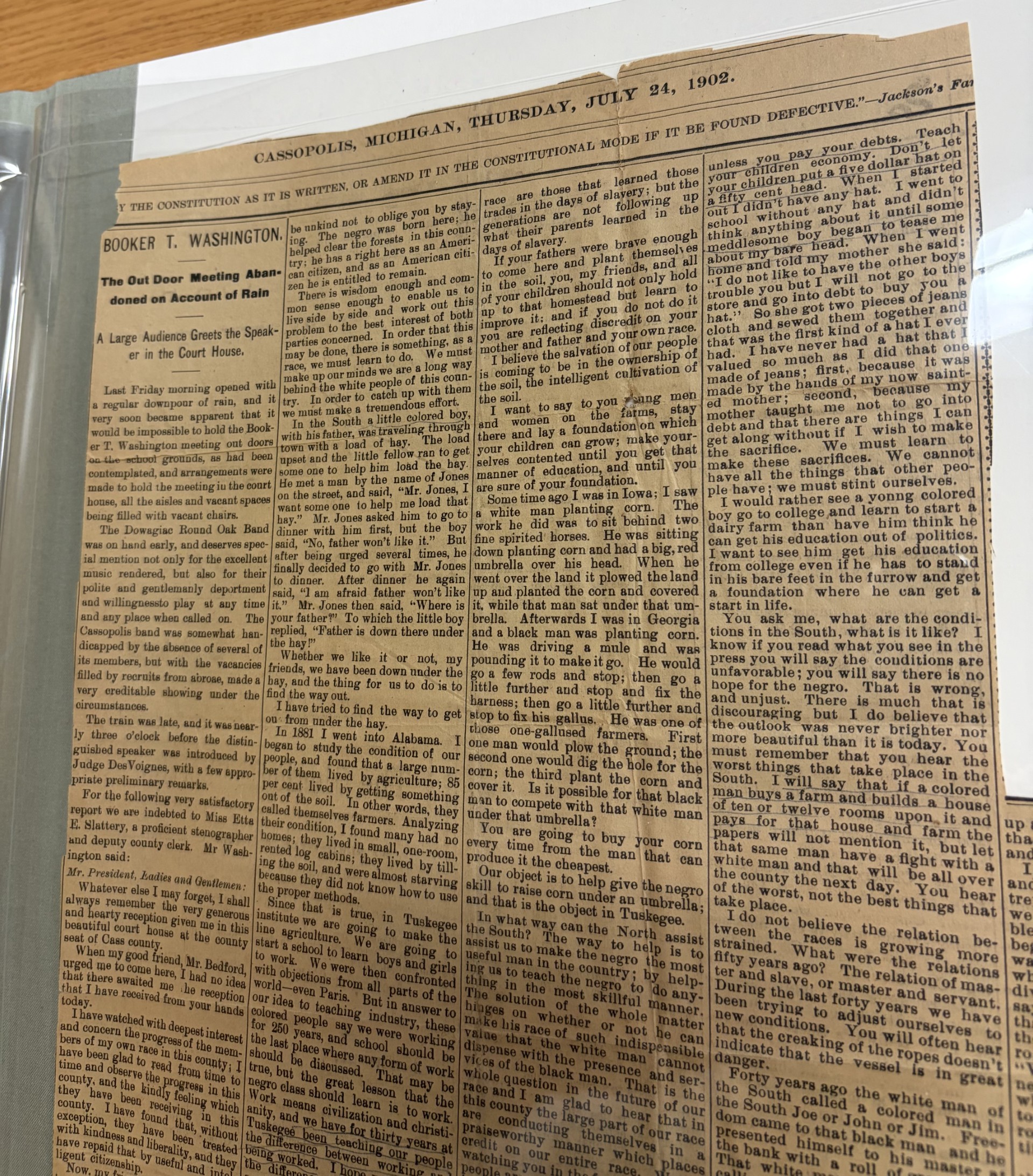
Washington’s speech at Cassopolis was later cancelled because of rainy weather as shown in this newspaper article stored in Up From Slavery.
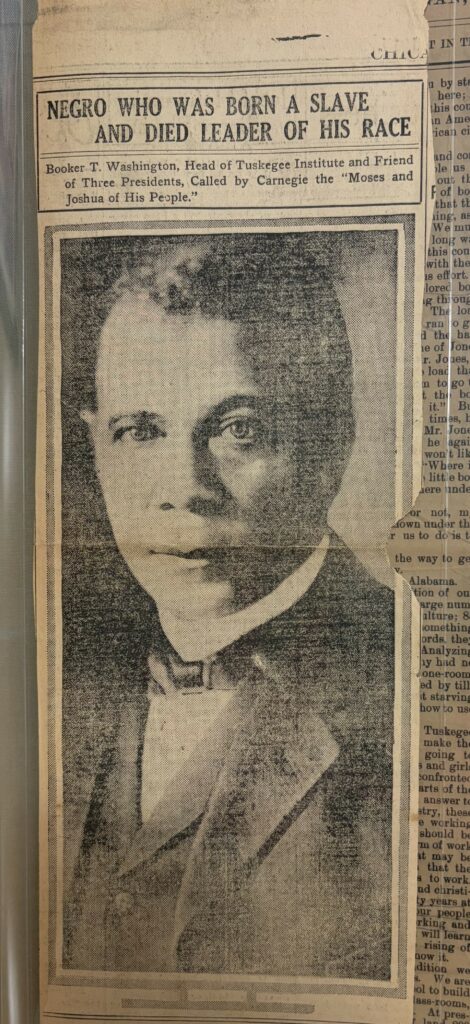
After S.B. McCracken’s passing in 1902, Up From Slavery probably passed down to his eldest son Robert Grover McCracken. It is also possible that William Robert McCracken, another of S.B.’s sons, inherited it as he lived in South Bend, Indiana (near Chicago). There is no clear evidence in the text to confirm either, but this copy likely stayed in the McCracken family as S.B. McCracken’s signed poster was never removed. Additionally, newspaper clippings from Chicago papers about Washington were stored in the book.12
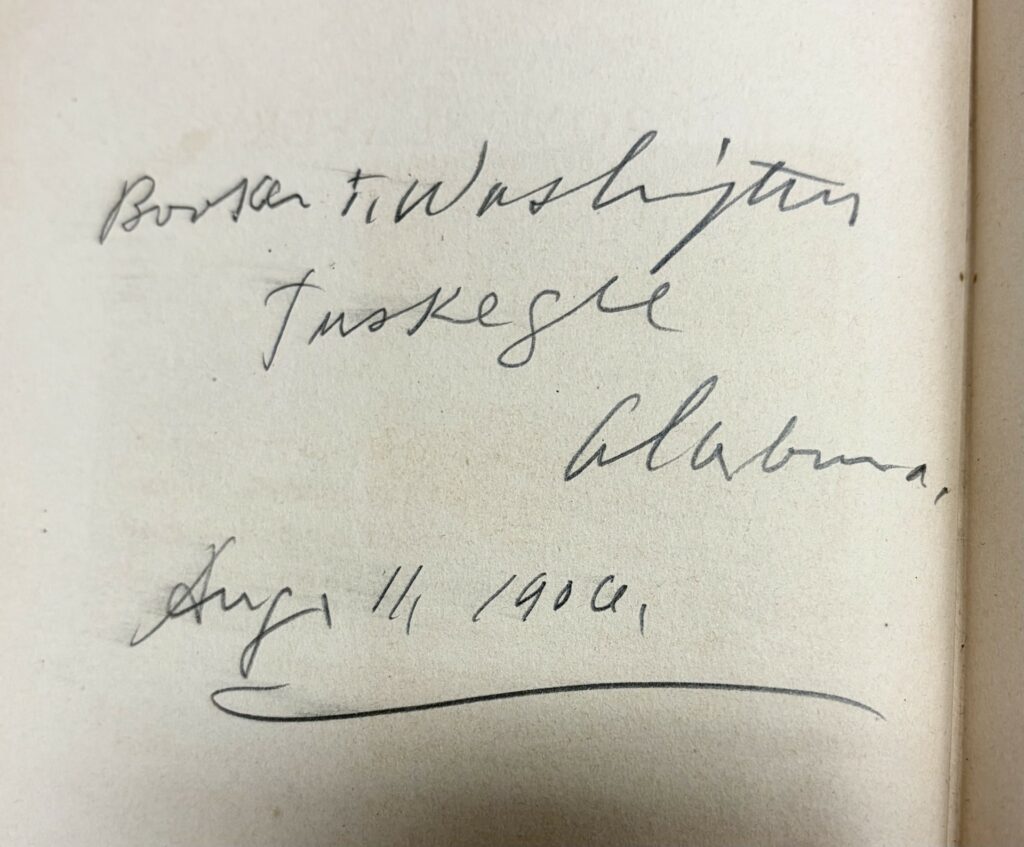
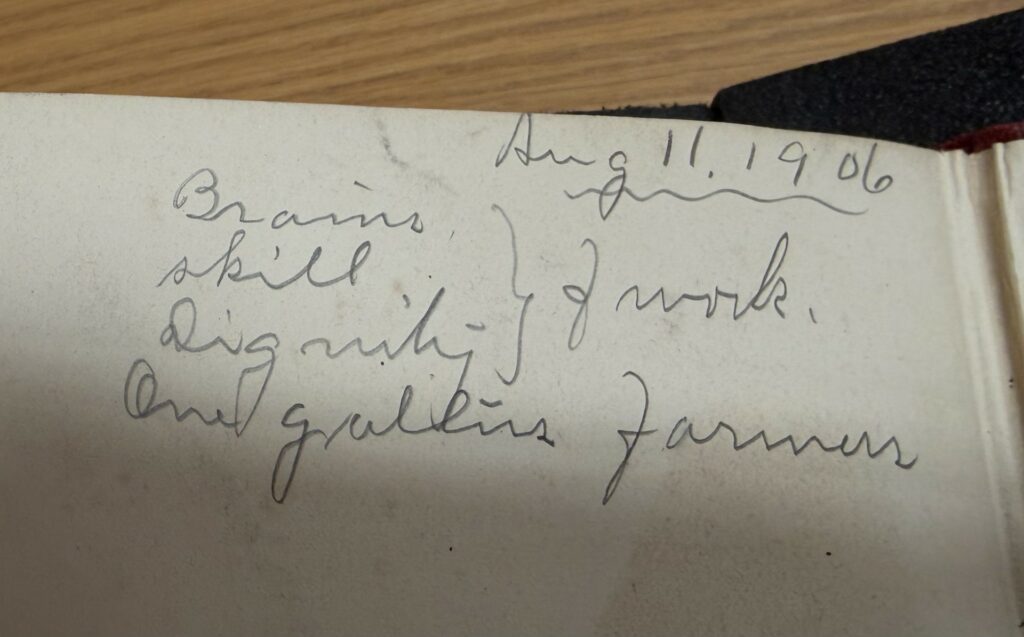
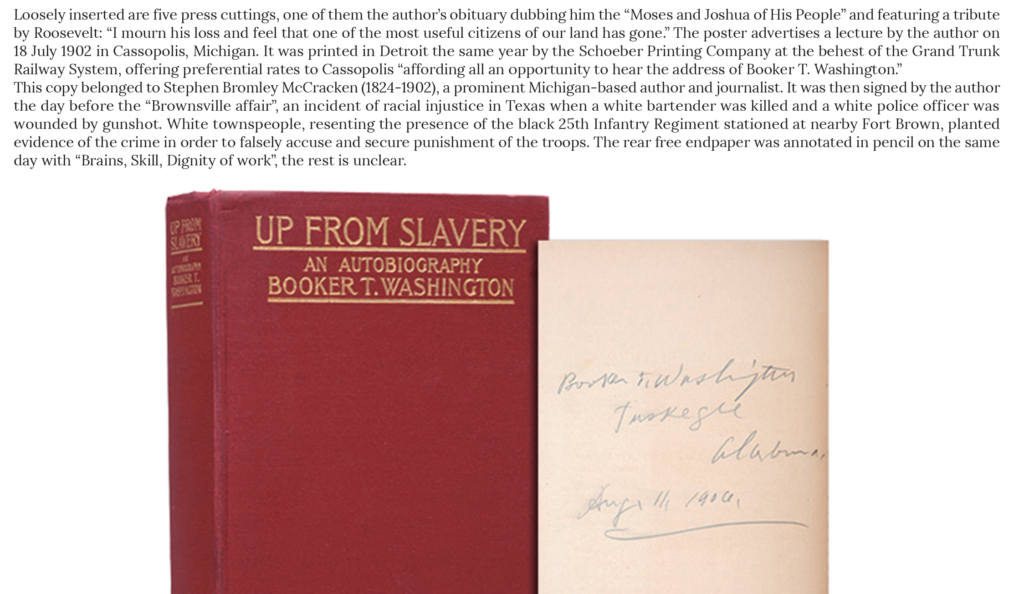
On August 11th, 1906, Booker T. Washington signed this book’s front end leaves. It was likely signed at one of Washington’s speeches in Chicago that a McCracken attended. It is unclear which speech this might have been, but Washington frequently travelled across the U.S. to promote his ideals. It matches other signatures by Washington, confirming it is his. Additionally, he repeatedly added “Tuskegee, Alabama” to many of his signatures despite not actually signing the books there. It was a reminder of where the majority of Washington’s community work took place and encouraged the reader to possibly support his efforts there. That same day, an inscription was written (presumably by one of the McCracken sons) in the back end leaves, reading “Brains, skill, dignity of work. One [illegible] farmers.” This could have been a note about or a quote of Washington’s speech.
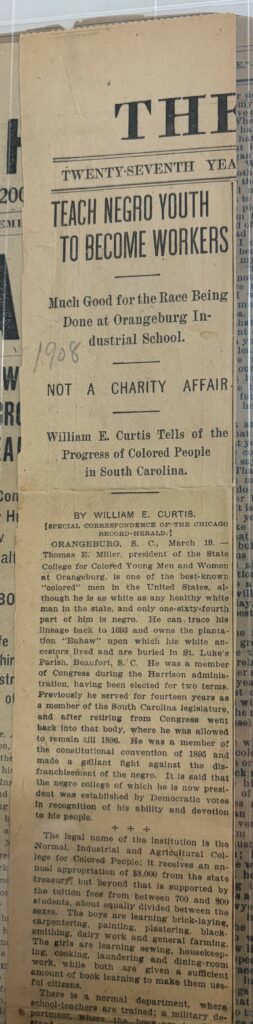
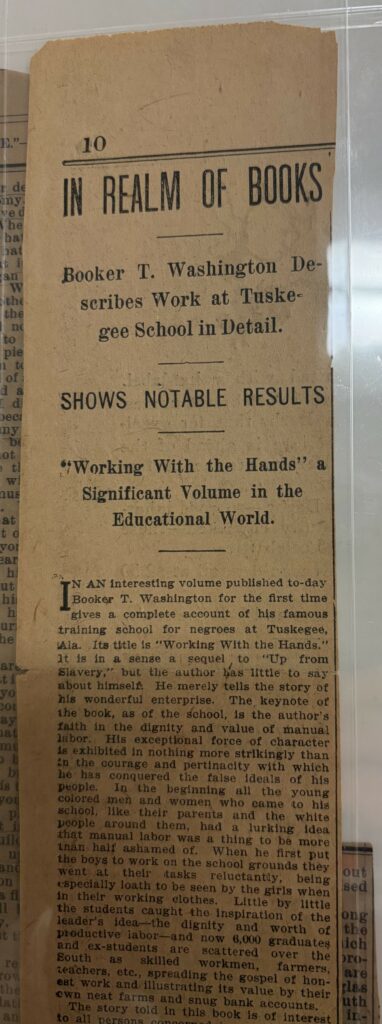
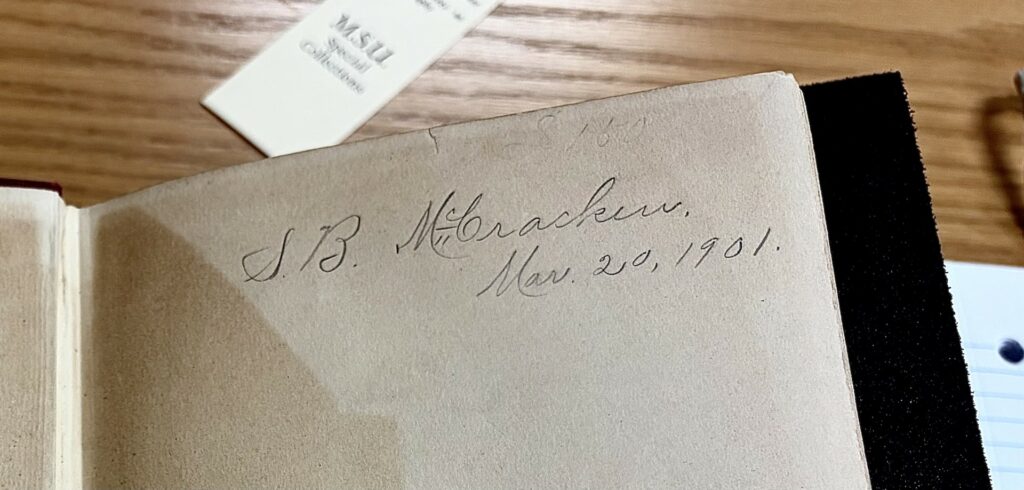
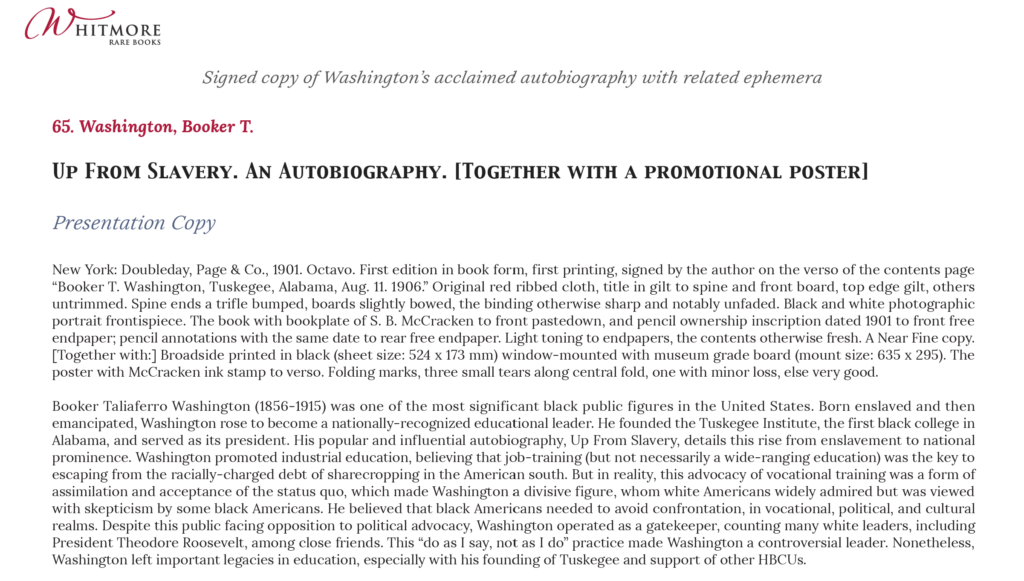
In the top right corner of this image, there is another provenance mark that has been erased. To me, it looks like “$150” possibly indicating that the book was sold for that amount at some point after 1915, leaving the McCracken family. From there, the book was untraceable until it was bought by Whitmore Rare Books. Whitmore Rare Books was contacted and left a message asking where they bought the book from, but they never called back with an answer. They then put the book in their 21st catalogue and sold it to Michigan State University on August 28th, 2020.13

Works Cited
- Michigan State University. “Up From Slavery : An Autobiography / by Booker T. Washington.” MSU Libraries Catalog. https://catalog.lib.msu.edu/Record/folio.in00001787350. ↩︎
- Washington, Booker T. Up From Slavery: An Autobiography. 1901. Doubleday, Page & Co. ↩︎
- Washington, Booker T. Up From Slavery: An Autobiography. Uploaded by Dan Muller and David Widger. The Project Gutenberg EBook. Doubleday, Page & Co. chrome-extension://efaidnbmnnnibpcajpcglclefindmkaj/https://ia801605.us.archive.org/view_archive.php?archive=/33/items/GutenbergENzip/41.zip&file=Up%20from%20Slavery_%20An%20Autobiography%20-%20Booker%20T.%20Washington%2C%202000%20%2884p%29.pdf. ↩︎
- “Franklin County Virginia Historical Society.” Franklin County Virginia Historical Society. https://franklincountyvahistoricalsociety.org/. ↩︎
- HISTORY.com Editors. “Booker T. Washington.” HISTORY. May 28, 2025. https://www.history.com/articles/booker-t-washington. ↩︎
- Kandasamy, Ambika. “The Debate Between W.E.B. Du Bois and Booker T. Washington.” FRONTLINE | PBS | Official Site | Documentary Series, September 23, 2025. https://www.pbs.org/wgbh/frontline/article/debate-w-e-b-du-bois-and-booker-t-washington/. ↩︎
- Metress, Christopher. “Up From Slavery.” Encyclopedia of Alabama, June, 5, 2008. https://encyclopediaofalabama.org/article/up-from-slavery/. ↩︎
- “Major American Political Parties of the 19th Century.” Norwich University – Online, online.norwich.edu/online/about/resource-library/major-american-political-parties-19th-century. ↩︎
- “Stephen Bromley McCracken (1824-1902).” Find a Grave. July 6, 2011. https://www.findagrave.com/memorial/72934676/stephen_bromley-mccracken. ↩︎
- Up From Slavery: An Autobiography by Booker T. Washington: Chapter 10 (Continued) – the Literature Page. www.literaturepage.com/read/upfromslavery-100.html. ↩︎
- “Cass County & UGRR.” Underground Railroad Society of Cass County. https://www.urscc.org/cass-county—ugrr.html. ↩︎
- “Stephen Bromley McCracken 1824-1902.” Ancestry Library Edition. https://www.ancestrylibrary.com/family-tree/person/tree/27774873/person/46584378358/facts. ↩︎
- “Catalogue 21.” Whitmore Rare Books. chrome-extension://efaidnbmnnnibpcajpcglclefindmkaj/https://whitmorerarebooks.cdn.bibliopolis.com/images/upload/catalogue21wrb-webnp.pdf. ↩︎
Thank you to Dr. Liam Brockey, Tad Boehmer, and the Reading Room staff for your help with research and development.
This project was created by Alex Spevetz.
