
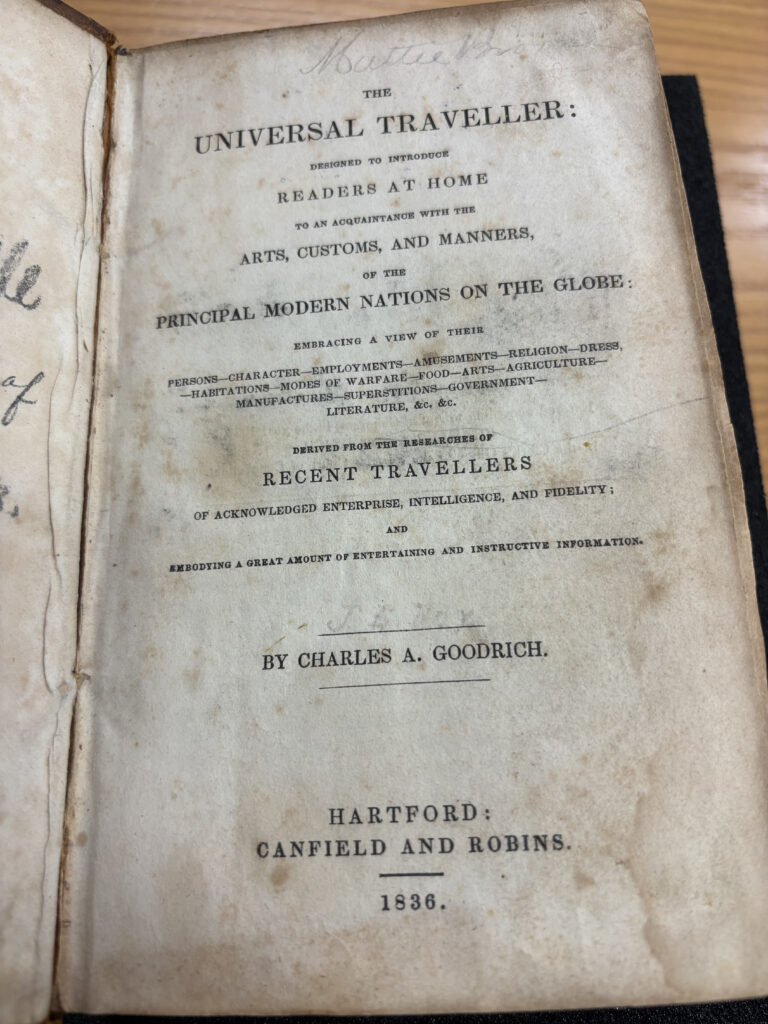
The Universal Traveller: Designed To Introduce Readers At Home to an Acquaintance with the Arts, Customs, and Manners of the Principal Modern Nations on the Globe was written in 1836 by Charles A. Goodrich and published by Canfield and Robins in Hartford, Connecticut.
Contents (listed as written):
Sect I. North America 1. United States 2. Indian Tribes 3. Canada 4. Esquimaux 5. Greenlanders 6. Iceland 7. Mexico 8. West Indies
Sect. II. South America. 1. Columbia 2. Brazil. 3. Peru. 4. Bolivia. 5. Buenos Ayres. 6. Chile. 7. Patagonia. 8.
Europe. 1. England. 2. Scotland. 3. Ireland. 4. France. 5. Spain. 6. Portugal. 7. Italy. 8. Greece. 9. European Turkey. 10. Switzerland. 11. Hungarian States. 12. Austria, Bohemia. 13. Germany. 14. Netherlands. 15. Denmark. 16. Norway. 17. Sweden. 18. Lapland. 19. Finland. 20. Russia.
Asia. I. Asiatic Tribes. 1. Circassians. 2. Gregorians. 3. Tartans 4. Calmucks. 5. Kamschatka.
MSU Call Number: G121. G6 1837
https://catalog.lib.msu.edu/Record/folio.in00001781261?sid=86926272
Author
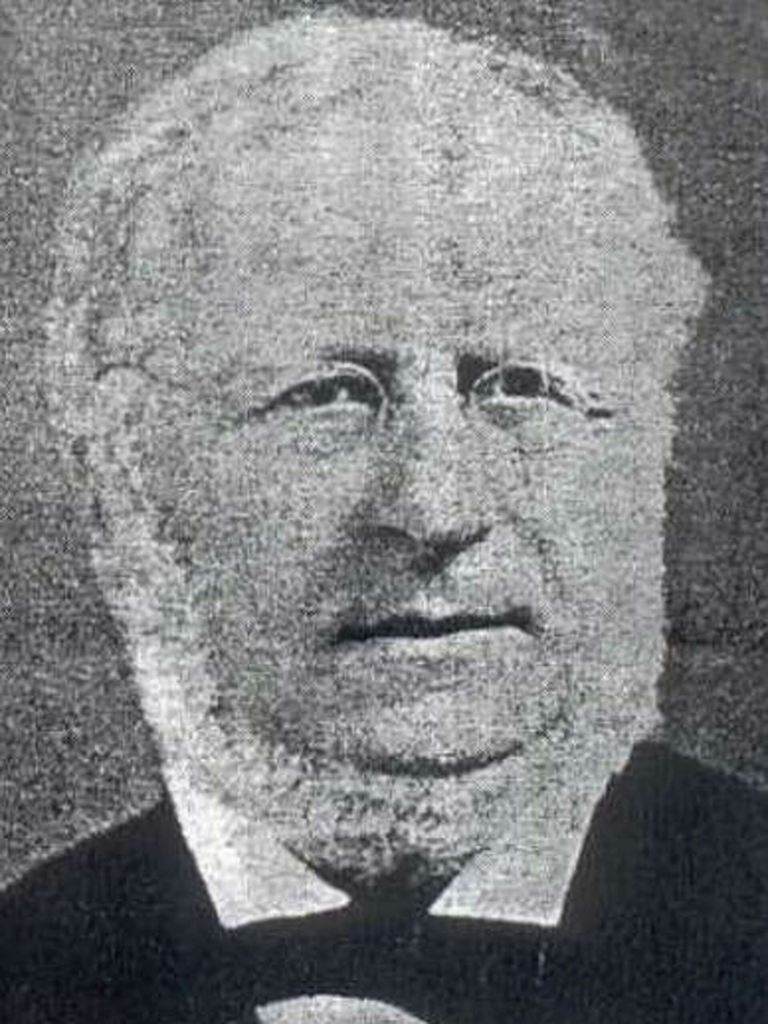
Charles Augustus Goodrich (1790-1862) was an Author and Congressional Minister. He graduated from Yale with a degree in Theology and became ordained in Worcester, Massachusetts, in 1816. He then continued his religious and written work in Hartford, Connecticut. His most famous works include “History of the United States of America” (1822), “Family Tourist” (1848), and “Child’s History of the United States” (1855). He is credited with the saying, “A place for everything, and everything in its place.”
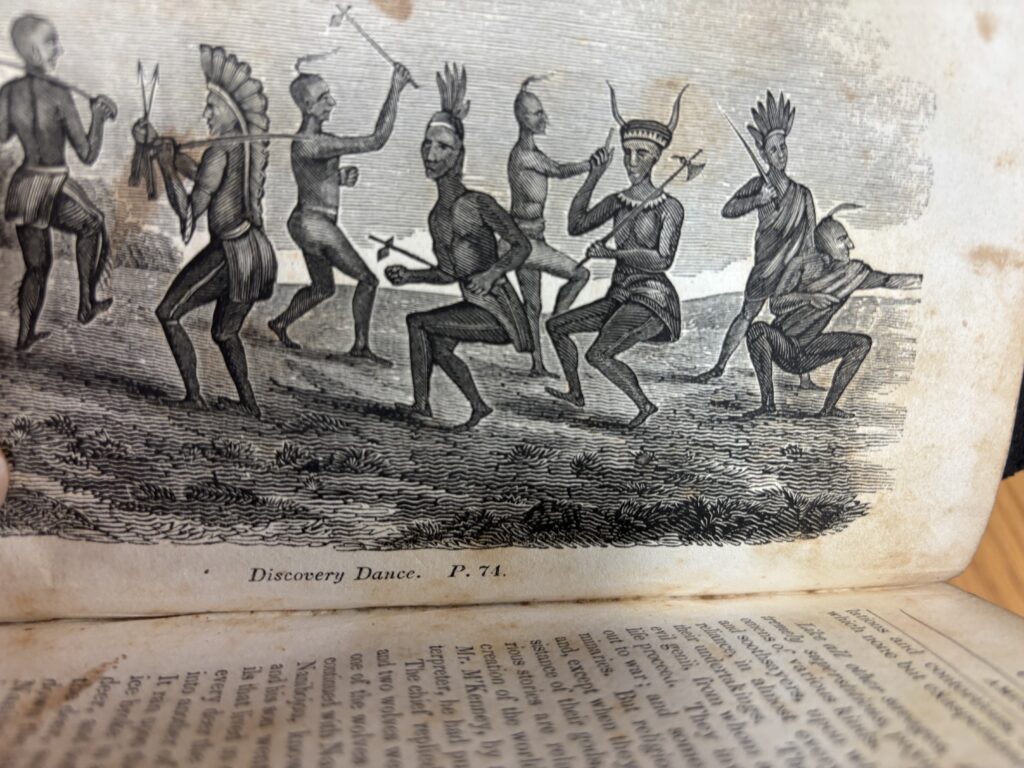
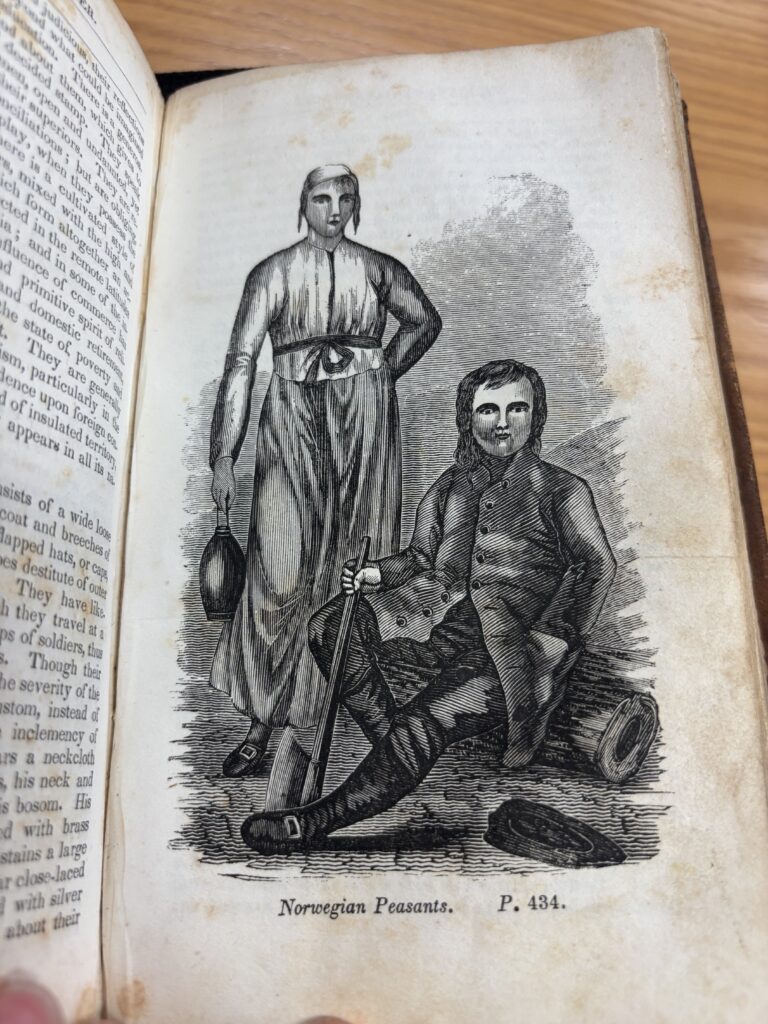
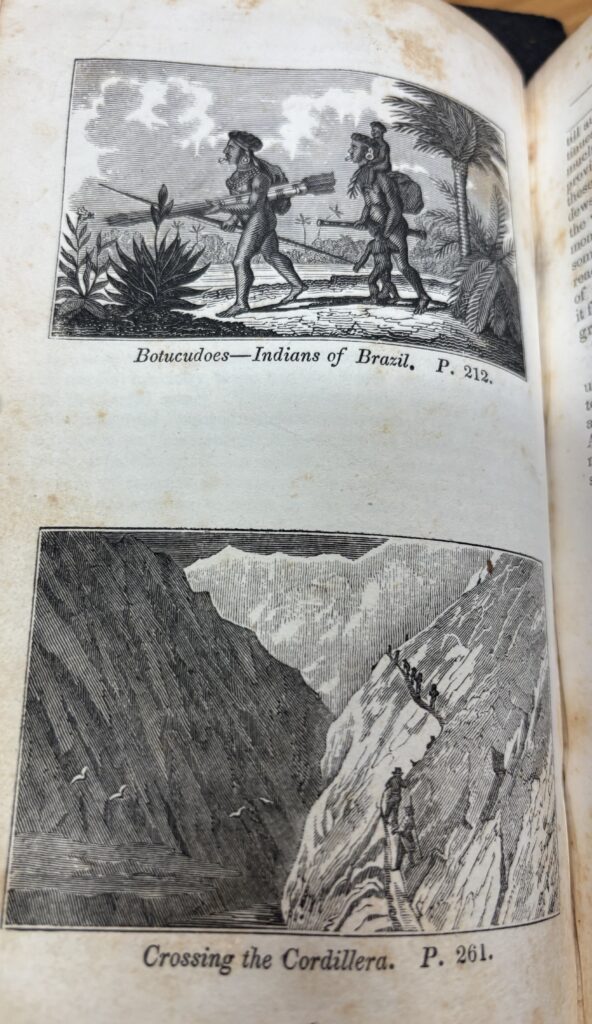
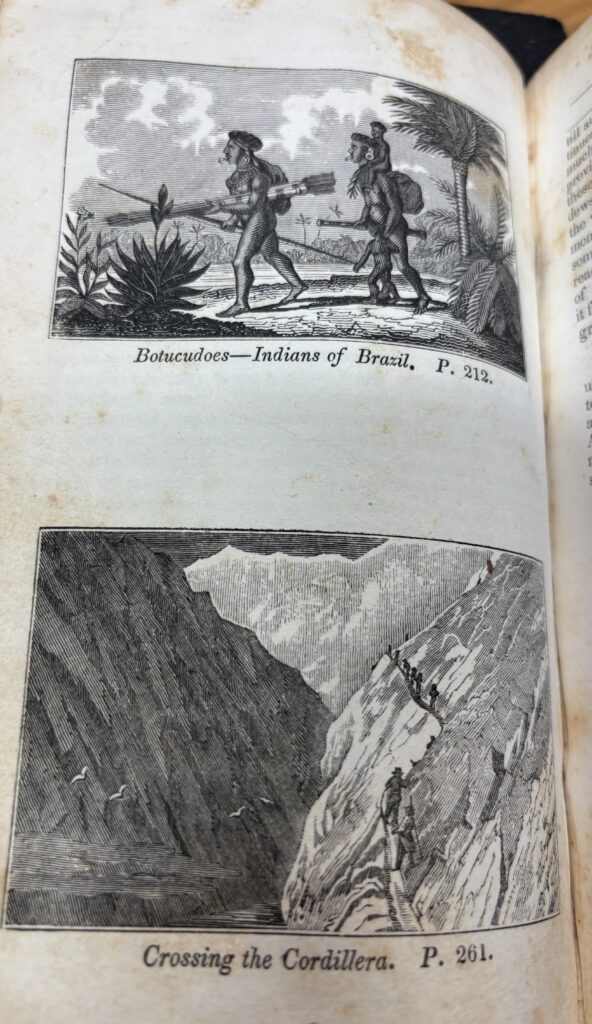
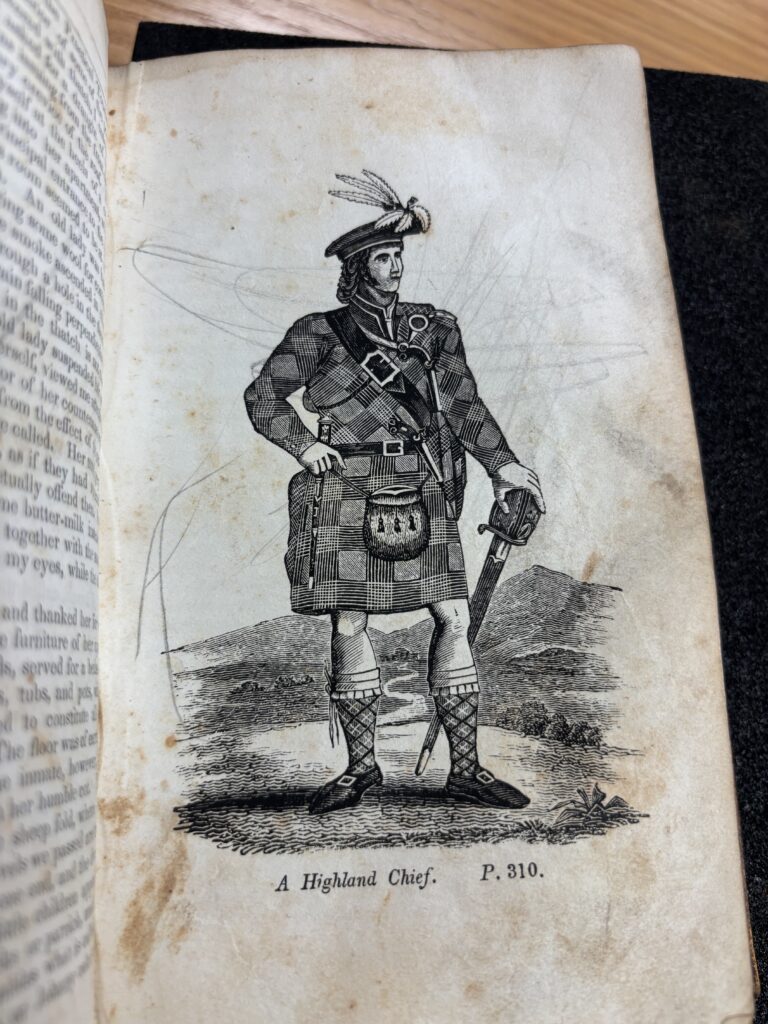
Published in 1836, The Universal Traveller educates the reader on the arts, customs, and manners of cultures across the globe. In modern times, his book serves as a time capsule into the early 19th-century perspective of cultures, providing researchers with both a geographical and sociological lens. His writing describes the features, attire, daily life, theology, practices, and other observations, accompanied by pictures alongside the text.
Condition of MSU Copy
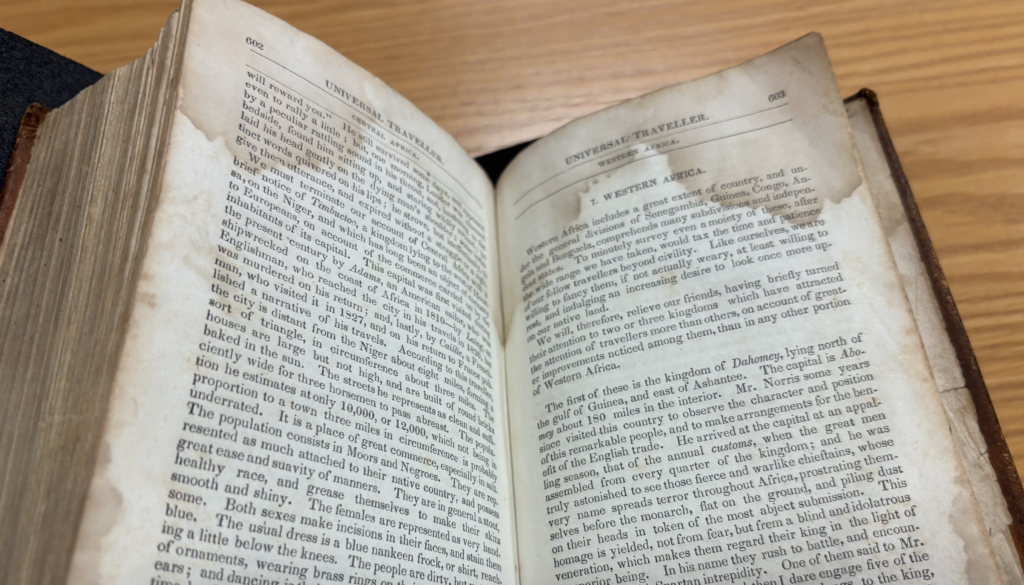
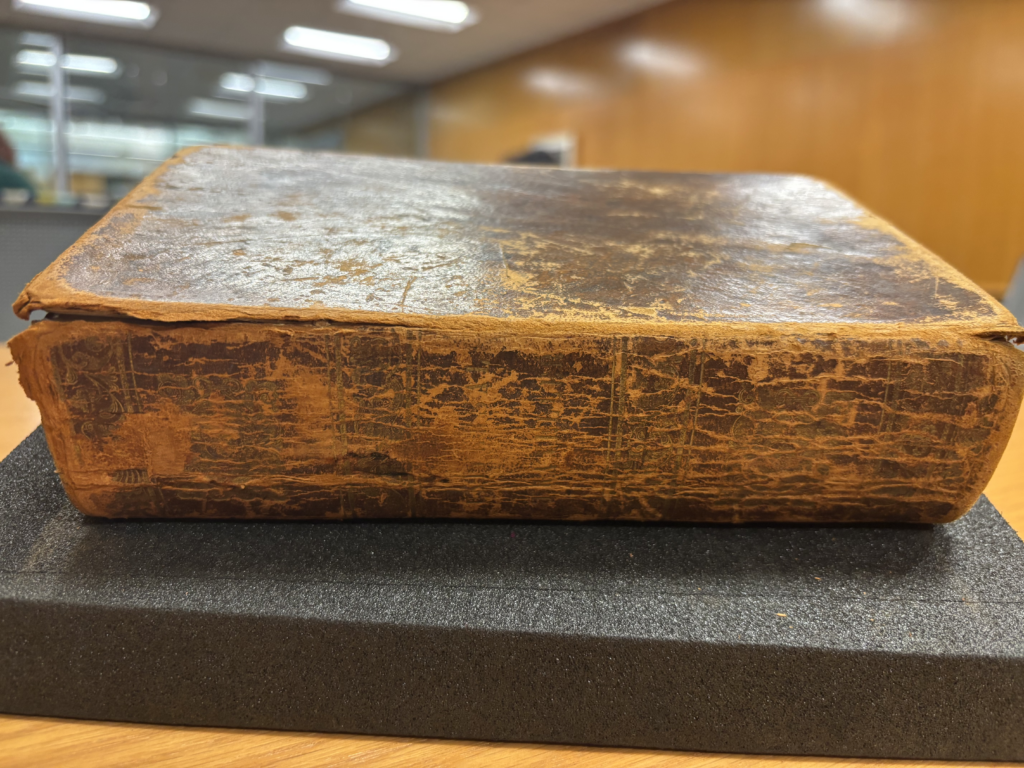
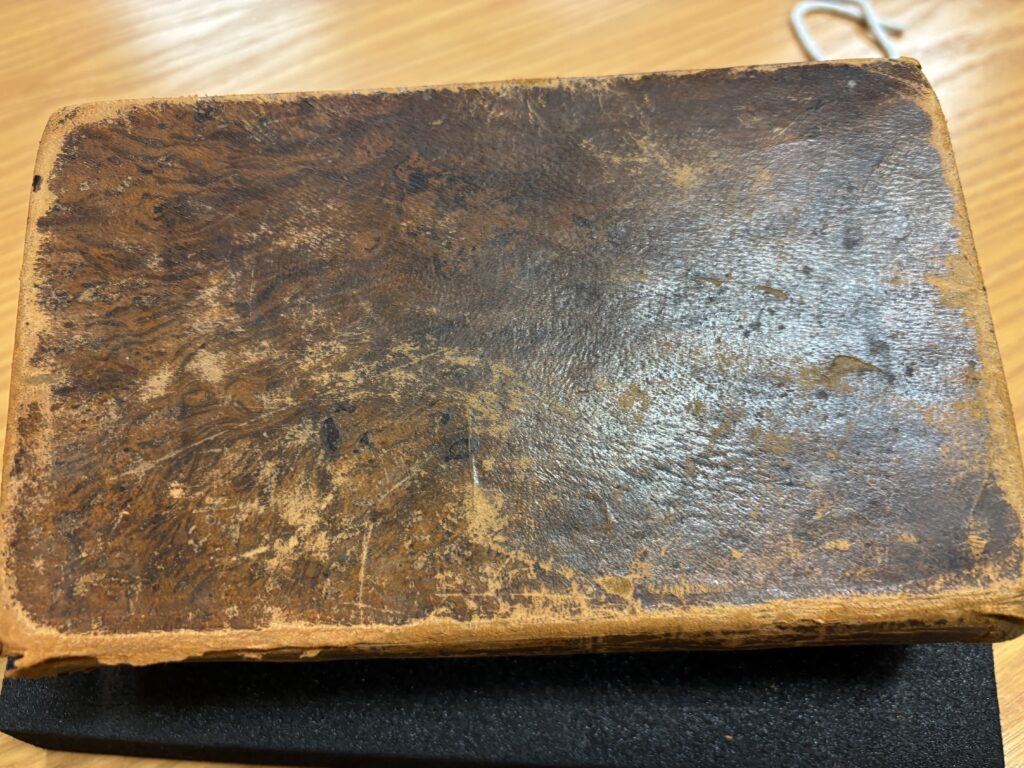
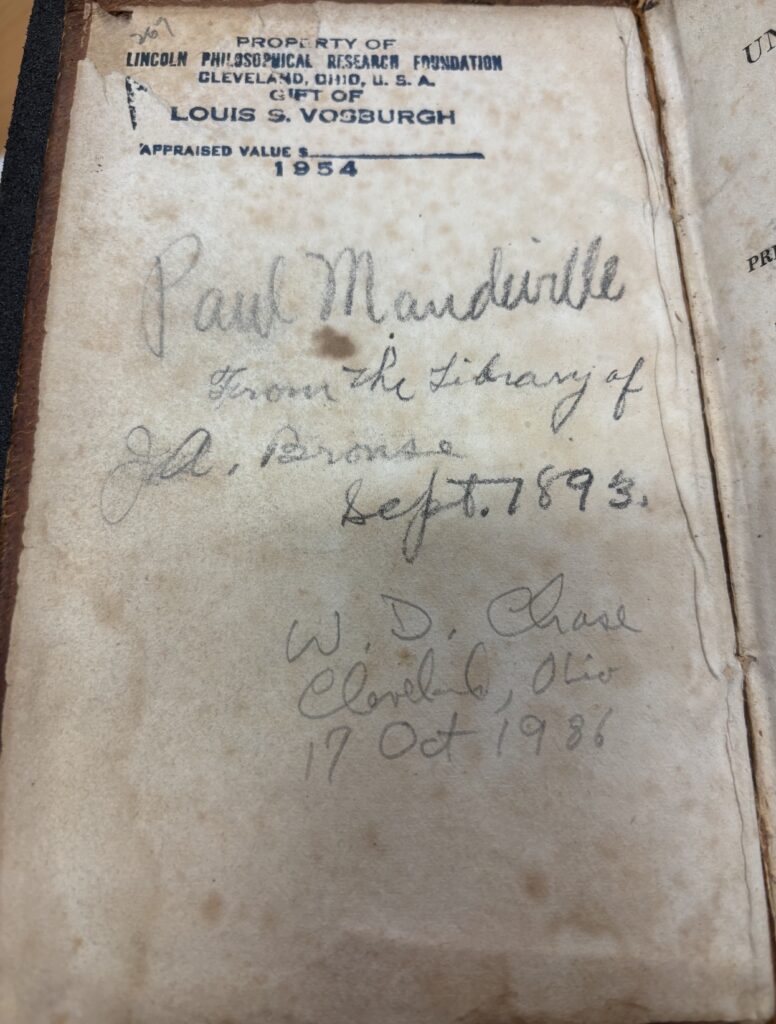
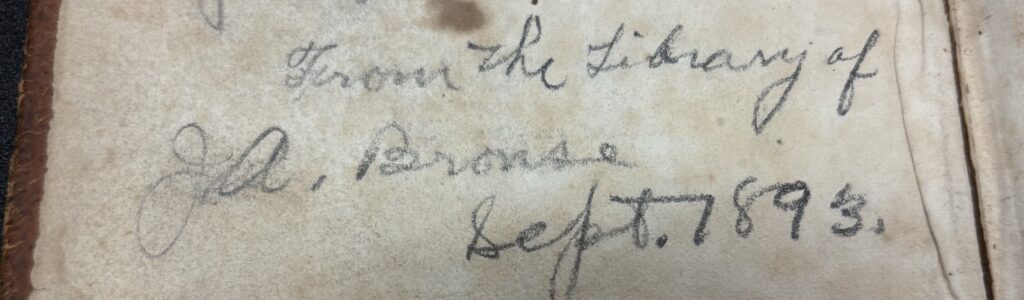
MSU’s copy of the Universal Traveller can be identified by significant weathering and cracking to both the front and back covers and the spine, making the book appear scratched. So much so, the gold detailing on the spine is extremely hard to make out. Evidence of provenance is majorly displayed on the front pastedown, including the names of J.A. Brouse, Paul Mandeville, W.D. Chase, Louis S. Vosburgh, and the Lincoln Philosophical Research Foundation. Further provenance evidence appears on the first leaf. The names J.B. and Mattie are inscribed on the back pastedown with a bookseller’s pricing. Inside pages reveal scribble marks in pencil on leaf 312 and 313. Throughout the book, significant foxing and some staining are present.
Provenance
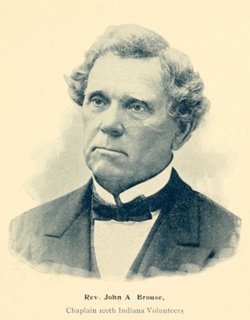
John A. Brouse
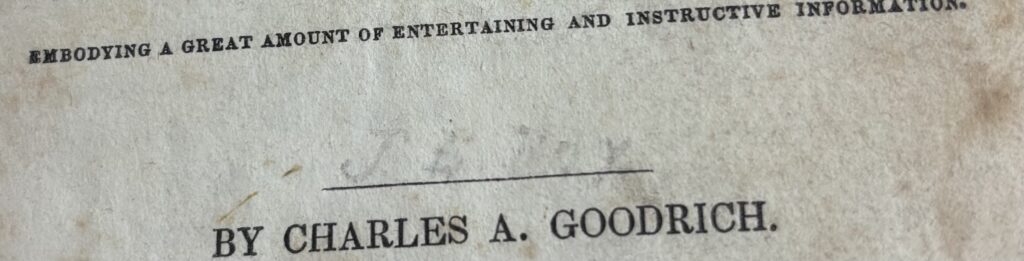
The first person to own this copy of the Universal Traveller is believed to be John A. Brouse (1808-1893). Two pieces of provenance point to his ownership: the first is “From the Library of J.A. Brouse,” written in pencil on the front pastedown, and what appears to be the initials J.B. on the title page. John A. Brouse was born in Hillsboro, Ohio, and died in Rockford, Illinois. He worked as a traveling Methodist Minister in Indiana, often relocating within the state before serving as a chaplain in the 100th Indiana Volunteer Infantry in 1863. Considering the extensive travel required of a traveling Minister, it can be inferred that he would have taken an interest in books pertaining to travel.
Mattie Brouse
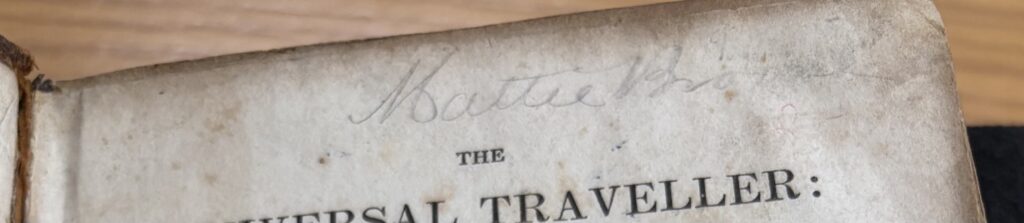
The exact date John A. Brouse acquired the book is unknown; the year of his death is included in the inscription above, “From the Library of J.A. Brouse Sept. 1893,” inferring that a descendant inherited the book after his death in 1893. The next owner is unclear; however, the name Mattie, followed by a last name starting with “Bro,” is written at the top of the title page. Assuming the last name is Brouse, Mattie is most likely Martha Brouse, daughter of John A. Brouse. She was born in 1856 in Indiana, and the date of her death is unknown. She married George Blake, and together they had two kids, Norman and Wallace Blake.
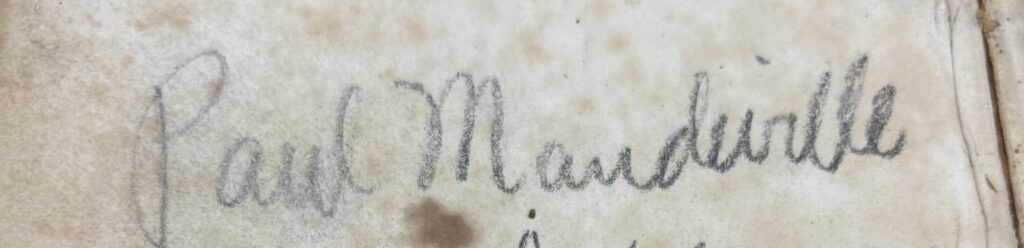
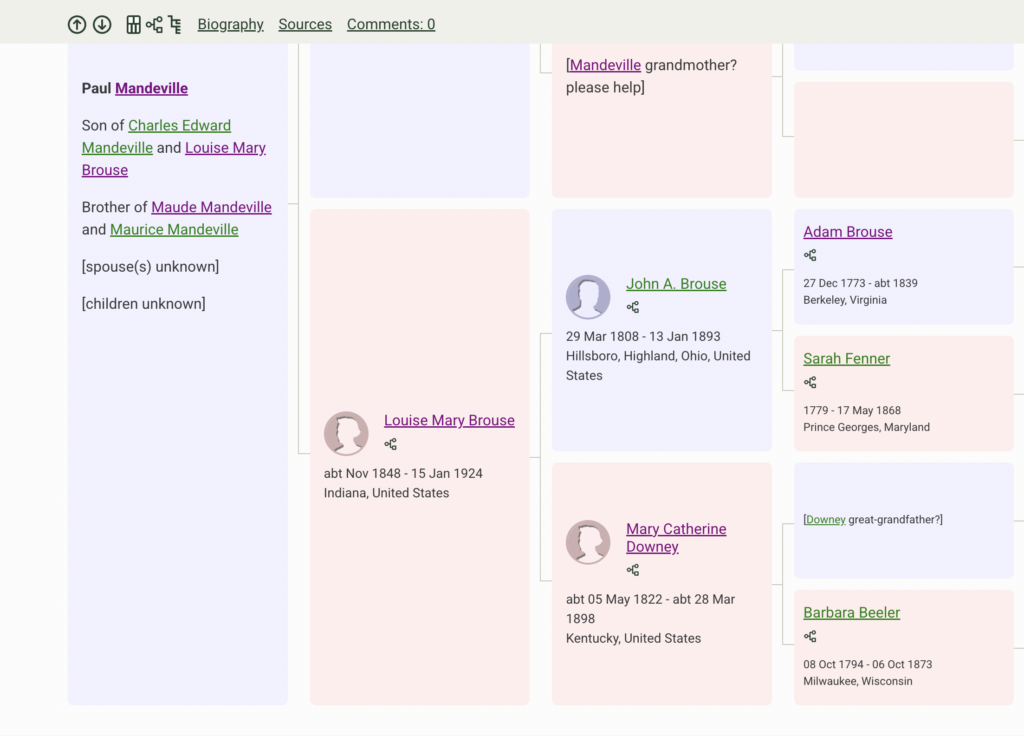
Another name mentioned on the front pastedown is Paul Mandeville. Mandeville is the grandson of John and the younger brother of Maude, presumably inheriting the book from his sister, Martha. It is also possible that Mandeville inherited the book directly from his grandfather upon his death. Mandeville was born in 1875 in Illinois and died in 1964 in California.
Louis S. Vosburgh
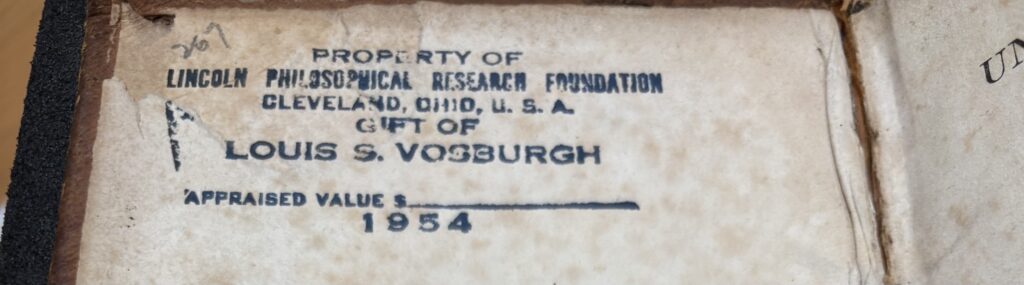
Before his death, Mandeville possibly sold the book to Louis S. Vosburgh. While his relationship to Mandeville is unclear, he is mentioned in the stamped inscription “Property of the Lincoln Philosophical Research Foundation Cleveland Ohio U.S.A gift of Louis S. Vosburgh Appraised value $_____ 1954.” He was born in 1895 in Clare, Michigan, and died in Toronto, Ontario, Canada. He enlisted in the military in 1917 and lived in Canada. While the full scope of his travel experience is unaccounted for, both of these events could explain his desire to own a book of this nature.
Lincoln Philosophical Research Foundation
The Lincoln Philosophical Research Foundation was established in 1947 in Cleveland, Ohio, by John C. Lincoln. The foundation mainly focused on works of spiritual philosophy, 17th-century poetry, and metaphysical literature. Their most popular collection of work is “The Lincoln Way” series, published in the 1950s. The foundation’s inclination for philosophy aligns with the sociological lens and study of culture provided by Goodrich, making the Universal Traveller a natural fit for the collection.
William D. Chase
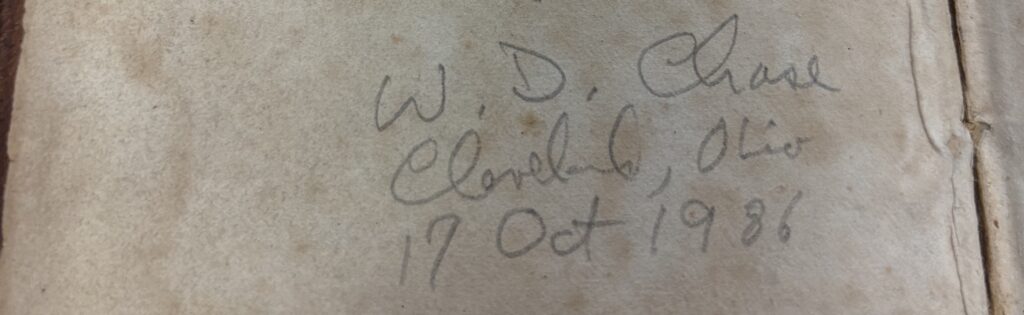
The last owner of this copy was William D. Chase. He was born in Lakeview, Michigan, in 1922, and died in 2020 at the age of 97. He worked as an editor for the Special Libraries Association before he was promoted to president of the Newspaper Division. He was responsible for the publication of “Chase’s Calendar of Events,” which he worked on with his brother, Harrison Chase. It includes celebratory occasions: holidays, federal and state observances, and historic anniversaries. Chase started his avid book collecting with his wife, Helen Chase, in 1943. He was especially interested in history, the written word, and works of the 17th and 18th centuries. Upon his death, they donated their collection to Michigan State University.
Bibliography
Book
1.Goodrich, Charles A. The Universal Traveler: Designed to Introduce Readers at Home to an Acquaintance with the Arts, Customs, and Manners of the Principal Modern Nations on the Globe. G. Robins, 1845.
Cataloguing Info.
2. “Maude Mandeville (1872 – 1940).” WikiTree, 8 May 2023, www.wikitree.com/wiki/Mandeville-44.
3. “MSU Libraries.” Michigan State University Libraries, lib.msu.edu/. Accessed 25 Mar. 2026.
4. “Paul Mandeville (1875 – 1964).” WikiTree, 8 May 2023, www.wikitree.com/wiki/Mandeville-46.
5. “Rev John A. Brouse (1808-1893) – Find a Grave…” Find a Grave, www.findagrave.com/memorial/9768710/john_a-brouse. Accessed 25 Mar. 2026.
6. “William Chase Obituary (1922 – 2020) – Ann Arbor, Mi – Ann Arbor News.” Legacy.Com, obits.mlive.com/us/obituaries/annarbor/name/william-chase-obituary?id=8475957. Accessed 25 Mar. 2026.
Special Thanks
A special thanks to Professor Brockey and Tad Boehmer for their assistance and encouragement on this project.
Brooke Holt, History of the Book, 2026
