
Identification
Author: Robert Fabyan c. 1512/1513
Robert Fabyan was born into a family in Essex that was connected with trade in London. He became a member of the Drapers Company, apprenticing under William Holme (around 1470). Fabyan also became a citizen-chronicler that integrated details of the city and its history into his narrative of British and French history. He also served as a sheriff of London in 1493-1494.
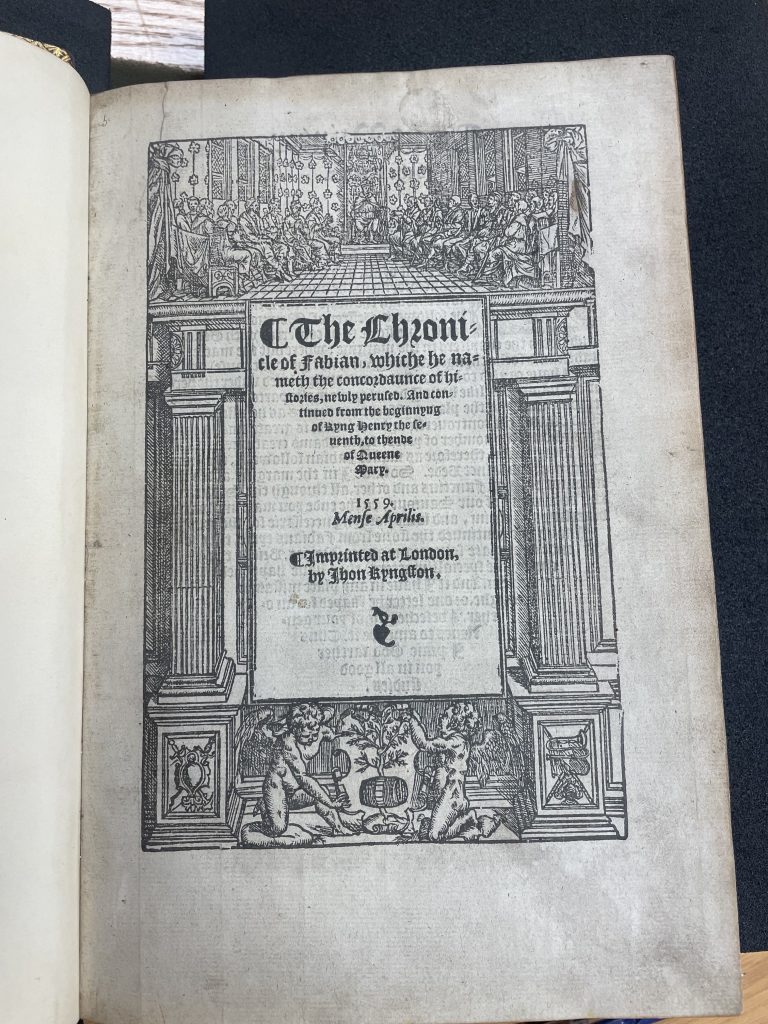
Title: The chronicle of Fabian: whiche he nameth The concordaunce of histories newly perused and continued from the beginnyng of Kyng Henry the Seuenth to the ende of Queene Mary
Contents of the Book and Its Significance:
Robert Fabyan started the Chronicle of Fabian as a compilation of accounts from other historians (Romans) about English (and French) history. This book collects accounts of British history from the arrival and reign of the legendary king Brutus following the Trojan War to the death of Henry VIIA. This third edition (1559) brought the narrative down to Queen Elizabeth. This book was also the source for Shakespeare’s Henry VI plays and Richard III.
Publisher: John Kingston
Place of Publication: London
Year of Publication: 1559
MSU Library Call #: xx folio DA130 .F13 1559
Physical Description of the Exterior of Book
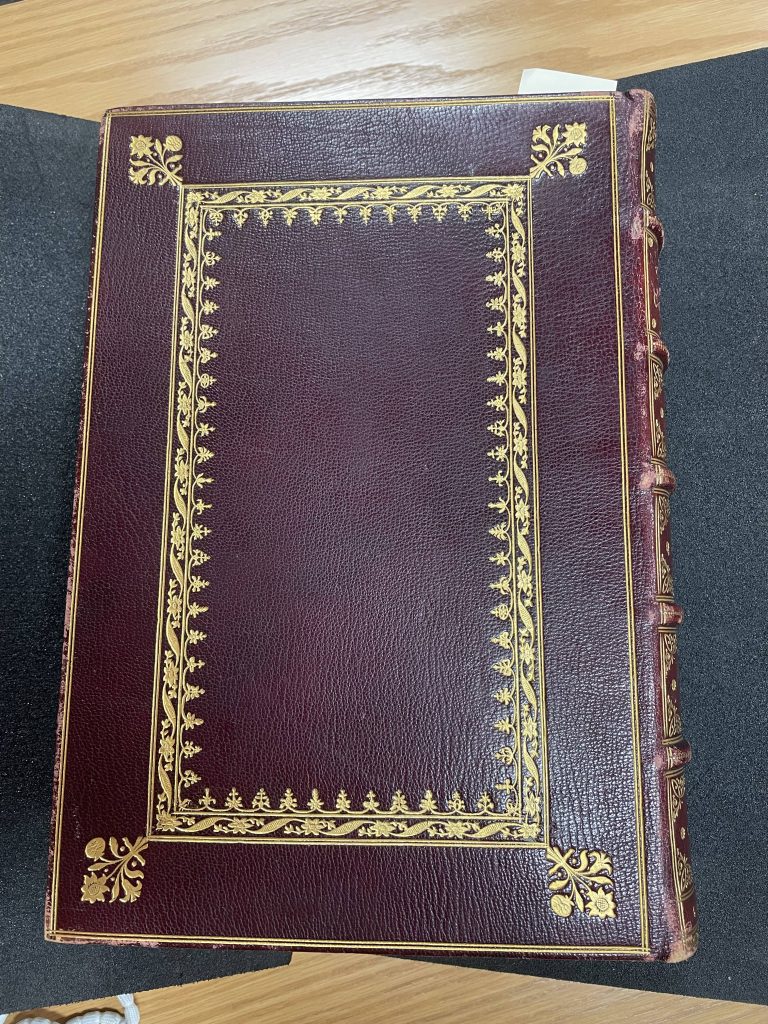
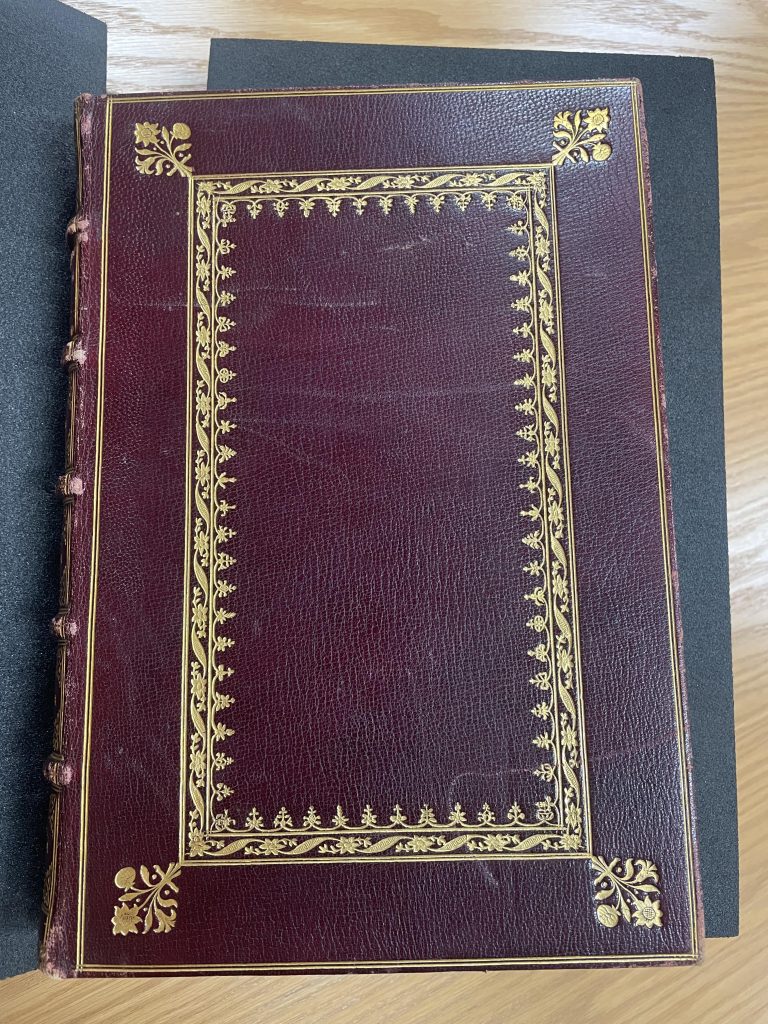
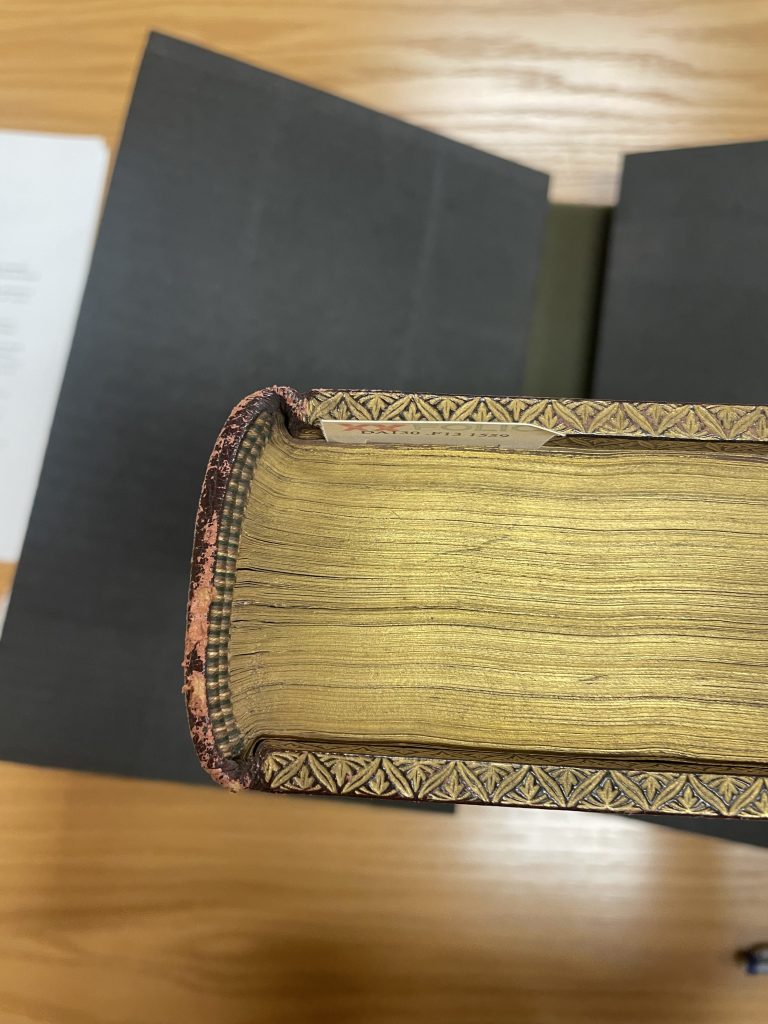
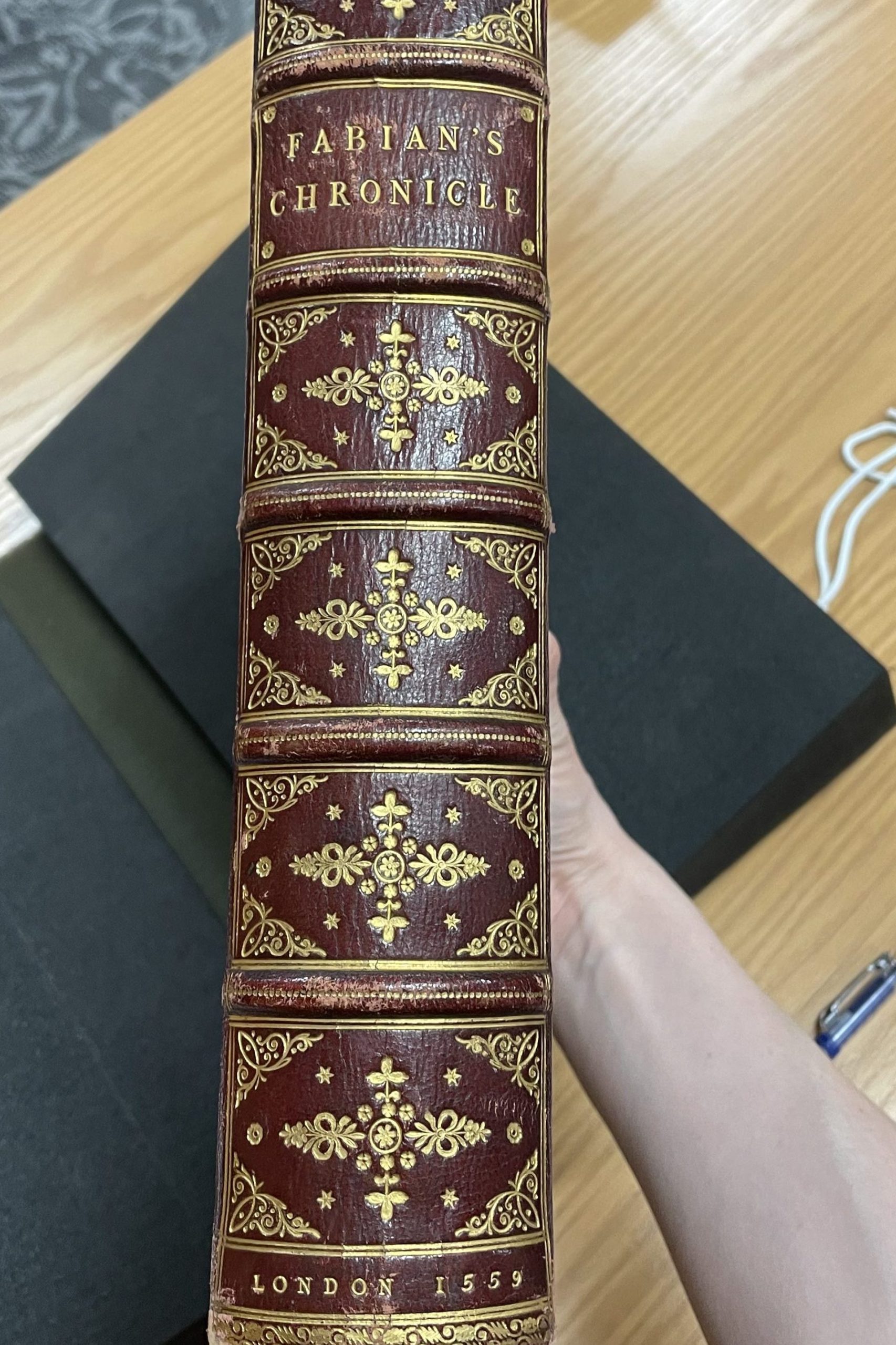
The book has a sewn binding reinforced with raised bands. The red leather cover is covered in gold tooling on the front and back – as well as the spine, edges of the front, and back panel. The front cover has some slight wear and tear on the red leather.
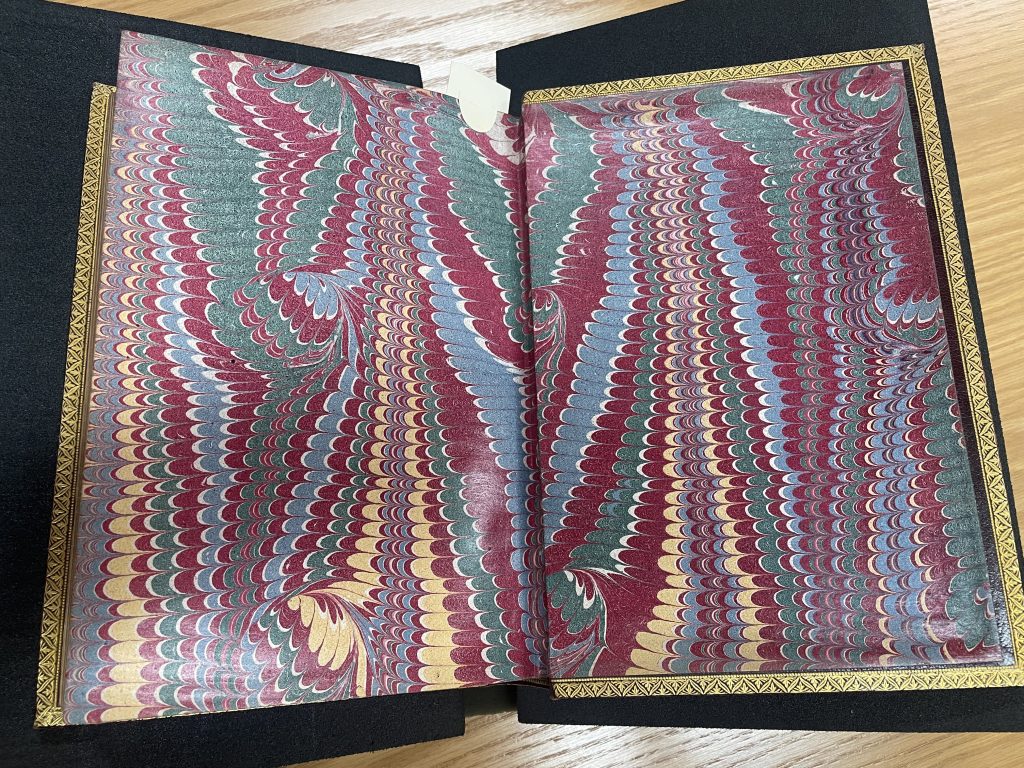
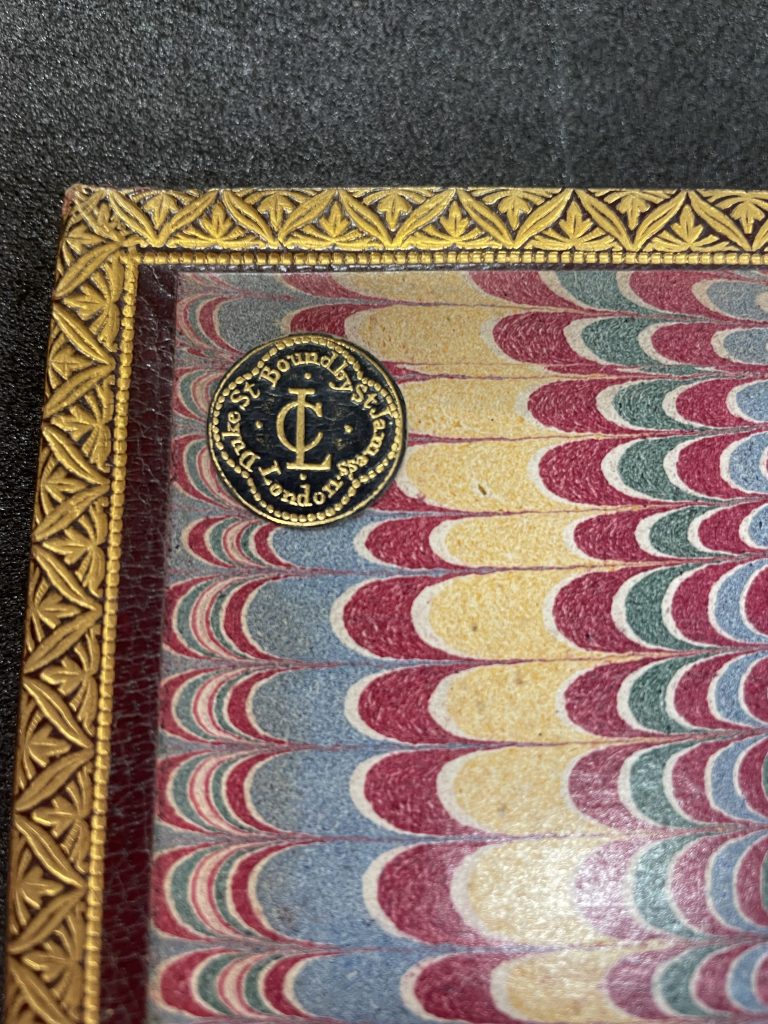
Beautiful marble paper covering the inside of the front and back panel.
Provenance Evidence
Where It All Began
The title page displays that this book was printed in London by John Kingston in 1559.
Unfortunately, I have no records of how the book got from the publisher to the first owners.
The Holford’s
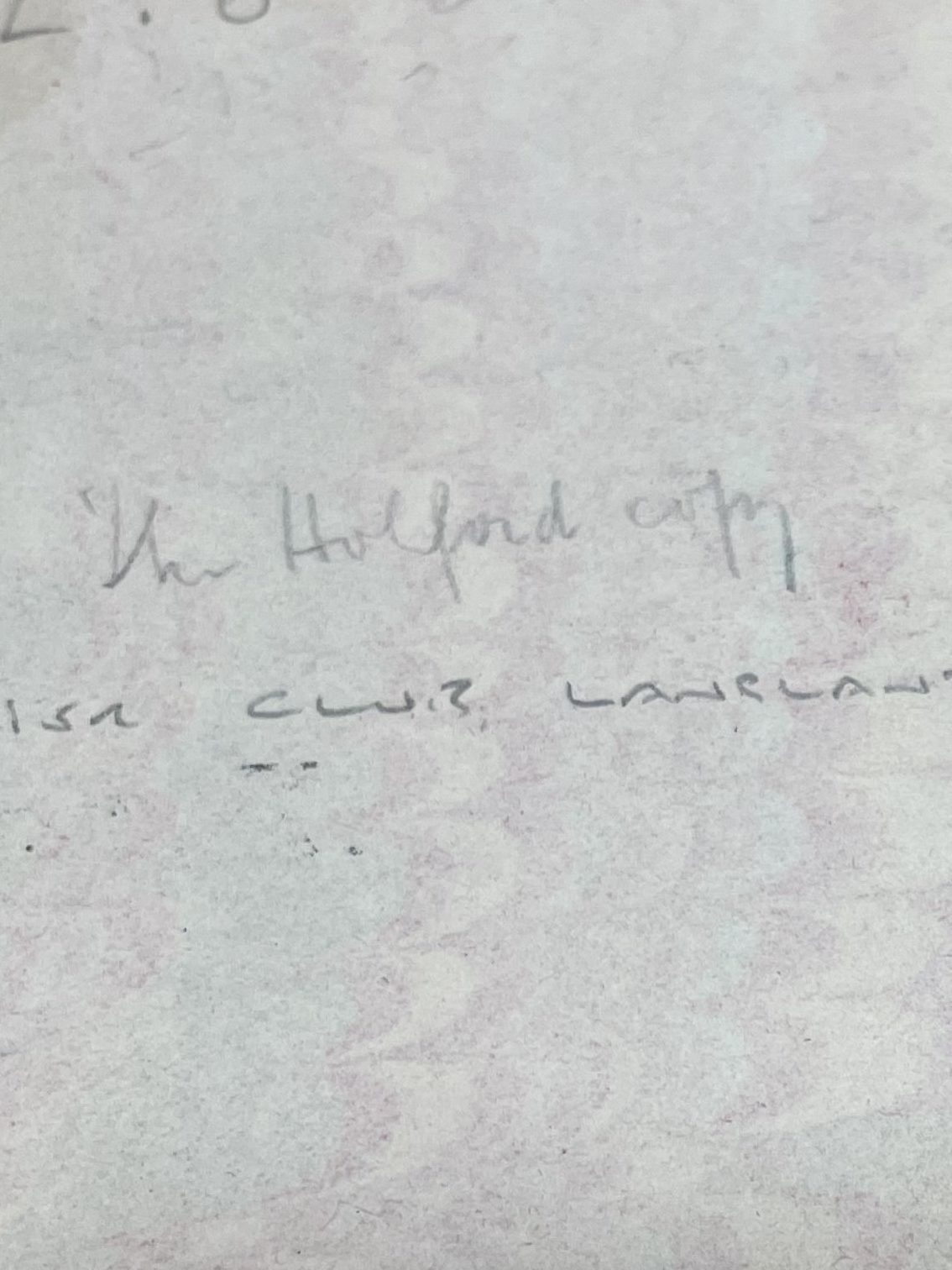
The book’s first known owner, that I could deduce from the provenance evidence, is the Holford family.
Robert Staynor Holford (1808-1892) was a very wealthy landowner, gardener, and art collector. Among the land he owned, Robert rebuilt the Dorchester House, located in Westminster, London, in 1853.
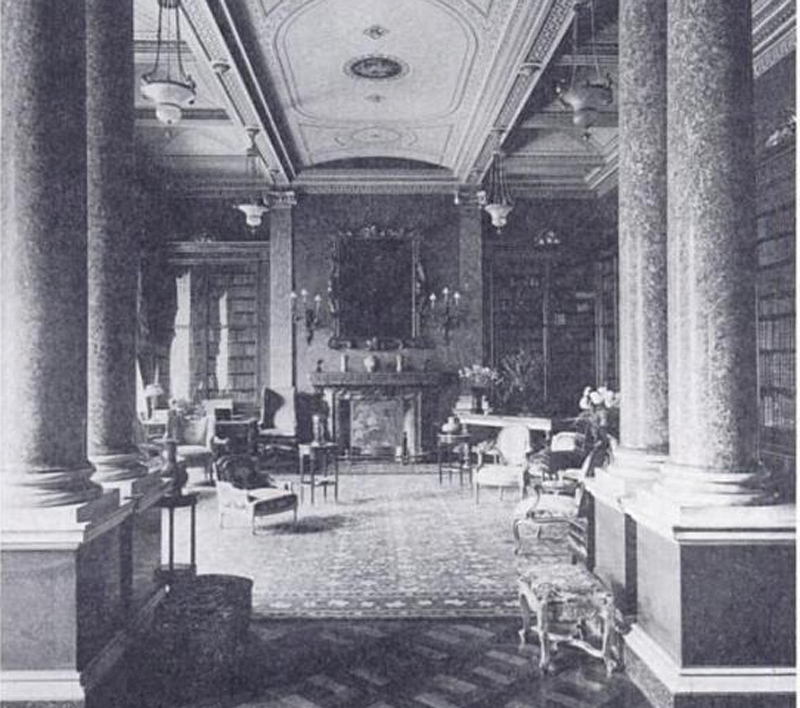
Among numerous art pieces throughout Robert’s multiple properties, the Dorchester House featured a library specifically for Robert’s large book collection.
- Charles Lewis (Bookbinder; 1786-1836)
Charles Lewis was born in London and by 1800 was an apprenticed bookbinder to Henry Walther. Later in life, Lewis moved onto Duke Street, St. James’s, London. I believe based on the information I found during research, and the binding ticket on the front panel, that Charles Lewis must have rebound The Chronicle of Fabian for the Holford family at some point.
Grolier Club

Grolier Club published the catalog, Catalogve of original and early editions of some of the poetical and prose works of English writers from Langland to Wither, published in 1893.
This piece of provenance is to be noted because that catalog is a reference to informs me what is common to all particular copies of this book.
Upon Robert Holford’s death in 1892, George Holford, Robert’s son, inherited Westonbirt House and Dorchester House from him. George Holford (1860-1926) was a British Army officer and courtier.
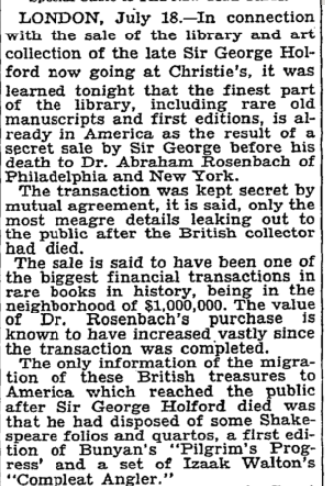
George did not have the same passion for art and books as his father did so after his death, his collection was sold at Sotheby’s and Co. for exceptionally high prices.
Linked is the Sotheby’s and Co auction catalog of items sold from George Holford’s collection.
John Elliot Burns
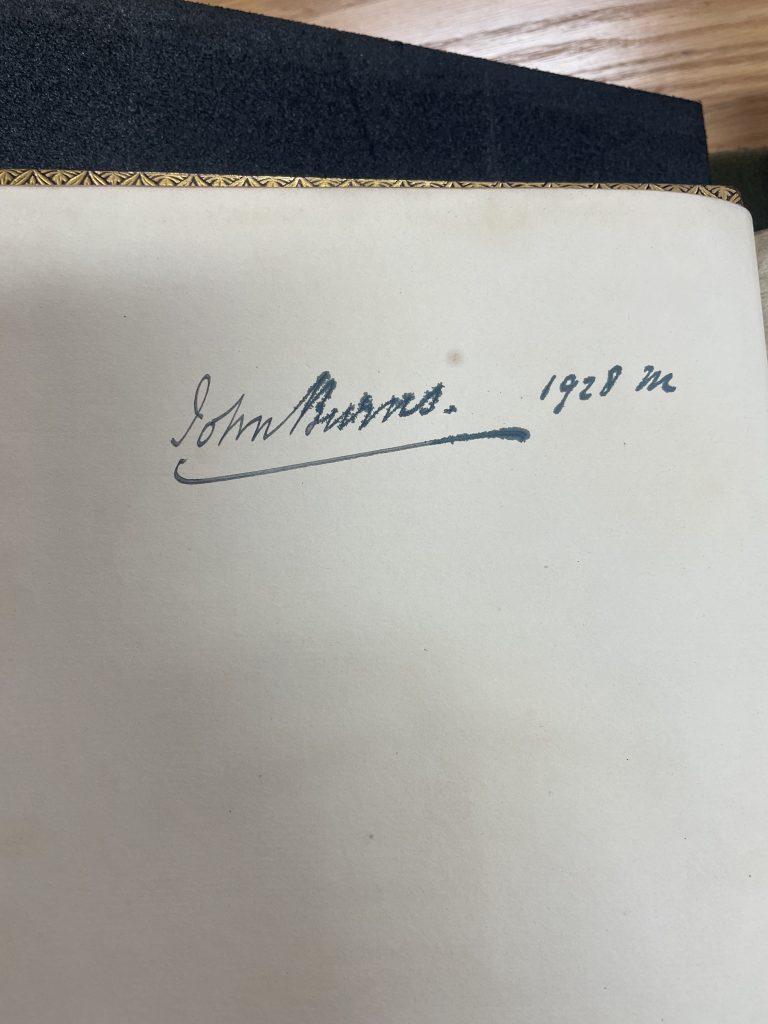
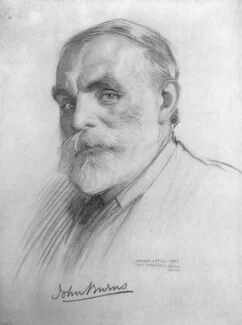
The book then changed hands to John Elliot Burns.
John Burns (1858-1943) was a trade unionist, labor leader, and politician in Battersea, London. He was a socialist and then a liberal member of Parliament and Minister. After Burns left politics, he spent the rest of his life devoted to his interest in books, among other things. As a book collector, he created a very large private library.
Unfortunately, I do not have access to any of the Sotheby’s and Co. auction catalogs but, based on the subsequent death of George Holford in 1926 and the year provided next to Burns’ name, I have deduced that John Burns either purchased it from the Sotheby’s and Co. auction or purchased it from a bookseller who acquired it from those same auctions.
At the end of Burns’ life in 1943, his collection of early books were sold in three sales by Sotheby’s in 1943 and 1944:
- The collection of books on London, Dec. 7-8, 1943, March 14, 1944, April 24-26, 1944
- Books by or relating to Sir Thomas More, March 14, 1944
- Books on various subjects, April 24-26, 1944
William Alfred Westropp Foyle
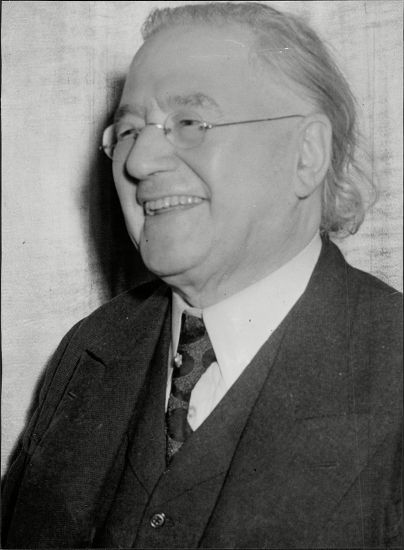
After the Sotheby’s and Co auctions of John Burns’ collection, the book then passed onto William A. Foyle.
William Foyle (1885-1963) was a British bookseller and co-founded Foyles Bookshop with his brother Gilbert Foyle in 1903. He was one of the leading booksellers in London in the 20th century and by the 1920’s his last name had become synonymous with bookselling in London.
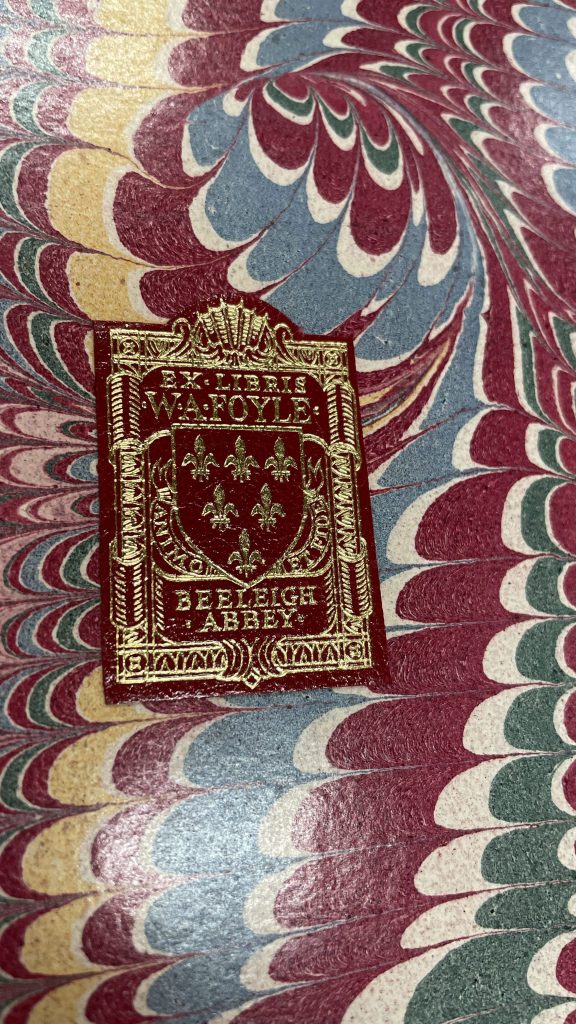
On The Chronicle of Fabian, William Foyle’s bookplate can be seen along with “Beeleigh Abbey.”
Although Foyle was an esteemed bookseller, he was also an avid book collector. Foyle bought Beeleigh Abbey in 1943. Beeleigh Abbey is a 12th-century monastery in Maldon, Essex. With the purchase of Beeleigh Abbey, Foyle was able to properly house his rare book collection, which ended up forming the largest English private library of the 20th century. By the time of his death in 1963, the library housed his collection of more than 4,000 books and manuscripts, ranging from the 11th to the 20th century
Although I was not able to gain access to the Sotheby’s and Co. auction catalogs for the sale of the John Burns collection, I was able to deduce that William Foyle most likely purchased this book in one of the first three rounds of the auction on either Dec. 7-8, 1943, March 14, 1944, or April 24-26, 1944.
After Foyle’s death in 1963, William’s daughter, Christina Foyle, lived at and maintained the Beeleigh estate. In July 2000, the library was sold at auction by Christie’s Auction House.
The Road to MSU
I was able to find the auction of The Chronicles of Fabian on the Christie’s Auction House website. It closed on July 13, 2000. It sold for $4560.66 (USD).
Through MSU’s Library catalog I was able to find that the book was acquired in 2016 from Sokol Books which is based in central London. From that information, I have concluded that a bookseller (possibly Sokol Books, but unlikely) must have purchased The Chronicles of Fabian from the Christie’s auction, which then may have been bought by Sokol Books somewhere down the line, which then led to MSU purchasing the book for special collections.
Acknowledgements
Thank you to Tad Boehmer for helping me swap my books/items along with helping me find my provenance evidence and thank you to the Senate House Library in London for the timeline of when John Burns’ book collection was auctioned off.
Sources
https://en.wikipedia.org/wiki/William_Foyle#External_links
https://www.christies.com/en/lot/lot-1837999?ldp_breadcrumb=back
https://en.wikipedia.org/wiki/Beeleigh_Abbey
https://web.archive.org/web/20110105044038/http://www.ull.ac.uk/specialcollections/burns.shtml
https://en.wikipedia.org/wiki/John_Burns
https://en.wikipedia.org/wiki/Charles_Lewis_(bookbinder)
https://www.christies.com/en/lot/lot-4455774
https://en.wikipedia.org/wiki/George_Holford
https://en.wikipedia.org/wiki/Dorchester_House
https://en.wikipedia.org/wiki/Robert_Stayner_Holford
https://archive.org/details/catalogveoforigi00grol/page/78/mode/2up
https://catalog.lib.msu.edu/Record/folio.in00005551921?sid=63343787#description
https://www.vialibri.net/years/books/606157517/1559-fabyan-robert-fabyans-chronicle-1559
https://www.countrylife.co.uk/architecture/250230-250230
Hazel Ericson – HST 475 – 03/26/2025
