
The Works of Hesiod: by Sutton Magee
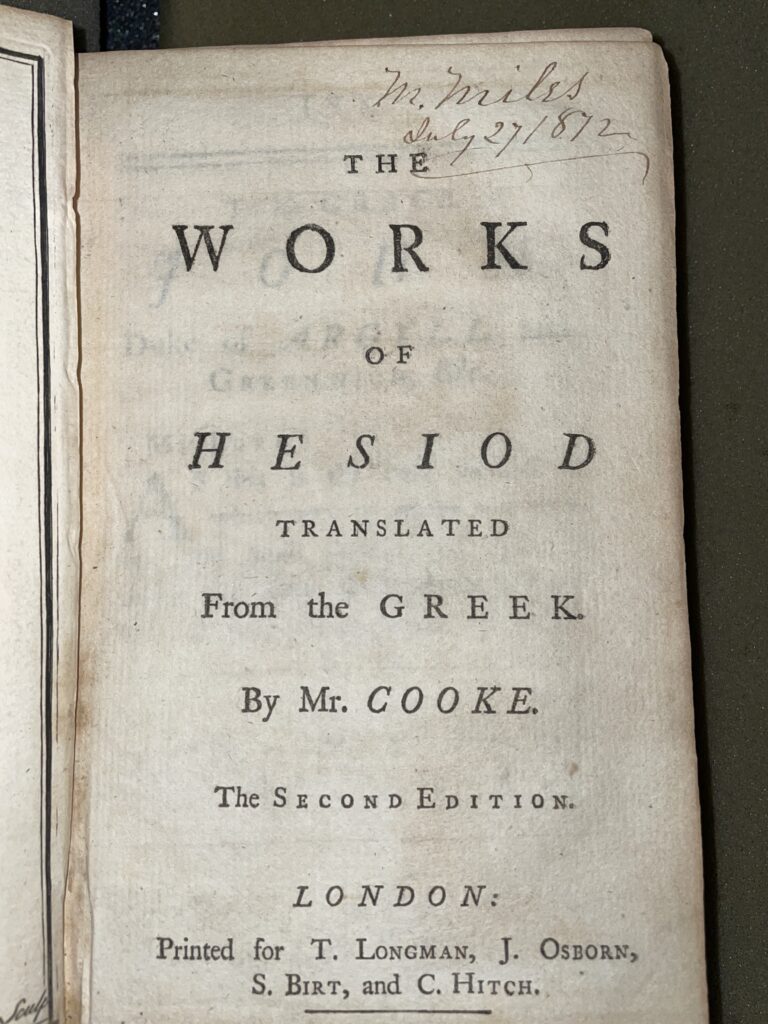
Complete Identification of the book:
Author: Hesiod
Title: The Works of Hesiod, translated from the Greek
Publisher: T. Longman, J. Osborn, S. Birt, C. Hitch
Place of Publication: London
Year of Publication: 1743
MSU Library Call Number: XXPA4010.ES1743
Detailed Description of Physical State:
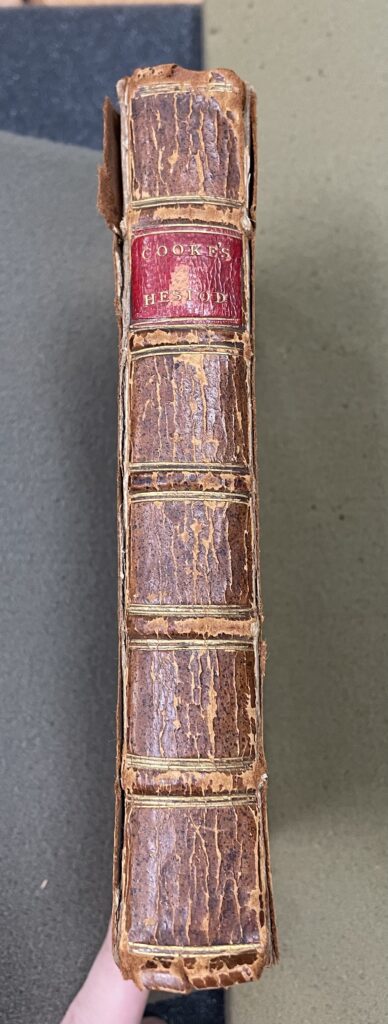
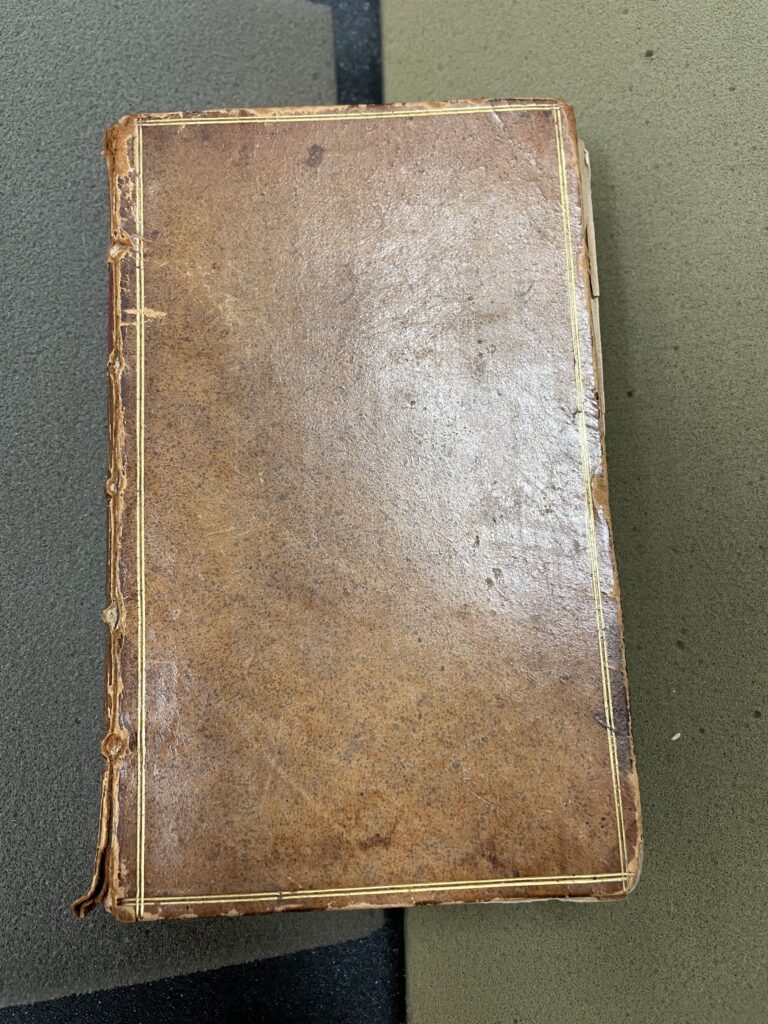
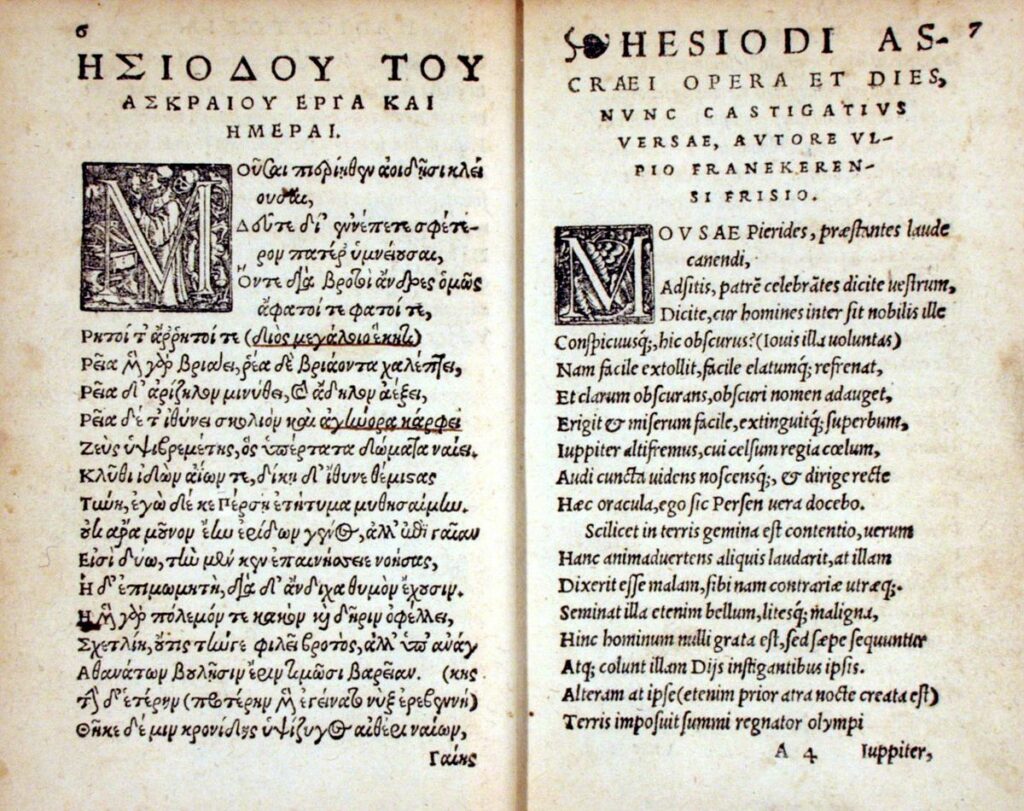
This edition of The Works of Hesiod is from 1743, and the outside of the
book shows almost every year. The front cover is completely off, the binding is cracked and peeling on the spine, and a few of the pages are stuck into the book loose. While the outside of the book is in rough shape, a majority of the pages are clean, very readable, and still bound properly. Throughout the book, the rest of the pages are still together and readable. The pages have a bit of discoloration, but nothing that makes it unreadable. The discoloration should be expected from a book this old. Overall, the outside of the book shows the wear and tear, but the insides and content are still great.
Discussion of the contents of the book:
This book is split up into two separate discourses:
- The first is on the life of Hesiod
- The second is on the writing of Hesiod
A few specific contents: Works and Days, the theogony, a discourse on the theology and mythology of the ancients, and a genealogical table to the theogony. All of these are prior works by Hesiod, and this book discusses each one at length from the author’s point of view.
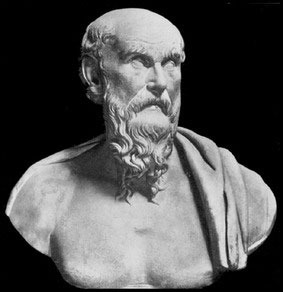
Who is Hesiod?
Hesiod was a Greek poet who is among the first of his time to be an active subject in his writing. He is known for creating Greek customs, both religious and moral. He also contributed to mythology, economics, astronomy, farming, and so many other ideals.
Significance of the book as a material object and literary/intellectual creation: Hesiod was one of the most influential figures in Greek history. As a poet, he wrote on the genealogy of the gods and gave moral and practical advice through Works and Days. In this book, his writing is discussed in the second discourse. While I did not read the book, as that was not the goal of this assignment, I would assume it is an analysis of what he wrote in these poems. The writing most likely dives deeper into his ideas and main points. For the genealogy sections of the book, recaps of gods associated with others is where I would anticipate the writing to go.
Because Hesiod was such an influential poet, the significance of the book comes from himself. In the first discourse of the book, I would guess that the book dives into Hesiod’s accomplishments, what he has written, and he himself gives significance to what he has written. So, overall, the success of this book as a literary creation is a repercussion of his past writing being successful. This book is significant because he and his prior works are.
A timeline through the book’s provenance:
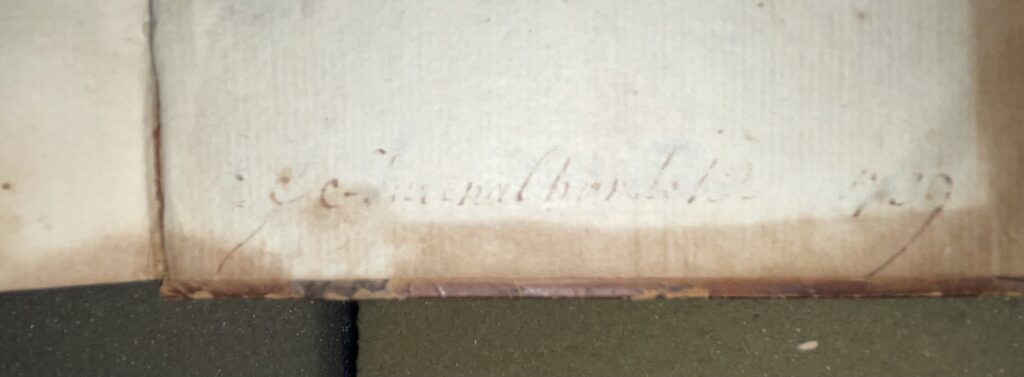
The book was published in 1743, but the first date written in provenance comes on the back bottom flap of the book. From what my eyes can see after playing with lighting and toning, it says “…Charles 1789.” While the words are hard to see with the common eye, I think the fading shows how old the provenance is and leads me to believe this was one of the first things written in The Works of Hesiod.
The next date, in chronological order, comes on the title page of the book. In the top right, “M. Miles July 27 1872” is written. Through a lot of google searches, I was not able to come back with any relevant information referring to the name, but it is clear as day this book passed through M. Miles’ hands at some point. A picture of this provenance is included at the top of the website.
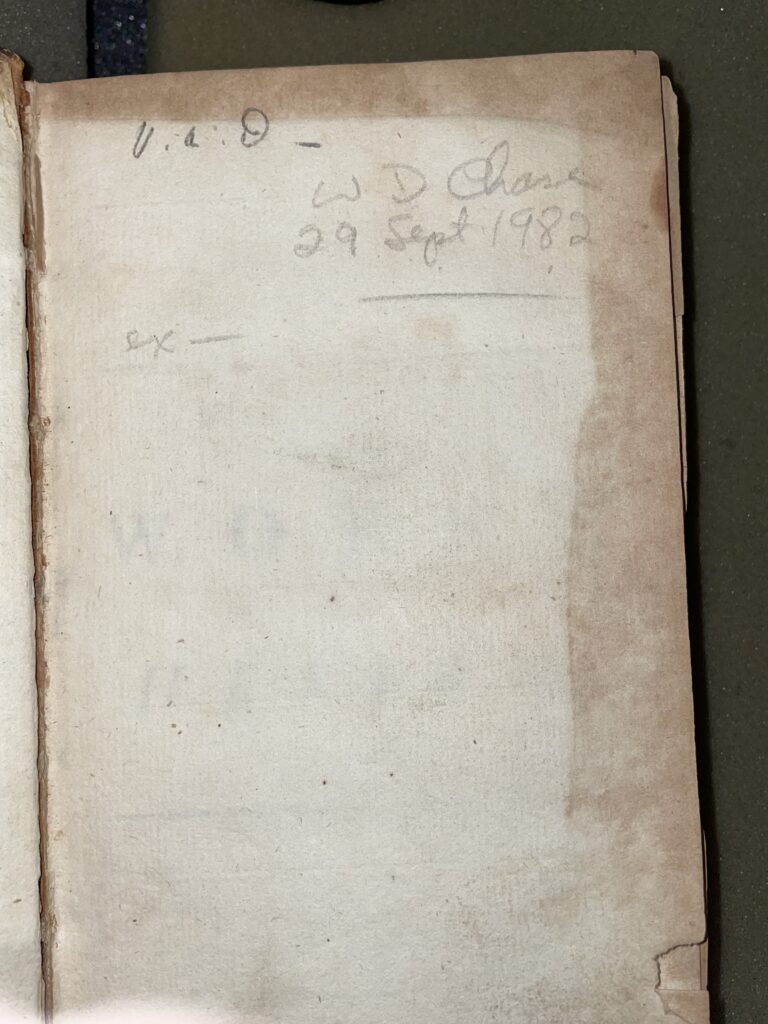
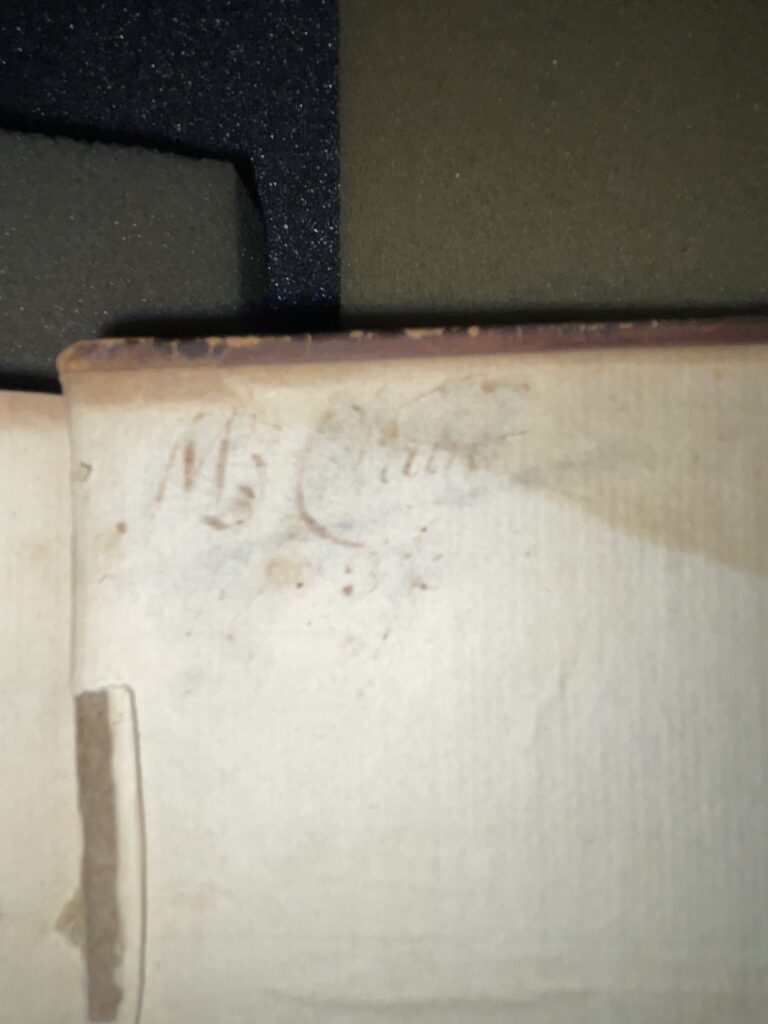
The last provenance name with a date associated is near the front of the book. W.D. Chase is the name written, along with the “29 Sept 1982.” William D. Chase recently passed and according to special collections curator Tad Boehmer, a big collection of his books were sold to Michigan State. I was unable to find the year he donated the books to the university. Another name found in both the front and the back is M. Crabb. There is no date associated with the name, but the writing is more faded than W.D. Chase and M. Miles. I could interpret this in one of two ways
- The book was cleaned and washed on the front and back covers, so
the name was faded out. The other two names are on actual pages, so they were not cleaned and therefore look a lot clearer. - It was written in the book before both Chase and Miles had it, and probably sometime between being published and 1872 when it found the hands of M. Miles.
While “M. Crabb” is faded, it is still easier to make out than the first chronological dated name of “…Charles 1789. Personally, I believe interpretation one is the most likely scenario, but number two could be possible as well.
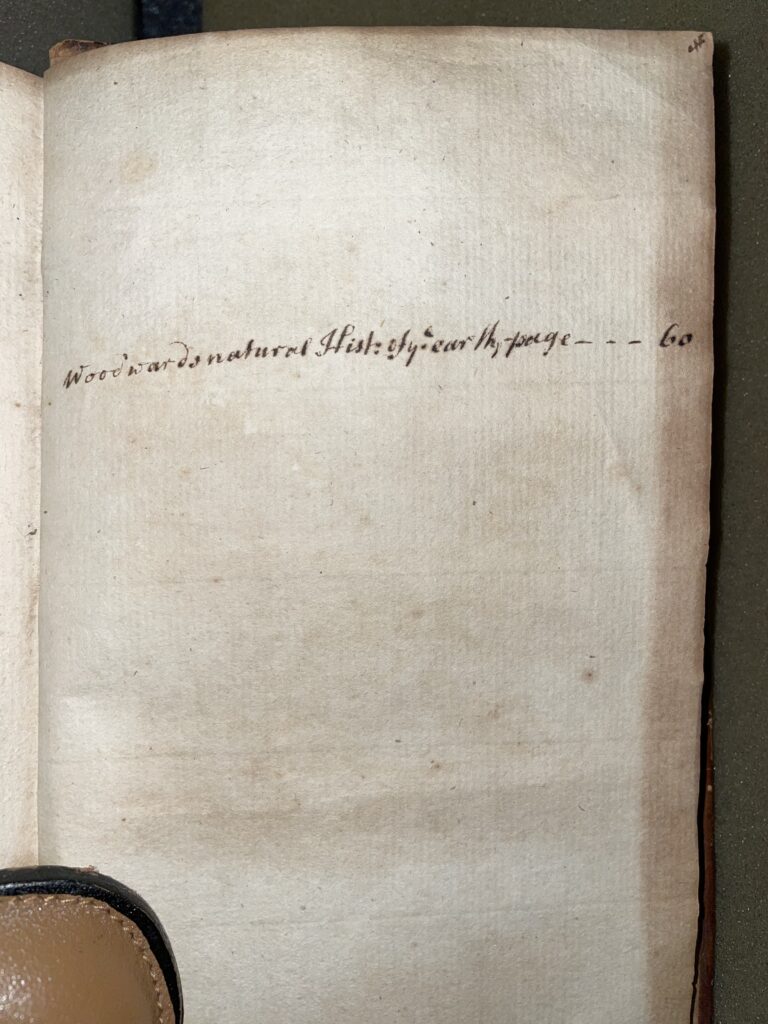
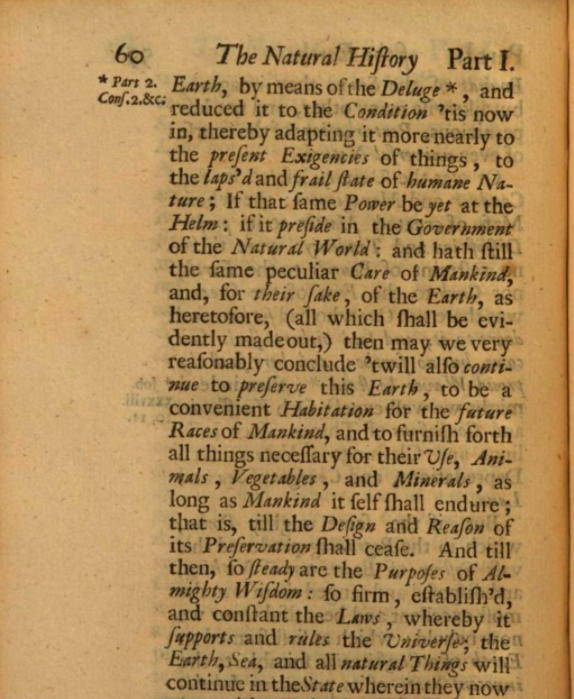
Citation: One of the next pieces of provenance in this book is a citation
found near the back. It says, “Woodwardsnaturalhistoryoftheearth, page -60.” I believe someone reading The Works of Hesiod found this other book to be comparative in ideology or just in reference. The citation is more general than the book because it is in the back, so I am not completely sure where it is associated with The Works of Hesiod. The provenance is really clear and darkly written. Here is a picture of the citation provenance, followed by page 60 of Woodward’s Natural History of the Earth:
Finally, the last piece of provenance in the book is three letters:
V.A.D.
While there is no definitive statement I can make about these letters, MSU special collections curator Tad Boehmer had a theory that the letters represented a code for publishers and booksellers.
V represents pounds, A shillings, and D pence. The code helps out the booksellers and publishers with pricing while keeping the buyer in the dark about it. This picture is included on the same page as W.D. Chase.
Over the course of finding all this provenance, the most intriguing thing to me was putting together the timeline. While the human that owned it may have passed on, the knowledge and enjoyment of reading The Works of Hesiod went through many names and generations.
Hesiod was a very influential figure, and the passing down of his books, and this one specifically, proved exactly that.
Project Done By:
Sutton Magee, HST 475, Fall 2021 Semester
