
Full Title: Francisci Baconi, Baronis Verulamio, Vice-Comitis S. Albani, Summi Angliae Cancellarii, Opera Omnia, que extant: Philosophica, Moralia, Politica, Historica
Translation: The Collected Works of Francis Bacon, Lord Verulam, First Viscount of St. Alban, The Lord Chancellor of England
Publication Information: Published 1665 by J.B. Schonwetteri, Frankfurt
Call No. XX folio B1153 1665
Physical Condition
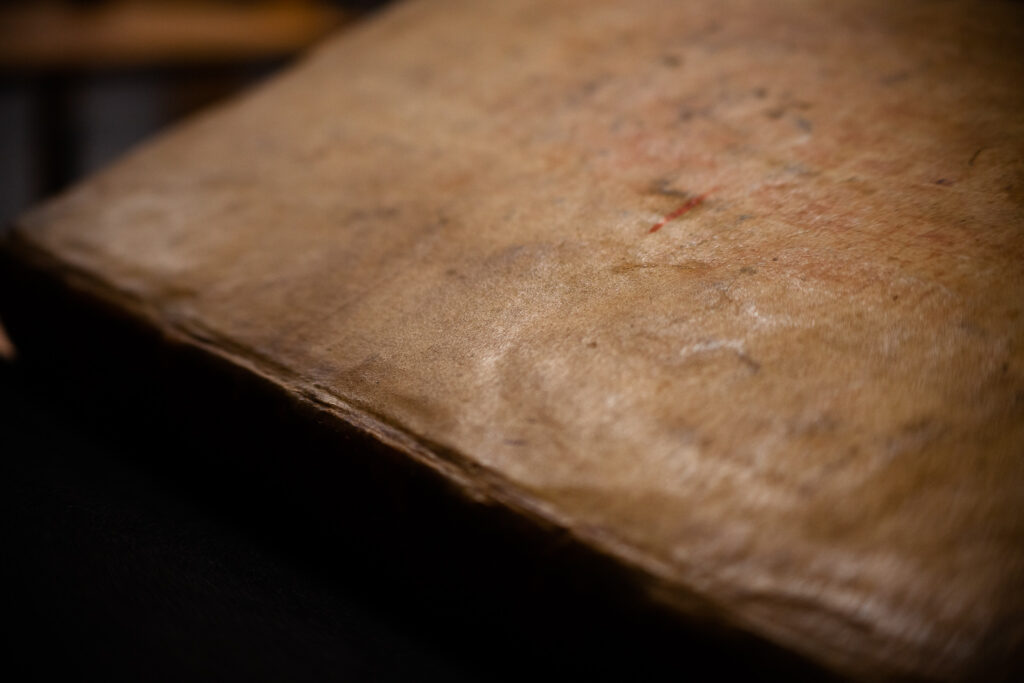
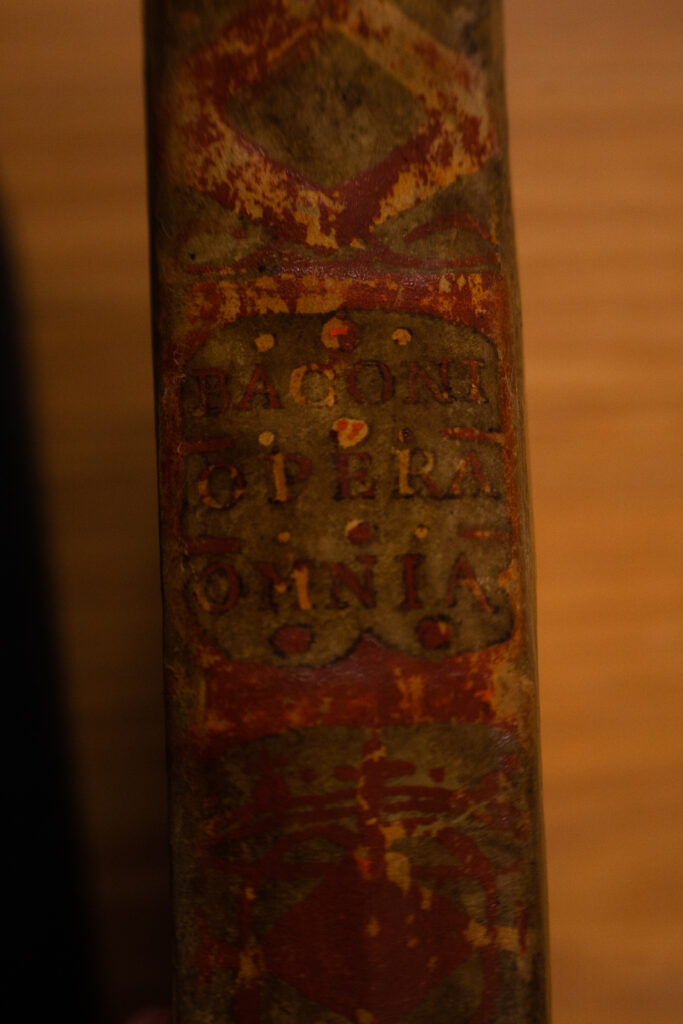
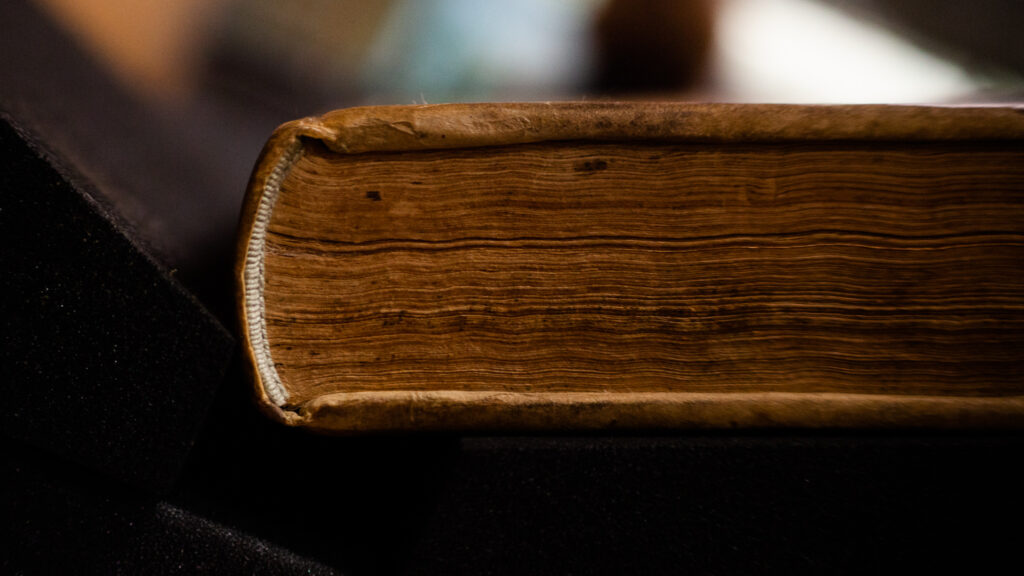
This edition is bound in vellum. The spine is embellished with red paint that has significantly faded in some parts. “Baconi Opera Omnia” is still legible in the center of the spine. The good condition of the vellum may be due to some repairs that were ordered by Michigan State in 2007 according to some receipts included with the book. Repairs were made to the spine and some pages were resewn. The title page was dry cleaned as well.
About the Author
Francis Bacon was an English nobleman who lived from the 1551 to 1626. Bacon had two titles: Lord Verulam and the 1st Viscount of St. Alban. Both of these titles were created for Bacon and after he failed to produce an heir (perhaps due to his questionable sexuality) the titles died with him. Bacon served as the Attorney General and Lord Chancellor of England. This book contains his complete works which include his religious and legal writings as well as scientific writings for which he was most well known.
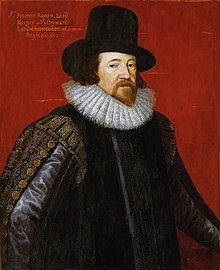
Bacon was a key figurehead of the scientific revolution, but he never made any significant findings of his own. Instead, he was known for the development of the scientific method (outlined in the book Novum Organum or “New Engine”) which became a framework through which science could be conducted. Of course, there were many philosophers prior to Bacon who he must have read for guidance (perhaps there is some distant relation to Roger Bacon (1219-1292), an English friar who also studied the methodology of science) but the key difference in Bacon’s writing was his emphasis on data collection. For Bacon, the hypothesis was secondary. If a scientist encounters a question in nature, his first obligation is to collect as much data as possible. Only with the data before him, could the scientist begin to formulate a hypothesis and conduct experiments to explain the phenomenon. This method was far more empirical than the methods that came before and has only become more relevant with time. Darwin’s first step when approaching the question of the origin of species was to board the Beagle for five years to gather data. There is no theory of evolution without Francis Bacon. Today, the internet has brought a near- infinite amount of data into the hands of scientists, ripe for hypothesizing, and Bacon would have wished.
The First Owner: William Stith
The bookplate of Virginia nobleman William Stith appears on the inside cover of the book. Stith lived from 1707 to 1755 and was the first known owner of the book, which was published in 1665, 42 years prior to Stith’s birth. Stith was born in Virginia to wealthy parents. After attending the College of William and Mary’s Grammar School in his home state, Stith set sail for England. He received his Bachelor’s degree from the Queen’s College at Oxford and a few years later while still in England, was ordained in the ministry of the Anglican Church.
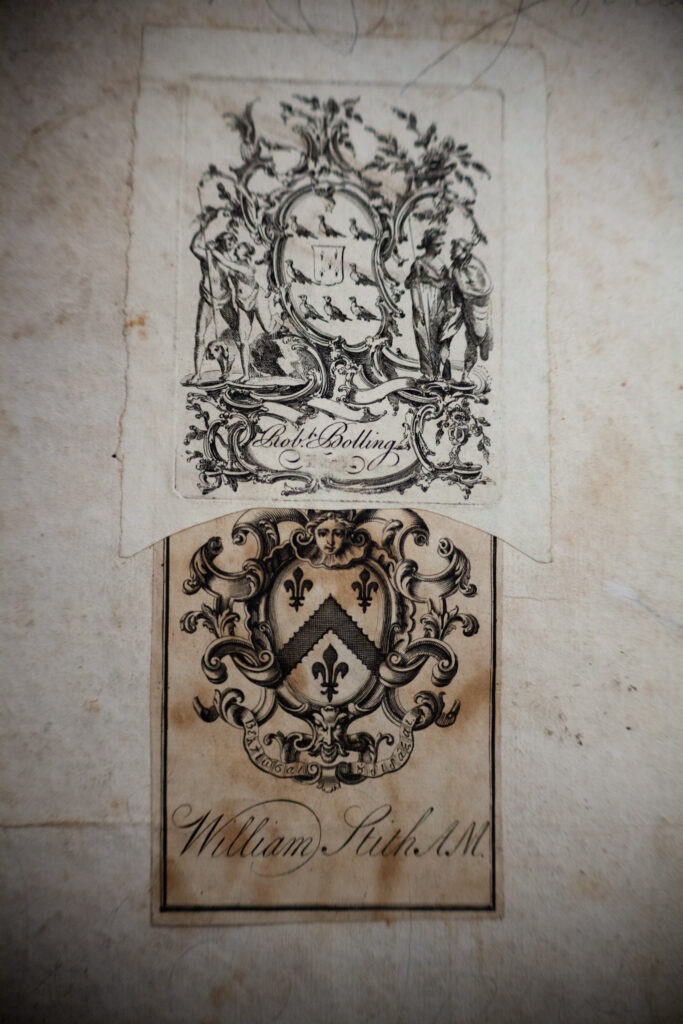
The book was published in Frankfurt and could’ve been purchased by Stith during his education at Oxford or while he sought ordination in the years after. Stith would have brought the book back to Virginia at this point where it would spend the next couple hundred years.
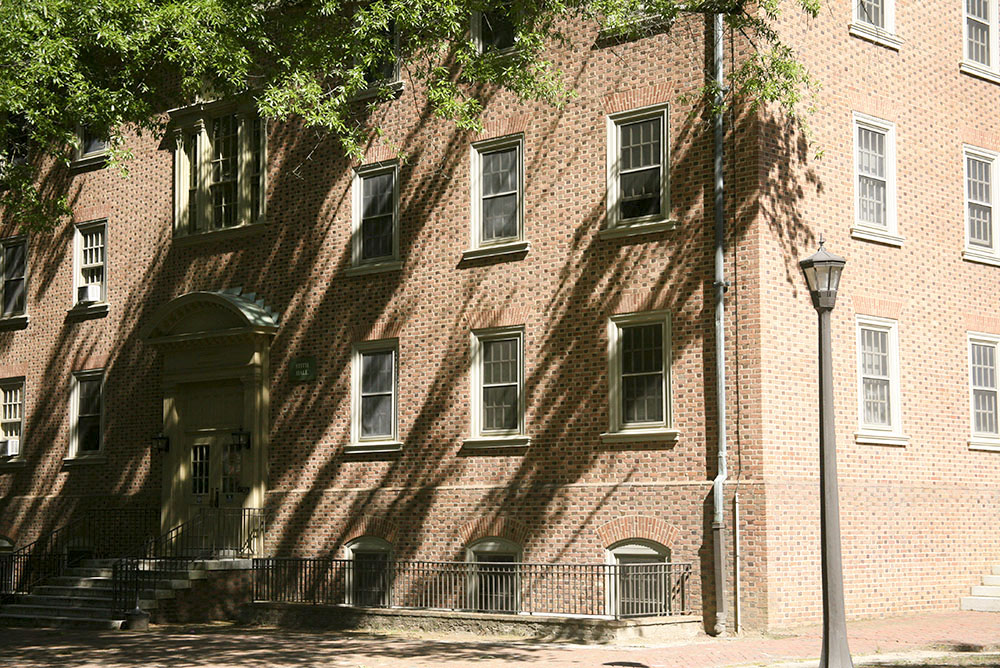
William Stith began working as a professor at the Grammar School of the College of William & Mary when he returned to America in 1731. Around the same time, he also began work at the Virginia House of Burgesses where he was a chaplain. Stith eventually worked his way up to President at the college, and today there is a building named after him on William & Mary’s campus.
Second Owner: Robert Bolling
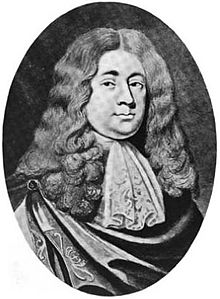
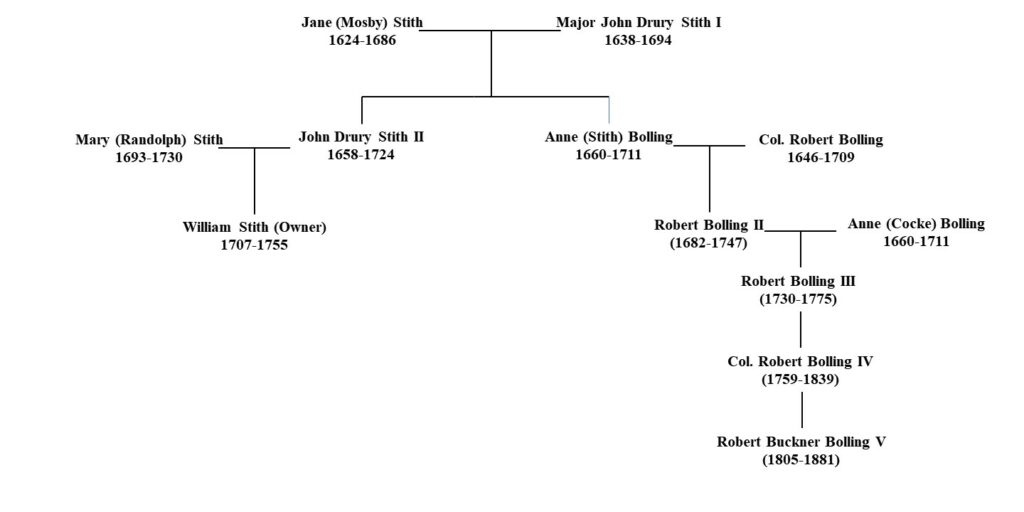
Many men named Robert Bolling lived in Virginia during and after William Stith’s lifetime. Robert Bolling’s bookplate is placed partially on top of Stith’s, so Robert Bolling who owned the book likely lived after William Stith. The owner may have been Robert Bolling III (1738-1775), grandson of Colonel Robert Bolling Sr., who owned and operated the Kippax Plantation in southeastern Virginia and was the first in the Bolling family to make his career in the New World. The Kippax plantation was passed down through the Bolling family and was eventually owned by Robert Bolling III.
A strong case can be made that Robert Bolling III was indeed the Rob. Bolling that the bookplate refers to because he was 25 when Stith died, perhaps an appropriate age to be given an essential book of the times. I questioned why Stith wouldn’t have wanted to keep the book for his own children, but he only had daughters and it’s reasonable to assume that he would want to entrust his most valuable books of law and science to someone who would go on to serve on the House of Burgesses. It ended up being the political duties that were the end of him, Robert Bolling III dropped dead during the third Virginia Convention in 1775 at the age of 36. Luckily, Bolling III lived long enough to birth one Robert Bolling IV who would go on to become a Colonel himself, just like his great grandfather.
The Stith and Bolling Families
The Stith and Bolling families were prominent in Virginia around the same time (both having several men serve in the House of Burgesses) so I was not surprised to find that there was some intermarriage between them. Col. Robert Bolling Sr.’s wife was Anne Stith, Bolling by marriage who was William Stith’s Aunt. William Stith was probably very close to the Bollings, and having no sons of his own to pass on his collection of books, he must’ve chosen a deserving Robert Bolling to gift his books to upon death.
Joseph Endom Jones
Written several times on both the front and back covers is the name J. E. Jones. In the back of the book, it says “Lynchburg, VA, D.D. Turner presented to J.E. Jones July 12th 72. Based on the style of handwriting, and later knowing that the book ended up at Michigan State University in 1954, this must be 1872. The name “J. E. Jones” alone doesn’t provide much to work with but when combined with the location of Lynchburg, Virginia, and a year I was able to deduce that this book was owned by Joseph Endom Jones.
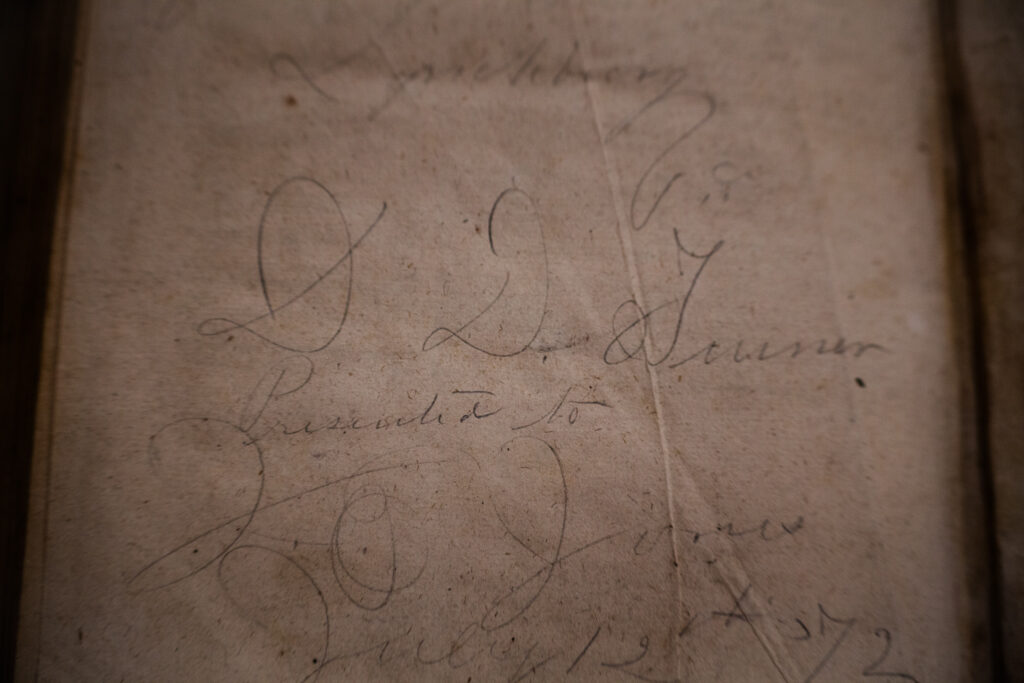
Jones was born into slavery in Lynchburg, Virginia on October 15th, 1850 where he worked in a tobacco factory from the age of six until he was freed at the end of the Civil War. In disobedience with strict Virginia laws against teaching slaves how to read or write, Jones’s mother took him for reading and writing lessons from another slave, Robert A. Perkins. Several nights a week, Perkins taught Jones. However, tensions started to rise on the plantation in 1864 when it became clear that the South was going to lose the war. Perkins thought it would be too dangerous to sneak over every night to teach Jones. Instead, Jones began sneaking over to Perkin’s room on Sunday from 10 to 12, when the slavers were at church.
Eventually, the slaveowner discovered Perkin’s ability to read and write and sold him to another plantation. Still determined to provide her son with an education, Jones’s mother convinced a sick Confederate soldier to teach her son, in exchange for food. (This is the only part of the story I find hard to believe, but it’s from the same book as the rest, for whatever that’s worth.)
Once the war ended, Jones and his mother were freed. Perkins, the man who first taught Jones had opened a private school for freed slaves, so Jones enrolled and excelled. J. E. Jones became a minister and attended Madison University (now Colgate University) in New York, graduating in 1876 with a Master of Arts in an unnamed subject.
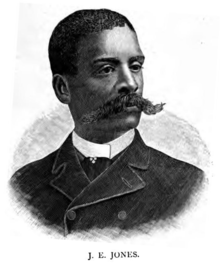
I couldn’t find information on D.D. Turner, who gave the book to Jones in 1872. The date is marked July 12th, so Jones probably returned home after a long semester to visit his mother and was gifted the book while in Lynchburg.
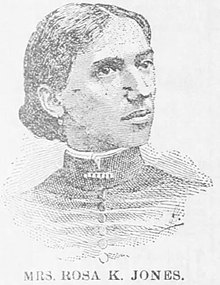
J.E. Jones returned to Lynchburg after graduating from Madison University where he married Rosa D. Kinckle, a graduate of Howard University. J.E. Jones passed away on October 14th, 1922. He was the last owner of the book that I could locate before the university acquired in 1953, a book that began in the hands of slaveowners.
Citations
Flora, Joseph M.; Vogel, Amber (June 21, 2006). Southern Writers: A New Biographical Dictionary. LSU Press. p. 384. ISBN 978-0-8071-4855-6.
Gordon, Armistead C (1914). “The Stith Family”. In Tyler, Lyon G. (ed.). William and Mary College Quarterly Historical Magazine. XXII. Richmond, Virginia: Whittet & Shepperson.
Lemay, J. A. Leo; Dictionary of Virginia Biography (14 August 2013). “Bolling, Robert (1738-1775)”. Encyclopedia Virginia. Retrieved 25 May 2016.
Simmons, William J., and Henry McNeal Turner. Men of Mark: Eminent, Progressive, and Rising. GM Rewell & Company, 1887. p234-239
Wiki-Tree and FindAGrave.com were consulted extensively
Thanks to Tad Boehmer and Andrew Lundeen for deciphering some of the 19th-century script.
