
XX folio JN508.D8 1685
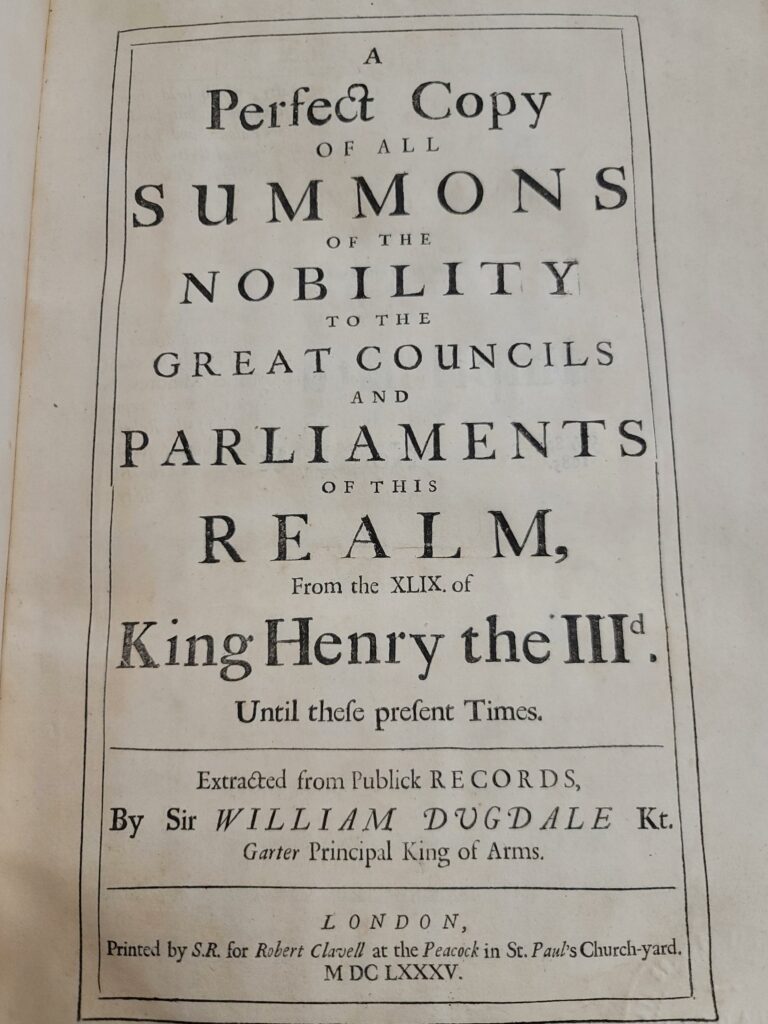
A Perfect Copy of all the Summons of the Nobility to the Great Councils and Parliaments of this Realm, from the XLIX of King Henry the III Until the Present Times, by Sir William Dugdale, was published in 1685 by Samuel Roycroft. This book chronicles the history of the councils of Parliament, from the time of King Henry the III until the year the book was published in 1685. The sources for this book were “extracted from Public Records” by the author, and then compiled together to make this comprehensive chronicle.
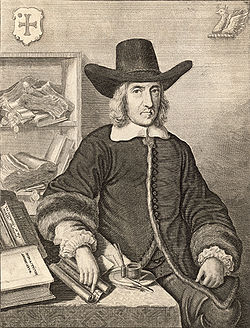
Sir William Dugdale (1605-1686) was a well- known English antiquarian, whose writing focused on the history of England. He was born at Shustoke, in Warwickshire, on 12 September 1605, and was the son of John Dugdale. His two most well known works are Monasticon Anglicanum, which chronicles the history of religious houses in England, and The Antiquities of Warwickshire, which provides a history for Warwickshire County.
Dugdale begins his book with commentary on the nature of government, in which he says, “that the Supreme Power, and absolute Sovereignty doth totally reside in the People.” The main body of the book is written in Latin and consists of the actual chronicling of Parliament.
Origin
The Publisher:
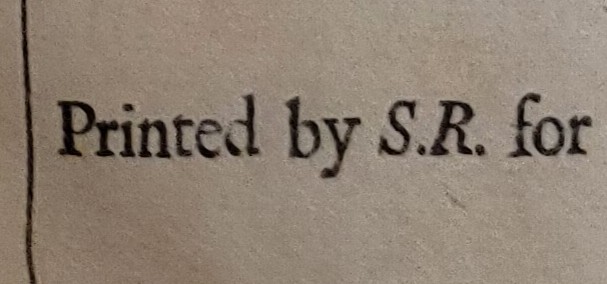
Samuel Roycroft (1657-1717) was the son of the printer Thomas Roycroft, and an active printer in London during the late 17th century. He was appointed City Printer in December 1677, at the age of twenty. Much of Roycroft’s surviving prints include administrative guides and government manuals.
The words “Printed by S.R.” appear on the cover page of this book, indicating that Samuel Roycroft was the printer. This book deals with the history of a government body, it makes sense that Samuel Roycroft would have printed it. His position as City Printer of London afforded him opportunity to work extensively with documents related to government.
The Seller:

As can be seen on the cover page, this book was printed for Robert Clavell to be sold at his bookshop, the Peacock, in St. Paul’s Church-Yard in 1685.
Robert Clavell (1633-1711) was a well known bookseller in London during the 17th century. He served as Master of the Company of Stationers from 1698-1699. He also served on the jury of Alderman Cornish, who was executed during the reign of James II, and which Clavell considered one of the unhappiest moments of his life. His shop was located on Paternoster Row, the chief center of the book-trade in London.
Provenance:
Charles E. H. Chadwyck Healey
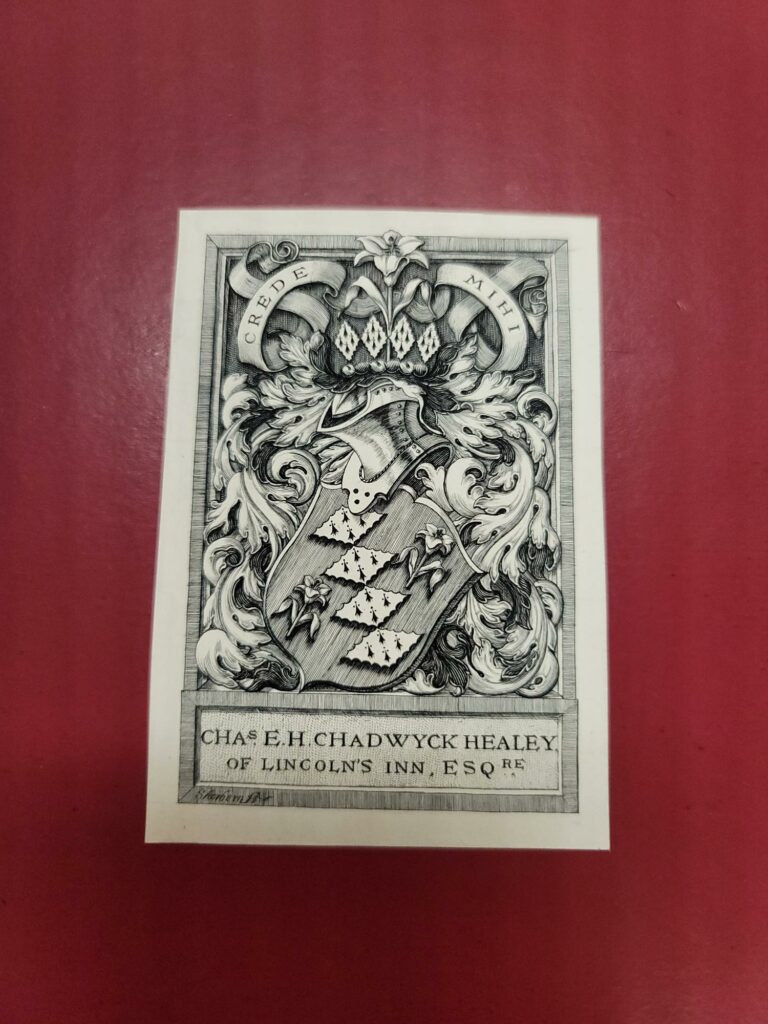
The only known owner of this book was a man by the name of Charles E. H. Chadwyck Healey (1845-1919), whose name appears on a bookplate on the inside front cover.
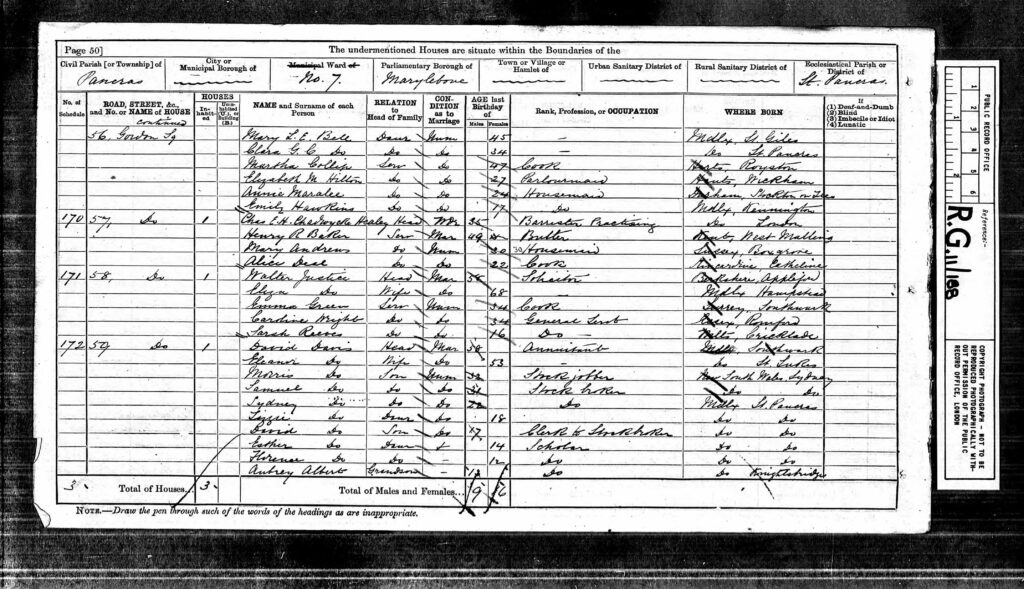
An 1881 English census lists Healey as a “Barrister Practising,” which makes it likely this is the same person mentioned on the bookplate. This census further reveals that Healey was 35 at his last birthday, and that his place of residence was 57 Gordon Square. Further information can be found on Charles Chadwyck Healey from a baptismal record from the year 1888.
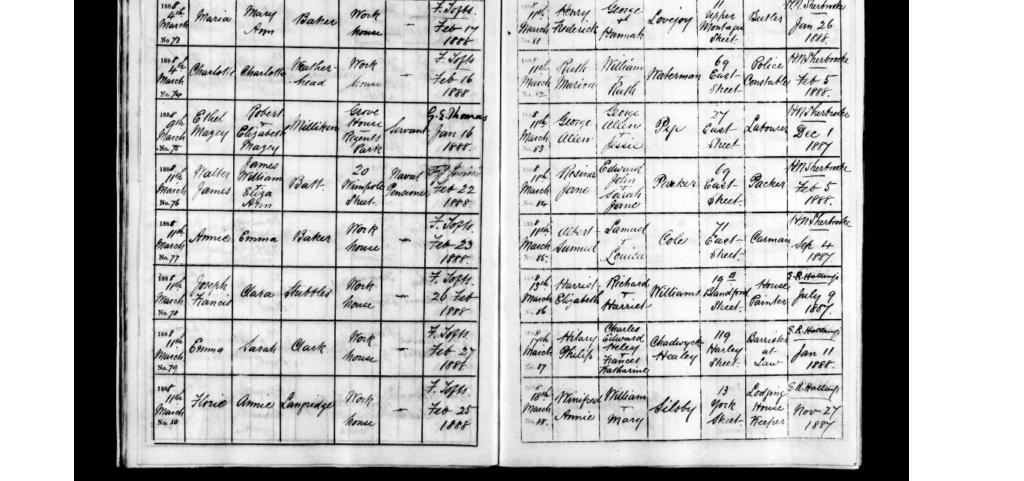
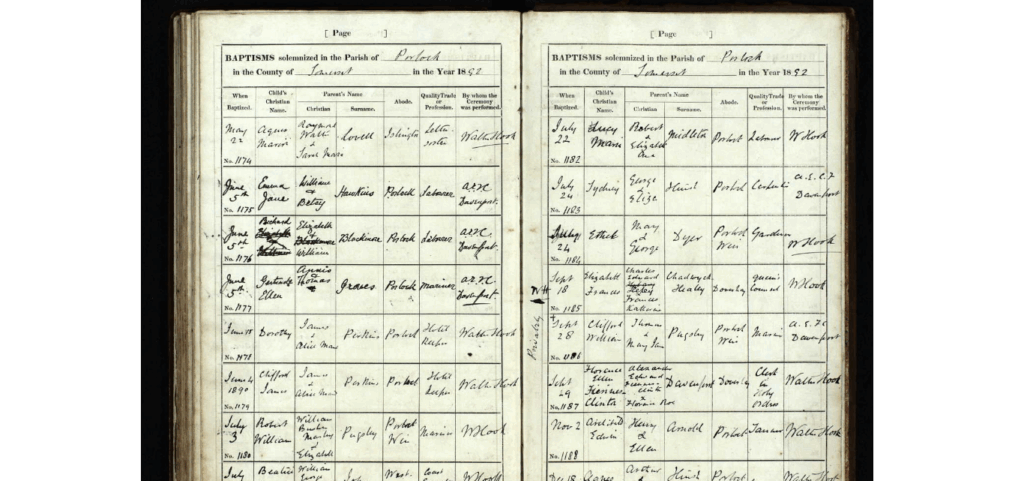
This document lists Charles E.H. Chadwyck Healey as the Father of Hilary Philip Chadwyck Healey. His wife is named as Frances Katharine. Another baptismal record reveals that Charles and Frances had a second daughter, this one named Elizabeth Frances Chadwyck Healey, in 1892. Charles Chadwyck Healey was also an author and wrote several books related to law and civil matters. Examples of his works can be found in publications entitled English Church Law and Divorce, Part 1, Notes on the Reformatio Legum Ecclesiasticarum (1912), and Somersetshire Pleas (Civil and Criminal), which was printed for subscribers beginning in 1897.
Rebinding:
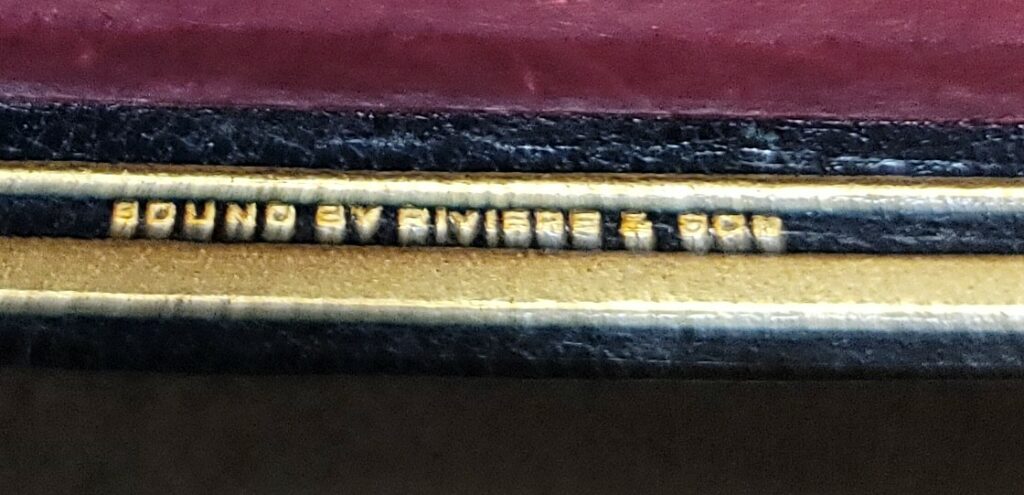
There is indication that this book was rebound at some point. Impressed upon the leather on the inside cover are the words: “Bound by Riviere & Son.” Originally from Bath, Robert Riviere opened his first shop in 1832. He moved to London in 1840, where he opened another bookbinding shop. This shop specialized in rebinding old books. In 1881, Robert’s grandson Percival Calkin became a partner in the business, and the name was changed to “Riviere & Son.”
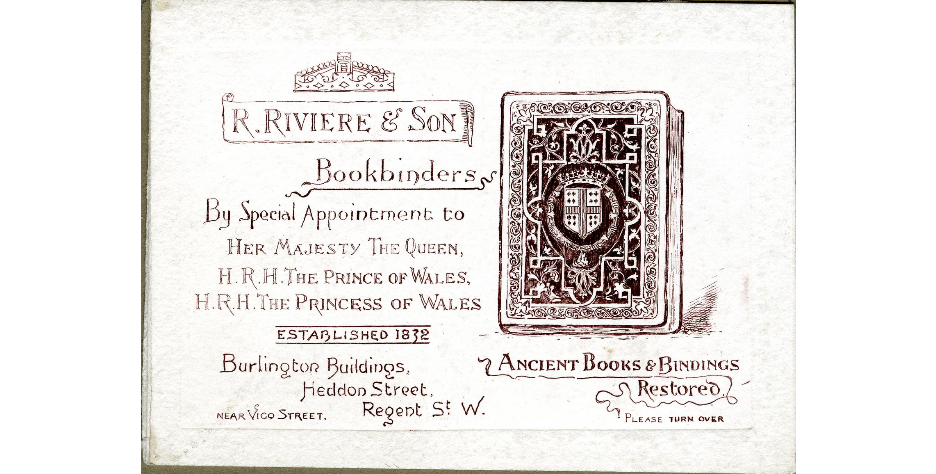
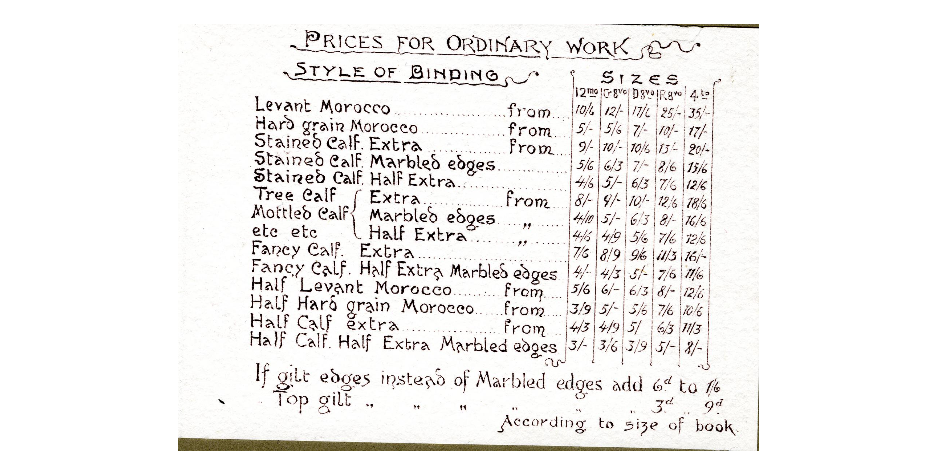
An advertisement for the shop reads: “R. Riviere & Son. Bookbinders By Special Appointment to Her Majesty The Queen, H.R.H. The Prince of Wales, H.R.H. The Princess of Wales. Established 1832. Burlington Buildings, Heddon Street, St. W. near Vigo Street. Ancient Books & Bindings Restored.Estimates given for Riviere & Son pricing Special Work, large quantities, restoring libraries &c. Skilled workmen sent to all parts.” This advertisement provides information on the shop, including its address and the year it was established. The business was closed in 1939.
Other Provenance:
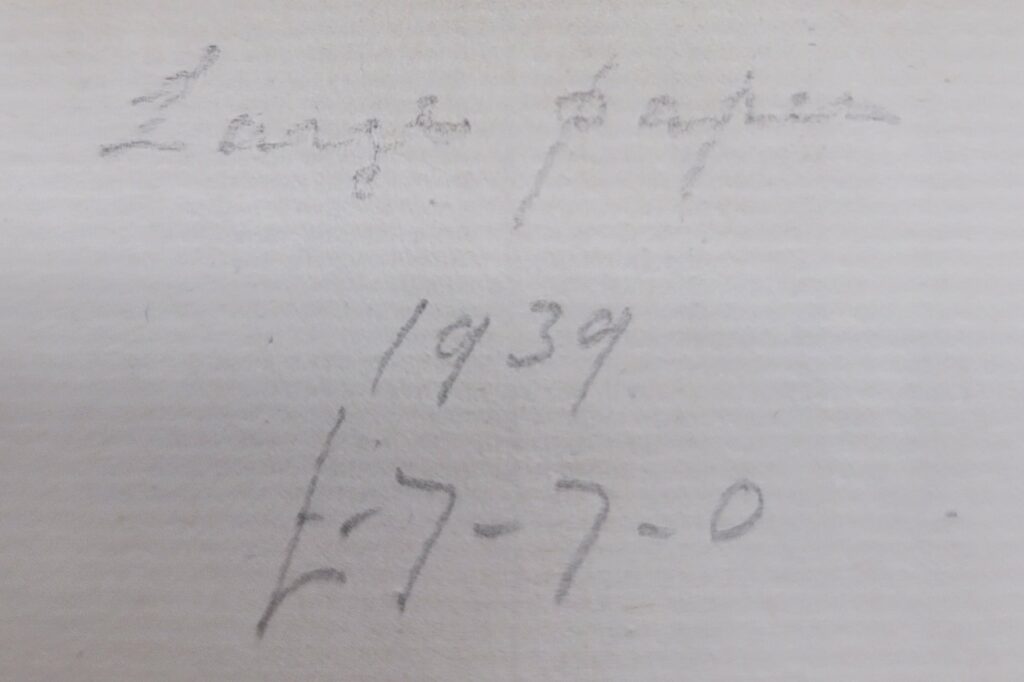
There is also a hand written note on one of the first pages. The note says: “Large Paper, 1939, £-7-7-0.” This indicates that in 1939, someone had possession of this book and felt it necessary to write the date. It could be that this is a booksellers note. If this is the case, then this book cost seven pounds and seven shillings to buy in 1939. It could also be that this is a note left from the book’s rebinding, and that the cost of the rebinding cost seven pounds and seven shillings. Also worth noting is that if this note shows the cost of rebinding, then it was done in the last year Riviere and Son was in business.
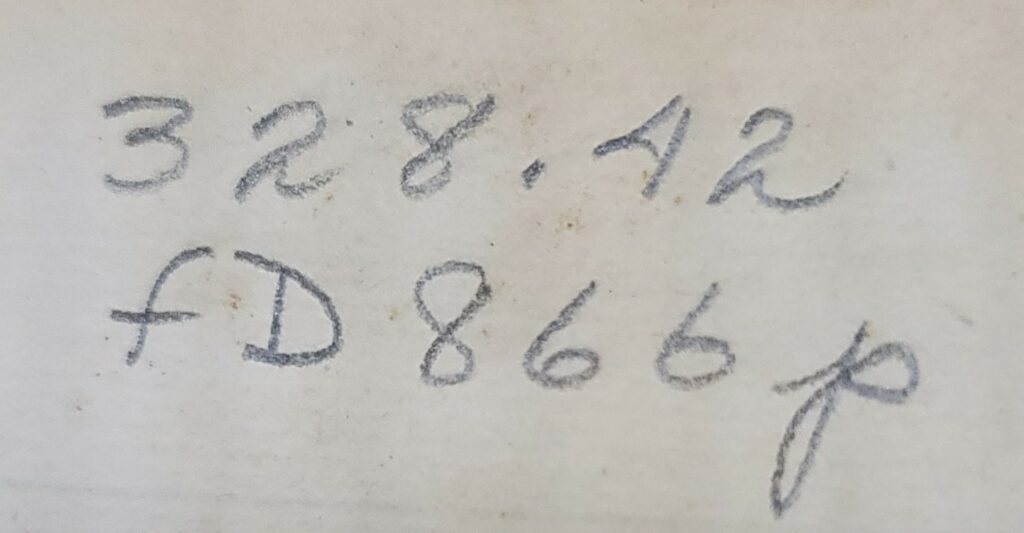
Another mark shows the catalog number for this book in the Dewey Decimal System. The number, 328.42, is the number for The Legislative
Process in England and Wales.
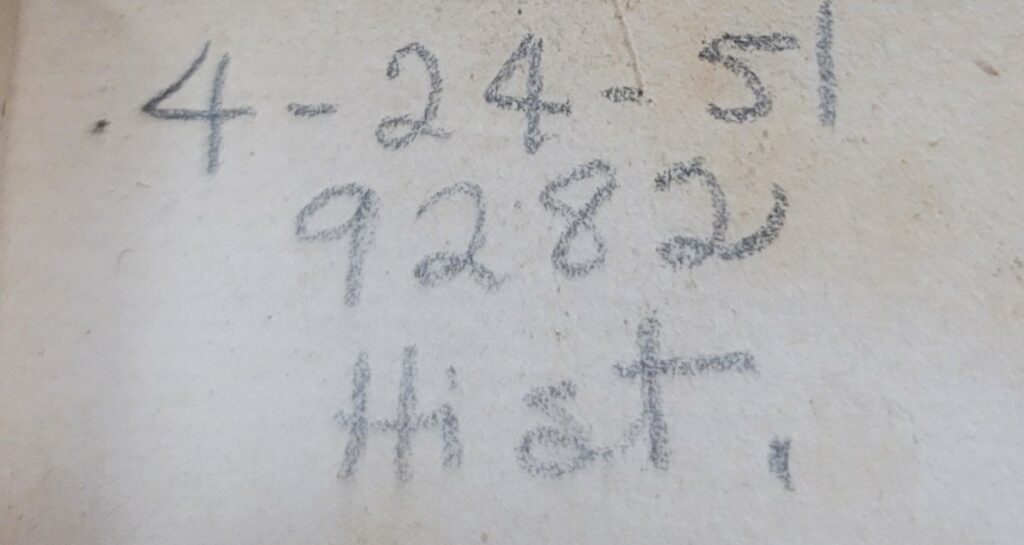
The final marking in this book indicates when Michigan State University obtained it. The note reads: “4-24-51, 9282, Hist.” This tells us that MSU received this book on April 24, 1951, and that it was either part of the History Library or was just cataloged under “History.”
Bibliography
Carlone, Dominic. “Bookselling at Paul’s Churchyard.” MOEML, The Map of Early Modern London, 1 Jan. 1970, https://mapoflondon.uvic.ca/BOOK2.htm.
“Collections Online: British Museum.” Collections Online | British Museum, https://www.britishmuseum.org/collection/term/BIOG211947.
The Dugdale Society, http://www.dugdale-society.org.uk/Index.html. Https://Search.ancestry.com/Cgi-Bin/Sse.dll?Indiv=1&Dbid…
https://community.familysearch.org/en/discussion/2341/https-search-ancestry-com-cgi-bin-sse-dll-indiv-1-dbid-61250-h-2277555-tid-pid-usepub-true-phsr.
“Https://Search.ancestry.com/Cgi-Bin/Sse.dll?Indiv=1&Dbid=61250&h=2277555&Tid=&Pid=&UsePUB=True&_phsr.” FamilySearch Community, https://community.familysearch.org/en/discussion/2341/https-search-ancestry-com-cgi-bin-sse-dll-indiv-1-dbid-61250-h-2277555-tid-pid-usepub-true-phsr.
“The Online Books Page.” Chadwyck-Healey, Charles E. H. (Charles Edward Heley), Sir, 1845-1919 | The Online Books Page,
http://onlinebooks.library.upenn.edu/webbin/book/lookupname?key=Chadwyck-Healey%2C+Charles+E.+H.+%28Charles+Edward+Heley%29%2C+Sir%2C+1845-1919.
“Print; Trade-Card: British Museum.” The British Museum, https://www.britishmuseum.org/collection/object/P_Banks-16-15.
Raven, James. Publishing Business in Eighteenth-Century England. The Boydell
Press, 2014.
“Seward Family Digital Archive.” Blackwood, Frederick Hamilton Temple () | Seward Family Digital Archive, https://sewardproject.org/node/79075.
Compiled by Evan MacKay
Special thanks to Professor Brockey, Tad Boehmer, and Andrew Lundeen, without whose help this project would not have been possible.
HST 475 FS21
