
Introduction to the book
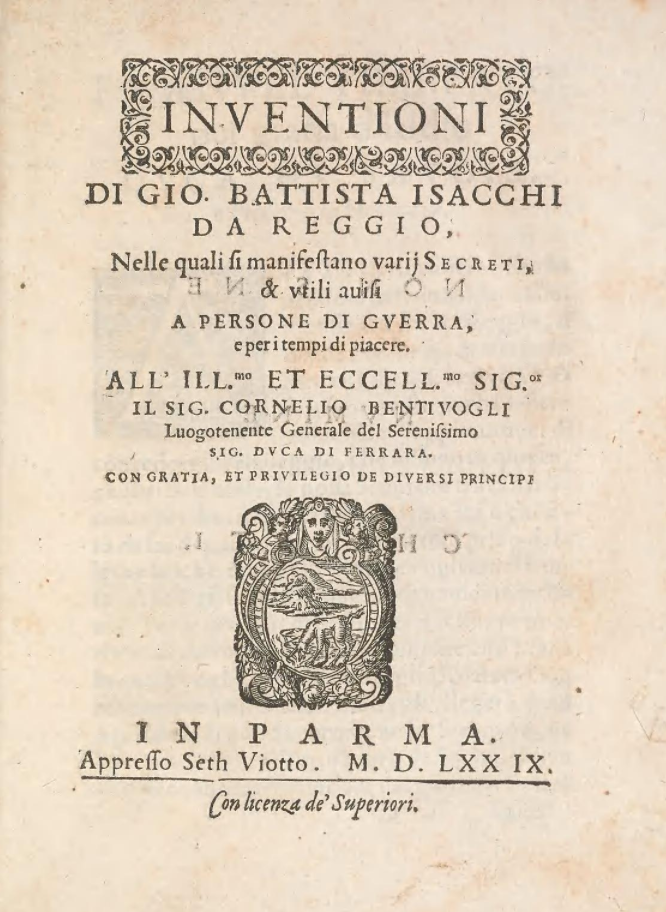
Original Title: Inventioni di Giovanni Battista Isacchi da Reggio, nelle quali si manifestano varii secreti, & utili avisili a persone di guerra, e per i tempi di piacere
Translated Title: Inventions by Giovanni Battista Isacchi from Reggio, in which secrets and useful advice to people of war are manifested, and for leisure.
Author: Giovanni Battista
Imprint: Parma Italy, Seth Viotto, 1579
Language: Italian
USTC: 836576
Call Number: 39088005572888
Collection: Smithsonian
Pages: 218
Link to E-Copy: https://archive.org/details/inuentionidigio00isac/page/n29/mode/2up
About the Author
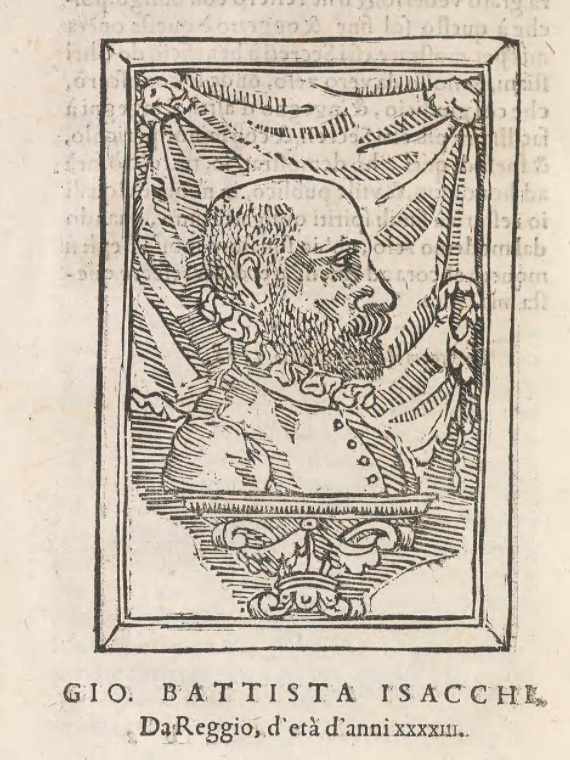
Giovanni Battista Isacchi was from Reggio Emilia in Italy. He was an engineer and inventor, most famous for his military inventions. He also crafted various machines from water wheels to heliographs. His gunpowder formulas included in this volume were used both for artillery and festive purposes (National Gallery of Art).
Physical State of the Book
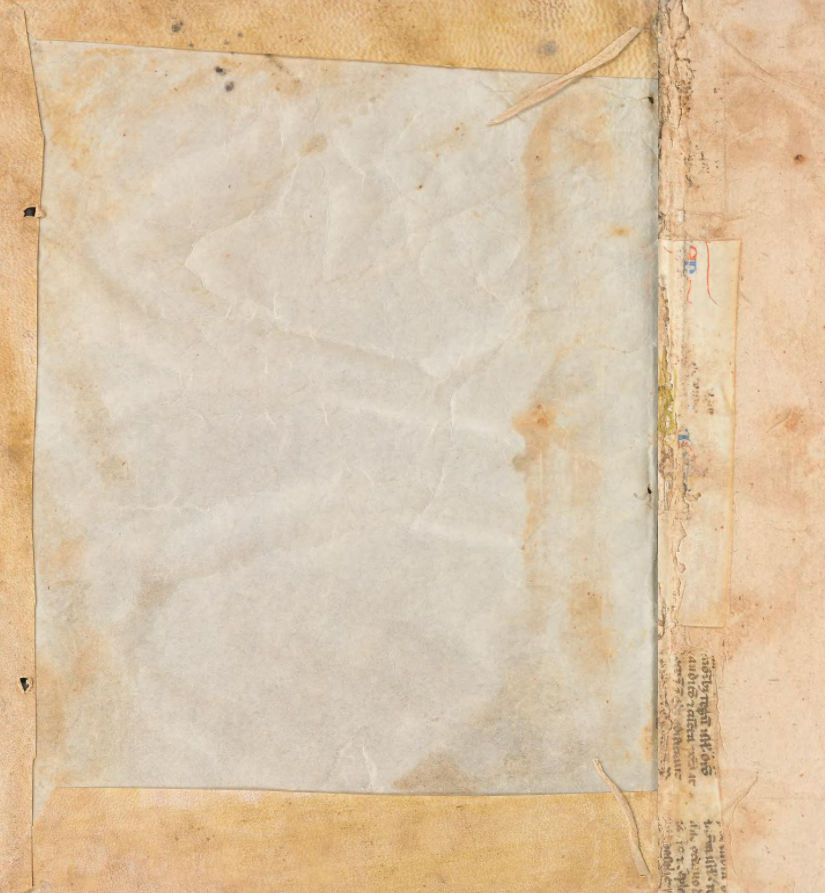
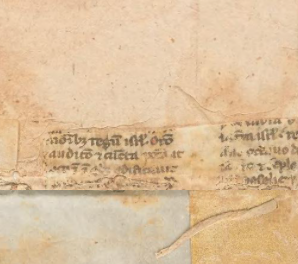
The book is in relatively good shape for its age. There are some minor discoloration spots that look to be from age and/or humidity. There are no visible tears or marks of serious damage. The pages are bound in an Italian vellum and it looks like pieces of a previous book were used in the binding, as seen in the photo below. This previous text used is written in a different font and possibly a different language.
The book uses one main Italian style black typeface, varying from italicized to regular and there were decorative initials at the beginning of each section. There was no rubricating of any words in the text.
Contents of the Book
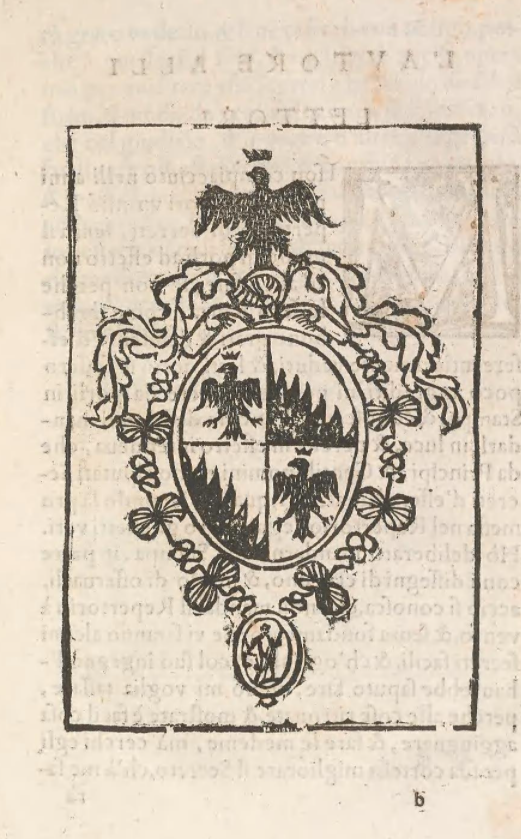
Inventioni is a book of discoveries. It includes over 50 inventions or “secrets”, mostly related to warfare but also some for domestic or industrial purposes. Interspersed with his inventions, Isacchi included many addresses to influential figures to whom the inventions were dedicated. One of the more impressive dedications in this book was the one to Isacchi’s patron, Cornelio Bentivolgi (1519-1585). During Bentivolgi’s lifetime he was the first to be appointed the title of Marquis of Gualtieri, after he had led construction on the city. There is a two page dedication to him featuring his coat of arms included right after the dedication (pictured below).
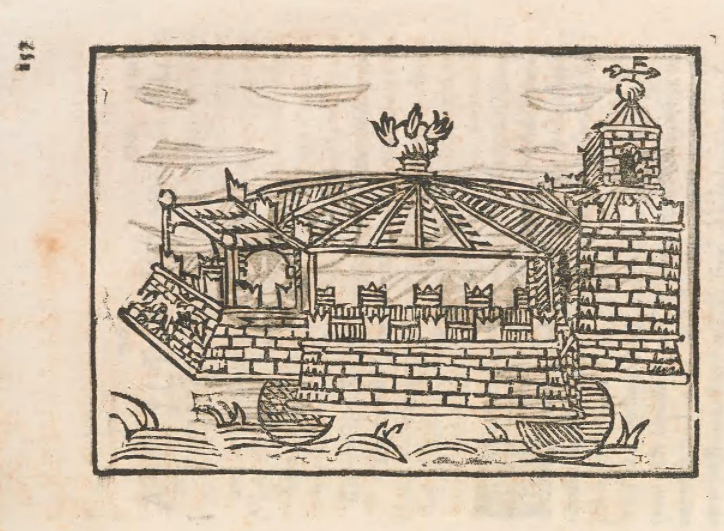
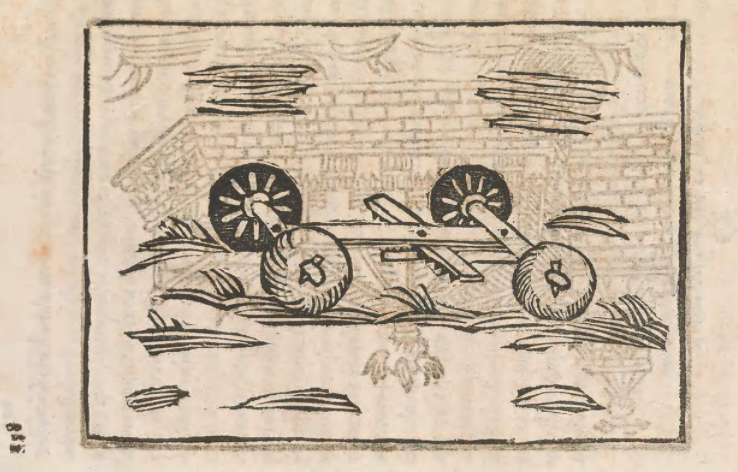
There are forty four woodcut prints throughout the book, based on drawings made by an unknown artist. Many of these prints are depictions of the inventions, so readers can compare the written descriptions to the artistic rendering of the innovation. One notable invention included in this book is the design for a horseless carriage, something that could potentially be used for both warfare and leisure. Isacchi included two different prints for this idea, one more ornate and the other much more simple (both pictured below). From this readers can see the intelligence of Isacchi and his innovative ideas.
The title page includes the unicorn printers mark of the printer Seth Viotto. (Pictured left)
The book also has a table of dedications which acts as a table of contents, as it lists the names of important figures along with the page numbers in which their dedications can be found.
Provenance
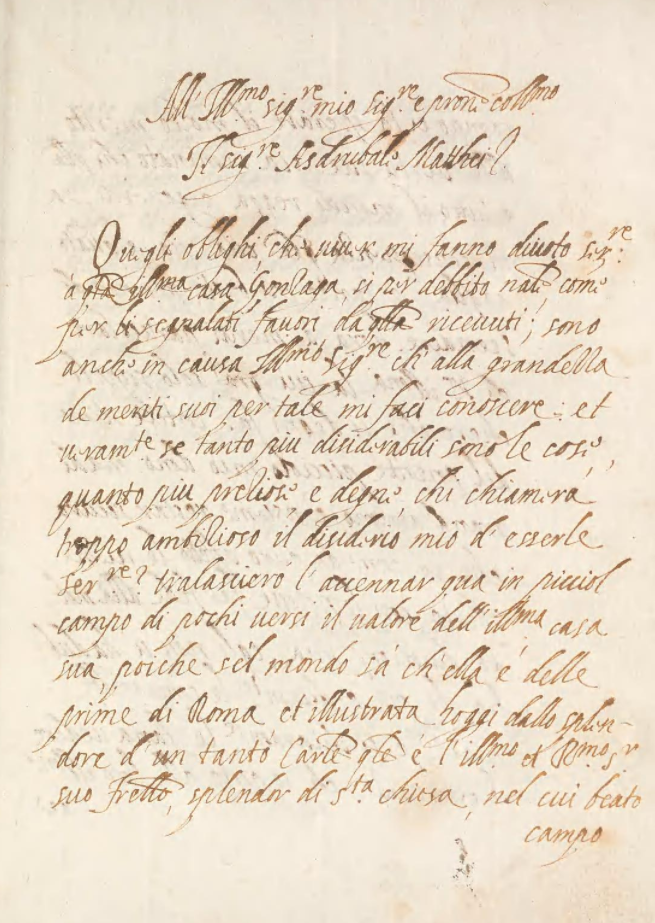
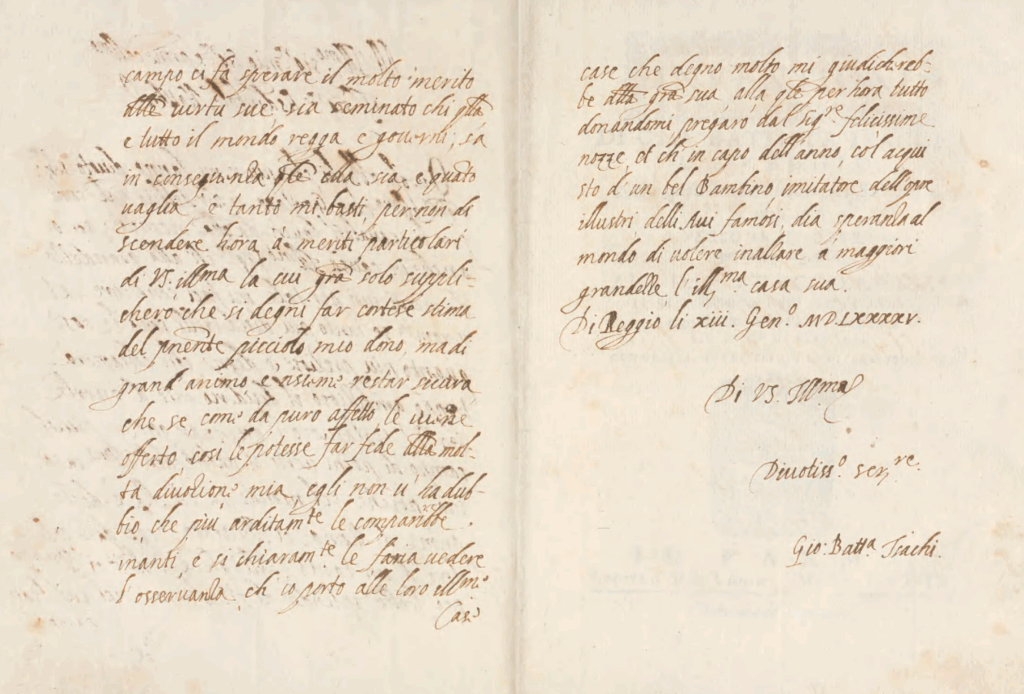
This copy of Inventioni has a handwritten letter from the author written before the title page. The letter is three pages long and written in a pretty Italian script. With some help from Professor Brockey, I was able to determine that this letter was addressed to a man named Asdrubale Matthei (1556-1638), an Italian Nobleman and a patron of the arts and architecture. Matthei was a patron for the famous artist Caravaggio (1571-1610), who was well known for his influence on the Baroque movement and his participation in painting the Contarelli Chapel in Rome, Italy, as well as many other works of art (Caravaggio-Foundation). The letter states that this was a wedding gift to Asdrubale Matthei for his wedding with Constanza Gonzaga, who was also from a noble family, and most likely the gift was given in hopes of gaining Matthei’s patronage. The letter is dated in 1595, sixteen years after the book was published, and Isacchi signs that it was written in Reggio Emilia, a city in modern Italy. So, this book was owned by Asdrubale Matthei in 1595.
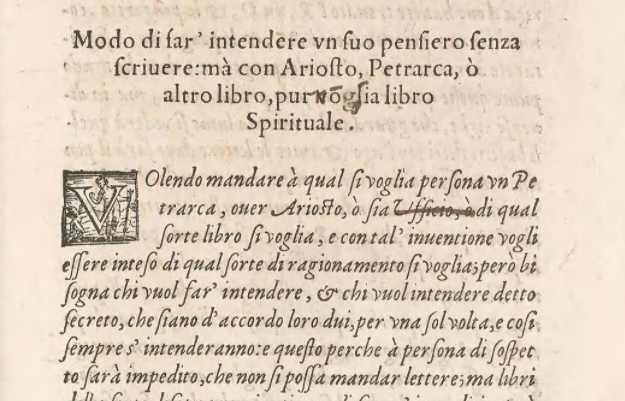
There were not many provenance markings throughout the text showing how often it was read or if any person had owned it after Matthei. However, there was one page where a reader had made a correction. (Pictured right). This seems to correct a spelling error, and also crosses out a word. These edits could indicate that this section was read more frequently by an owner and so they took the time to fix it, or there were not many other errors throughout the book.
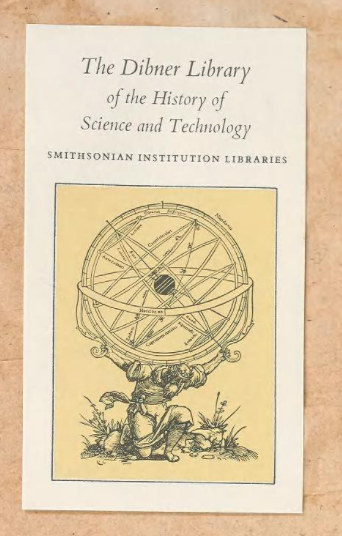
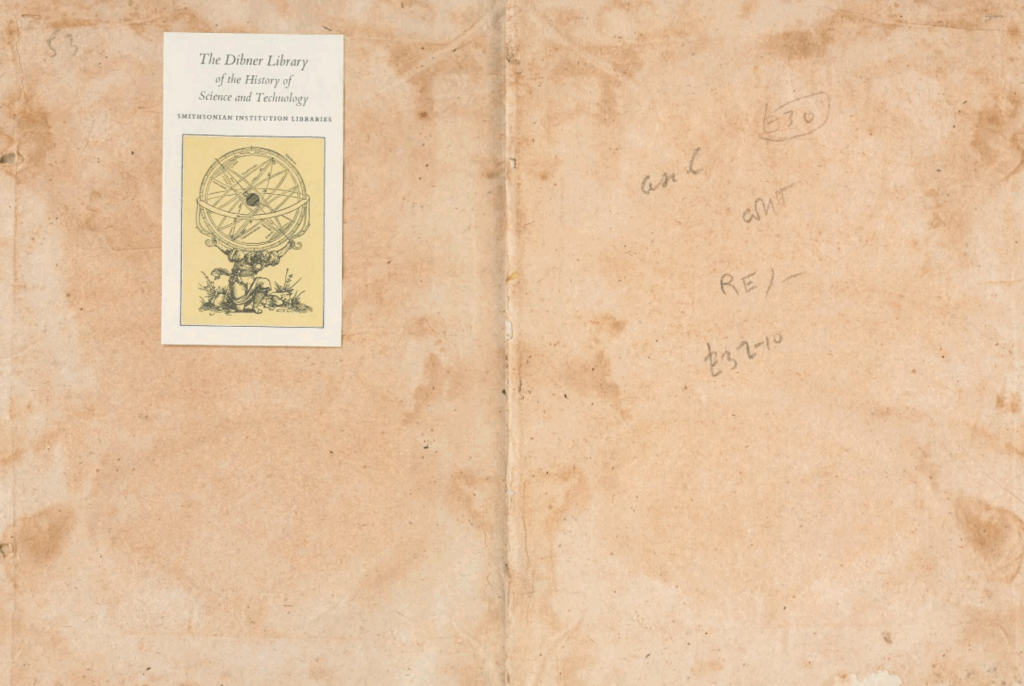
This book has a library bookplate from the Dibner Library of the History of Science and Technology: The Smithsonian Institute, which is where this work is currently being housed. There are also numbers and letters written on the page next to the bookplate in what looks to be pencil. These markings may have been added by the library the book is currently a part of or a previous library, but as they are in pencil they are recent additions to the book. The eBook copy of this book, found on the Smithsonian website, marks that this book was donated to them by the Burndy Library, but there was no physical record of this within the book as there was no library bookplate from the Burndy Library.
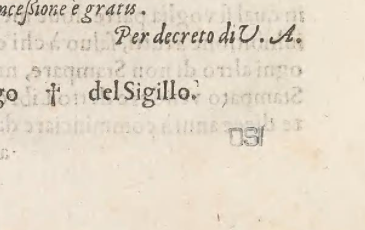
Another unique element of this book is a spot on the page after a2 in the book, and it looks to be a little stamping of the letters “DSI”. If it is “DSI”, it is very possible it could be from the Dibner library at the Smithsonian Institution to mark that it belongs to them. (Picture Below)
Sources
“Biography of Caravaggio.” Caravaggio-Foundation. https://www.caravaggio- foundation.org/biography.html. Accessed 12 November 2020.
“Cornelio I Bentivoglio.” Wikipedia, Wikimedia Foundation, 9 July 2020, it.wikipedia.org/wiki/Cornelio_l_Bentivoglio.
“In the Library: Pageantry and Pyrotechnics in the European Fete Book.” National Gallery of Art, 24 June 2019. https://www.nga.gov/content/dam/ngaweb/exhibitions/pdfs/2019/pagean try-and-pyrotechnics.pdf. Accessed 8 November 2020.
“Inventioni nelle quali si manifestano varij secreti, & vtili auisi a persone di guerra, e per i tempi di piacere.” Maggs Bros LTD. Rare Books and Manuscripts. https://www.maggs.com/inventioni-nelle-quali-si-manifestano-varij- secreti-and-vtili-auisi-a-persone-di-guerra-e-per-i-tempi-di- piacere_234084.htm. Accessed 7 November 2020.
Created by: Haylie May, Fall 2020 for Dr. Brockey’s HST 475 course at MSU
