
As teachers Albert, Alkind, Haly, and Petolomy. With the Shepherds perpetual Prognostication for the Weather.
XX AG104.G633 1671
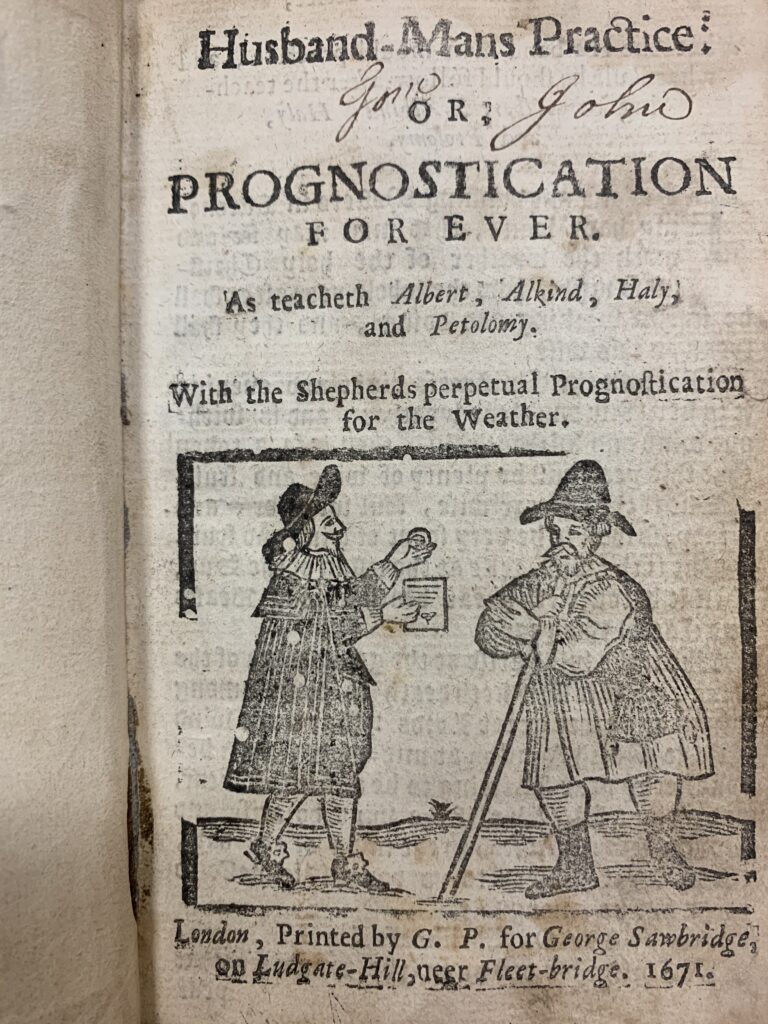
The book’s first edition was printed/published around 1530 and continued until around 1806 by different printers and publishers.
This edition was printed in London by G.P. (George Palmer or George Pawlett) [14] for George Sawbridge. It was printed on Ludgate-Hill, near Fleet-bridge in 1671. The part from Ludgate Circus later became Fleet Street. The book has three parts whose content came from different authors.
The first part is “The Book of Knowledge. Both necessary and useful for the benefit of all people” by Godfridus. Yet, this part is printed at the end of the book.
The second part was put at the beginning of the book. It is called “The Husbandmans prognostication for ever, together with his rules and practice” and came from works by Albert, Alkind, Haly, and Petolomy (Ptolemy).
The last part came from Melampus, a Greek author. Its title is “The Shepherd Prognostication for the Weather. With brief Chronology of divers Memorable things since these hundred years, shewing in what year they happened, and how long it is since, to this year, 1671. With a Brief Collection of all the Members of Man Physiognomized. And a Judgement upon the Signification of Moles on Man or Woman, from Head to Foot… Also the Wheel of Fortune, Approved and confirmed by Science and Reason of Pythagoras, the most excellent Philosopher: By the which you may know all things that you will demand.”
Authors
Godfridus
The British Library has a catalog of a document that” Godfridus super palladium” contributed. Its title is “Medical miscellany, including Godfridus super palladium; Agnus Castus, fragmentary.” [5]
This individual also studied ” the cultivation of trees and the storing of fruit”. His work, translated by Nicholas Bollard, clerk of Oxford, was popular in England in the fifteenth century. [2]
Albertus Magnus, Alkind, Alboazen Haly, and Ptolemy
Albertus Magnus, St. Albertus Magnus, or Albert the Great was a German theologian, scientist, and philosopher. Alkindi was also an important Arab philosopher.
All these figures believed in the geometric system where the Earth is the center of the universe. They are also convinced that there is a relationship between the stars and human life. For example, we can predict an individual’s future based on the movements and the positions of the stars, and by understanding how they work and implementing them into our lives, we would be able to live the most fulfilling lives. [1][6][8][9]
The geometric theory was popular until the end of the 17th century when during the Scientific Revolution, heliocentricism disputed it. [12]
Melampus
Since Melampus is a Greek mythological figure, so it’s likely a name that the author made up to give the book importance. [15]
Physical Appearance
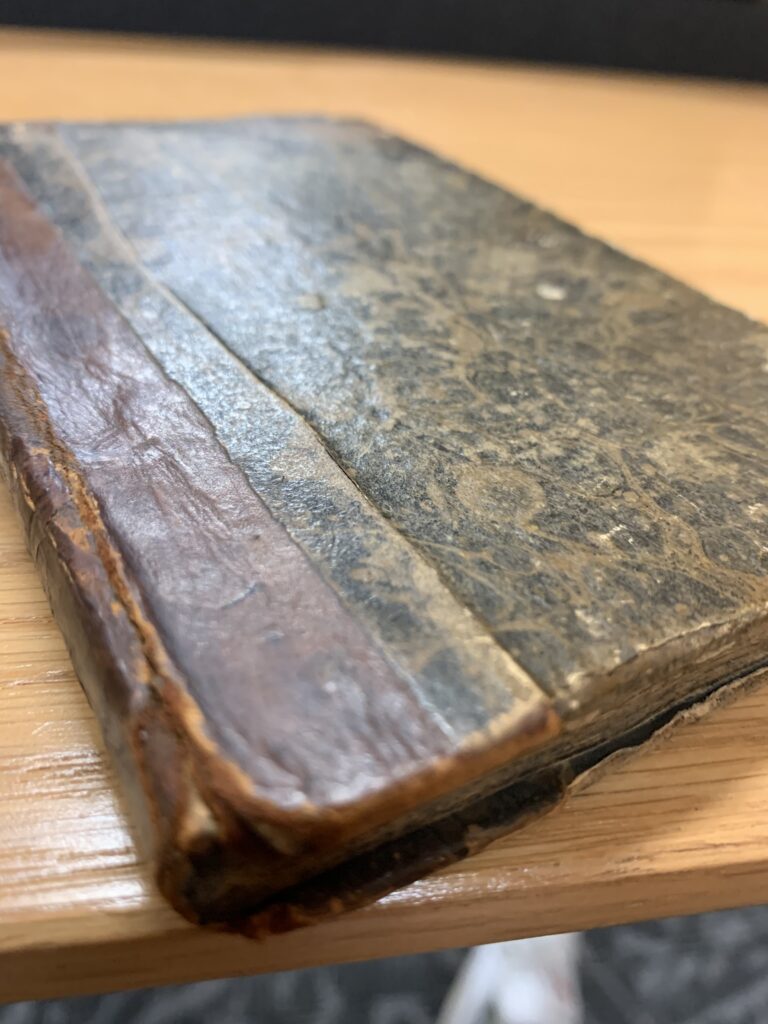
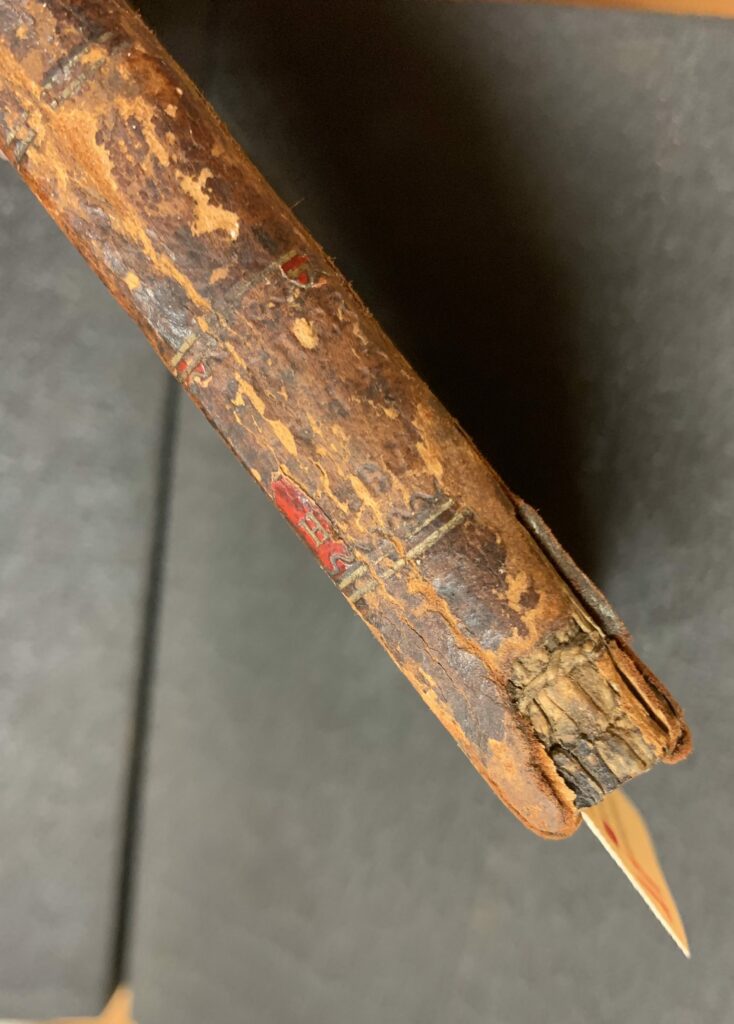
The book was marbled paperboard quarter-bounded with calf. The spine was once gilded and had a red label. The book must have been wide open for many times, as seen on the worn- down spine and the red label. The top of the spine is missing, revealing the sewn gathering beneath.
It is likely the book has been rebounded and curated once as the paper near the spine and the rest of the frontboard is visually detached.
The corners of the boards are also worn-off and curated because they have different colors and materials.
Many headlines and notes on some pages were cut off, suggesting that the rebounding was done in-between owners.
Provenance Evidence
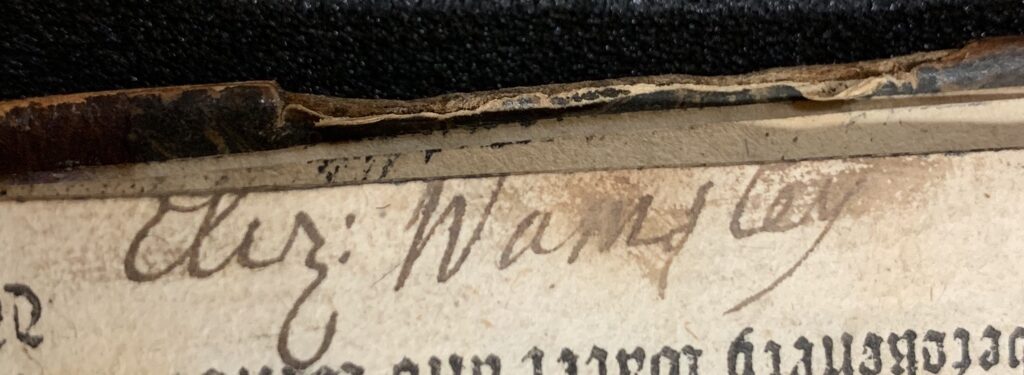
Elizabeth Wamsley
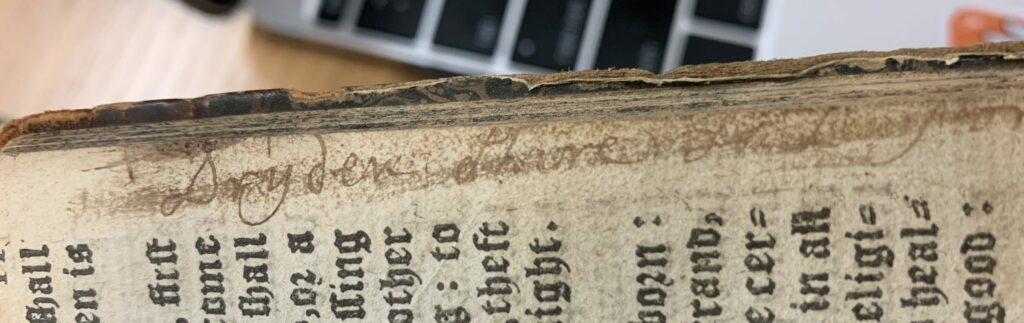
Ruby Spelman and Torway George
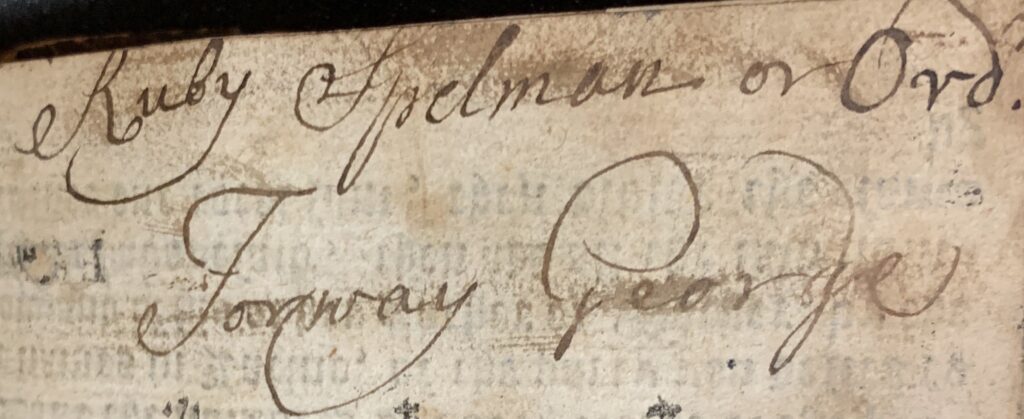
Torway George was mentioned as George Torwaly in Magna Britannia Notitia Or The Present State of Great Britain: With Diverse Remarks Upon The Ancient State Thereof, Volume 2. He was a Fourth Teller clerk.

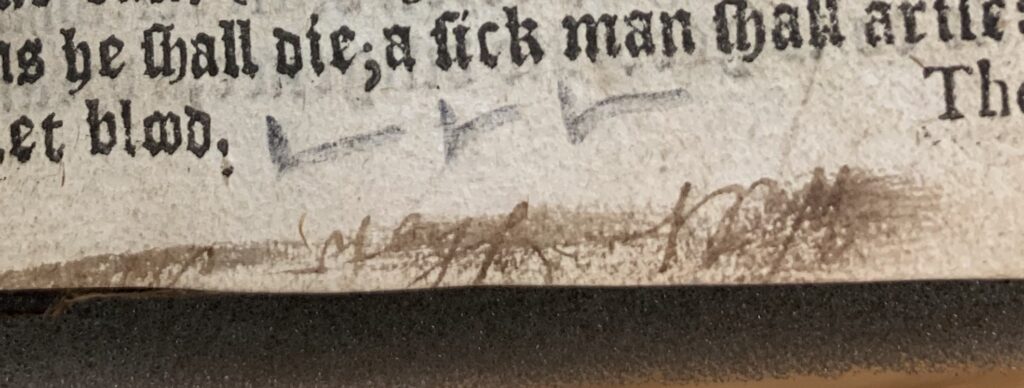
This marginal note about a person named “George”, who possibly had drunk, and was found at the bottom of a page about good times to purge, according to horoscopes. Based on the similarities between this handwriting and the one that wrote “Ruby Spelmand and Ord? Torway George”, they could come from the same person and talk about the same Goerge, a person possibly close to this owner.
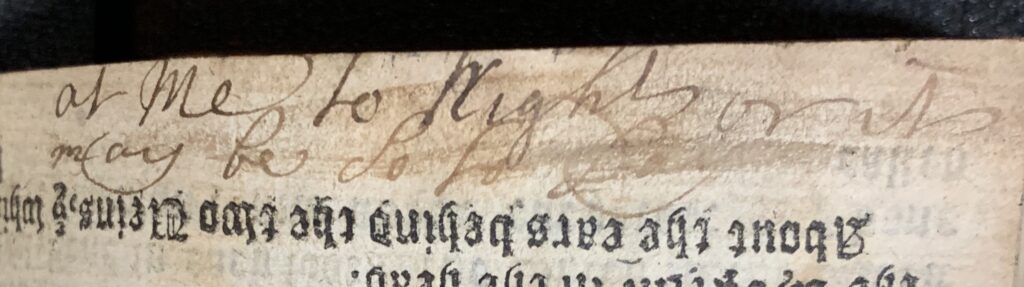
This handwriting could be “at me tonight or it may be so today.” It was written upside down at the bottom of a paragraph about “the vein in the midst fo the forehead” and that a headache indicated fevers, lethargy, or “begrim” in the head. This owner may have had a headache, and she would have some kind of illness that day or that night.

“These are to certify why principle” was marginally written on a page about using moles to understand someone. This owner might have found this information to be “correct” and aligned with her experience reading people.
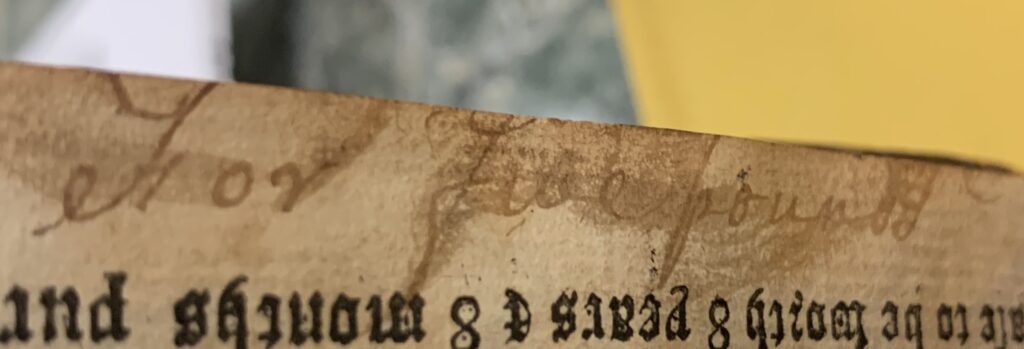
This note was found at the bottom of a section that talks about the lease of a house for twenty years by looking at a table provided next by. This owner
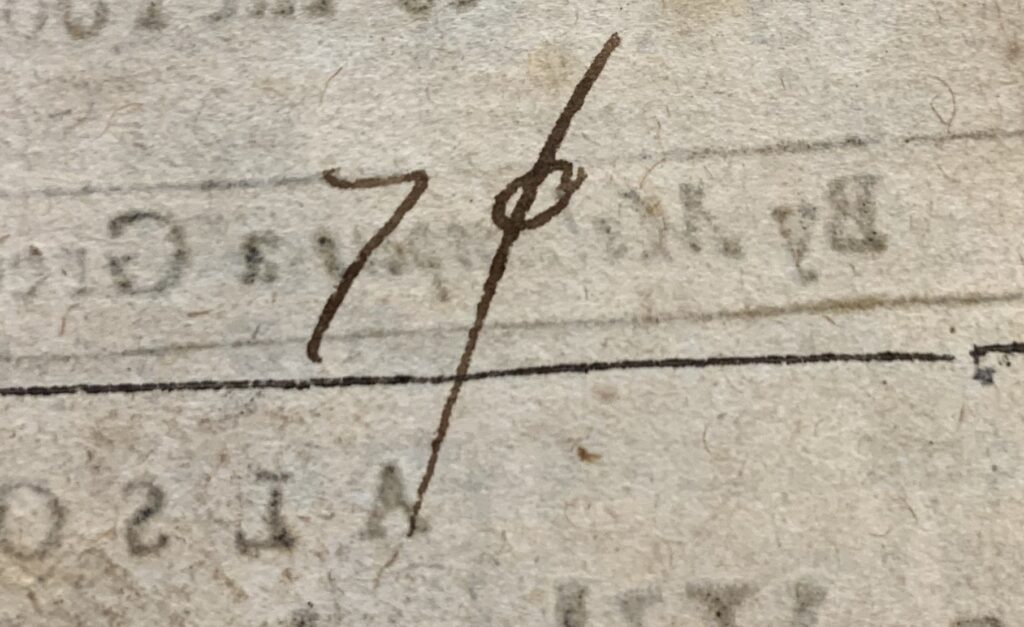
This inscription is at the end of the second part of the book, after a section called “Pleasant Questions in Arithmetick”
The handwriting from Fig. 5 to Fig. 11, and it’s possible that they all came from the same owner whose name is Elizabeth Wamsley.
Susanna Tibbit
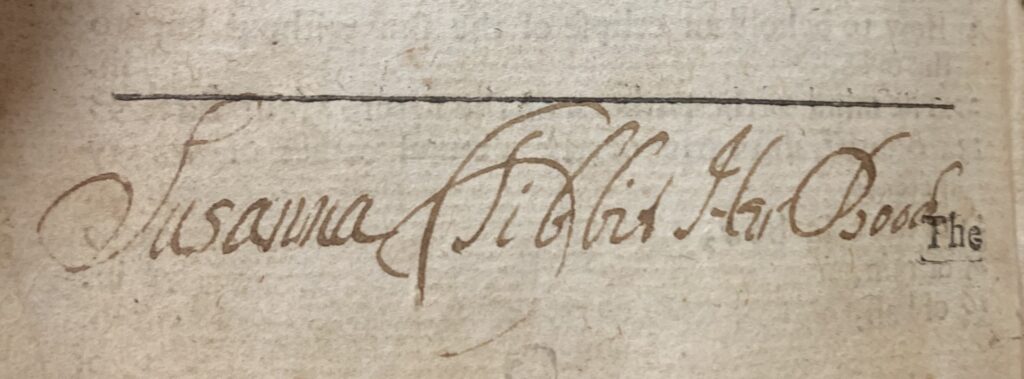
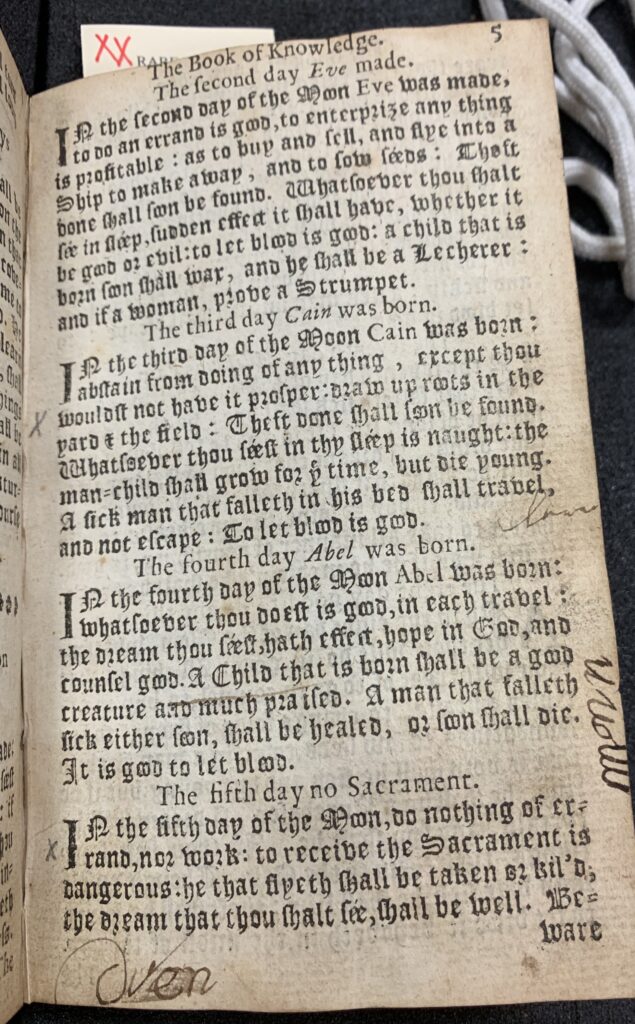
Both the handwritings in Fig. 1 and Fig. 13 have tiny distance between characters and the same style of “n”; therefore, they may have come from the same owner called “Susanna Tibbit.”
“Oven” and “monn” were cut off, indicating that the book belonged to her before rebounding. Since the Scientific Revolution started in the 16th century, it is possible that the book was losing its reputation as well as credibility throughout history. Susanna jotted down a significantly less amount of notes than Elizabeth, implying that Susanna was the second owner of the book.
John
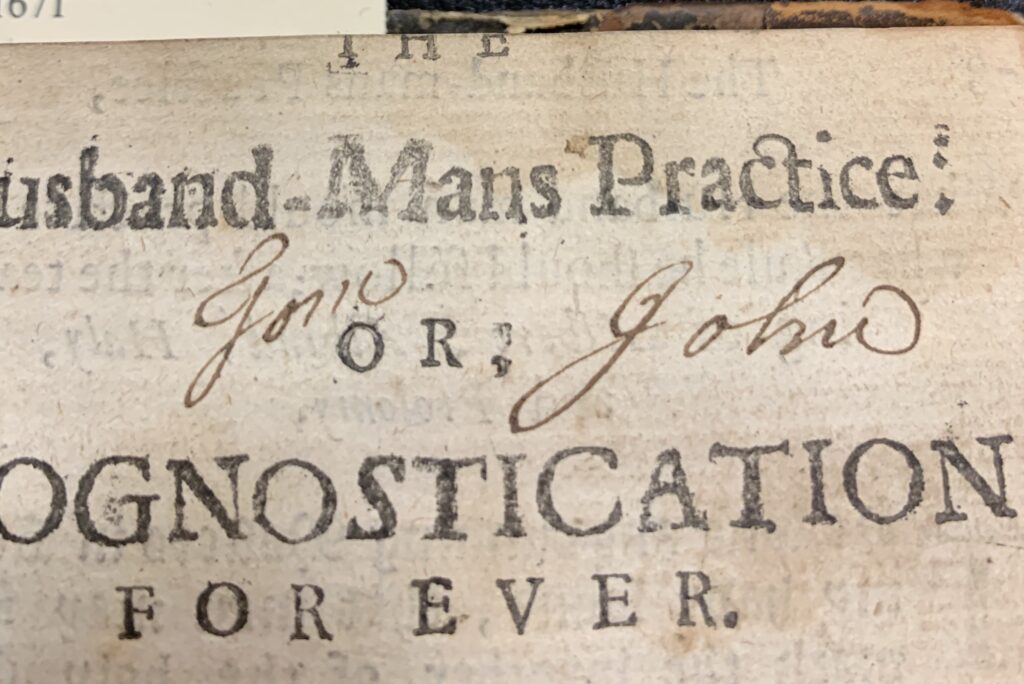
Mx Tanes
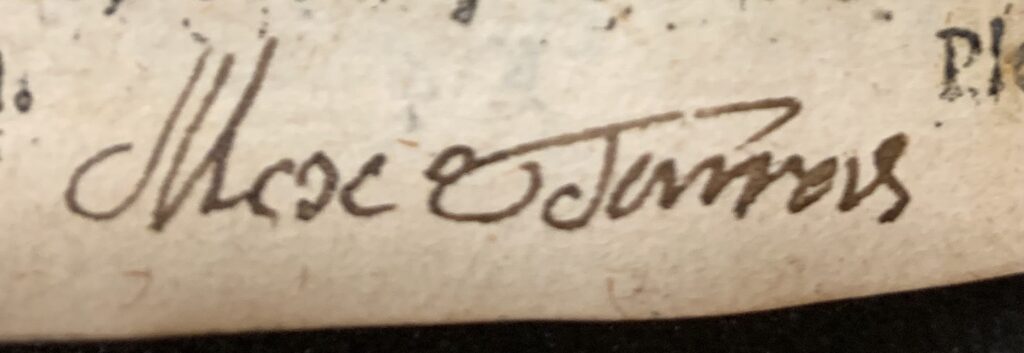
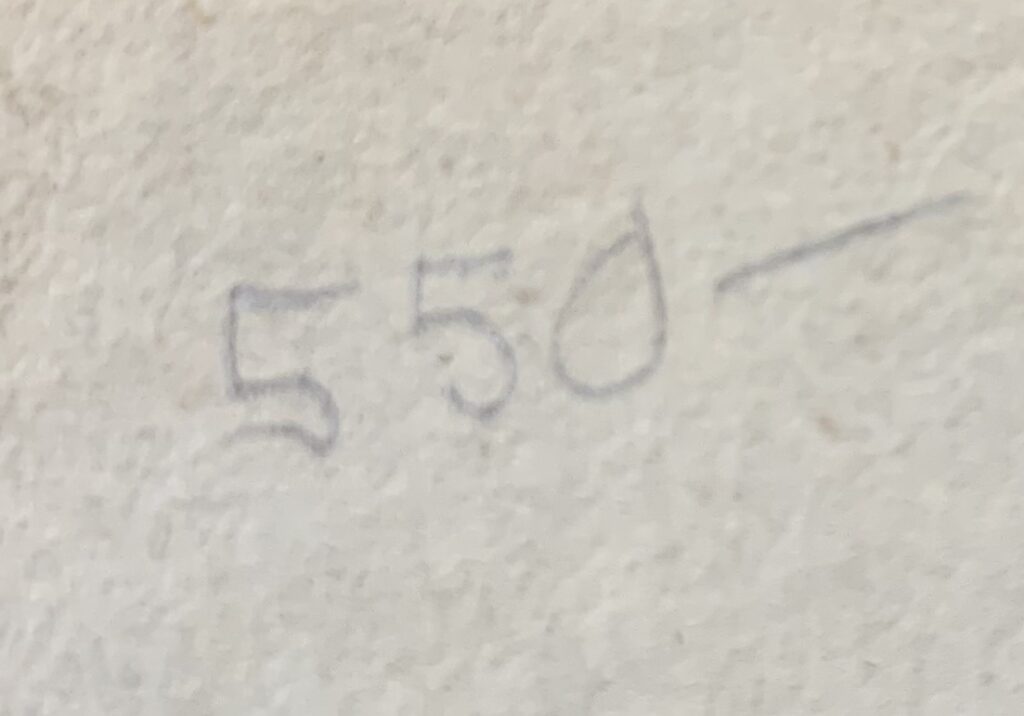

“Misplaced, not imperfect” written under a paragraph that described a method to study the Alphabet which was said to the efficient. The owner may have followed the recommendation and found it not working for him or her.
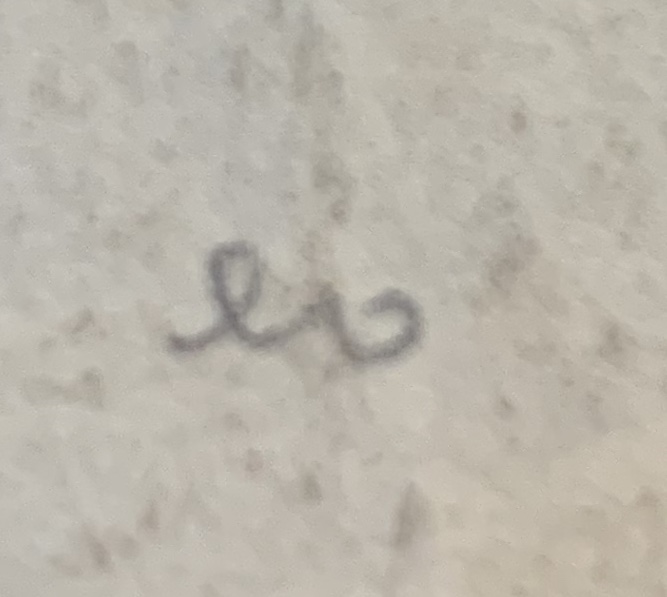
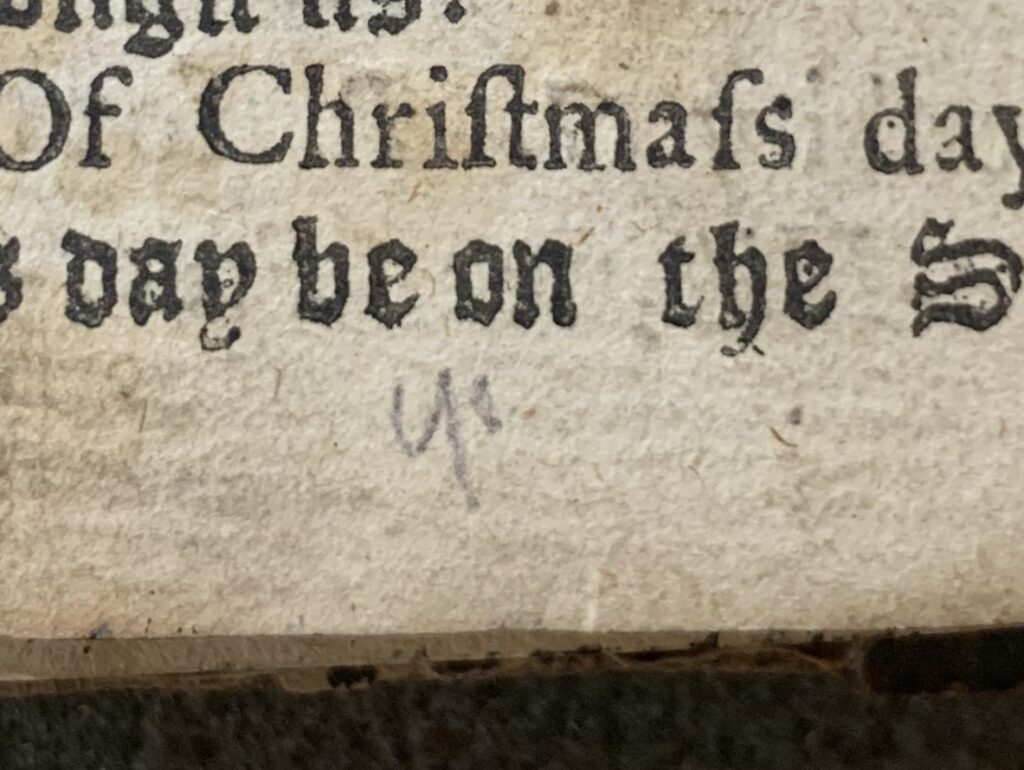
C. J. Cotterell
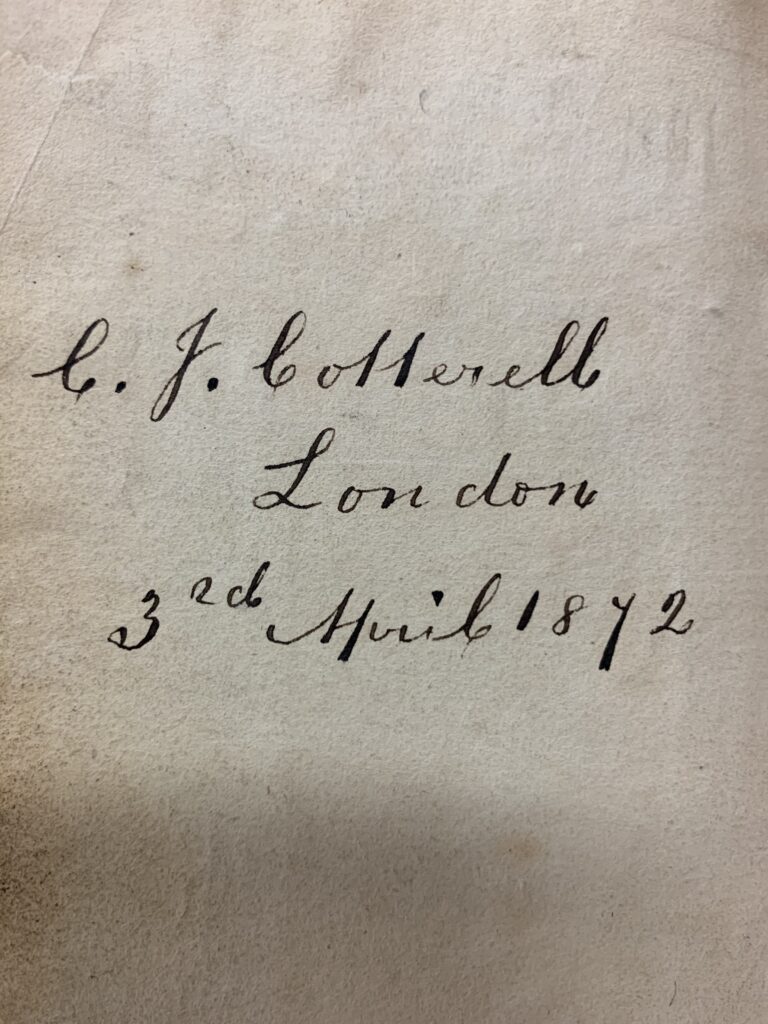
The inside of the front flyleaf is an inscription of C. J. Cotterell. There is a person named Charles Lodowick Cotterell (1654-1710), who graduated from Trinity College, Cambridge, and lived as an English courier. C. J. Cotterell could have been his grandchild. [3][4]
G. J. Symons
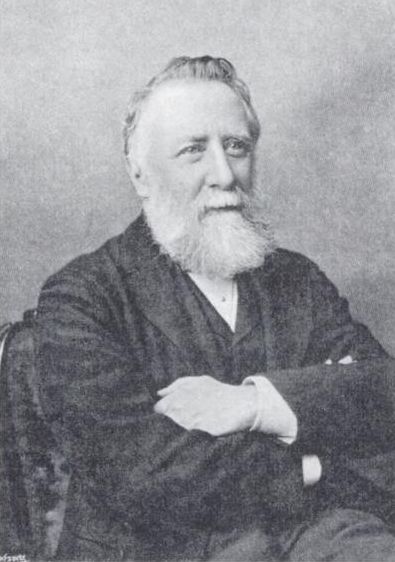
In the Meteorological Magazine, Volume 31, the 1671 edition (according to our MSU Rare Collection faculty Tad, there is only one copy of the 1671 edition which is the one we are talking about here) is provided with a catalog by “Symons’s Catalogue.” That can imply that around 1896, the year this volume of this magazine was printed, the book belonged to George James Symons (6 August 1838 – 10 March 1900), the founder and editor of the magazine. Sometime between 1872 and 1896, the book’s owner changed from C. J. Cotterell to George James Symons.
Mr. Symons owned “an extensive and valuable library”, and he was a collector of old and rare books, especially books and pamphlets on meteorology. The total number was 60,000 at the time of his death in 1900. In 1882, he “furnished” 20,000 of them to the Chief Signal Office, Washington, U.S. in hope of them being printed out, which was not executed. If The Husband-Mans Price or Prognostication for ever was one of those 20,000 books, it could have traveled from London to the U.S. in that way.
(https://rmets.onlinelibrary.wiley.com/doi/pdf/10.1002/qj.49702611406)
W. D. Chase
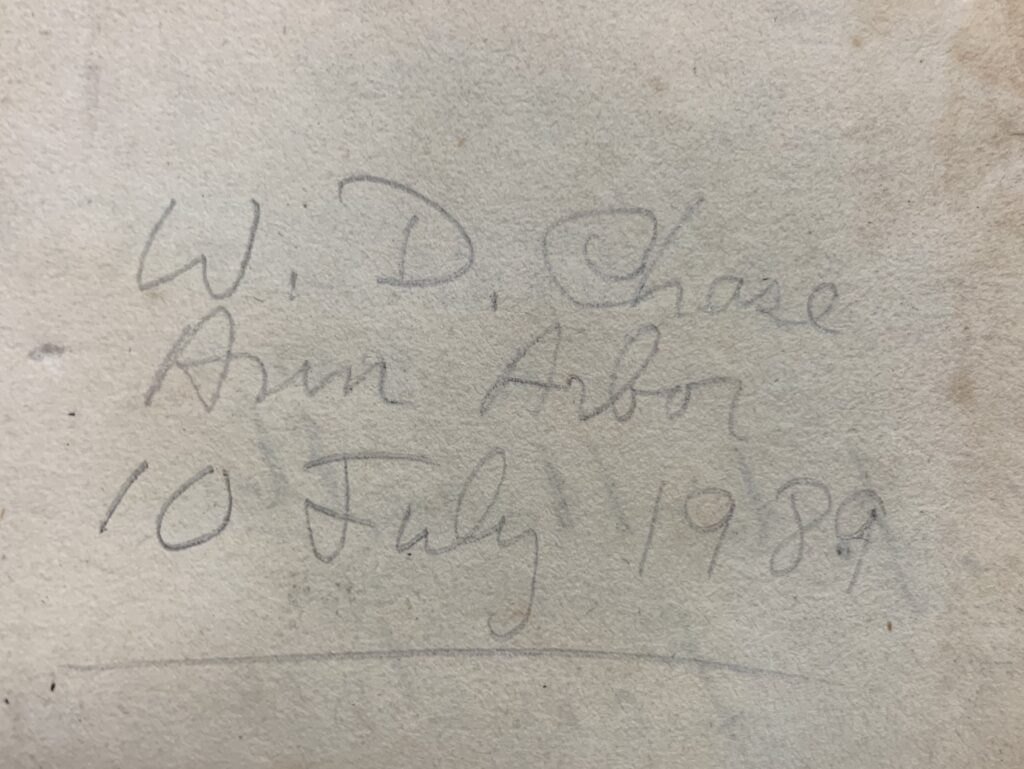
On the front of the front flyleaf is the inscription of William DeRoy Chase. He was born in Ann Arbor and studied in the College of Literature, Science, and Art of the University of Michigan sometime around 1942-1943 [16] [17]. In 1949, he moved to Flint and worked as a librarian in the Flint Journal newsroom library [8]. One document mentioned him as A.B. Assistant Curator of Printed Book in Williams L. Clements of the University of Michigan from Dec 11, 1946. [17]
Chase has been interested in recording dates and special events since he was little, so he asked his brother Harrison Chase to help him compile a book called “Chase’s Calendar of Events” that included all religious holidays, national holidays, historical events, as well as trading events. The U.S. Chamber of Commerce noticed the effort and asked them to include even more events, and since then the books have been the official records of holidays and celebrations. [8][11]
Significance
The marginal notes that were cut off indicate that they belonged to the first owners of the book. The fact that most of them commented on the use of geometric theory in predicting health and planning daily schedule also implies that before the 18th century, the book was popular due to its applications of geometric theory.
This decreasing number of editions from the 1600s hundred also supports this (fourteen 17th-century editions, four 18th-century editions, and two 19th-century editions.).
However, the book still contains valuable information for those interested in weather forecasting and geometric theory. This is why George James Symons obtained the book for his enormous meteorology collection which he used for his weather study.
Resources
[1] Adamson, Peter. “Al-Kindi.” Edited by Edward N. Zalta, Stanford Encyclopedia of Philosophy, Stanford University, 11 Apr. 2018, plato.stanford.edu/entries/al-kindi/. Accessed 1 Nov. 2019.
[2] Ambrosoli, Mauro. The Wild and the Sown: Botany and Agriculture in Western Europe, 1350-1850. Cambridge University Press, 1997.
[3] “Charles Lodowick Cotterell.” Wikipedia, Wikimedia Foundation, 17 Nov. 2019, en.wikipedia.org/wiki/Charles_Lodowick_Cotterell#Family. Accessed 5 Dec. 2019.
[4] Cohen, Daniel. Admissions to Peterhouse Or S. Peter’s College in the University of Cambridge, A Biographical Register; Being an Extract Transcription of the Entries in the College Admission Books from 1615 to 1887, Together with an Abstract of the Entries in the Academic Register from 1887 to October 1, 1911. Cambridge University Press, 1912. Google Play. https://play.google.com/books/reader?id=GsagAAAAMAAJ&pg=GBS.PP1. Accessed 10 Dec. 2019.
[5] “Detailed record for Sloane 7” Catalogue of Illuminated Manuscripts, The British Library, www.bl.uk/catalogues/illuminated manuscripts/record.asp? MSID=1039. Accessed 10 Dec. 2019.
[6] Führer, Markus. “Albert the Great.” Stanford Encyclopedia of Philosophy, Stanford University, 27 May 2019, plato.stanford.edu/entries/albert- great/. Accessed 10 Dec. 2019.
[7] “George James Symons(1838-1900)” Wikimedia Commons, Pierre cb, Wikimedia Commons, 3 Dec. 2012, https://commons.wikimedia.org/wiki/File:GeorgeJamesSymons(1838- 1900).JPG. Accessed 11 Dec. 2019.
[8] Janet, Miller. “Ann Arbor Man, 90, Founded Catalogue of Events for Every Day of the Year.” AnnArbor.com, The Ann Arbor News, 2 Apr. 2012, www.annarbor.com/news/chasing-down-days-ann-arbor-founder-of-chases-calendar-of-events-turns-90/. Accessed 5 Nov,.2019.
[8] Manilius, Marcus. The sphere of Marcus Manilius made an English poem with annotations and an astronomical appendix / by Edward Sherburne, Esquire. Early English Books Online Text Creation Partnership, 2011, http://name.umdl.umich.edu/A04486.0001.001. Accessed 1 Nov. 2019.
[9] Plomer, Henry Robert, et al. “A Dictionary of the Printers and Booksellers Who Were at Work in England, Scotland and Ireland from 1668 to 1725.” Internet Archive, [Oxford]: Printed at the Oxford University Press, 1 Jan. 1970, archive.org/details/dictionaryofprin00plomiala/page/n11. Accessed 31 Oct. 2019.
[10] Ptolemy, abyss.uoregon.edu/~js/glossary/ptolemy.html. Accessed 1 Nov. 2019.
[11] Severson, Kim. “Having a Snack? Make It a Holiday.” The New York Times, The New York Times, 30 May 2007, www.nytimes.com/2007/05/30/dining/30holi.html. Accessed 5 Nov. 2019.
[12] Spencer, J. Brookes, et al. “Scientific Revolution.” Encyclopædia Britannica, Encyclopædia Britannica, Inc., 26 Nov. 2019, www.britannica.com/science/Scientific-Revolution.
[14] “THE BOOK OF KNOWLEDGE -THE HUSBANDMAN’S PRACTICE – THE SHEPHERD’S PROGNOSTICATION.” The Meteorological Magazine, vol. 31, H.M. Stationery Office, 1897, 102-106. Google Play, https://play.google.com/store/books/details id=cALIDuJkLXcC&rdid-book-cALIDuJkLXcC&rdot=1. Accessed 5 Nov. 2019.
[15]The Editors of Encyclopaedia Britannica. “Melampus.” Encyclopædia Britannica, Encyclopædia Britannica, Inc., 19 Feb. 2018, www.britannica.com/topic/Melampus. Accessed 11 Dec. 2019.
[16] University of Michigan. University of Michigan Official Publication. Vol.46, University of Michigan, 1945. Accessed 5 Nov. 2019.
[17] University of Michigan. University of Michigan Official Publication. Vol. 49, University of Michigan, 1949. Accessed 5 Nov. 2019.
Written by Han Nguyen for Professor Brockey’s Fall 2019 UGS 200H, MSU.
