
The Decameron: Containing An Hundred Pleasant Nouels: Wittily Discovered Between Seuen Honorable Ladies, and Three Noble Gentlemen.
XX PQ4272.E5 A3 1620
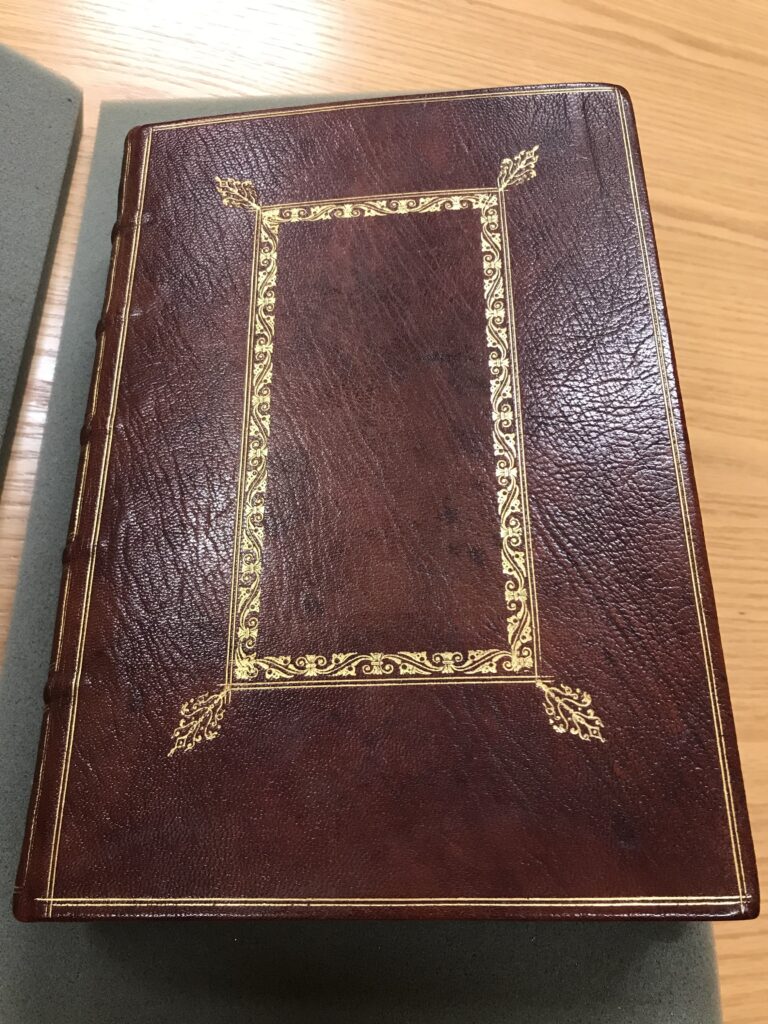
A very rare first English edition of both volumes of The Decameron by Giovanni Boccaccio. The Decameron is a series of novels or short stories inspired or taken from folk tales local to Europe, specifically Italy, the Middle East, and even India. Upon its release it was very popular with Italy’s northern merchant class and had a wide reaching effect on many famous authors from Chaucer to Edgar Allan Poe; even Shakespeare used The Decameron to influence his own works.1 The stories include a wide range of genres including wit, practical jokes, tragedy, erotica, and life lessons. The Decameron is considered a masterpiece of classic early Italian prose, by many people.2
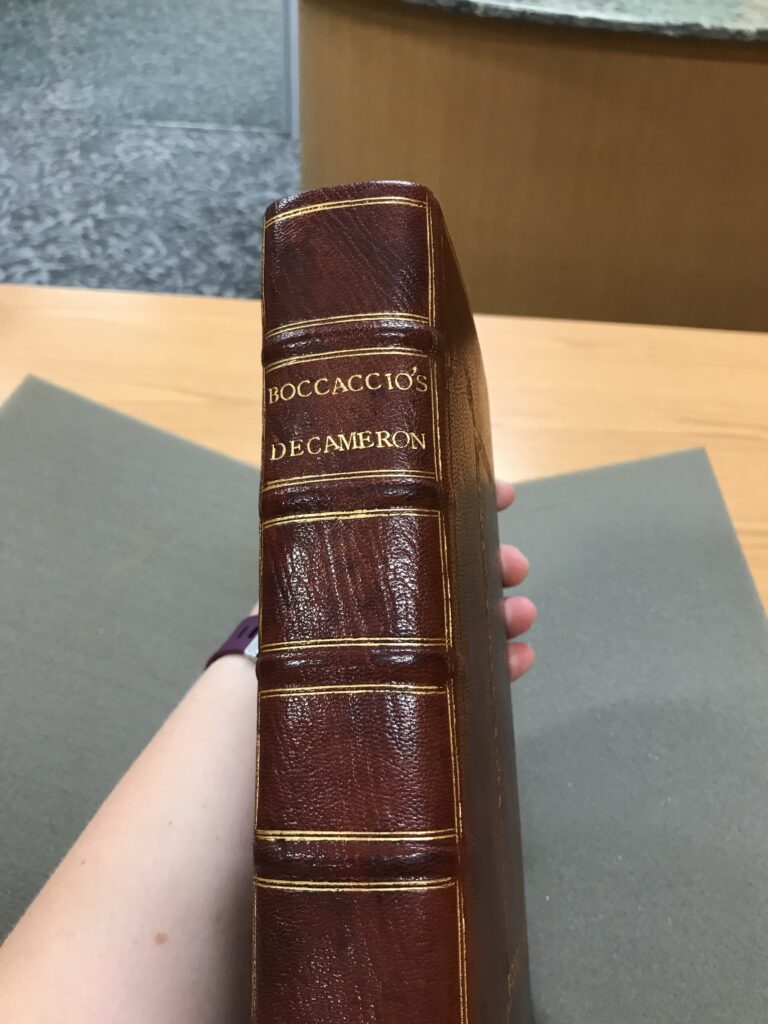
Author and Publisher
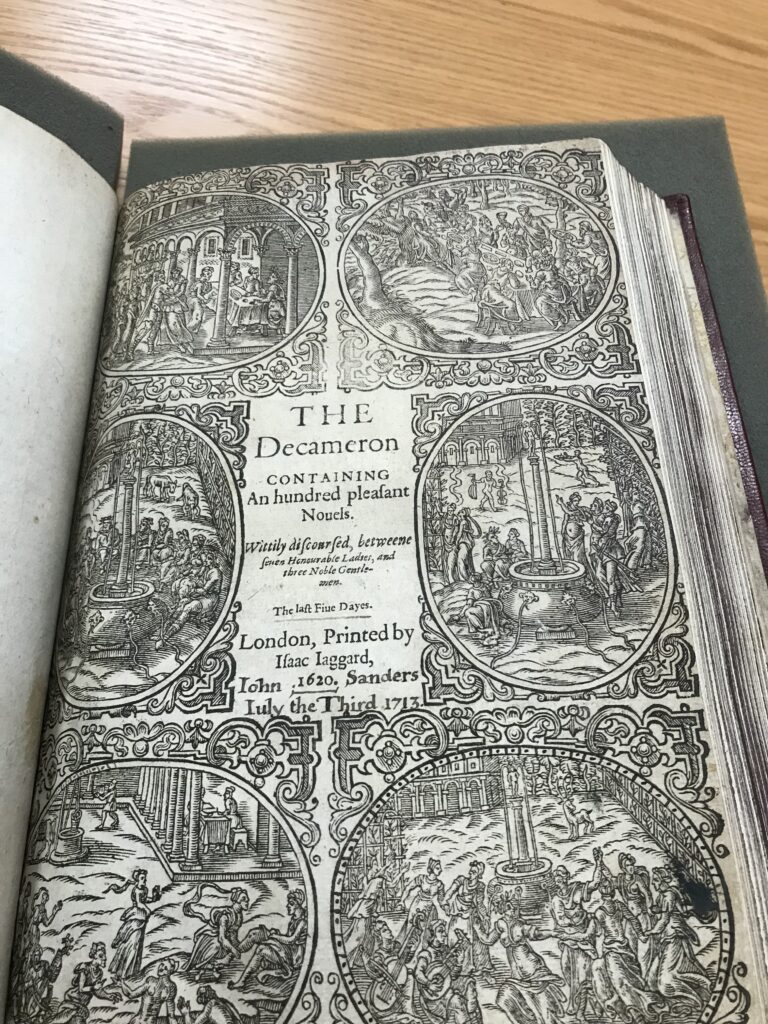
The author of this novel is Giovanni Boccaccio, an Italian writer. Boccaccio was born June 16th, 1313 and died December 21, 1375 in Certaldo of congestive heart failure.3 Boccaccio wrote more than 20 works before his death, ranging from short stories like this novel to a book about 106 famous women of the time.4 This particular printed version was published by Issac Jaggard the son of William Jaggard, who had the rights to publish Shakespeare’s first folios.5 William Jaggard had deteriorated in his health so bad by the time he published Shakespeare’s works, that it was most likely our publisher Issac Jaggard who did the printing and publishing.6 This specific printed edition was published in 1620 in London, England.
Front Inside Cover
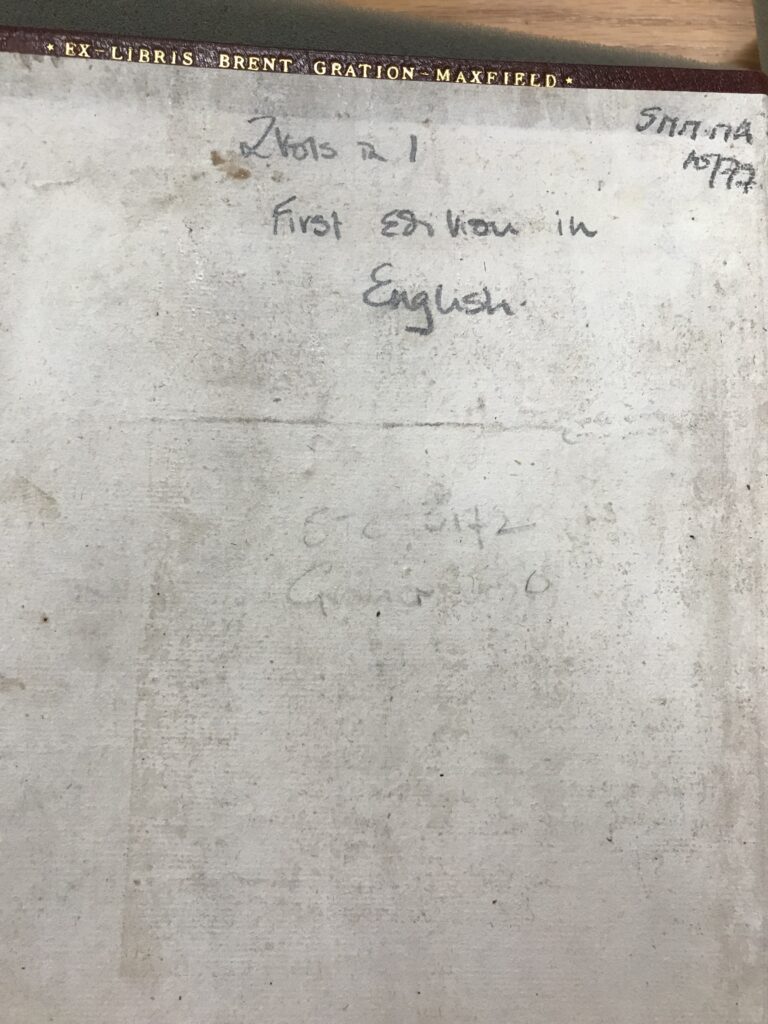
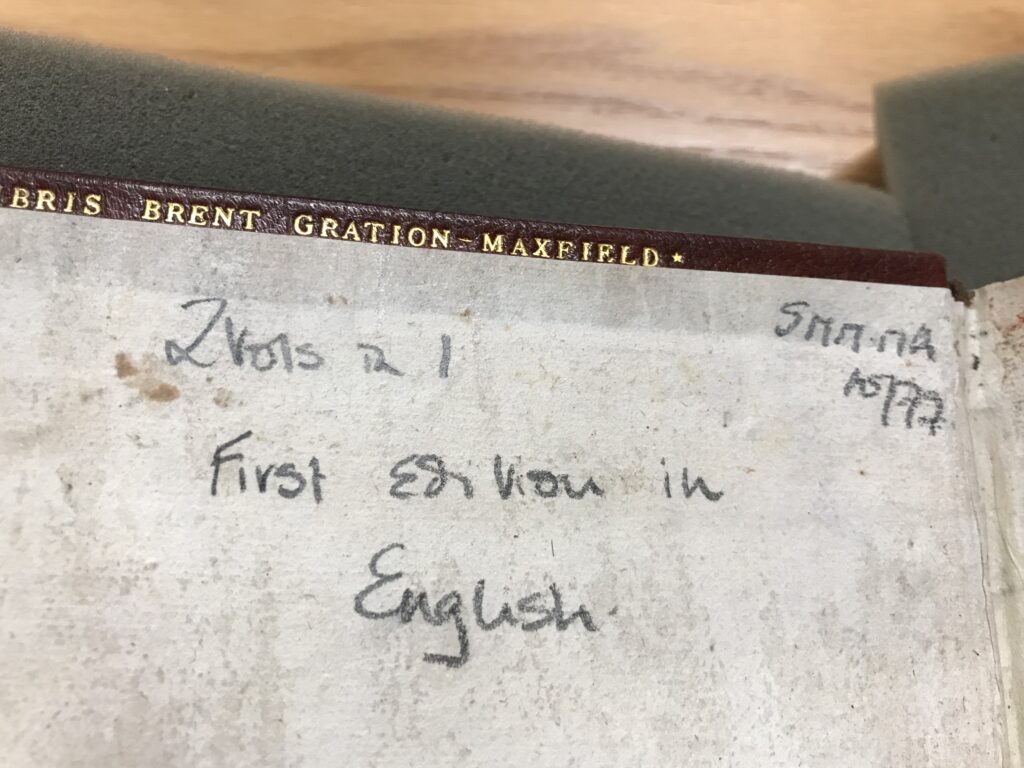
The front inside cover contains several points of provenance. The first and most noticeable is the pencil writing in the top right hand corner and the top center of the inside cover. The writing is in both spots appears to be by the same person. The center writing explains that this specific book is a two volume in one edition. It also explains that this is a First Edition English version. The top corner of the page also has provenance on it. The second piece of provenance that you see on this page is the gold tooling at the very top of the cover that folds onto the inside cover. This tooling says “ex-libris (owner) Brent Gration Maxfield,” Maxfield was a known book collection and author himself.7 He was at one point the owner of this book. Books from his collection have been sold at auction in the past, so the collection he had, has been separated.8
Front Fly Leaf
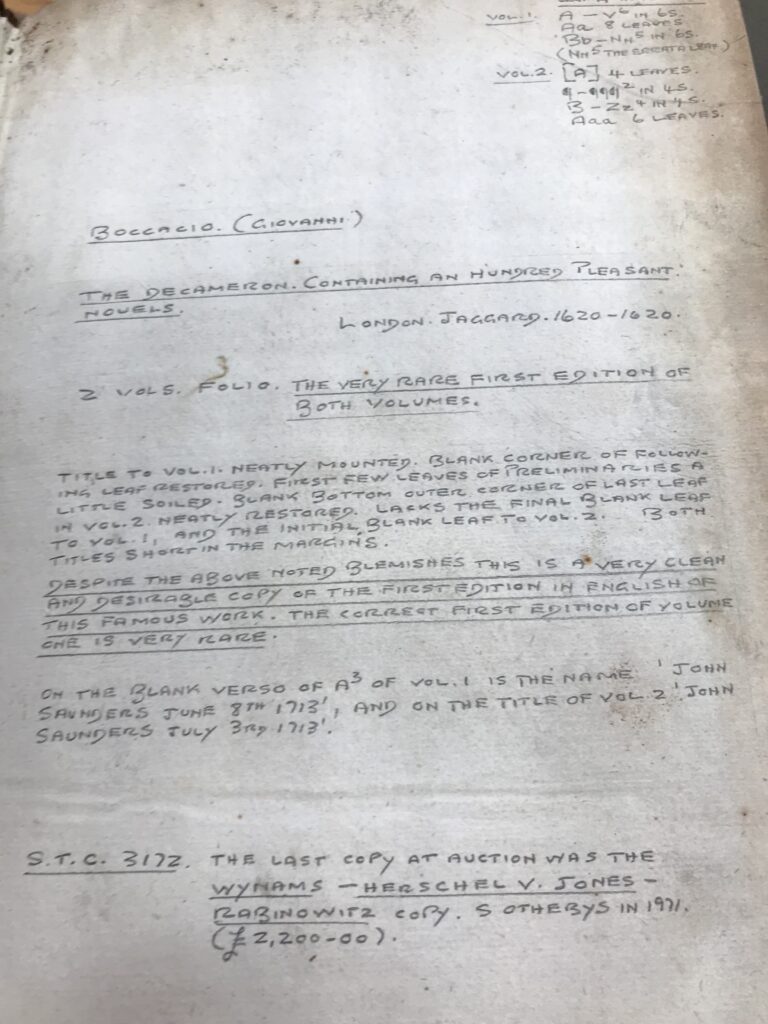
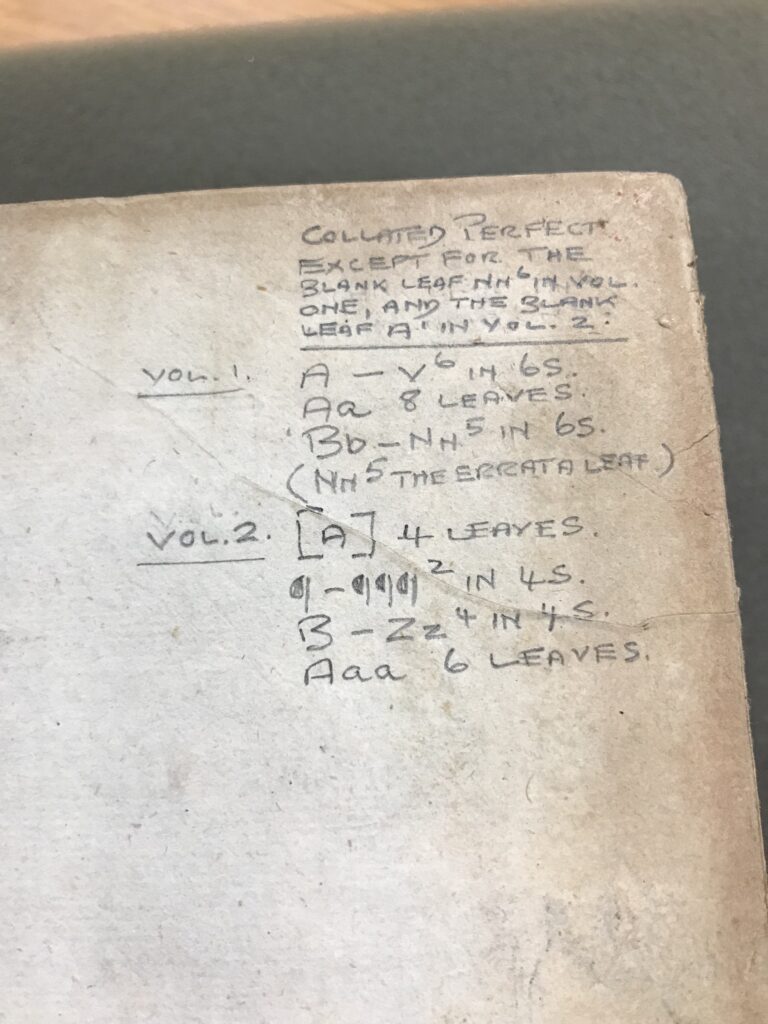
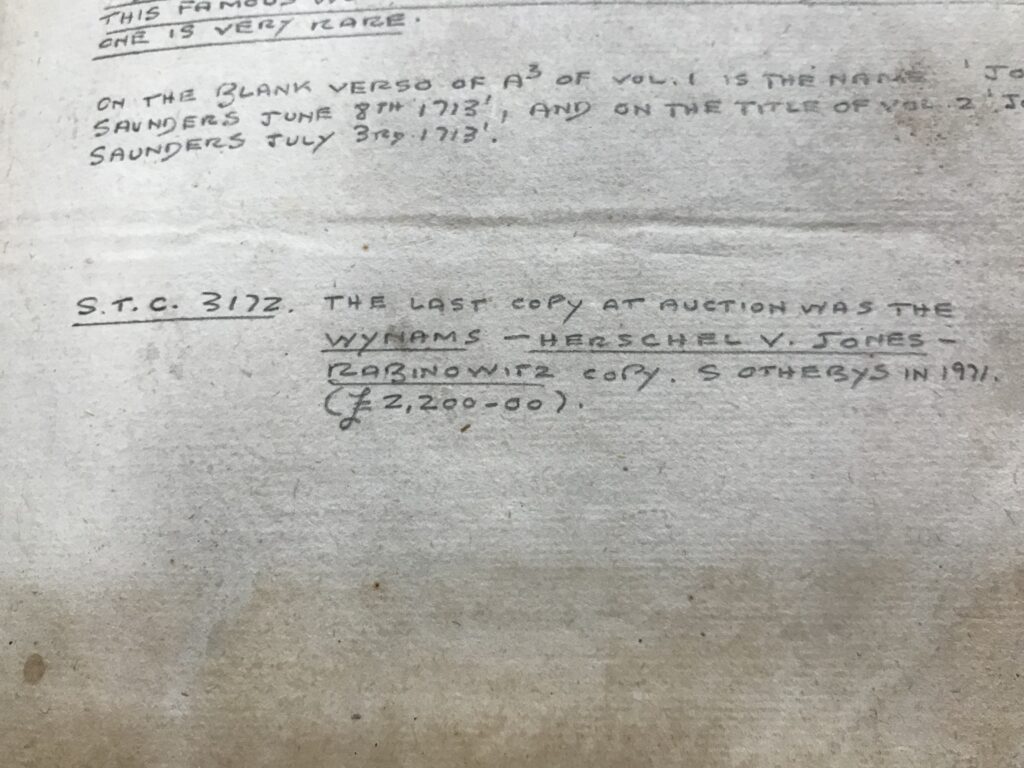
The front Fly Leaf of this specific book is very interesting. This page is filled with provenance about this edition of the book and the information a book seller or someone interested in the value of this book would need to know. In the right top corner of the page the penciled in writing talks about each volume of the book and the condition of the leaves in each one. This would be important information for the book seller as well as the buyer of the book. The next piece of provenance on this page talks about the author, the title, place of printing, and different pieces of provenance found through out this edition of the book. It notes all the different provenance that is found through both volumes of this book. Everything from the quality and condition of the leaves to the writing found on the title page of volume two. The third piece of provenance on the front fly leaf is about a previous book at auction called “Wynams- Herschel V. Jones- Rabinowitz” copy which sold for 2,200-00 pounds, thi man was a book collector in the late 18 and early 19 hundreds.9 He is best known fro his collection on Americana.10
John Saunders
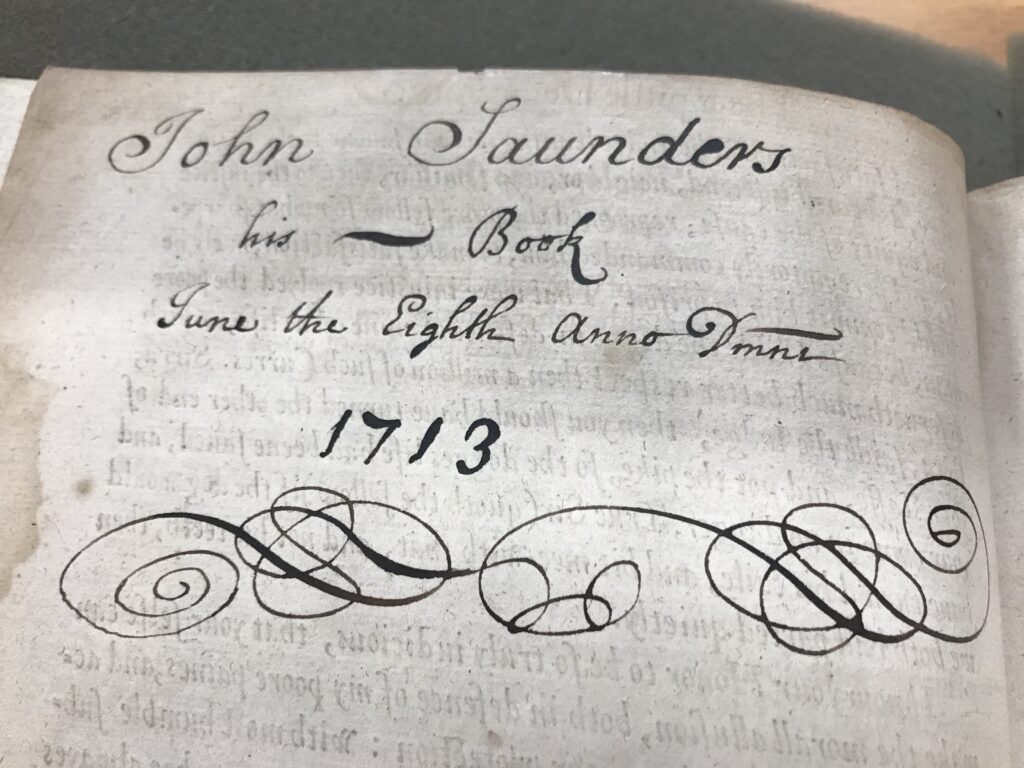
The next bit of provenance found in this edition of this book is ownership information. One of the blank pages has the name John Saunders written on it. This provenance is also claiming this book at as his. It also gives us important information about the time period this man owned the book. He gives us the date of June 8th, 1713 as the time when he owned the book. Underneath the written information is a line doodle that accents the above writing. Who John Saunders is, is a mystery. In my research I could not find any mention of the name John Saunders associated with the year 1713 or any years surrounding this one. However, we can assume based on the last name that Saunders was from an English or Greek Family. AS the surname Saunders is Greek in origins, and derives from the old name ‘Alexander’ which was first recorded in 2000 B.C., but is considered Olde English locational to Sanderstead in Surrey.11
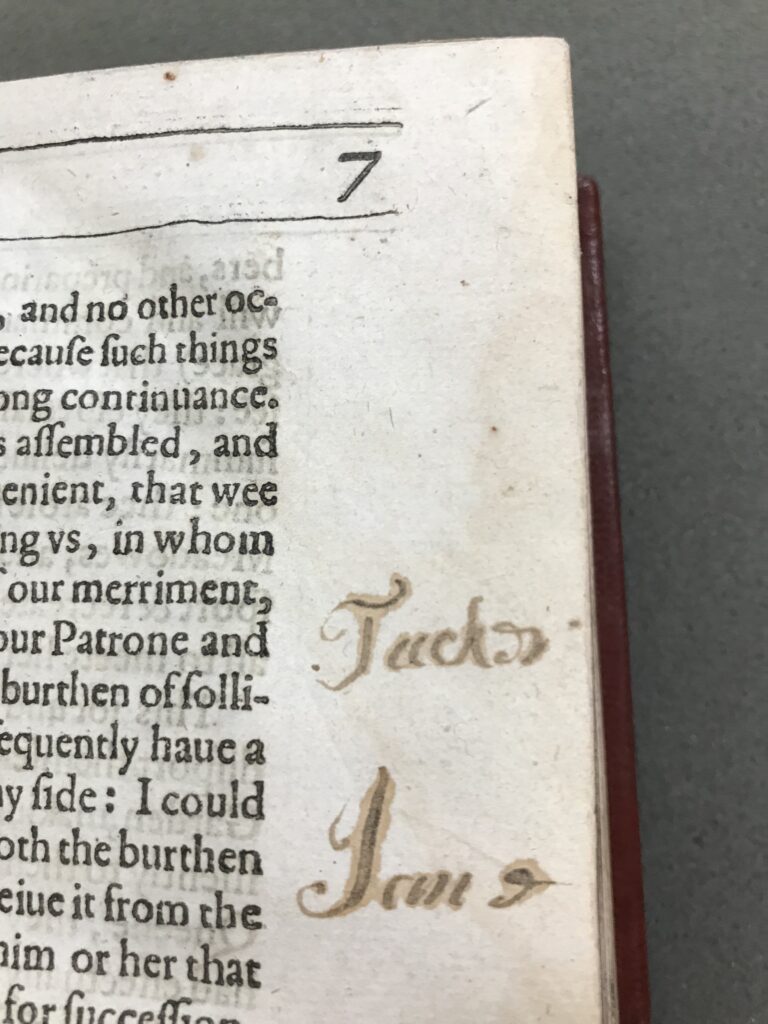
Page 7
On page 7 of this edition of this book there is provenance. There is not a lot of provenance, but someone wrote two words that are somewhat faded now, with age.
John Sanders
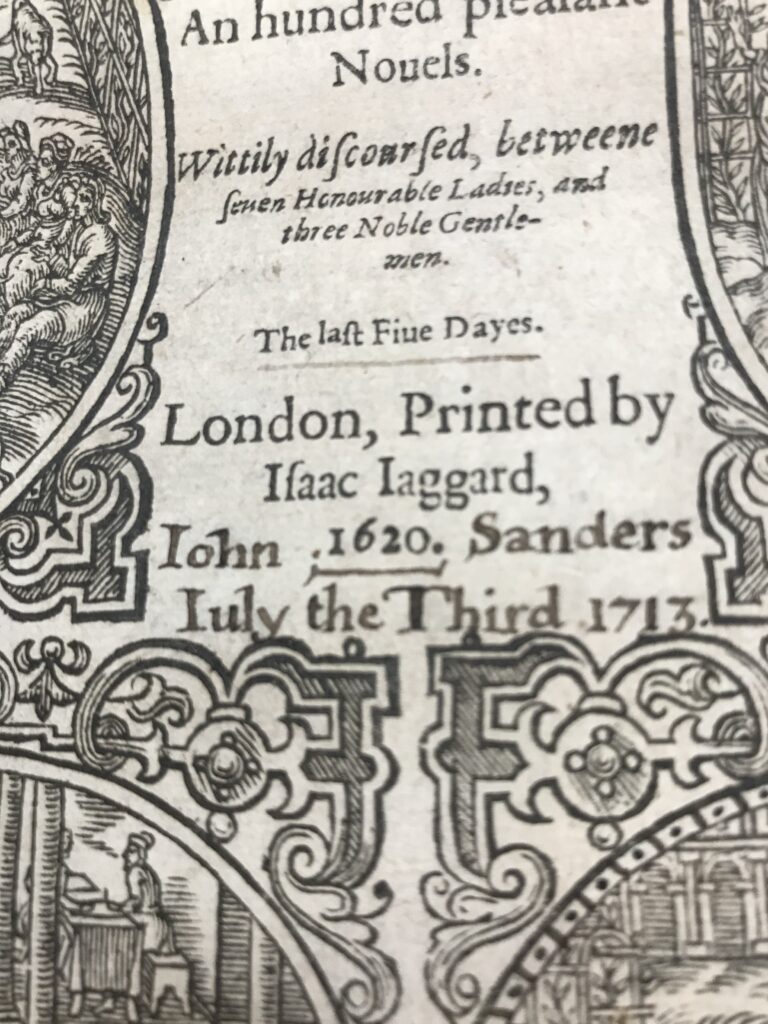
The next piece of provenance in this edition of this book is on the title page of volume two of this edition. The name John Sanders is written around the date 1620 and under the printed date is another date that was written in. The date is July 3rd, 1713. We can assume that this was the same owner as John Saunders, just with a different spelling of the last name. It is possible it is a relative of John Saunders not actually John Saunders himself, but it is not likely. When researching this spelling of the name, still no information was found about John Saunders or Sanders.
End Fly Leaf
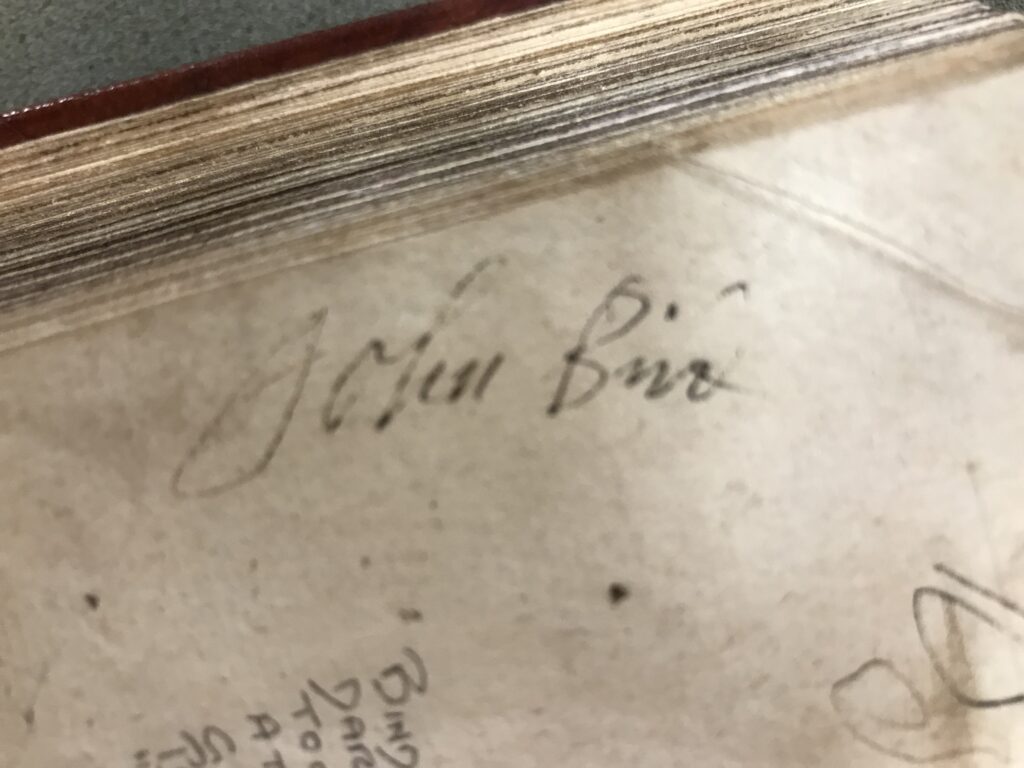
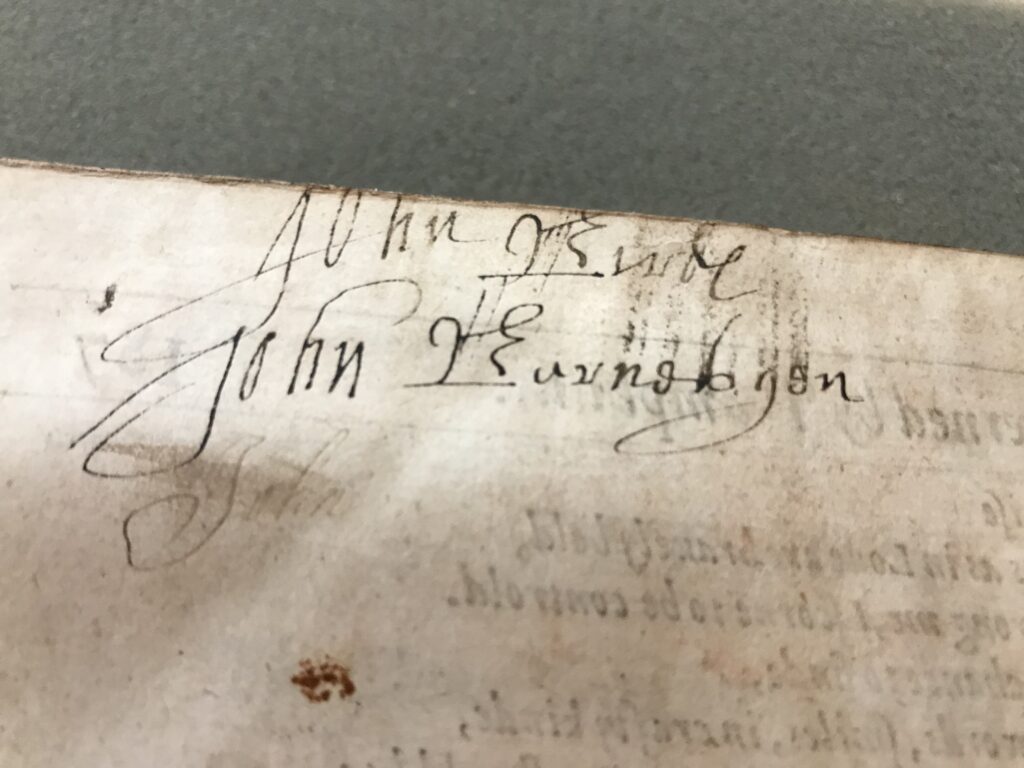
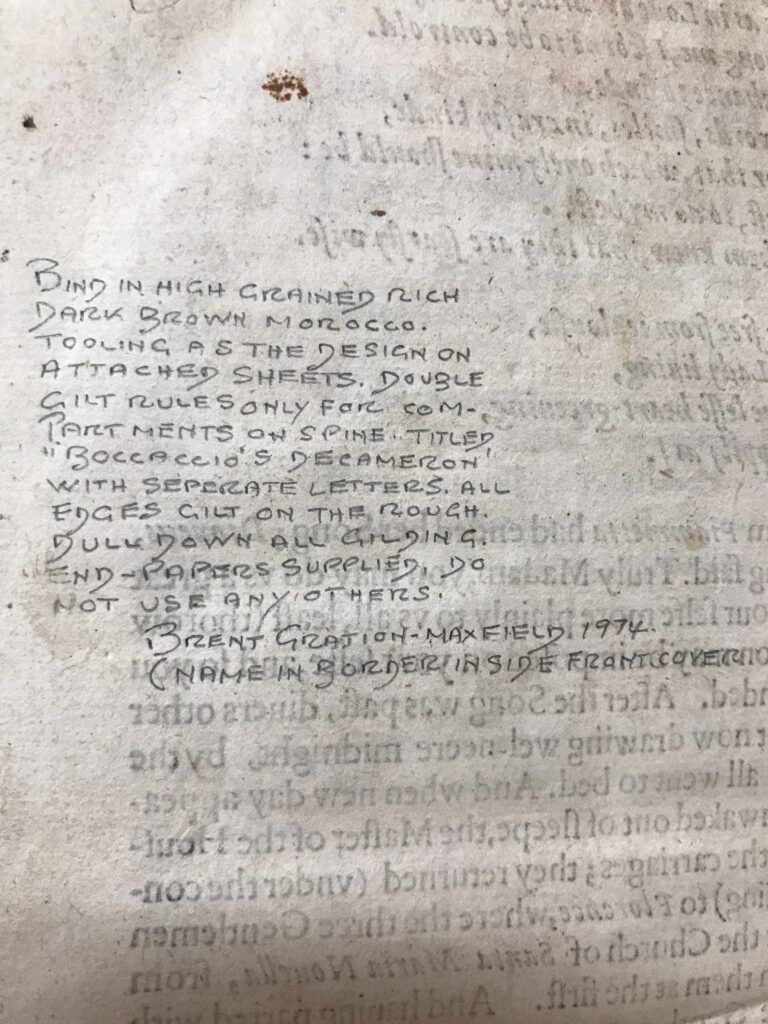
The last section of provenance found in this edition of the Decameron is on the end fly leaf. There are several pieces of provenance from several different time periods. The most noticeable provenance from first glance is the three names scribbled on the left and top of the fly leaf. All three names are the same first name of John. However, the last or middle name of the three do not appear to be the same. The left sided one is might says the name John Bino, while the top two might say John Rurde and John Hurnbgen. The writing is unclear the names might not be accurate. The other piece of provenance that is on this page is the pencil writing written by the same hand as the front fly leaf. This is detailing how to bind the book and what to put on the cover, spine, and the inside front cover gold tooling at the top of the page. This is an interesting piece of provenance because we learn that this is not the original binding of this book, which is somewhat obvious, but we get conformation in this provenance.
References
1 MSU Library, Special Collections The Decameron, Boccaccio Giovanni.
https://magic.msu.edu//search-S23?/YThe+Decameron+1620&searchsco pe=23&SORT=D/YThe+Decameron+1620&searchscope=23&SORT=D&S UBKEY=The+Decameron+1620/1%2C2%2C2%2CB/frameset&FF=YThe
+Decameron+1620&searchscope=23&SORT=D&2%2C2%2C
2 Wikipedia. “The Decameron.” https://en.wikipedia.org/wiki/The_Decameron.
3 Wikipedia. “Giovanni Boccaccio.” https://en.wikipedia.org/wiki/Giovanni_Boccaccio.
4 Wikipedia. “Giovanni Boccaccio.” https://en.wikipedia.org/wiki/Giovanni_Boccaccio.
5 Wikipedia. “William Jaggard.” https://en.wikipedia.org/wiki/William_Jaggard.
6 Wikipedia. “William Jaggard.” https://en.wikipedia.org/wiki/William_Jaggard.
7 WorldCat Identities. “Gration-Maxfield, Brent.” http://www.worldcat.org/identities/lccn-no2005-45716/.
8 WorldCat Identities. “Gration-Maxfield, Brent.” http://www.worldcat.org/identities/lccn-no2005-45716/.
“Wikipedia. “Herschel V. Jones.” https://en.wikipedia.org/wiki/Herschel_V._Jones.
10Wikipedia. “Herschel V. Jones.”
https://en.wikipedia.org/wiki/Herschel_V._Jones.
11Name Origin Research. “Last Name: Saunders.” http://www.surnamedb.com/Surname/Saunders.
Created by Delaney Peters for Professor Brockey’s HST 475 Class. Fall of 2018
