
XX KD838.M3 C6 1673
About the Author
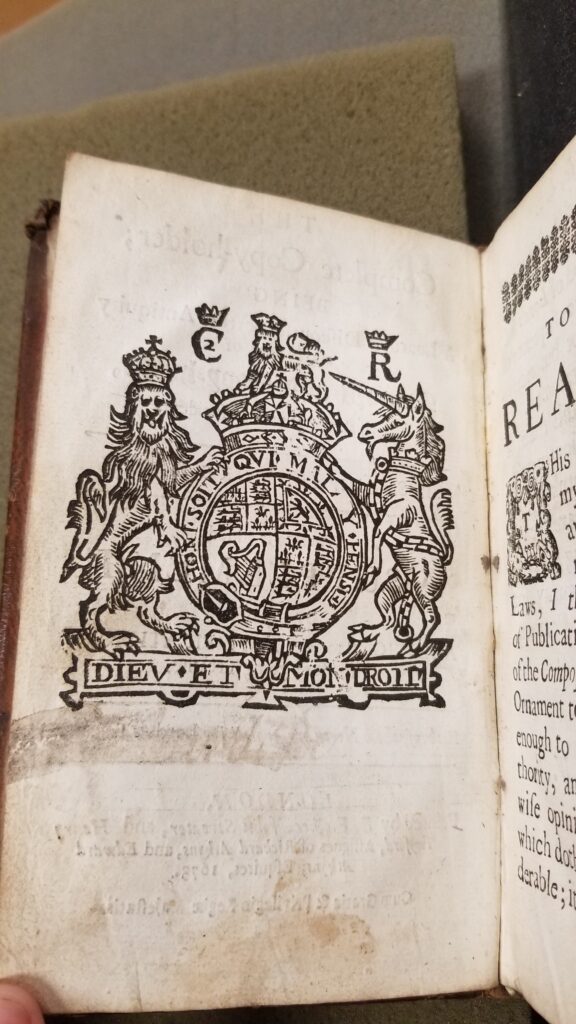
Sir Edward Coke, the author of The Complete Copy- holder, lived from 1552 to 1634 and was considered to be one of the greatest judges of his time and was knighted by King James I[1]. He served as attorney general, where he prosecuted Sir Walter Raleigh, and also as Chief of Justice in the Court of Common Pleas, where he defied King James I by “asserting that the common law was the supreme law”[1]. He published many works under the topic of Law and Legislation, where this one is no exception. The Complete Copy-holder describes the relationship between “Lord and Tenant” and the manner in which to deal with land disputes. The term “copy-holder” originated from the fact that the Lord of the land owned the main copy of the deed to the land and the Tenant would be given a hand-written copy, stating that they could use the land as they wish, at the discretion of the Lord. It wasn’t until 1926 that all copy-held land became free-held land [2]. This edition, though printed after Sir Coke’s death, was printed one year after the highly contested Royal Declaration of Indulgence by King Charles II of England (see his coat of arms in the book, right)
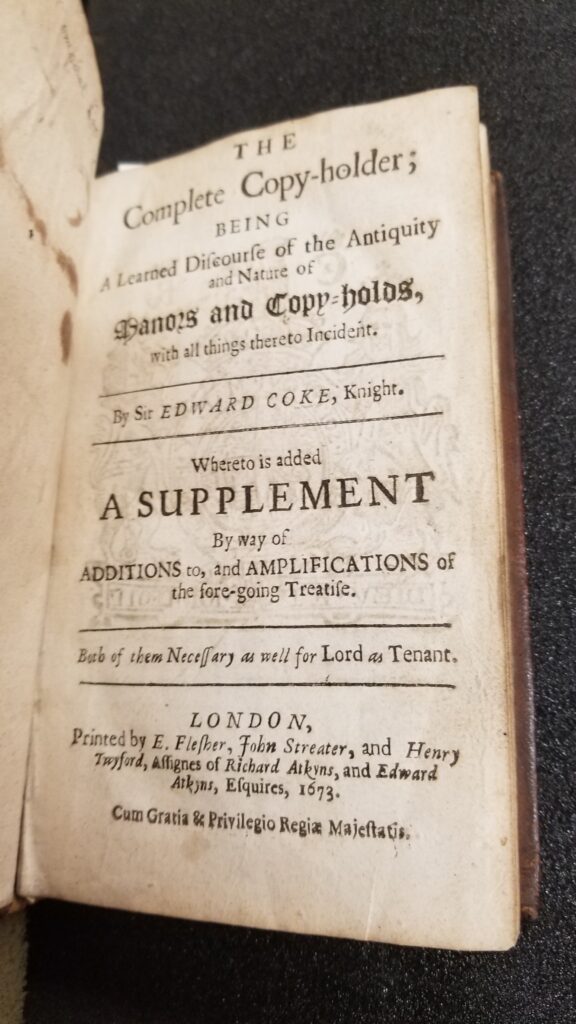
Sir Coke’s texts were extremely popular. Michigan State University’s Special Collections has the sixth (recorded) edition of the book and the second edition to contain a supplement. The first edition was said to have been published in 1630 [3]. The need for many editions indicates that the book was popular and was also corrected and kept as current as possible. It also allowed for supplements, like the one contained in this edition, to be added. This edition was printed in 1673, 39 years after Sir Coke’s death.
About the Printers
This book, The Complete Copy-holder by Sir Edward Coke, was printed in London in 1673 by E. Flesher, John Streater, and Henry Twyford, assignes of Richard Atkyns, and Edward Atkyns, Esquires. E. Flesher, more commonly known as Elizabeth Flesher, was an active printer from 1670- 1678 and is attributed to printing hundreds of books during that time period [4]. In addition to printer, John Streater was also a soldier and politician who became recognized for his printing after the Restoration [5]. Henry Twyford remained quite anonymous, but was said to have been a book seller. He was also once arrested for illegally selling law books that another company had the copyright for [6]. As assigns of Judge Edward Atkins and his first cousin Judge Richard Atkins, they also printed the law books that had been patented by the Atkyns family [7].
The Book
Physical Description
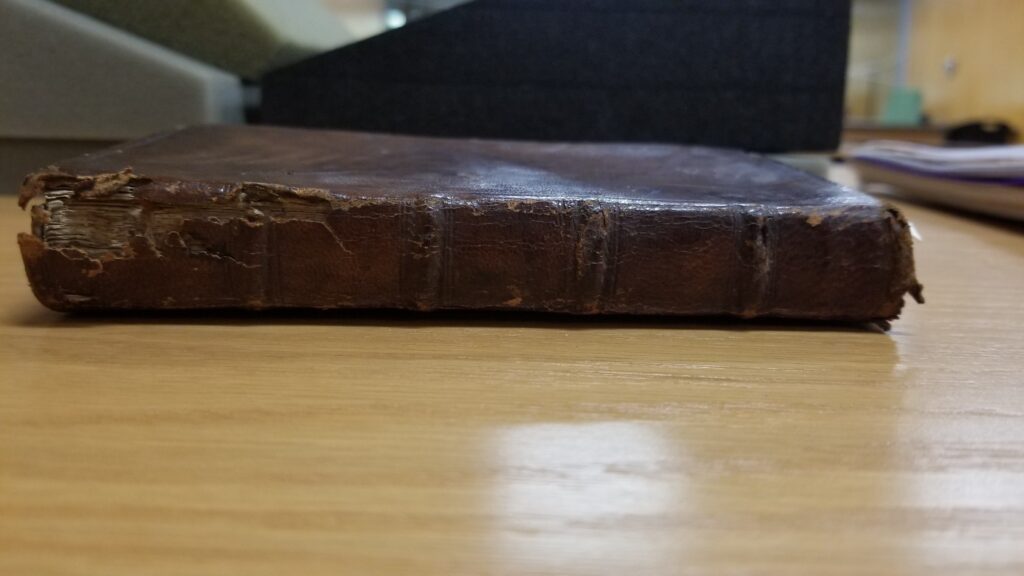
This book is 15 cm long and is divided into two sections: the main text and the supplement. The main text is 173 pages with fairly regular pagination (page numbering), where it is worth noting that pages 62-63 are numbered as 63-62. The supplement, A Supplement By way of Additions, is 111 pages long with pages 110-111 numbered as 80-81 and appears after the main text. The binding and spine of the book show wear and tear, but the inside of the book, besides a few wormholes near the middle, has little damage.
Evidence of Ownership
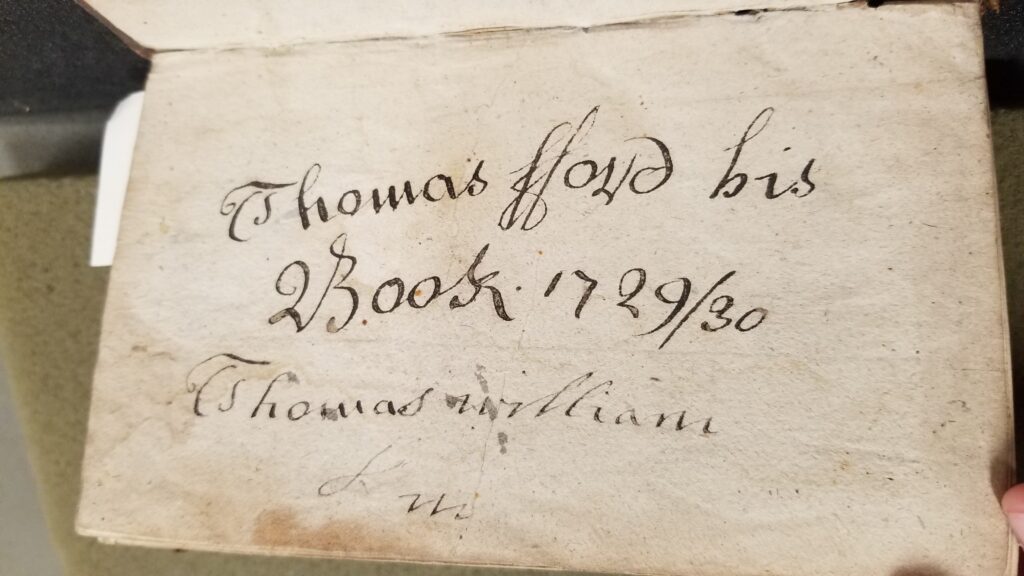
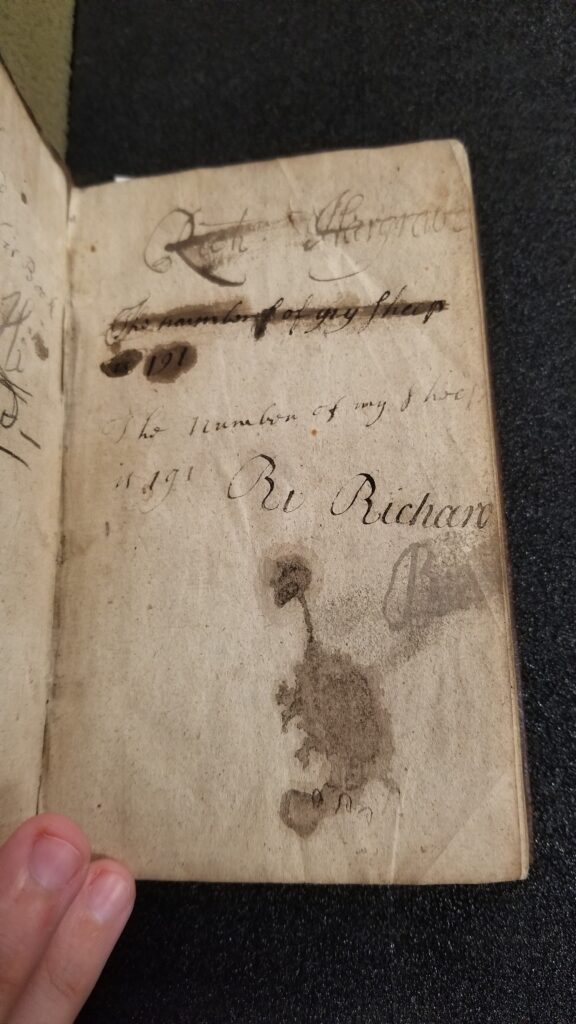
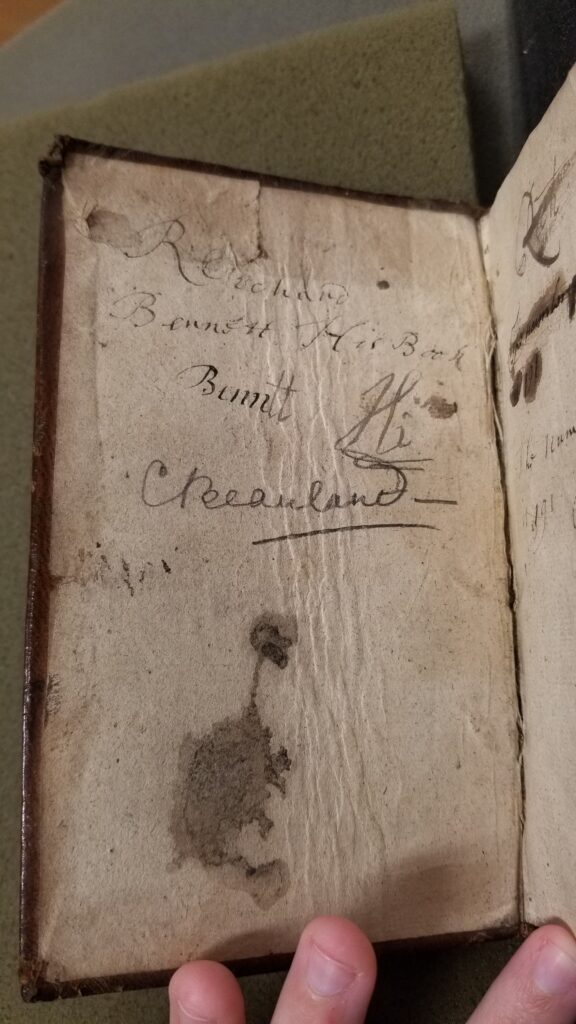
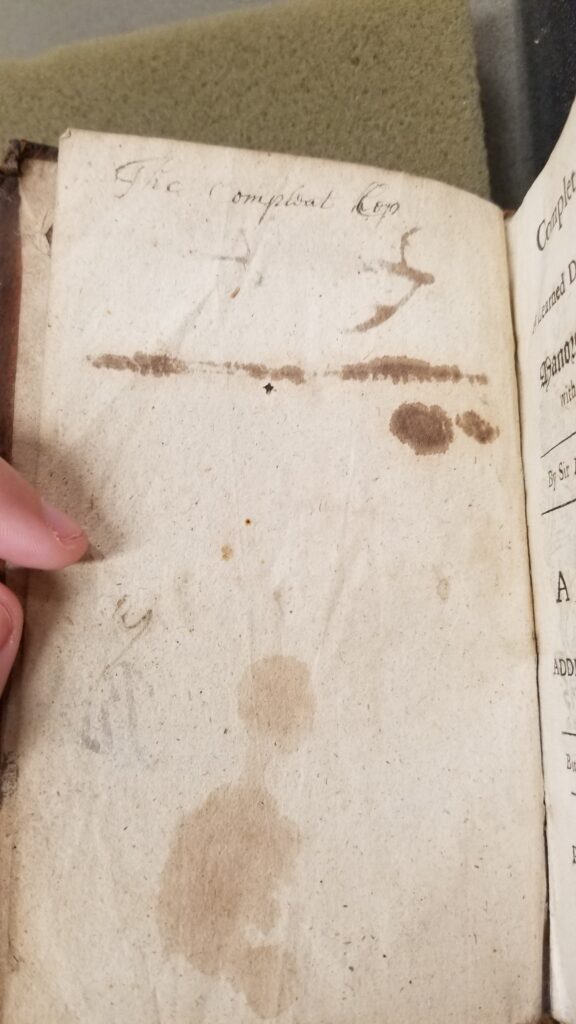
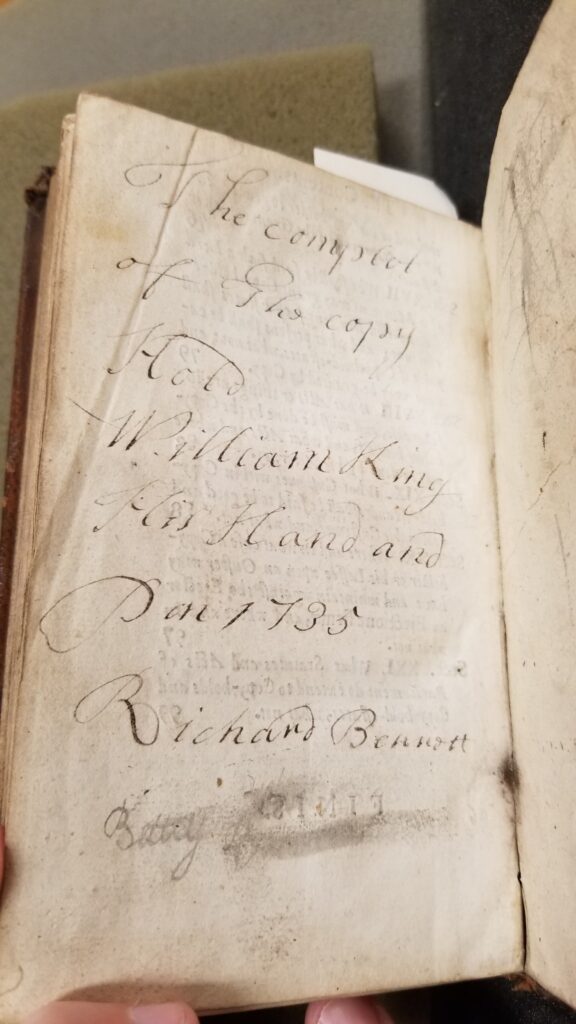
This book contains a large amount of evidence that points it possibly being used as a school book. Many names appear inscribed in ink on the flyleaves and pastedown endpapers. “Richard Bennett” appears often through out the inscriptions and it looks as though “Richard” liked to practice writing his name. The book looks like it has had many owners, as in addition to “Richard”, we have names like “William King”, “Bett[e?]y”, “Thomas William”, and “Thomas [Ford?]” and two dates, 1729/30 and 1735. There are also phrases like “the number of my sheep is 191” and statements of ownership like seen above and below. The existence of several names and a short difference between dates suggests that it, like previously mentioned, may have been used as a school book.
Unfortunately, searching for these names around these dates, especially Richard Bennett’s, does not turn up anything interesting, furthering the idea that this was just used as a school book.
Bibliography
[1] https://en.wikipedia.org/wiki/Edward_Coke
[2] https://www.britannica.com/topic/copyhold
[3] Sir Edward Coke, The Selected Writings and Speeches of Sir Edward Coke, ed. Steve Sheppard (Indianapolis: Liberty Fund, 2003). Vol. 1. 10/18/2018. http://oll.libertyfund.org/titles/911
[4] http://worldcat.org/identities/lccn-no00051157/
[5] https://en.wikipedia.org/wiki/John_Streater
[6]https://en.wikisource.org/wiki/A_Dictionary_of_the_Booksellers_and_Printers_who_Were_at_Work_in_England,Scotland_and_Ireland_from_1641_to_1667/Twyford_(Henry)
[7] https://books.google.com/books?id=MctrqXyky6UC&pg=PA134&lpg=PA134&dq=Richard+Atkyns,+and+Edward+Atkyns+assigns&source=bl&ots=40HwNeFtGa&sig=vYY2hwd3v920je40TiVWFUOK55s&hl=en&sa=X&ved=2ahUKEwi11ci900XfAhUFPqOKHfwRB5wQ6AEwBXoECAQQAQ#v=onepage&q=Richard%20Atkyns%2C%20and%20Edward%20Atkyns%20assigns&f=false
