
XX BS255.A2 J3 1676
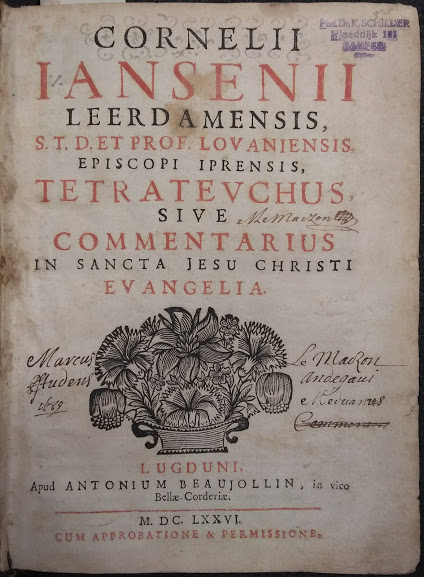
Tetrateuch: Or, Commentaries on the Gospel of Holy Jesus Christ was first published in 1639, a year after its author’s death.1 This edition was printed in 1676 by Anthony Beaujollin, in Lyon, France, on the street of Belle-Cordière.
The book’s author, Cornelius Jansen, was the well-known Catholic bishop of Ypres from 1636 to 1638 in modern-day Belgium. Tetrateuch is one of his lesser-known works, far overshadowed by his Augustine, which launched him posthumously into infamy and inspired the Jansenist theological movement. Jansenism spread throughout Europe in the 1600s, but was especially popular in France and the Netherlands.2 In Tetrateuch, Jansen reflects and comments on the lessons contained in the four gospels with analysis and allegory.

Description
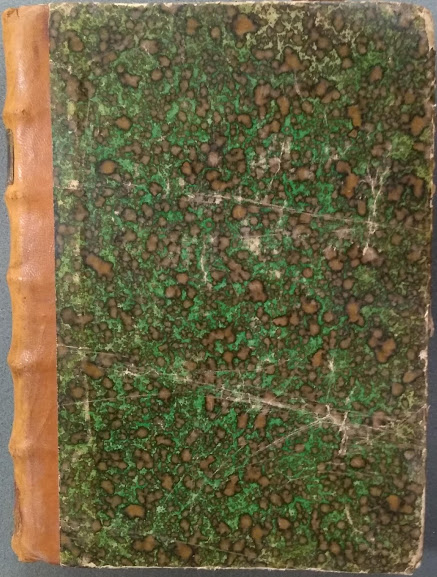
This volume has a half leather binding with marbled paper over pasteboard. There are serious tears and frays on each edge, as well as scratches and worn spots on both covers.
The leather spine has five raised bands, with the only decoration being a small label bearing the gold-tooled words “IANSENI IN EVANG” in the second compartment.
The free edges of the text block are speckled with red, and the laid paper has lengthwise wire lines and crosswise chain lines. The format is quarto, with eight unnumbered pages, 586 numbered pages, and 30 more unnumbered pages. The text is in two columns with no legible marginalia.
Origin
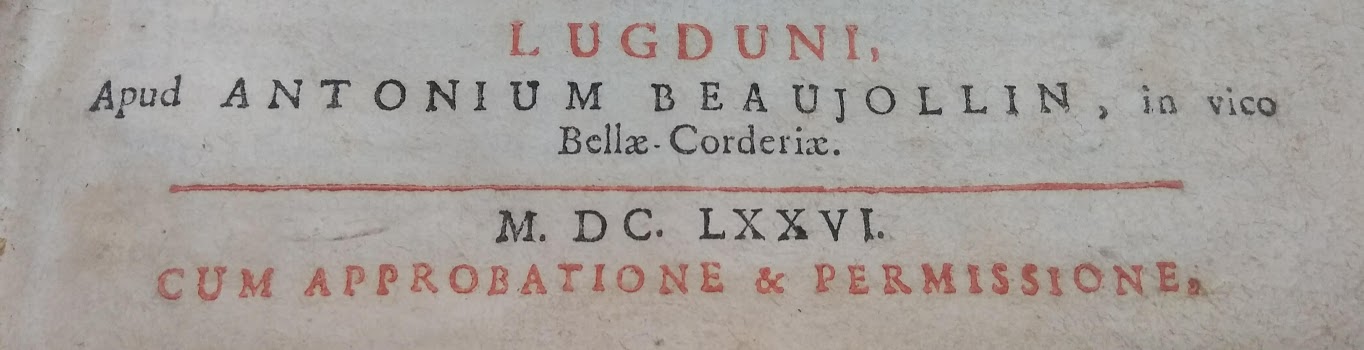
This book was printed in Lyon, France, on the street of Belle-Cordière. The printer of this edition was Anthony Beaujollin,3 but he was not the only one who had the rights to it. Other editions published around the same time have nearly identical title pages, with only the printer’s name and street changed.4 Almost all of them were printed in Lyon, however, which was a hub for bookmaking. There were an estimated 50 printing houses on Belle-Cordière and the surrounding streets.5 It makes sense that Tetrateuch would have been printed in Lyon because of the city’s prevalence in printing; and Jansenism was very popular in France, so it would have had a strong market in the immediate vicinity.
Ownership
Among the several owners of this book, the two that are most easily identifiable are also well-known figures. The other readers who wrote their names are not as traceable, at least not in English records. It seems that this book spent much of its life in France, so there my be French records that would shed more light on other owners.
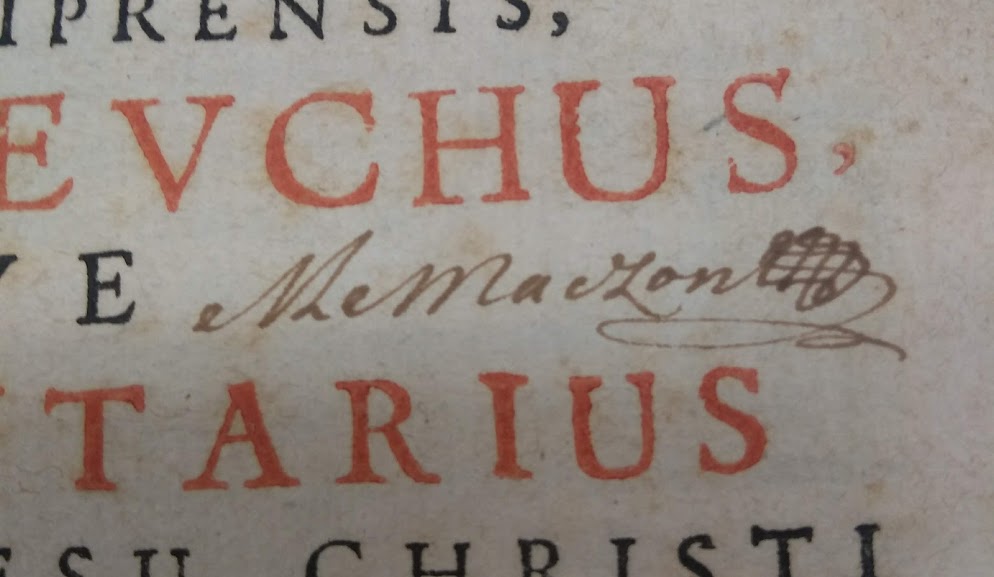
Marcus Macron
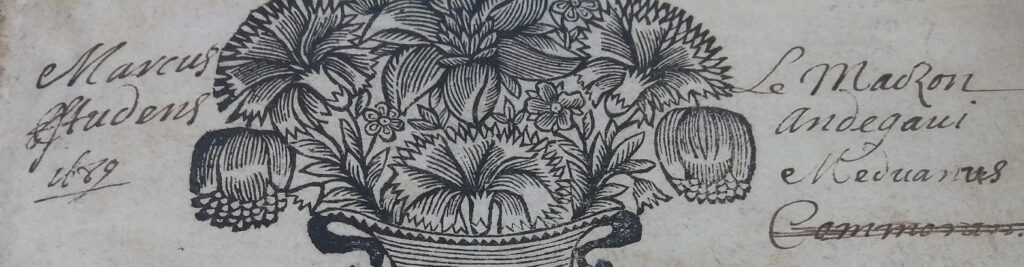
Marcus seems to have been a student at a university in Angers in 1689. He wrote his surname again higher up on the title page. Based on the next probable date of ownership, the book stayed in Angers for at least the next 200 years.
Griffaton
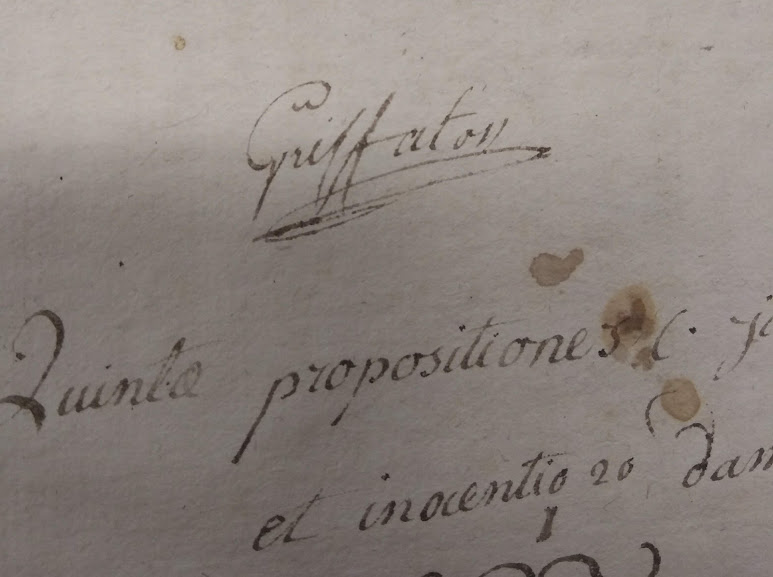
On the recto of the back free endpaper, someone began to copy the list of propositions on the same page. Their penmanship is messier, they misspelled words, and only got through the title of the list. Above it is the word “Griffaton.”
There are records of a family by the name of Griffaton who lived in the Anjou province,6 and a Julien Griffaton is mentioned to have attended a lecture on Jansenism in 1887.7 He may have brought this book with him to the lecture, but if the partially copied list is his work, he may not have learned very much.
Leo Polak
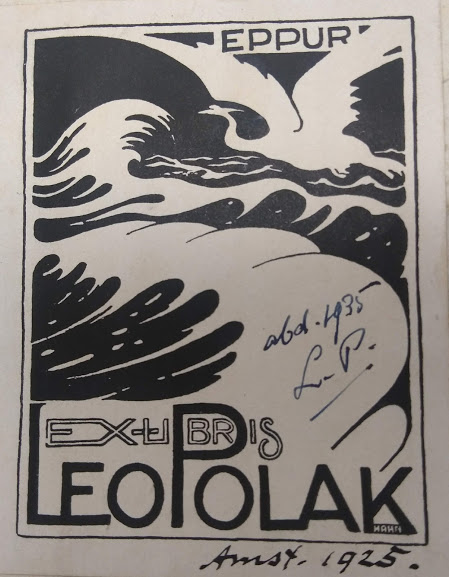
The book label on the front pastedown endpaper identifies this volume as one in Leo Polak’s library from 1925 to 1935. Polak was a Dutch philosopher and professor at Groningen University, a freethinker, and Jewish.8 Although he was a well-respected intellectual, he became a target after the Netherlands was invaded by Nazi Germany. He was imprisoned in 1940 and died at the concentration camp Sachsenhausen in 1941.9
Polak’s interest in the book could have been historical or intellectual. He was known for his extensive library collection,10 which was mostly recovered and displayed at the University of Amsterdam in 2011.11 This book, however, apparently only held his interest for ten years, as it was removed by him before there was any threat of arrest.
Klaas Schilder
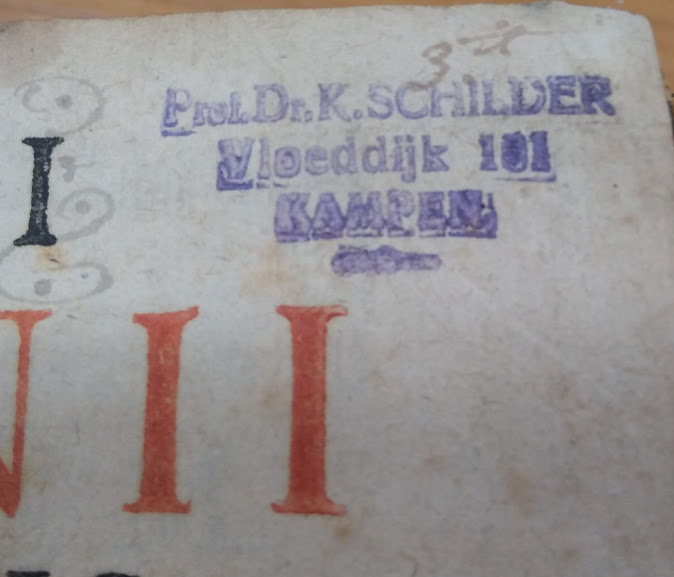
The book’s owner after Polak was Klaas Schilder, a Dutch Neo-Calvinist theologian and preacher and the founder of the Liberated Reformed Church of the Netherlands.12 Schilder was also impacted by the Nazi regime, as he was outspoken against them to the point of being forced to go into hiding in 1942.13 It is likely that his library was seized by the Nazis at this point, but there is no notation to that effect in his book. While in hiding, Schilder was also rejected from the Reformed Church that he had long been a prominent member of, in part because of his political opinions. He gathered his many supporters and formed the Liberated Reformed Church.14After the war, he traveled widely giving sermons and speeches, and even came to Michigan in 1947.15
Schilder’s ink stamp (on the title page) bears the address he lived at for much of his adult life until he went into hiding,16 which means that he acquired the book sometime before 1942. He may have been interested in this book as a theological scholar, since Jansenism was still present in the Netherlands and shares elements with Calvinism.17 However, he was also a known book collector, so he may have simply treated it as a rare item.
Other Signs of Provenance
The following signatures, sketches, and inscriptions can be found on the pages of Tetrateuch, but could not be thoroughly identified. There are also faded and illegible pencil markings throughout.
D. Z. Hg / Zau Der Haegh [sig] / Nauias [sic]
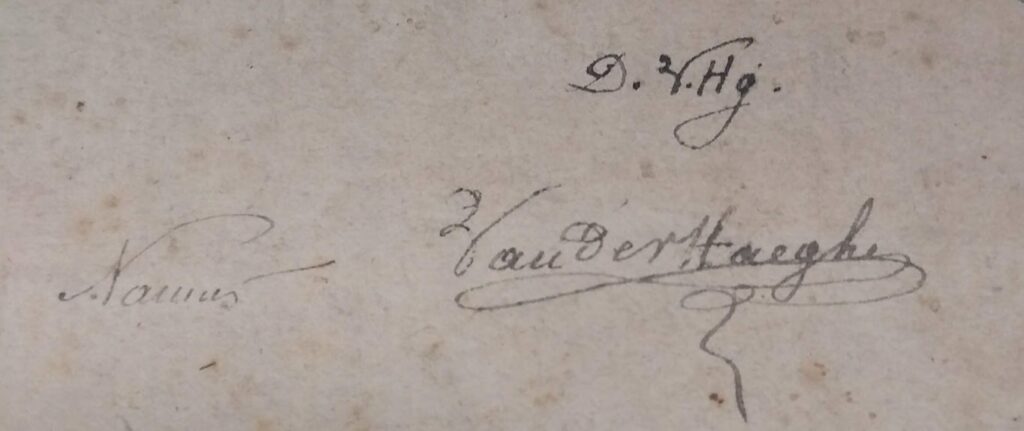
Found on the back pastedown endpaper. These signatures do not appear to be related to each other or to any writing, and are not traceable to a person.
Partial sketch of a man
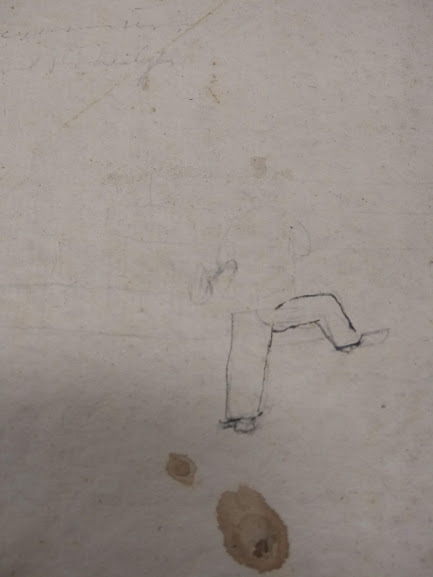
Found on back pastedown endpaper. First done in pencil, then partially traced in pen.
Cataloger/bookseller’s notes

Found on the front pastedown endpaper. These marks are from a recent vendor or library, possibly MSU. It is unclear when this book entered MSU’s catalog, but it was probably a gift in the late 20th century.18
List of five propositions
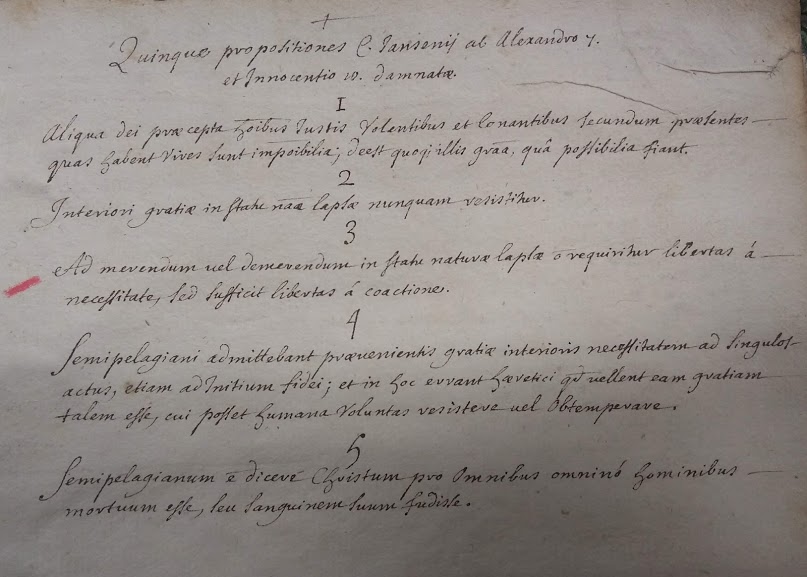
Found on recto of back free endpaper. Further explained below.
Significance
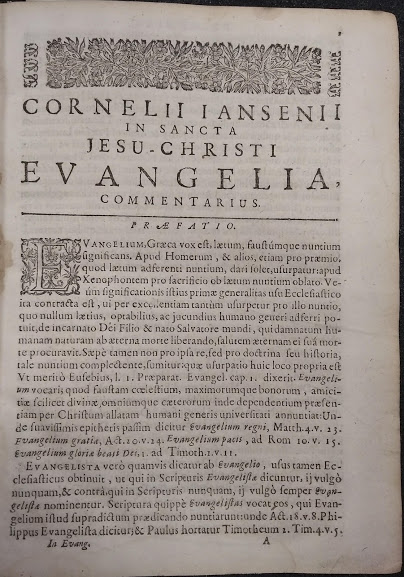
The value of this book lies in its content and context. The text itself is an analysis by one of the most influential theologians in history, Cornelius Jansen. His most powerful books, including Augustine and Tetrateuch were published after his death, but the force of his conviction was enough to create a schism that still remains in the Catholic church (although today’s Dutch Jansenists are quite different from the original movement).19 Readers in the 17th and 18th centuries would have looked to this book to learn more about Jansen’s beliefs, and to decide which side of the divide they fell on. Although Augustine was the book that sparked the fire, books like Tetrateuch would have given more detail, as it covered similar themes of God’s selective granting of grace. Jansen inspired a movement that believed that God chose some people for salvation and not others, and that one’s own actions had little sway in one’s fate after life.20
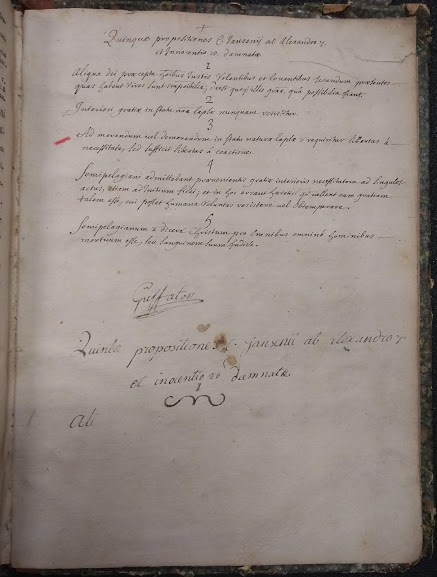
It is evident that readers using this book to analyse Jasen’s ideology by the list written in the recto of the back free endpaper. The list is in Latin and details the five propositions of Jansenism that were pulled from Augustine and condemned by Pope Innocent X, turning those who agreed with them into heretics.21 This did not silence the movement, and the propositions were a point of contention for decades. Tetrateuch was clearly one place where people went to find out more about them.
The two recent owners are prominent and traceable figures lends a greater value to this book. Polak and Schilder were both highly respected for their philosophies and their book collections, and this volume could be useful to researchers. Both men were also persecuted during World War II, and the possibly lost their libraries because of it. Interesting, Polak, Schilder, and the author Jansen were all from Dutch cities within 200 miles of each other. Further tracting the path of this book from Jansen’s mind to France, back to the Netherlands, and finally to Michigan could enrich the studies of both Jansenism and World War II.
Timeline
1638: Cornelius Jansen dies22
1639: Tetrateuch first published23
1640: Jansen’s Augustine is published24
1653: Five Propositions condemned by Holy Office25
1670s: Jansenism gains popularity in the Netherlands26
1676: This edition of Tetrateuch published
1689: This edition owned by Marcus Macron
1887: Julien Griffaton attends a lecture on Jansenism27
1925: This edition acquired by Leo Polak
1935: This edition leaves Polak’s library
1930s: This edition acquired by Klaas Schilder
1941: Polak dies in Sachsenhausen concentration camp28
1942: Klaas Schilder goes into hiding from Nazis, library likely seized29 1944: Schilder deposed from Reformed church, Liberated Reformed church founded30
1947: Schilder visits Michigan on speaking tour31
1980-90s: This edition donated to MSU library32
References
- Jacques Forget, “Jansenius and Jansenism,” The Catholic Encyclopedia, vol. 8 (New York: Robert Appleton Company, 1910),
http://www.newadvent.org/cathen/08285a.htm. - Ibid.
- ABES Identifiers and Repositories for Higher Education and Research
(ID 076959155; accessed October 14, 2018),
