
This set of Thomas Thomson’s An Attempt to Establish the First Principles of Chemistry by Experiment published by Baldwin, Cradock and Joy in 1825, was once owned by Robert Clark Kedzie.[1] Kedzie, an early faculty member at Michigan State University, contributed to the reputation of the school and improved the surrounding community through his work as a chemist. In these books, we have a tangible connection to an influential faculty member in MSU history.
The Books
Author
Thomas Thomson, the author of this two volume set, was born in 1773 in Scotland. He attended university and earned money for his medical training by tutoring and writing scientific articles. Shortly after be began his career, he became more interested in chemistry, and eventually became a professional chemist. At the time, professional chemists “covered mineralogy and metallurgy, heat and light, electricity and magnetism” and were considered to be “expert[s] on what has been called ‘the natural history of the inanimate.” As he established himself in the field, Thomson contributed “masterly reviews of scientific progress and a series of brilliant scientific biographies with careful documentation” to the Annals of Philosophy (1813-1821), which he founded and edited. [2] As a the first Regius professor of Chemistry at the University of Glasgow from 1818- 1852, he “was a pioneer in emphasising the importance of laboratory work in teaching his subject and has been called ‘the first teacher of practical chemistry in a British university.!” [3] Thomson died in 1852.
Content
In 1825, Baldwin, Cradock and Joy, a publishing and printing house located on Paternoster Row in London, England, published Thomson’s An Attempt to Establish the First Principles of Chemistry by Experiment.[4] These books provide the basic components of different elements and some simple experiments regarding them. They are the results of Thomson’s research experiments to prove William Prout’s theory that “the atomic weight of all the elements were multiples of the atomic weight of hydrogen.” While some criticized the books by claiming the experiments were not accurately performed and Thomson did them in his head so as to arrive at the correct numbers, others praised the books and Thomson for the amount of time, labor and skills used in carrying out the experiments.[5]
Physical Description
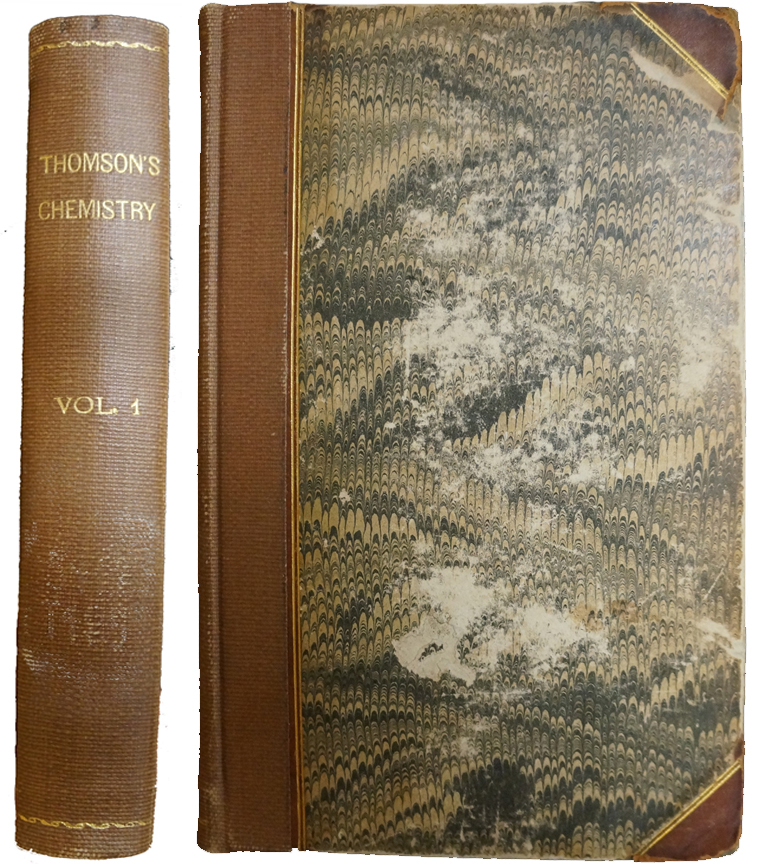
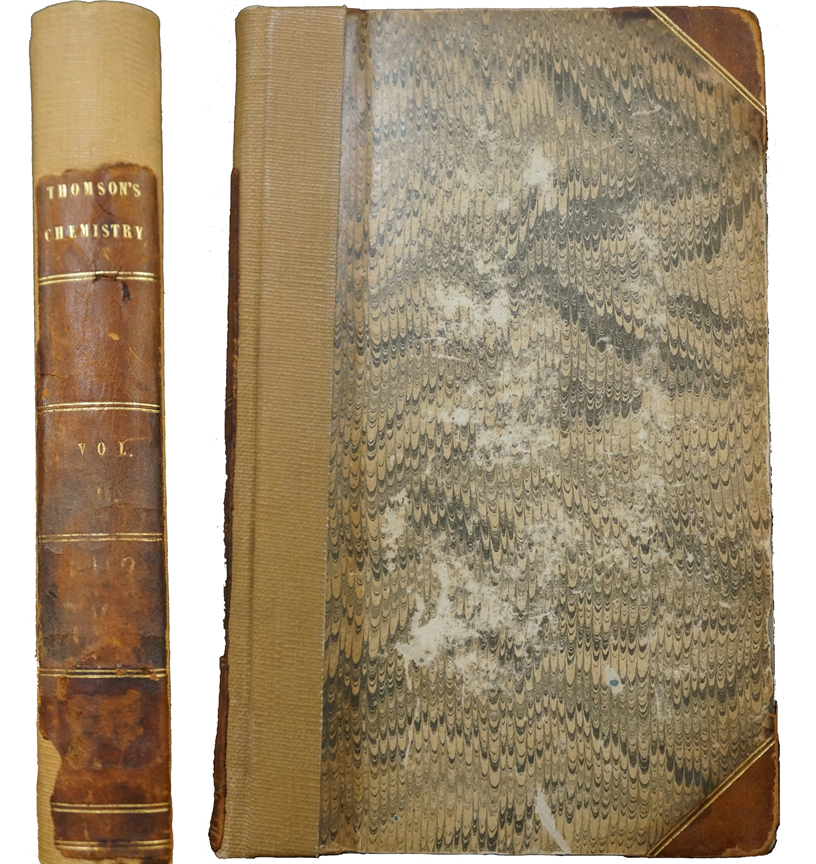
Thomson’s experimental results were printed in two books that are roughly 1″x 6″x 10″. Both volumes have been rebound in marbled boards, with leathered corners and a fabric spine. The leathered corners have thin lines of gilding on the inner edges. Volume II’s rebinding is interesting in that part of the original spine was overlaid on the new fabric spine (see above image). The page edges of both volumes are marbled.
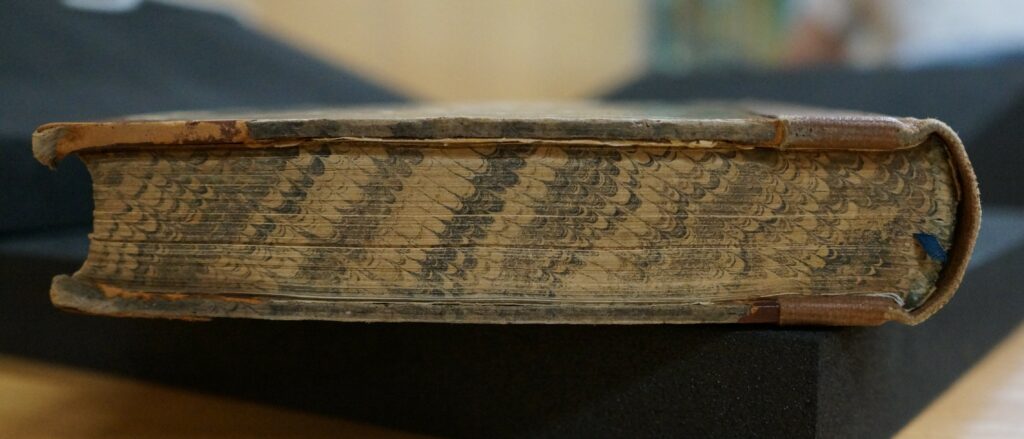
In general, these books are excellent condition. There is very little
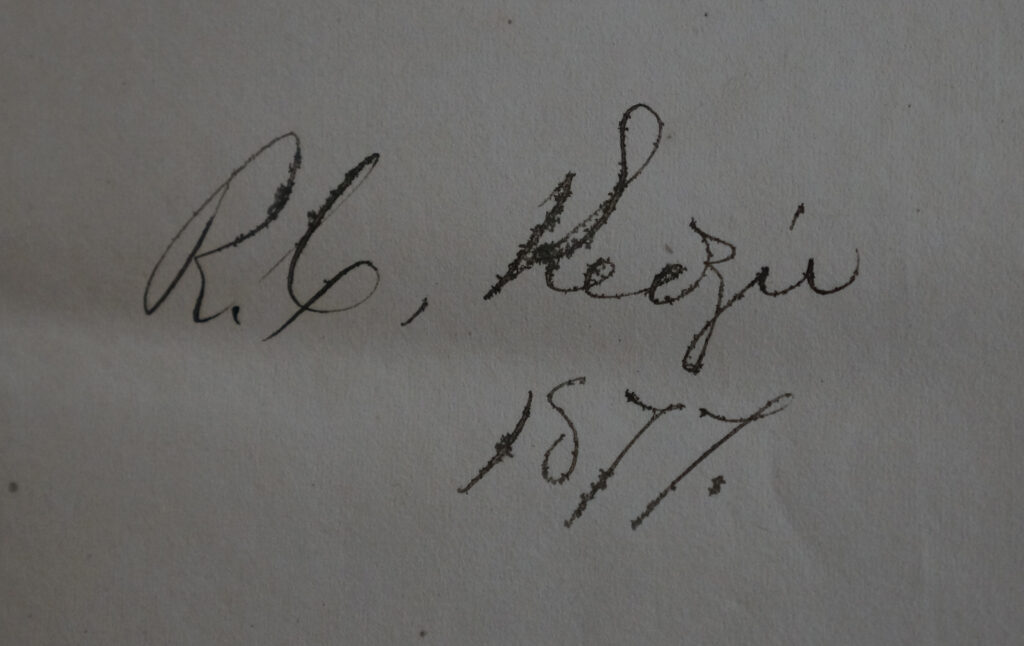
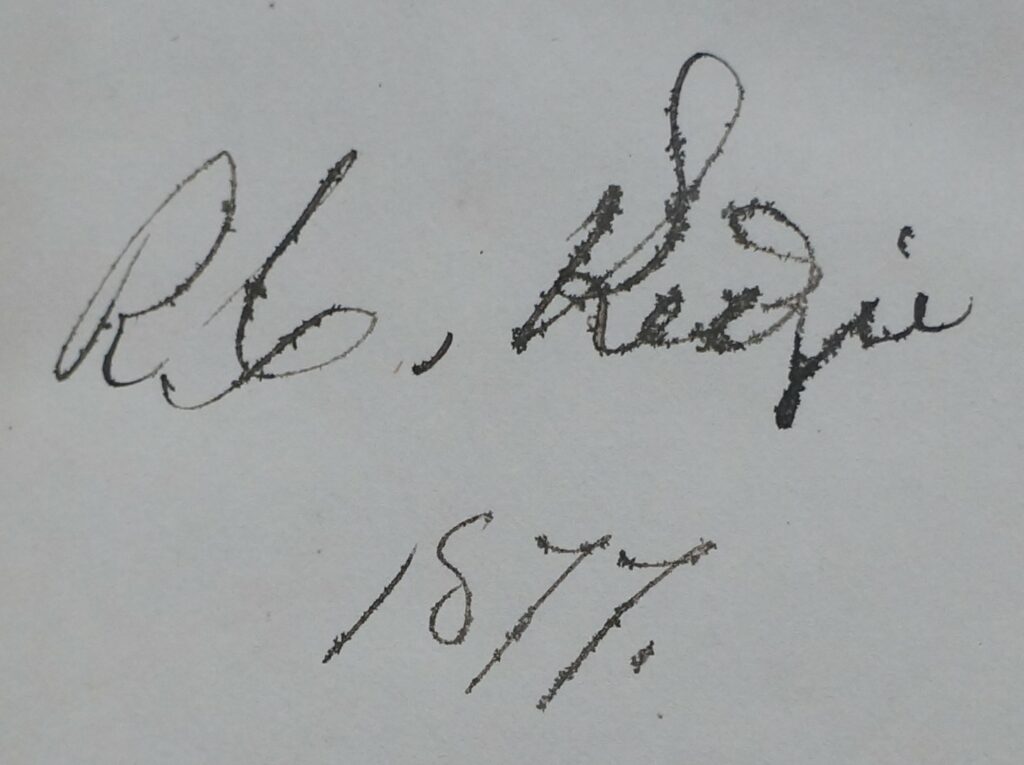
marginalia and most markings are from libraries, with one inscription-“R.C. Kedzie 1877”-in the flypapers of both volumes.
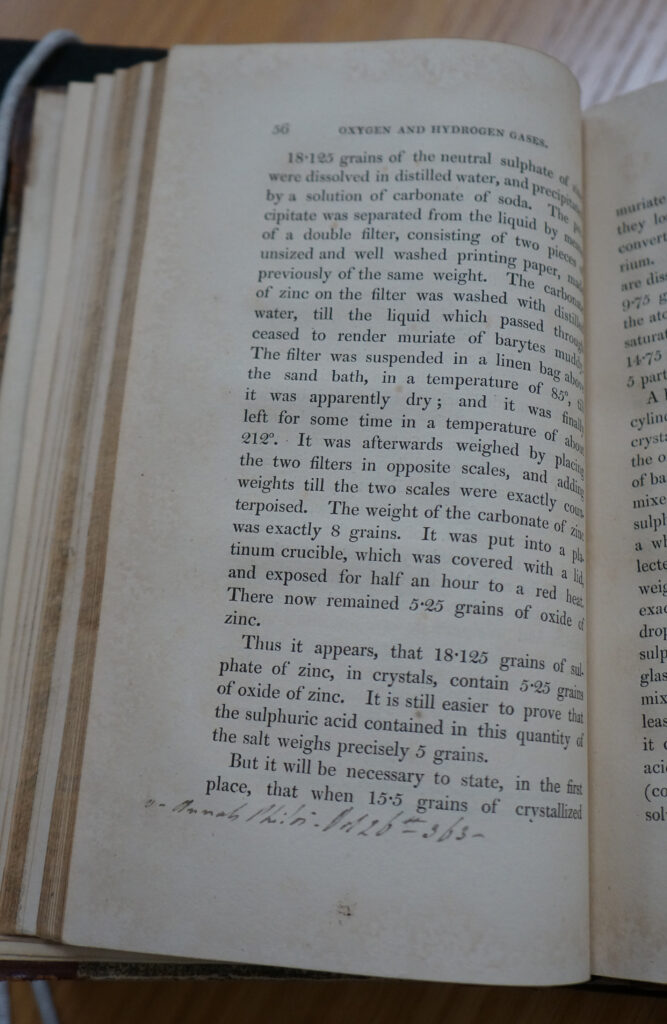
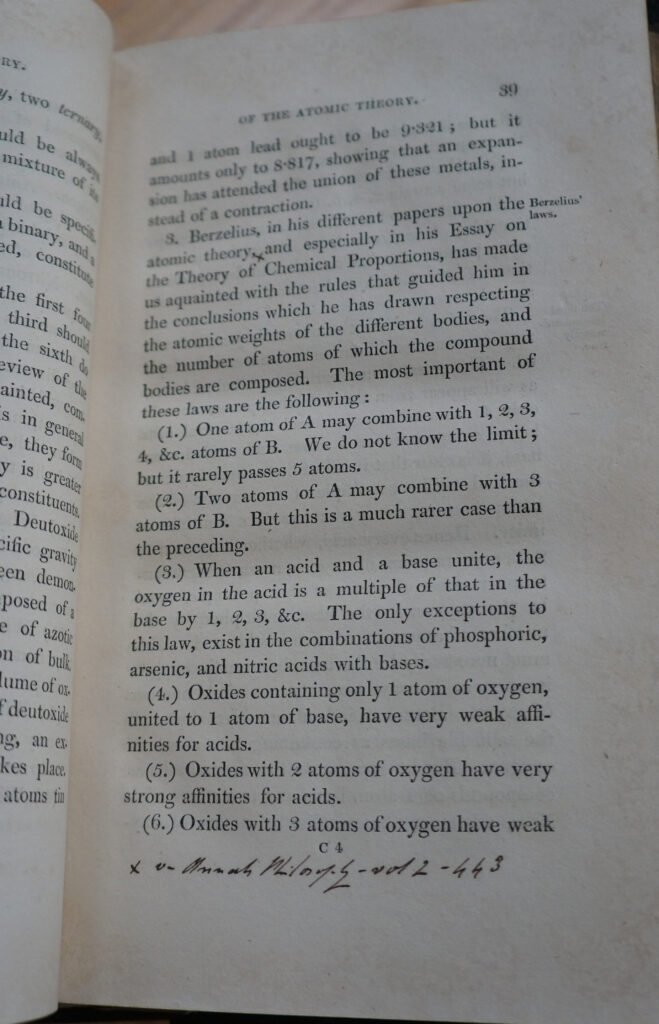
There are a few items of interest beyond the inscriptions. As stated above, there is very little in the way of marginalia. However, I was able to locate two instances of it on pages 36 and 39 of Volume I. Both instances are references to passages in the Annals of Philosophy journal that Thomas Thomson founded.[6]
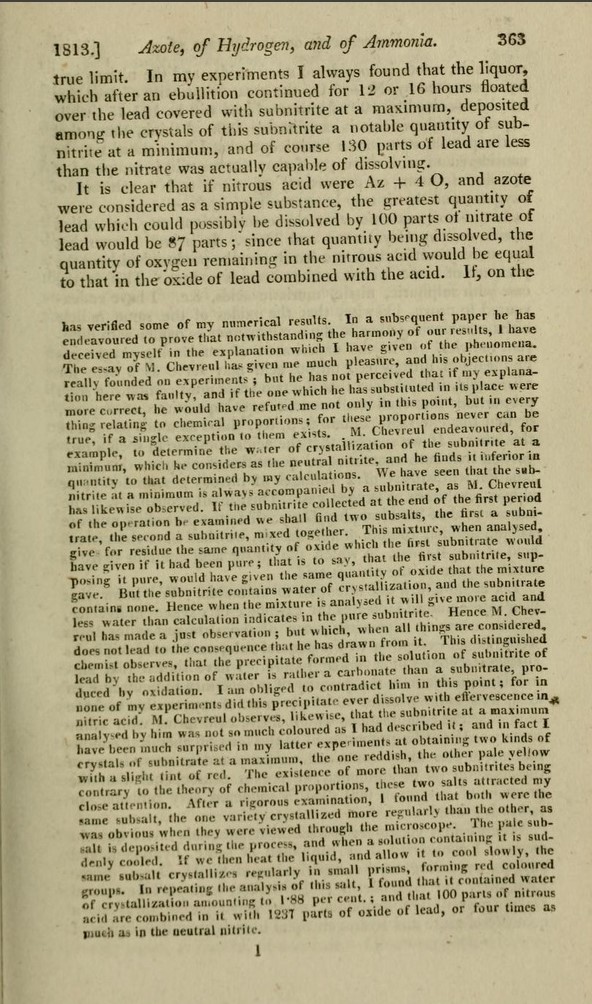
On page 36, Kedzie wrote “Annals Philo. Vol 2b #363.” This is in reference to an article regarding previous similar experiments and the steps Thomson took in conducting them.[7]
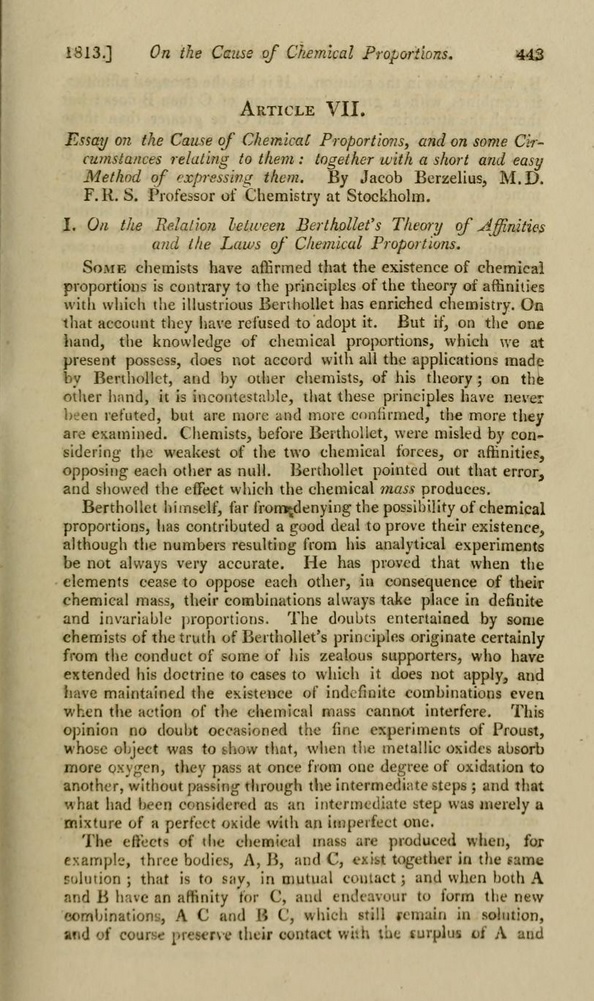
The marginalia on page 39 reads “Annals Philosophy-vol 2-443.” Here, Kedzie makes a notation in the text to reference The Essay on the Theory of Chemical Proportions as put forth by Jacob Berzelius in the noted journal.[8]
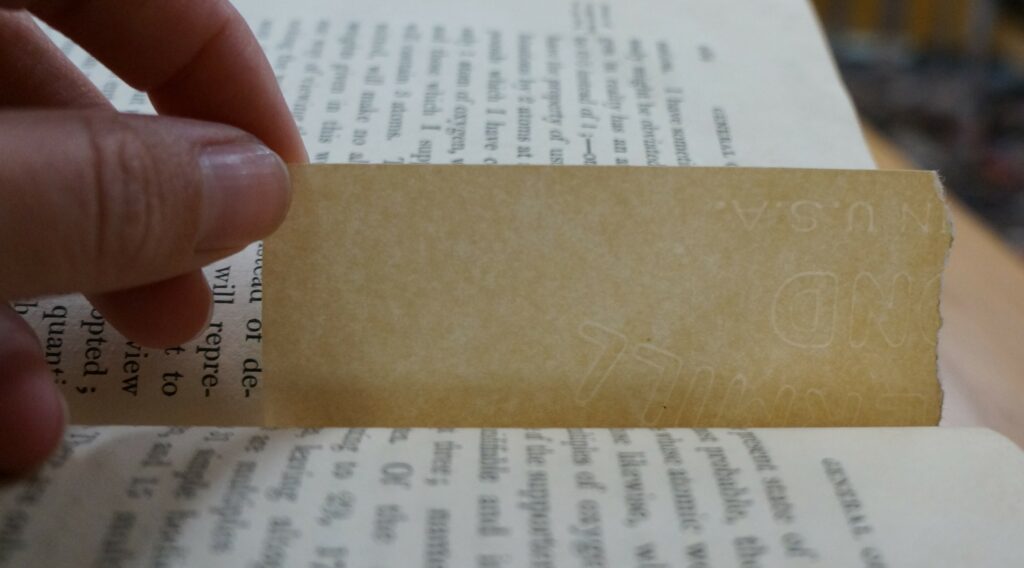
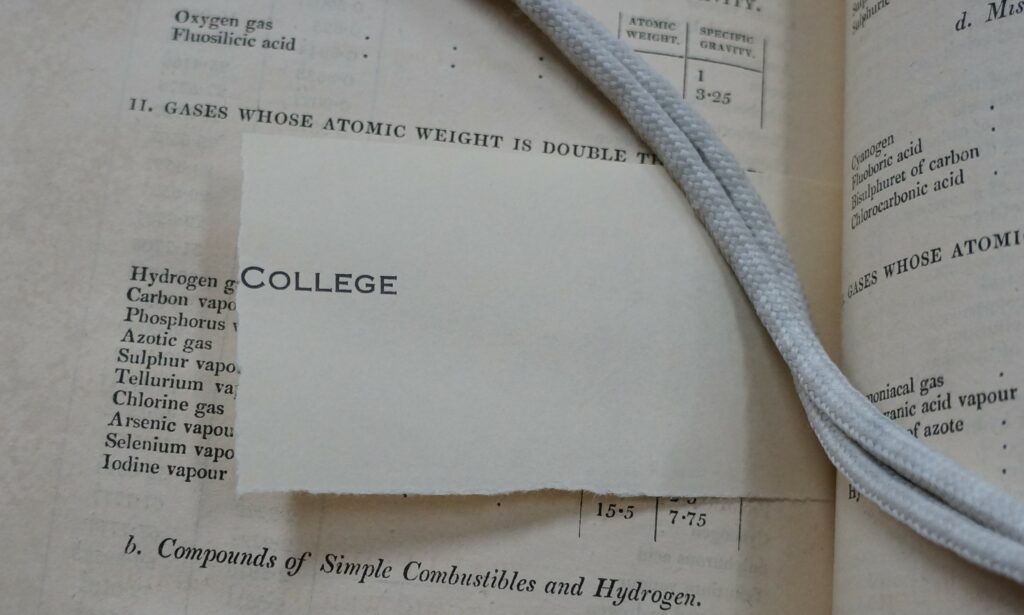
Unlike Volume I, Volume II had no marginalia or writings of any kind (besides the inscription), but I did discover two scrapes of laid in paper that most likely were used as book marks. One piece of paper was inserted between pages 464 and 465, with a portion of a water mark visible: ERMILL”, “-ND” and “IN U.S.A.” (possibly a scrape of paper from Hammermill Paper Brand[9]). The second piece of paper was inserted between pages 478 and 479 with a typed word “college” visible (possibly a portion of old letterhead).
The last item of interest is a book binder’s ticket located on lower inside right hand corner of the front cover of Volume II. Prior 1951, the books were sent to Wagenvoord & Co., Library Book Binding in Lansing, Michigan for rebinding [10].

Ownership
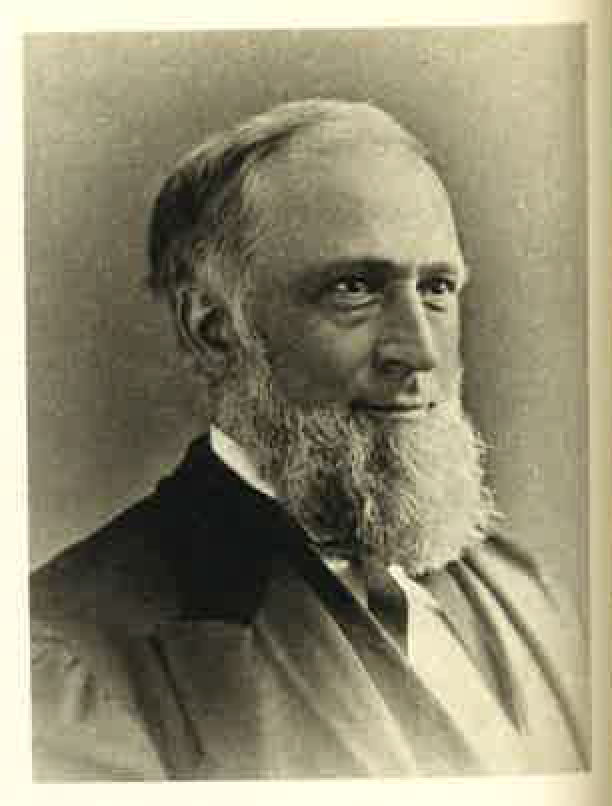
In 1877, Robert Clark Kedzie owned this set of Thomson’s First Principles and inscribed his name in them. Based on Kedzie’s ownership of these books, and his references within Volume I set to the Annals of Philosophy that Thomson edited, Kedzie appears to have respected Thomson and drew on his works for teaching his classes. As a fellow chemist, Thomson’s book provided Kedzie with information to teach future chemists and farmers the principles of chemistry through scientific experimentation.
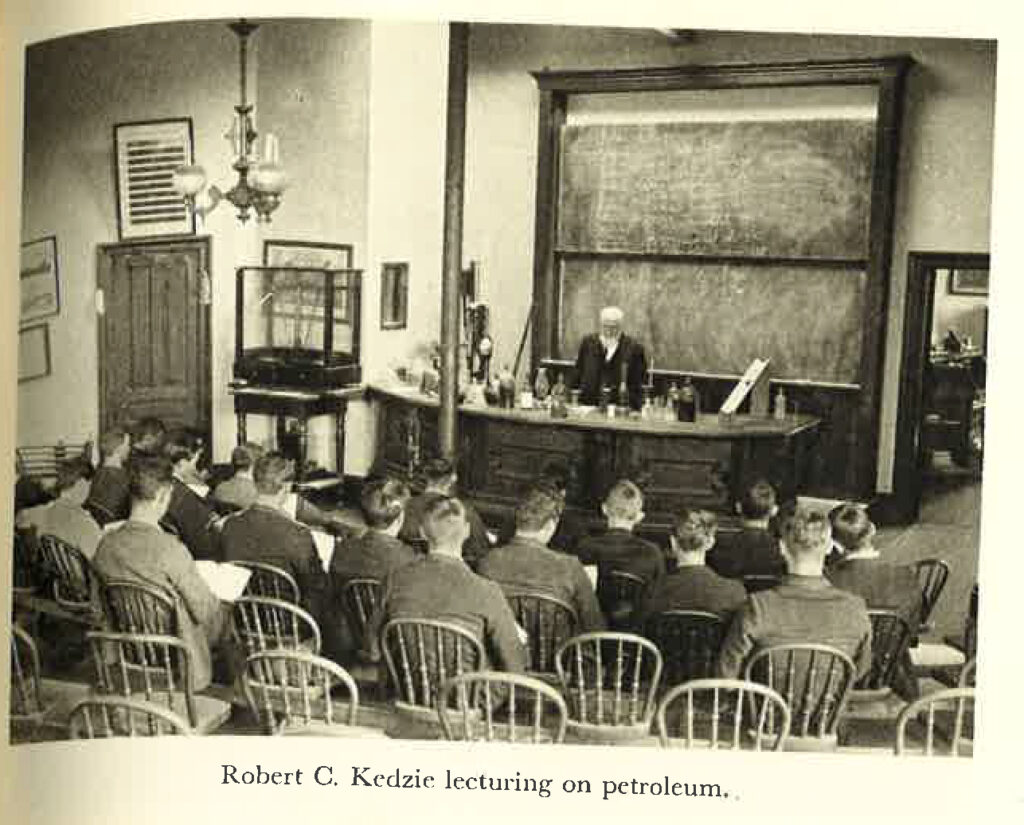
Kedzie taught chemistry at State Agricultural College-later Michigan State University-from 1863 to 1902. Originally trained as a physician, he moved to Faculty Row with his family after he resigned from the Union army due to ill-health issues at the of age 40. As an instructor, he gave “forceful lectures spiced with genuine wit and frequent experimental demonstration.” He was intolerant of “careless preparation” for his class, but provided counsel for students when needed.
Outside of the classroom, Kedzie aided the local community by publishing weather reports for the area and helped pass a law that reduced taxes for people that planted trees along roadways. In 1868, he was appointed to the first State Board of Health where he alerted people to the dangers of using wallpaper dyed with Paris Green-which included arsenic as an ingredient- in the book Shadows from the Walls of Death that he sent to libraries around the state, and he provided research that put regulations on kerosene lamps to prevent them from exploding. He also helped the agricultural community by disproving a type of wheat was of low yield, thus increasing it’s economic value and adding over an estimated half million dollars to the farm economy. Because of these actions and many others, Kedzie “was acclaimed as the defender of both the people and the honest manufacturer.”
As Kedzie grew older and class sizes increased, his youngest son, Frank (who was also a chemist), assumed more of his father’s teaching rolls. In 1902, at the age of 79, Robert Kedzie retired from teaching, and shortly after passed away.[12] Upon either Robert Kedzie’s retirement or death, these books passed into the possession Frank S. Kedzie.[13]
MSU Possession
While visiting the MSU Archives, I was able to determine that sometime after 1921 [15], Frank Kedzie donated a collection of his father’s books to his alma mater’s chemistry department which included these volumes [16], possibly in 1922 or 23 when the students asked for more books to read. [17] An embossed stamp with with “Michigan State College of Agriculture and Applied Sciences”- which was the name of the university from 1925 to 1955-indicates that the donation might have happened at a later date though. However, the stamp of “Chemistry Dept. Office Vault,” and the F.S.
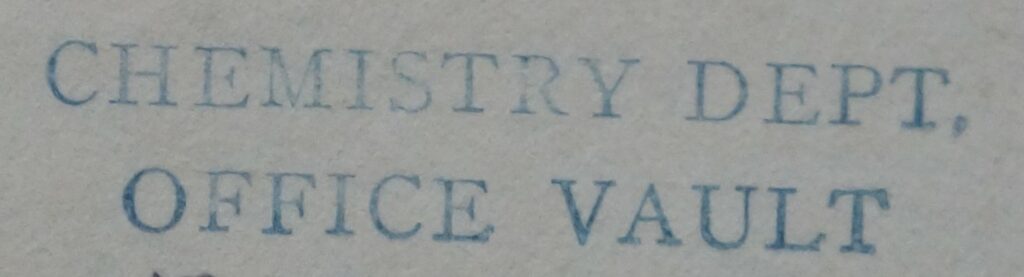
Kedzie donation list affirms that these books were initially the possession of the Chemistry Department before being transferred to the main campus library, indicating that the donation might have taken place prior to the embossed stamp being applied.
Currently, it is unknown when the books were transferred to the main library. It is possible that books stayed in the Chemistry Department Office Vault until 1964 when the chemistry department moved from Kedize Hall to the brand new Chemistry Building on campus.[18] Or it could have been when the Chemistry Department and Physics Department libraries merged in 2000 with the completion of the Biomedical and Physical Sciences Building.[19]
Another mystery surrounding these books is the “Chemistry Department Office Vault” stamp on both books’ inside covers (see above image). At this time, I am unable to determine what this was, as no one in the department nor the main library has recollection of it.[20]
While at first glance, these books appear to be unremarkable, the simple inscription of “R.C. Kedzie 1877” provides modern viewers a link to the early history of Michigan State University.
[1]This set of books can be found in the Michigan State University’s Rare Books and Special Collections Library under call number XX QD28.T46 1825.
[2]Andrew Kent, “Thomas Thomson (1773-1852), Historian of Chemistry,” The British Journal for the History of Science, Vol 2, No. 1 (June 1964): 59-60
[3]”Thomas Thompson,” The University of Glasgow, accessed October 17, 2018, https://www.universitystory.gla.ac.uk/biography/?id=WH0200&type=P
[4] “Baldwin & Cradock (Biographical details),” The British Museum, accessed October 26, 2018, http://www.britishmuseum.org/research/search_the_collection_database/t erm_details.aspx?biold=73252. While this seems to have been a popular printer and publisher, I was able to find very little regarding a company profile or description beyond the location, years of operation and other names it went by.
[5] Klickstein, Herbert S. “Thomas Thomson: Pioneer Historian of Chemistry.” Chymia 1 (1948): 44-45
[6] Dr. Liam Brockey was able to decipher the handwritting and provided the author with links to the pages referenced via email on November 6, 2018.
[7] Berzelius, Jacob. Experiments on the Nature of Azote, of Hydrogen, and Ammonium, and Upon the Degrees of Oxidation of which Azote is Sustainable. Annals of Philosophy, vol II, 2nd ed. (July-December 1813). 276-84; 357-369. https://www.biodiversitylibrary.org/item/54026#page/387/mode/1up.
[8]Berzelius, Jacob. Essay on the Cause of Chemical Portions, and on Circumstances Relating to them: Together with a Short and Easy Method of Expressing Them. Annals of Philosophy, vol II, 2nd ed. (July-December 1813). 443-454 https://www.biodiversitylibrary.org/item/54026#page/469/mode/1up
[9] Mr. Andrew Lundeen, provenance curator at the MSU Library speculated that it could be Hammermill Paper Company in an email to the author on October 15, 2018.
[10] In 1951, Wagenvoord merged with another book binder to become Wagenvoord-Reigel, hence we can determine that the rebinding took place prior to 1951.[“Company Overview,” HFGroup Company Overview Timeline, accessed October 15, 2018. www.hfgroup.com/media/CompanyOverview-Timeline.pdf ] The local history librarian at the Capitol Area District Library, Heidi Butler, provided the author with some newspaper clippings that allowed her to establish a profile of the company: Wagenvoord & Co. Library Book Binding was founded in 1898 or 1902 (multiple sources listed both years as founding dates) by J. William Wagenvoord in Lansing Michigan. [“Bookbinder Dies,” Lansing State Journal, October 14, 1937, 14. https://www.newspapers.com/image/204467522] Originally located on Ottawa street near the capitol building, Wagenvoord purchased the D.O.H Hall on Grand River Avenue in 1919 to accommodate his expanding business that had a “connection with 300 public, university and college libraries throughout the United States.”[“Local Firm Gets Rebinding Order: Many Libraries Giving Work to Wagenvoord Co., as Smaller Binderies Fail,” Lansing State Journal, January 4, 1923, 17, https://www.newspapers.com/image/206937235] Through the early 1900’s, the bindery continued to grow and became nationally recognized. [“J.W. Wagenwoord Taken by death: Head of Local Bookbinding Firm Was Active in National Association” Lansing State Journal, October 17, 1937, 1. https://www.newspapers.com/image/204467235] Later decades saw Wagenvoord go through various mergers and name changes, until it ultimately became part of the HF Group in 2006. [“Company Overview” HFGroup Company Overview Timeline]
[11] Kuhn, Madison, Michigan State: The First Hundred Years (Michigan State University Press, 1955) pictures 20-21.
[12] Kuhn, 106-07, 181.
[13]Frank Kedzie has his own place in Michigan State University history.
Born in 1857, he grew up on Faculty Row, graduated in 1877 from Michigan Agricultural College, studied as a physician in Lansing, and started working in his father’s laboratory in 1880. Frank Kedzie started helping his father teach class as the elder Kedzie progressed in age. The younger Kedzie’s lectures “inspire[ed] and aw[ed] his students [with] his vigourus presentation, [with] his scathing treatment of latecomers, and [with] the test tube that he circulated for chewing gum contributions.” After his father’s passing, Kedzie lead the chemistry department while he “earned a master’s degree,…studied in Germany, and…received an honorary Doctor of Science from his alma mater in 1912” In 1915, Kedzie became acting president of the college and shortly thereafter, president. As president, Kedzie continued to teach one class a week as long a time allowed, saw increased alumni actives, and the erection of various buildings on campus-some to replace those lost by fire. Frank Kedzie resigned as president in 1921 due to public criticism of the college’s static enrollment following the end of the war. He stayed on as the dean of the applied science division. [Kuhn, 260-276]
[14] Kuhn, pictures 70-71
[15] The books do not appear on a list of library books that the chemistry department had in 1921. “Library Books, July 8, 1921” Chemistry Department Records, UA 16.34, Box 2134, Folder 2, Michigan State University Archives and Historical Collections, East Lansing, Michigan. [16] “Thomas, First Principles of Chemistry, 1825′′ appears on the list of books that F.S. Kedzie donated to the chemistry department, no date was recorded. “List of Books in Chemistry Department Vault (Historical Chemistry as Donated by F.S. Kedzie)n.d., UA 16.26, Box 3124, Folder 3. Michigan State University Archives and Historical Collections, East Lansing, Michigan.
[17] Kuhn, 300.
[18]”About Chemistry” Chemistry Department, Michigan State University, accessed October 17, 2018. https://www.chemistry.msu.edu/about/ [19] Cliffard Haka, university history librarian informed the author via email of this merger on October, 2018
[20] The author communicated via email with the office manager of the Chemistry Department between October 12 and 25, 2018, and with various staff members of the library regarding the Chemistry Department Office Vault from October 23 to October 31, 2018.
