
by James White
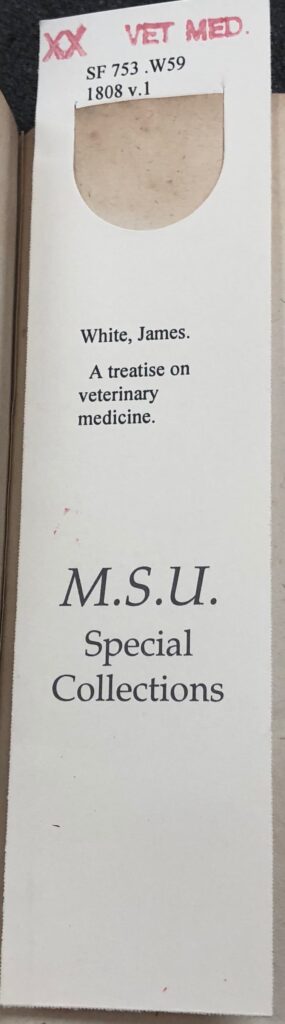
Call Number: XX SF753 .W59 1808
Book Content
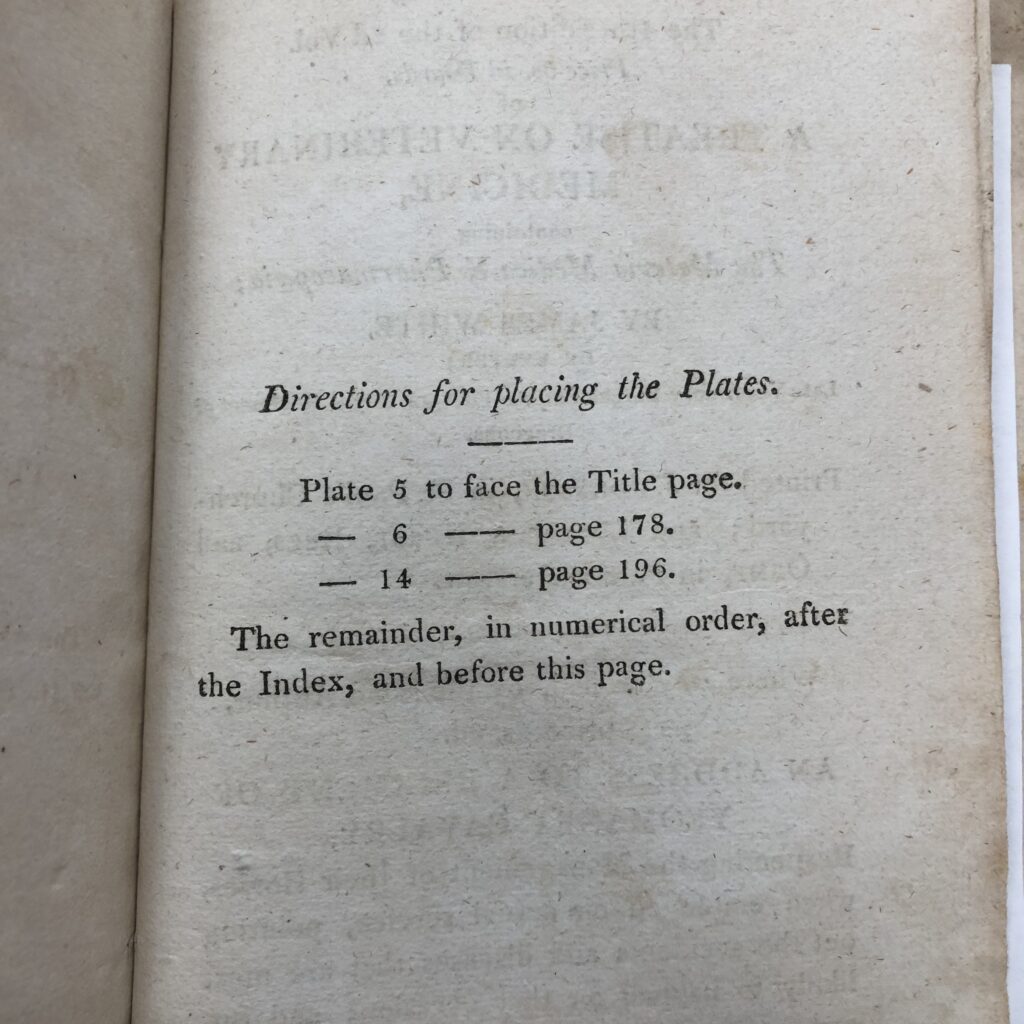
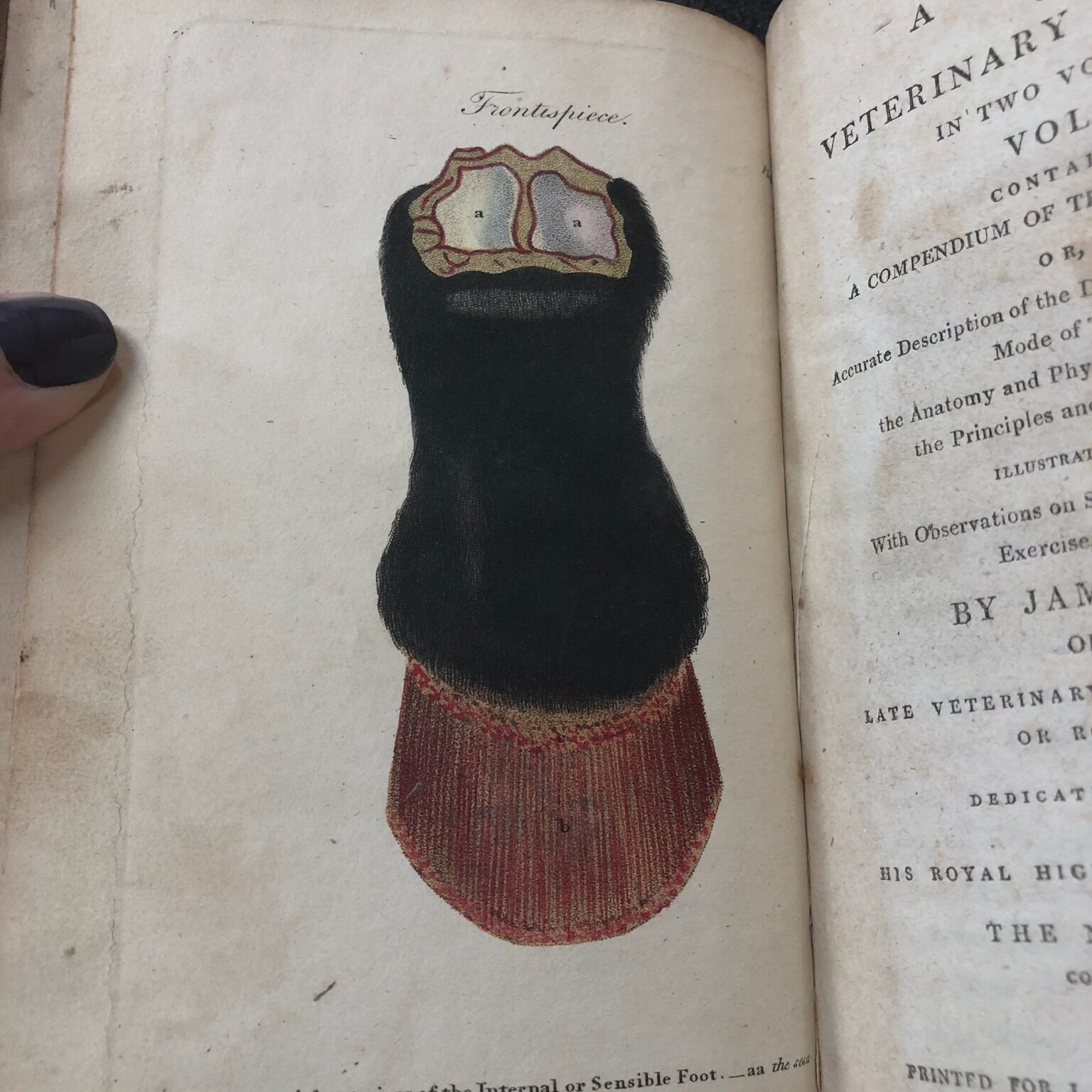
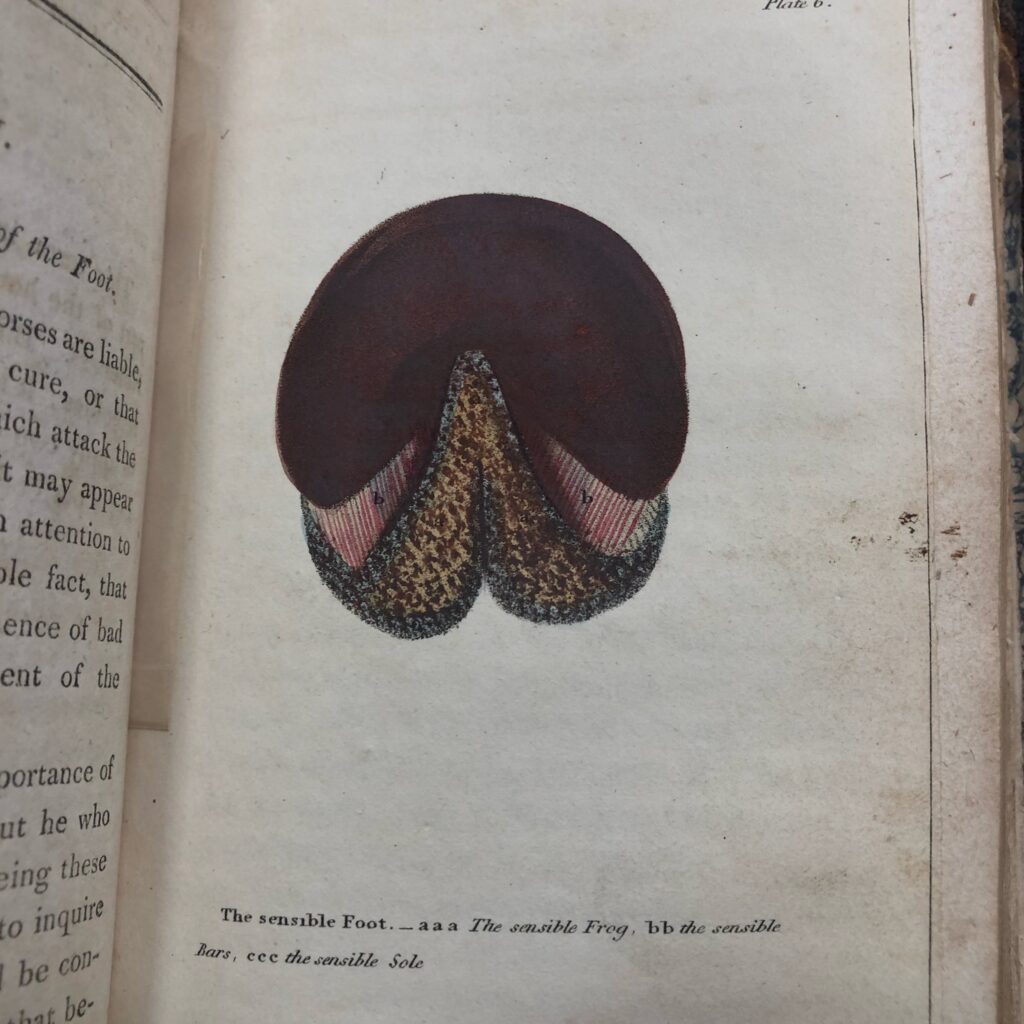
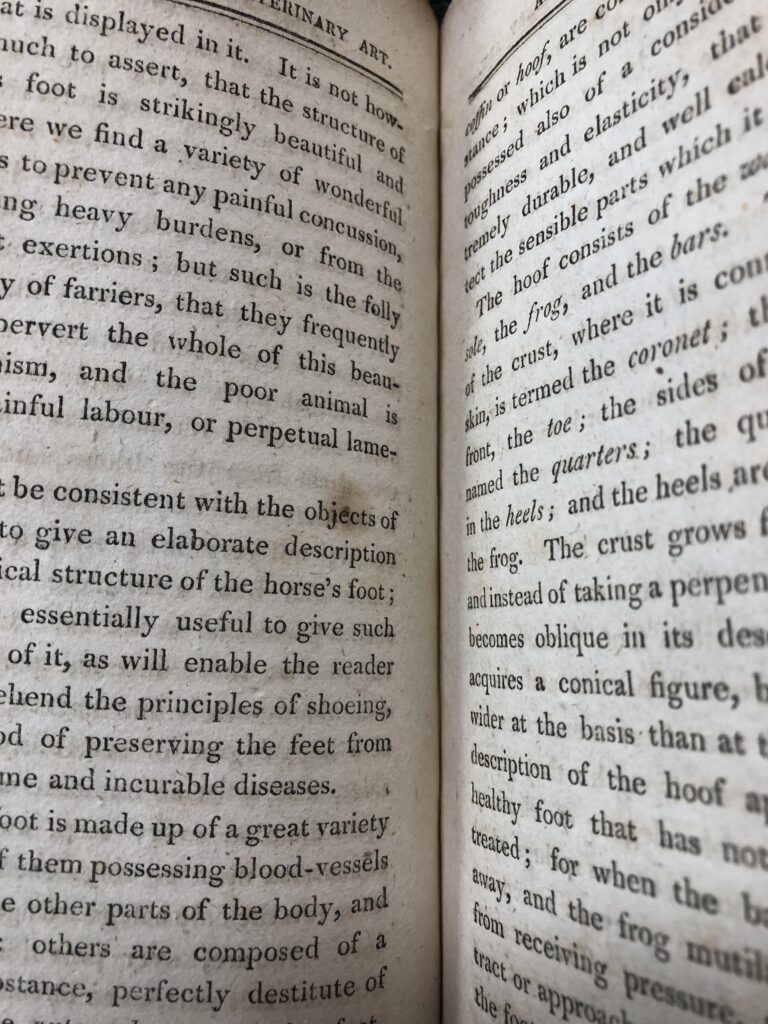
A Treatise on Veterinary Medicine is a multiple volume set of books written near the beginning of veterinary medicine, to teach the reader about subject. Some of the subjects covered in the text is bruises, wounds, feeding and exercise distemper, and the practice of shoeing. The book is about practice of veterinary medicine and how to treat horses effectively. There are diagrams to illustrate what is being discussed in the text, the most interesting thing about the diagrams is the instructions after them. There are directions for where to the plates.
Significance of the book
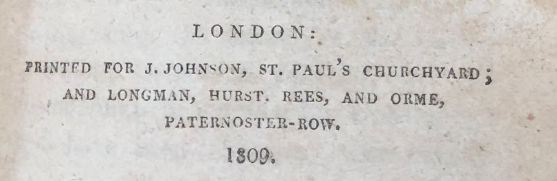
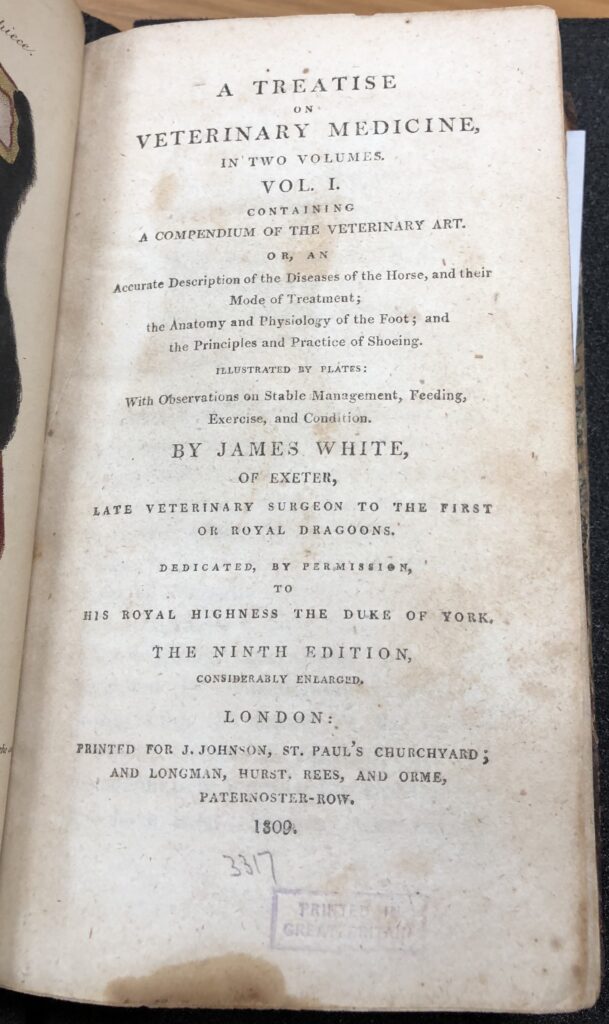
This edition was published in London in 1809 for J. Johnson, St. Paul’s Churchyard by Longman, Hurst, Rees, Orme, and Brown. Veterinary medicine started around 1760, this book was published in 1809. Because the book was published so early on in the profession it helped shape future generations of veterinarians. The book tells how to practice veterinary medicine, during this time. The book was used as a text book for veterinary students.
Physical State of the Book
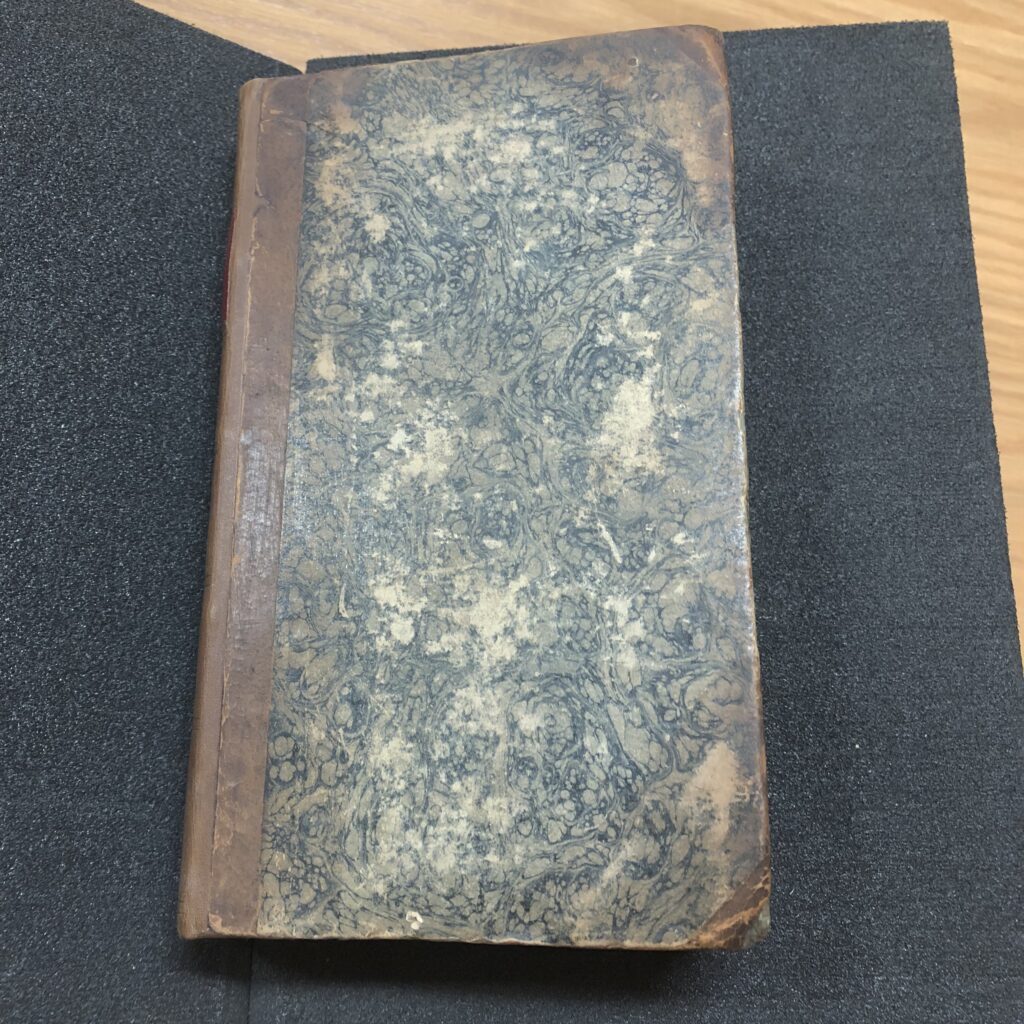
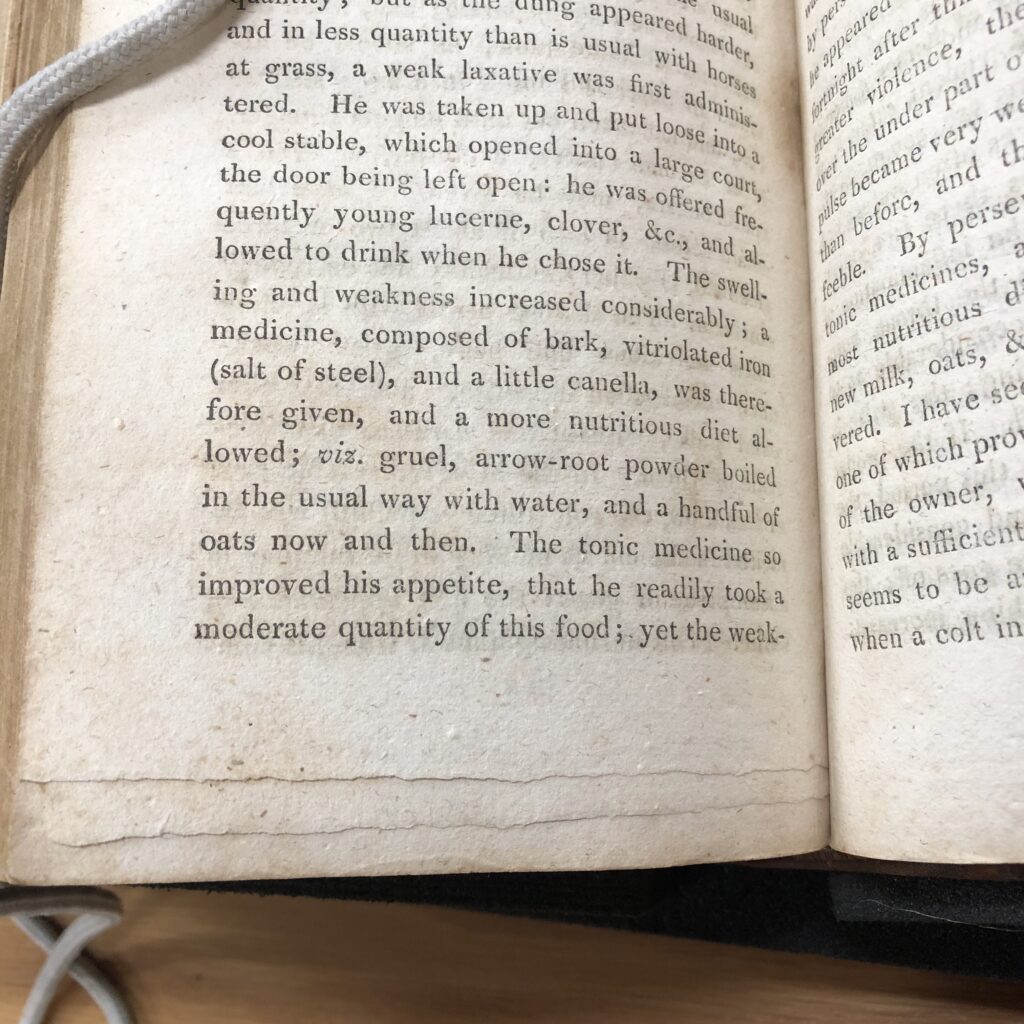
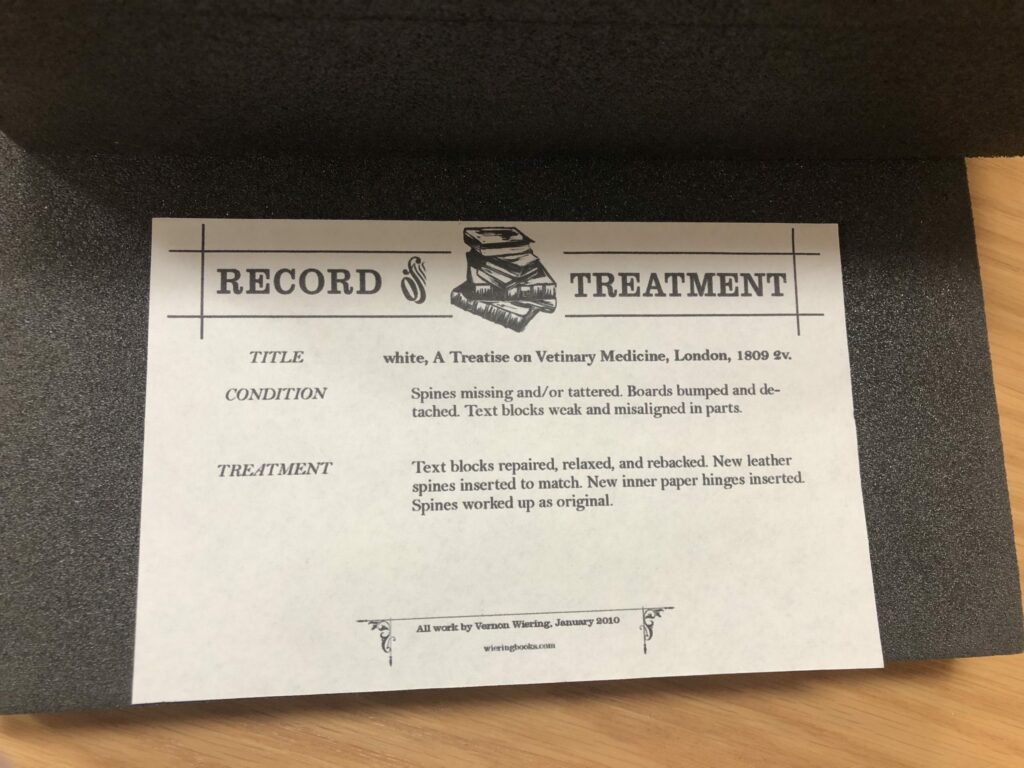
The book itself is a bit tattered. Many of the pages are discolored and worn. There are stains on a few pages, and some pages are cut smaller than the rest. There are a few places where the text on the page is faded and hard to read. However, despite these few flaws, the book is in relatively good condition considering its age. The book has been rebound, with a leather spine and marbled boards.
Provenance
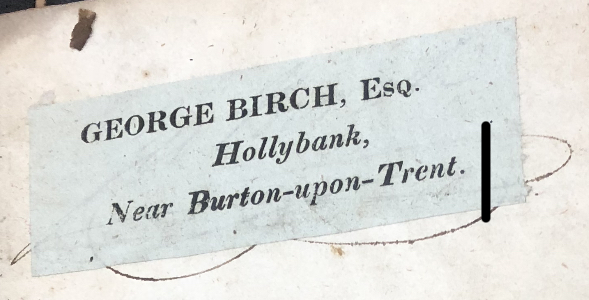
There is a lot of interesting providence in this volume. This book plate shows that this book was once owned by George Birch- likely an attorney based on the “Esq” that follows his name- who lived in Hollybank, a town near Burton Upon Trent in England. The book plate was placed over something hand written.
In addition to this book plate on the flyleaf, there are hand written inscriptions on the inside of the book cover. I cannot make out mot of the writing on these inscriptions, but they are likely past owners. The image to the left looks like a name and “2 vol” stating that this is a two volume set. The image on the right looks like a name and a date.
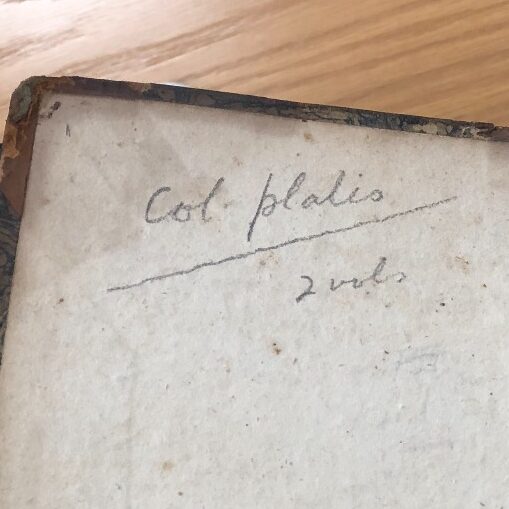
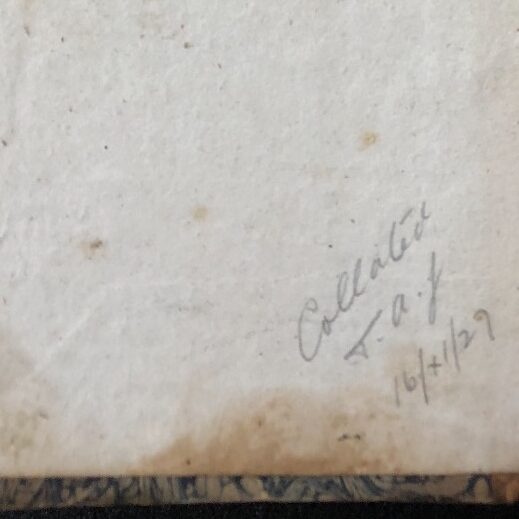
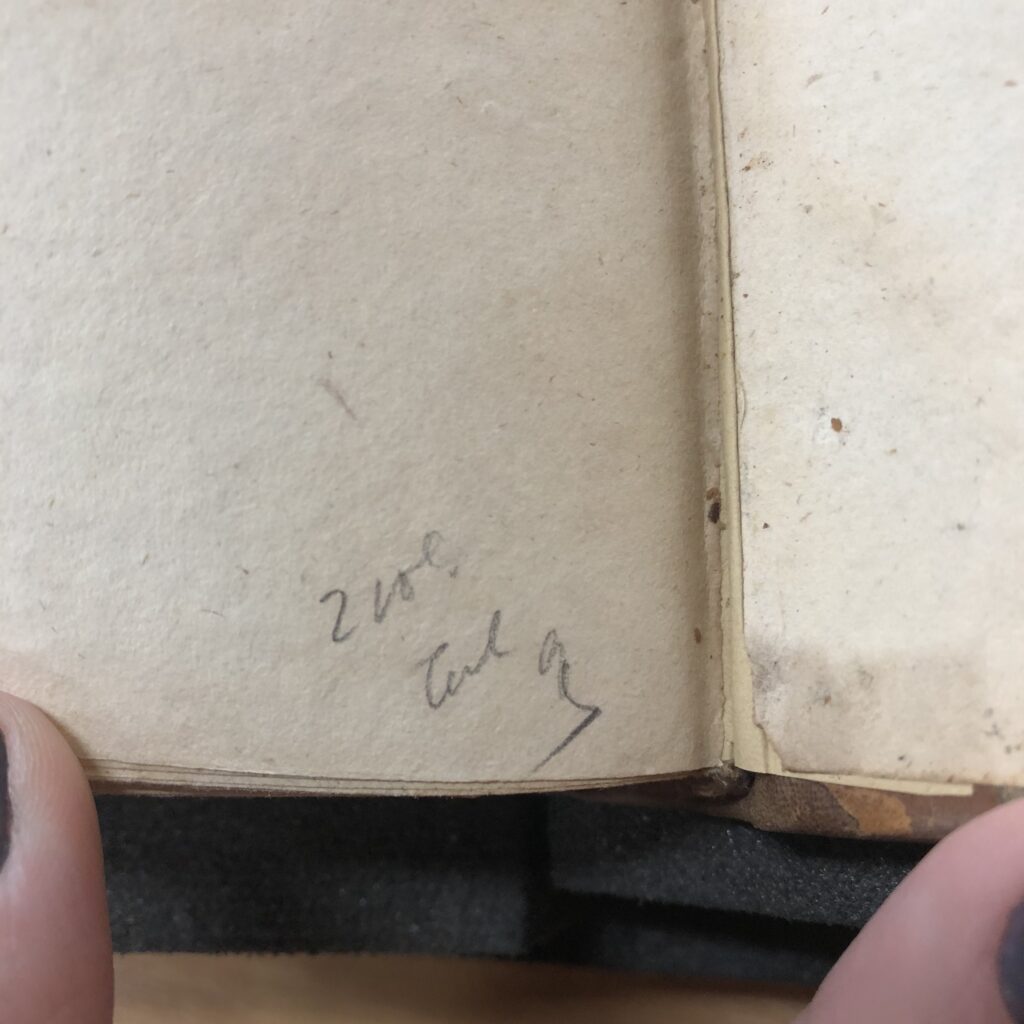
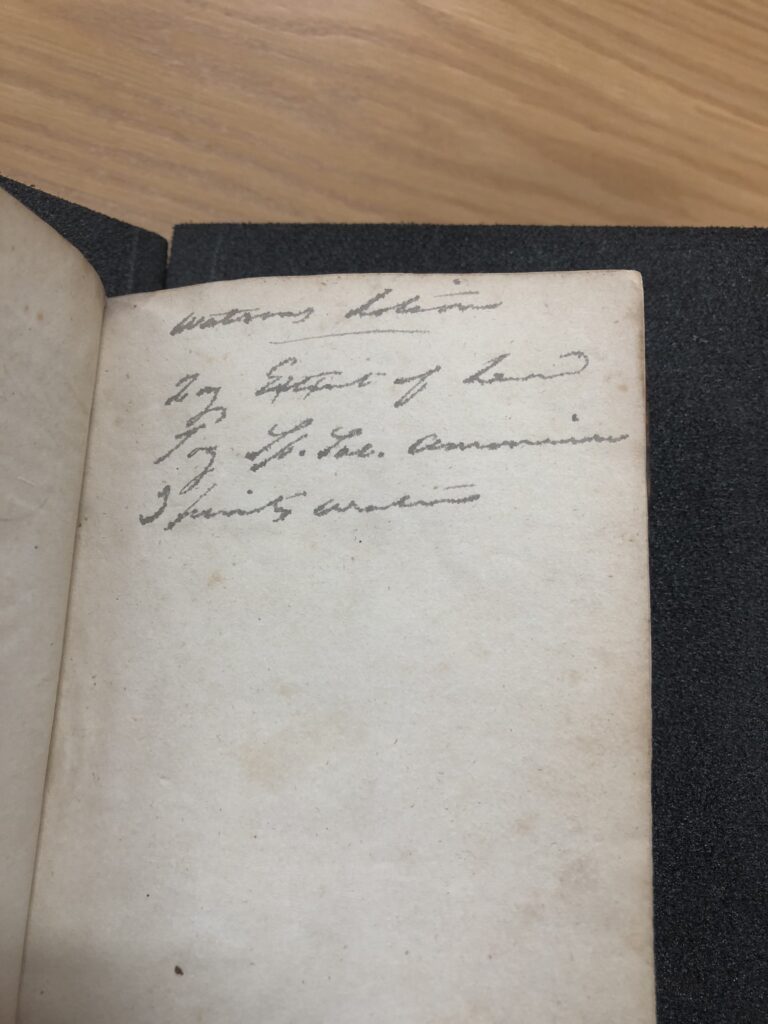
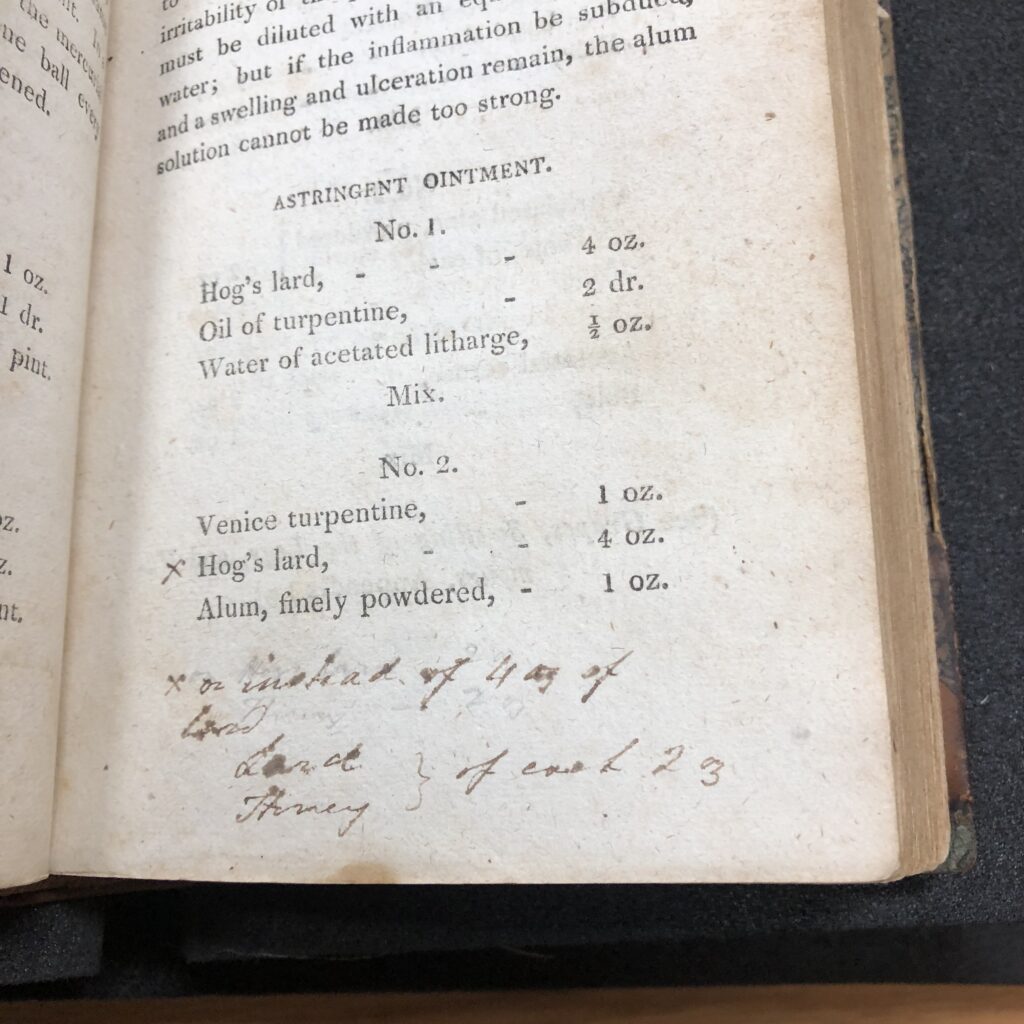
There are a few more examples of inscriptions on the pages, they are faded and difficult to read. But the owner thought they were important enough to write in the pages, so it definitely helps tell the story of where this book has been. The first images looks like it says “2 vol” again, likely to denote that this is not the only volume of this set and it continues in a second volume. It is written on the cover page that this is a two volume set, it looks like the same hand writing as the message saying “2 vol” on the book cover. The owner really wanted it to be known that this book had two volumes. Another inscription looks to be a list of questions, you can kind of make out the word questions in the title, and then a question mark in the list. If this book was in fact used as a text book at a veterinary school this list could be a lis of study questions. Within the text, there is a table of astringent ointments, and there are annotations surrounding it. Hog’s lard os marked with an “x” and they are making notes about the amount of lard needed.
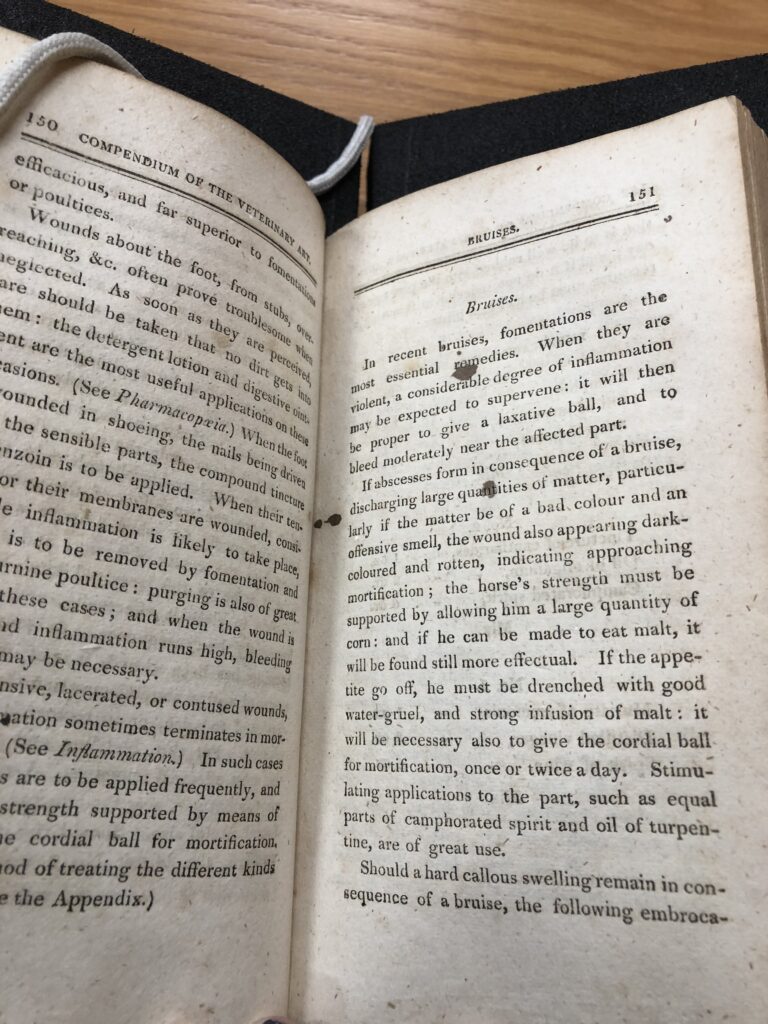
The pages have many stains on them, some look like normal discoloring, some look like food was spilled, and others look like ink was spilled.
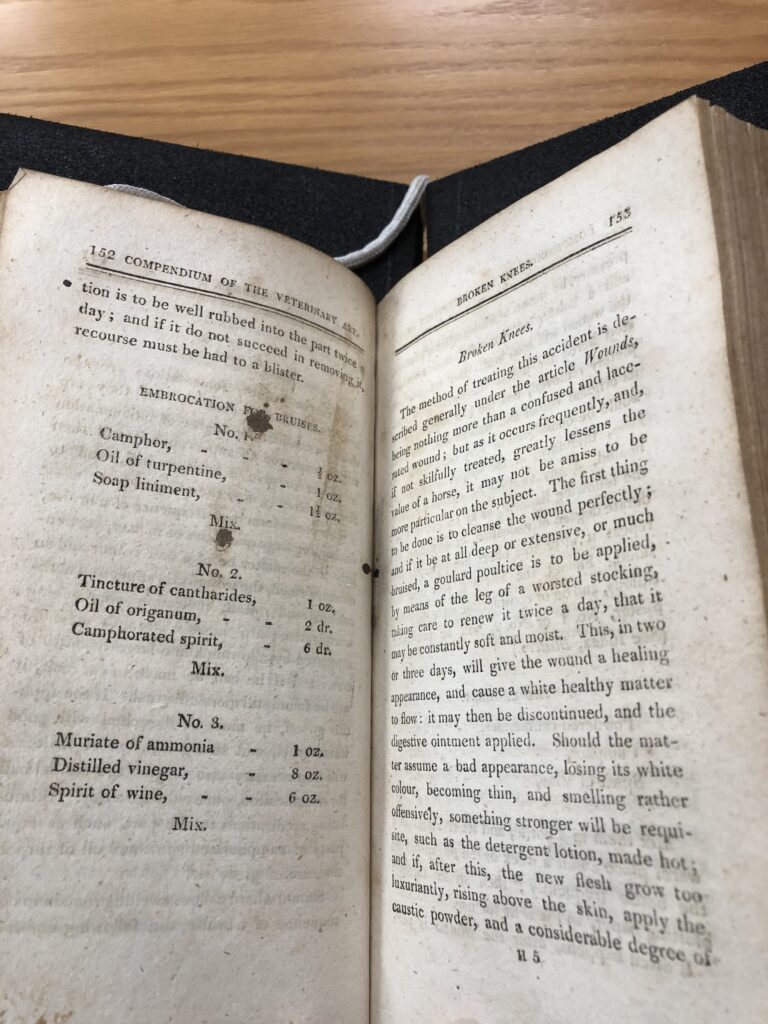
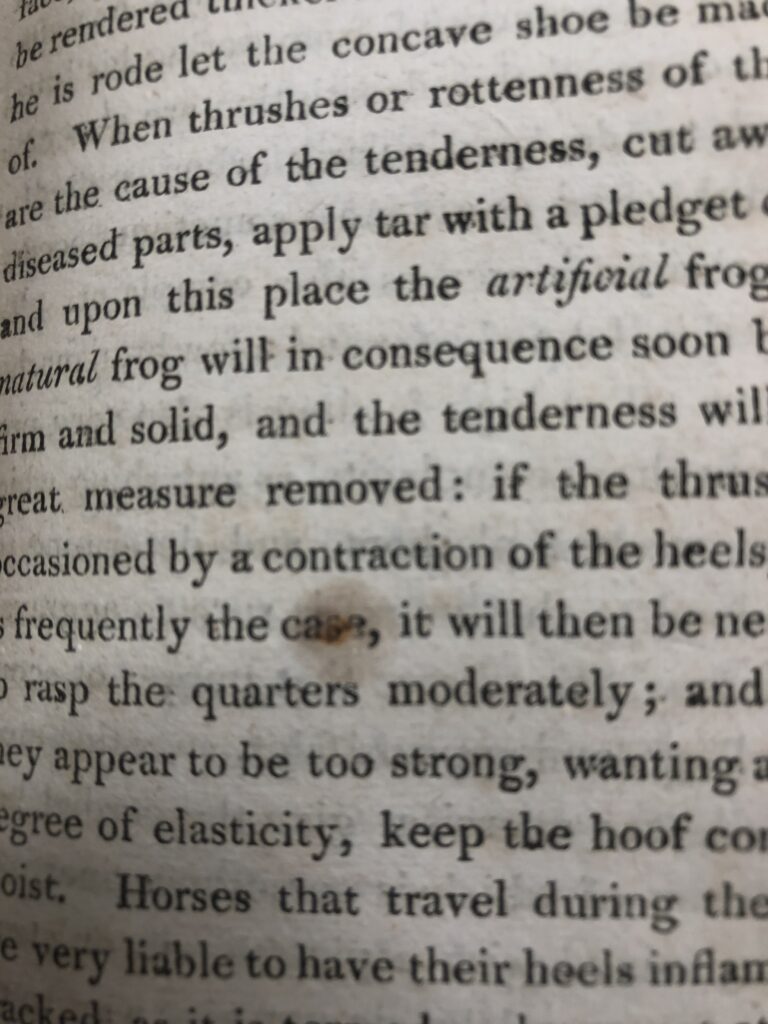
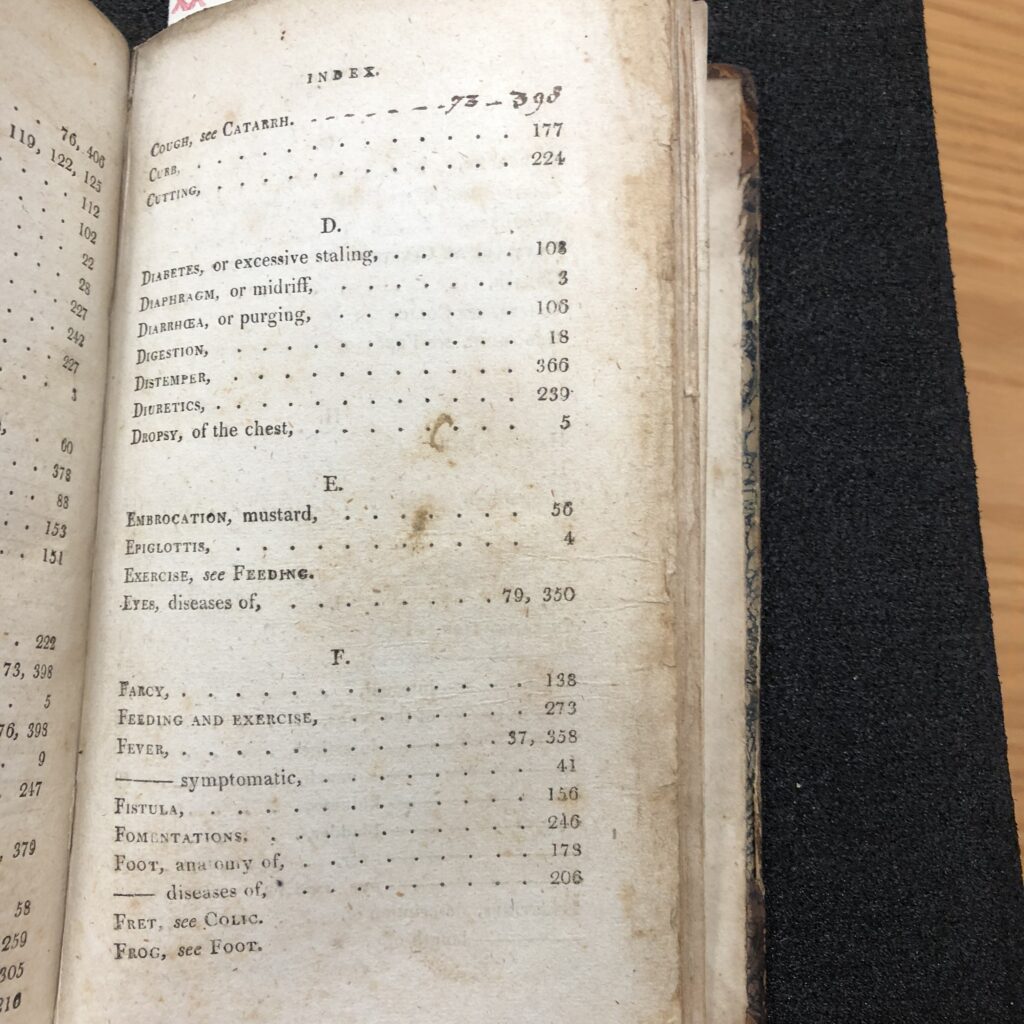
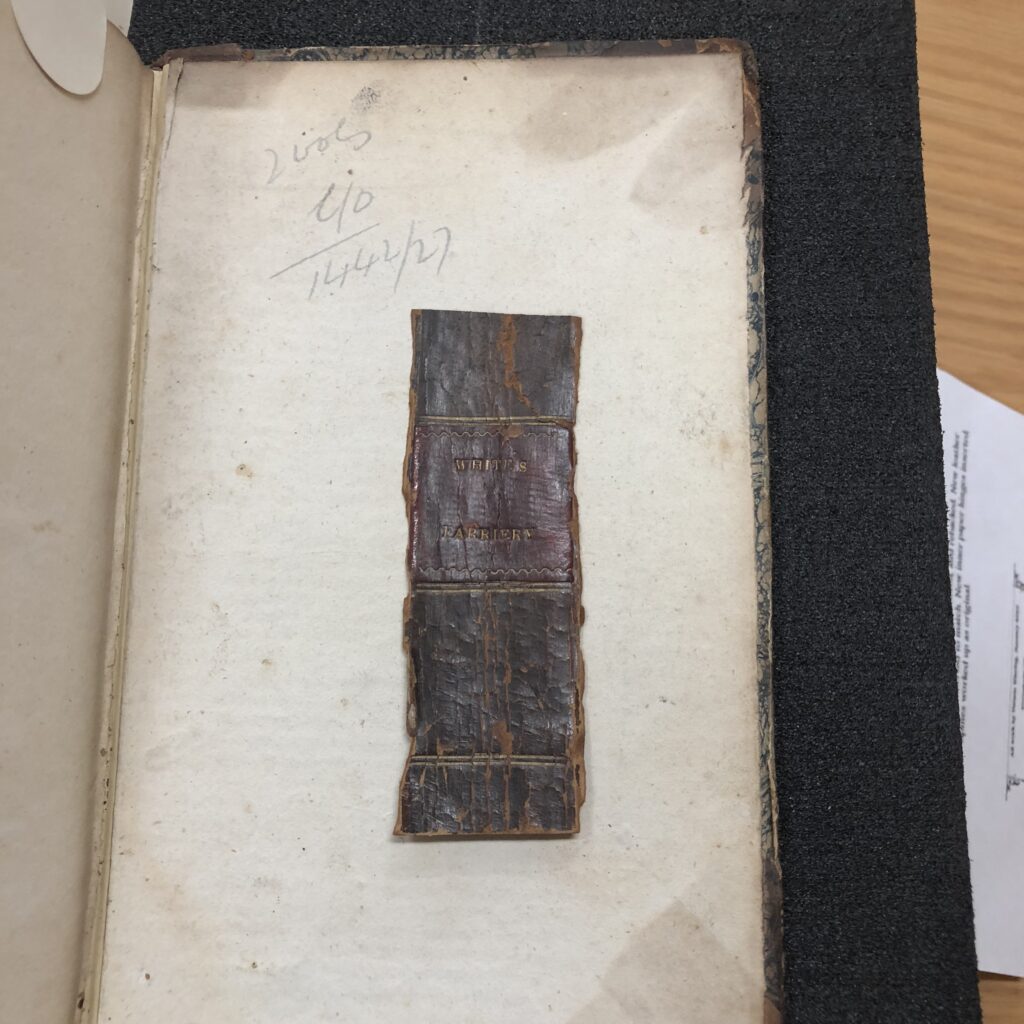
As I stated before, the book has been rebound. When the book was rebound, the conservators saved the original binding and placed it on the inside of the back cover. It is nice to have the original binding to see what the book looked like when it was in common circulation. It has a lot of history.
References
https://magic.msu.edu/search/Y?
SEARCH=XX+SF753+W59+1808&searchscope=39
http://www.josephpriestleyhouse.org/wp-content/uploads/Joseph-
Johnson-Priestleys-Publisher-and-Bookseller.pdf
https://archive.org/details/b21468989/page/n3
Written by Taylor Rager for HST475 FS18 Professor Brockey
